

Dedicated team vs fixed price: choosing a software contract when AI assists delivery
Choose fixed price when the scope is small, stable and specified well enough to test; the supplier carries cost risk and changes become contract variations. Choose a dedicated team when the scope will evolve: you control priorities and carry cost risk, so governance matters. AI-assisted engineering speeds up specifications, which favours fixed price after discovery.
Book a solution review See the related serviceBy Huy Nguyen (David), Founder & CEO · Updated 28 Sep 2026 · 12 min read

This comparison is for founders, CTOs and product owners about to sign with a software partner, and for procurement teams asked to choose between "a fixed quote" and "a team per month". For the wider outsourcing decision, including cost drivers, IP and partner checks, start with our software development outsourcing to Vietnam guide.
The two models in brief
Fixed price. Buyer and supplier agree a defined scope, a price and a delivery date before work starts. The supplier is paid for delivering that scope, usually in payments tied to accepted milestones. Anything outside the agreed scope is a change request with its own price and date. The model buys price certainty with scope rigidity.
Dedicated team. The supplier provides a stable team, for example developers, QA, an analyst and a project manager, working on the buyer's priorities over an agreed period. The buyer pays for the team's capacity, typically monthly, and decides what the team builds next. The model buys flexibility and control with cost uncertainty.
"Time and materials" is close to a dedicated team billed by the hour; "turnkey" is close to fixed price. What matters is who decides the scope, and who pays for being wrong about it.
Evaluation criteria
The comparison uses six criteria that decide real engagements:
- Scope certainty. How well can the work be specified and tested before it starts?
- Control. Who decides priorities and trade-offs from week to week?
- Cost risk. Who pays when the work takes longer than planned?
- Change handling. What happens when you learn something that changes the plan?
- Governance effort. How much of the buyer's time does the model need to work well?
- Knowledge retention. Does the knowledge built during delivery stay available to you?
Evidence table
| Criterion | Fixed price | Dedicated team | Basis |
|---|---|---|---|
| Scope certainty | Needs a specification complete enough to price and accept against | Works from a backlog that is refined as you learn | FAR 16.202 and 16.601 |
| Control | The supplier controls how the agreed scope is delivered | The buyer sets priorities; the team adapts each iteration | General practice |
| Cost risk | The supplier carries the cost of overruns within the agreed scope | The buyer carries cost risk; a ceiling or budget cap limits it | FAR 16.202 and 16.601 |
| Change handling | Each change is a contract variation, priced and scheduled separately | Changes are reprioritized in the backlog without a new contract | Agile Manifesto values; general practice |
| Governance effort | Heavy up front (specification, acceptance criteria), lighter during delivery | Continuous: reviews, backlog decisions and progress checks | FAR 16.601 surveillance requirement |
| Knowledge retention | Knowledge sits mostly with the supplier's project team | A stable team accumulates product knowledge you keep using | General practice |
The clearest public description of this risk split comes from public procurement, not vendors. Part 16 of the US Federal Acquisition Regulation (FAR) says a firm-fixed-price contract places maximum risk and full responsibility for costs on the contractor, and suits work where a fair price can be set because requirements and performance uncertainties are reasonably well understood. Under FAR 16.601, a time-and-materials contract may be used only when the extent or duration of the work cannot be estimated accurately at the start; the buyer must monitor performance, and a ceiling price is exceeded at the contractor's own risk. The risk logic transfers directly to software.
The Agile Manifesto adds the delivery view: it values customer collaboration over contract negotiation, and responding to change over following a plan. A fixed-price contract can run agile practices inside it, but every change that crosses the scope boundary returns the parties to negotiation.
Decision table by situation
| Situation | Better fit | Why |
|---|---|---|
| A small, well-specified build with clear acceptance tests | Fixed price | Scope is stable enough to price; the supplier carries overrun risk |
| A new product whose features depend on user feedback | Dedicated team | Scope will change as you learn; renegotiating each change would stall delivery |
| A discovery or prototype phase before a larger build | Fixed price for the phase | A short, bounded phase is easy to specify and produces the specification for the next one |
| A platform that needs continuous releases after launch | Dedicated team | The work never finishes; a stable team keeps product knowledge |
| A migration with a known source, target and data set | Fixed price or milestone-based | Scope is inventory-driven and testable, provided discovery has been done |
| A fixed budget but an open scope | Dedicated team with a budget cap | Priorities are traded inside the cap instead of adding scope |
| A buyer with no time to steer the work | Fixed price with strong acceptance criteria | A dedicated team without a product owner drifts |
| An AI feature whose output quality is not yet known | Fixed-price pilot, then priced milestones | The pilot produces the evaluation set that later milestones are accepted against |
Two questions settle most cases. Can you write acceptance tests for the whole scope today? If yes, fixed price is viable. Will someone on your side make product decisions every week? If yes, a dedicated team is viable. If both answers are no, fix that before signing anything.
Scenarios
Launching a SaaS MVP. A founder knows the core workflow but not yet which features customers will pay for. A fixed-price MVP would lock in guesses. A small dedicated team working in short iterations can ship the core, measure and adjust. For the product side of this path, the SaaS product accelerator starts from reusable modules instead of a blank page.
Rebuilding an online store with clear requirements. A retailer has documented its checkout, catalog and integration requirements and has a fixed launch date. A fixed-price or milestone-based contract fits the build; a support arrangement can follow launch. Retail and e-commerce projects often split this way, because building a store and optimizing it afterwards are different kinds of work.
Extending an in-house team. A company has a product owner and an engineering lead but too few developers. A dedicated team that joins existing planning routines fits; fixed price would duplicate planning done well already.
A one-off integration. Connecting an ERP to a store through documented APIs, with known data and volumes, suits fixed price once discovery has confirmed the interfaces.
A multi-year platform programme. Scope evolves, releases are frequent and knowledge must stay with the product. A dedicated team with firm governance fits, sometimes with fixed-price work packages for bounded pieces.
Hybrid structures that often work better
These structures combine the strengths of both:
- Fixed-price discovery, then a team. A short, priced discovery produces the architecture, backlog and estimates; the build then runs as a dedicated team or as priced milestones.
- Milestone-based delivery. Payments are tied to accepted milestones, each specified just before it starts. Scope is fixed per milestone, not for the whole project.
- A team with a budget cap. A dedicated team works within an agreed monthly capacity and a total cap; the buyer trades scope inside the cap.
- KPI-linked terms. Part of the commercial terms depends on agreed outcomes, such as release frequency or defect rates. This needs measures both sides trust and can check.
How AI-assisted engineering changes the choice
Suppliers now use AI to draft code, tests and documentation. That shifts the comparison in four ways, without making either model the automatic answer.
- Discovery gets sharper. AI turns workshop notes into draft user stories, acceptance criteria and test cases for analysts to correct. A specification that is cheaper to write and check makes fixed price viable for more projects, if people still sign off every criterion.
- Hours say less about output. With AI assistance, a month of capacity no longer maps neatly to delivered scope. Steer a dedicated team by accepted outcomes and release quality, which favours milestone or KPI-linked terms.
- Review becomes the bottleneck. Generated code still has to be read, secured and tested, so prices do not fall in step with drafting speed. Ask how AI output is reviewed before merge.
- AI features carry their own uncertainty. A chatbot or document classifier cannot be accepted against a fixed specification until its answers are measured on your data. Agree the evaluation set and pass threshold in a pilot, then price the build.
Contract terms to check in either model
Whichever model you choose, check the terms that protect you; for IP, our guide to protecting IP when outsourcing goes clause by clause:
-
IP ownership
Who owns the code created for you, and which reused components are licensed rather than transferred
-
Acceptance
How deliverables are accepted, and what happens when acceptance fails
-
Change process
How changes are raised, estimated, approved and recorded
-
Team stability
How team changes are announced and how knowledge is handed over
-
Governance
Review cadence, reporting, and the named contacts on both sides
-
Exit
Handover of code, documentation, credentials and environments at the end
-
AI use
Which AI tools may see your code and data, whether your data can train models, and human review of generated code
How Netbase structures engagements
Most Netbase projects are delivered on fixed-price contracts. In the terms of this comparison, Netbase works mostly in the left-hand column: a short discovery produces the specification and acceptance criteria, and the build then runs at an agreed price with milestones. That follows from Netbase's consulting-first positioning, where solutions, custom development and AI-enabled digital transformation lead and team capacity follows. For work whose scope cannot be settled up front, Netbase also offers dedicated development teams, on-demand support and fully managed delivery, with milestone-based, monthly team retainer and KPI-linked terms; onsite work is available on request at extra cost. An evolving product maps to a dedicated team on a monthly retainer.
Either way, delivery runs remote-first from Hanoi in English, 9:00 to 18:15 Vietnam time (UTC+7). AI tools and models are chosen per project with the client, and engineers stay accountable for every change they merge.
Teams of 3 to 30 people mix analysts, project managers, architects, developers, QA and UI/UX designers; work typically starts within 1 to 2 weeks after discovery. Governance runs through weekly reviews, KPI dashboards, a dedicated account manager and project manager, and Slack, Zoom and client dashboards. On IP, the client owns the IP created in custom development, while Netbase productized modules and Business Division products are licensed, not transferred. The dedicated development teams service describes how a team is set up and governed.
What delivery record exists, and what does not
No published Netbase case study states its commercial model. For a long-running team that keeps knowledge across releases, the AI-first offshore development center guide compares that route with project outsourcing, and when the contract is one step in a larger programme, the digital transformation roadmap shows how to sequence it.
Geo-Tek IT Solutions, Cyprus. Netbase delivered the Geo-Tek IT Solutions e-commerce platform. The published case reports revenue up 36% in the first quarter after launch, engagement up 35%, repeat transactions up 24% and order processing down 30%. The case does not state which commercial model was used, so it is shown here as delivery proof, not as evidence for either model.
Recommendation limits
- This comparison covers software development contracts between businesses. Employment, staffing and procurement rules differ by country; take legal advice on your contract.
- FAR Part 16 is cited as a well-documented description of how contract types allocate risk; it binds US federal agencies, not private buyers.
- Total cost depends on scope, team shape and the quality of the specification. This page gives no prices, rates or savings figures.
- A fixed price is only as reliable as the specification behind it. Without discovery, a fixed price tends to carry a risk margin or to end in disputes about scope.
- Netbase's engagement and commercial models are described here as Netbase states them. Netbase does not publish the share of its projects that run at a fixed price, so "most projects" is not a measured figure. The Geo-Tek figures describe that project's results, not the effect of any contract type.
Plan the next step with a Netbase consultant
Frequently asked questions
Not necessarily. A supplier that carries cost risk prices that risk in, and changes are charged separately. It is more predictable, not automatically cheaper.
It moves cost risk to the buyer, but it also gives the buyer control. Weekly reviews, a clear backlog and a budget cap keep that risk visible.
Yes, and it is common: fixed-price discovery followed by a team, or a team followed by a smaller support arrangement. Agree the handover terms in advance.
That depends on the contract, not the model. Check the IP clause either way.
It can make fixed price viable sooner, because specifications and tests are faster to draft and review. It does not make an unclear scope safe to fix; discovery still decides that.
Fixed price. Most Netbase projects are delivered on fixed-price contracts after discovery; a dedicated team is offered when the scope will keep changing.
Next step
Bring your scope, your deadline and the decisions you can make each week, and we will book a solution review to recommend a model or a hybrid. You can also see the related service or browse more Netbase insights.
Work behind this guide
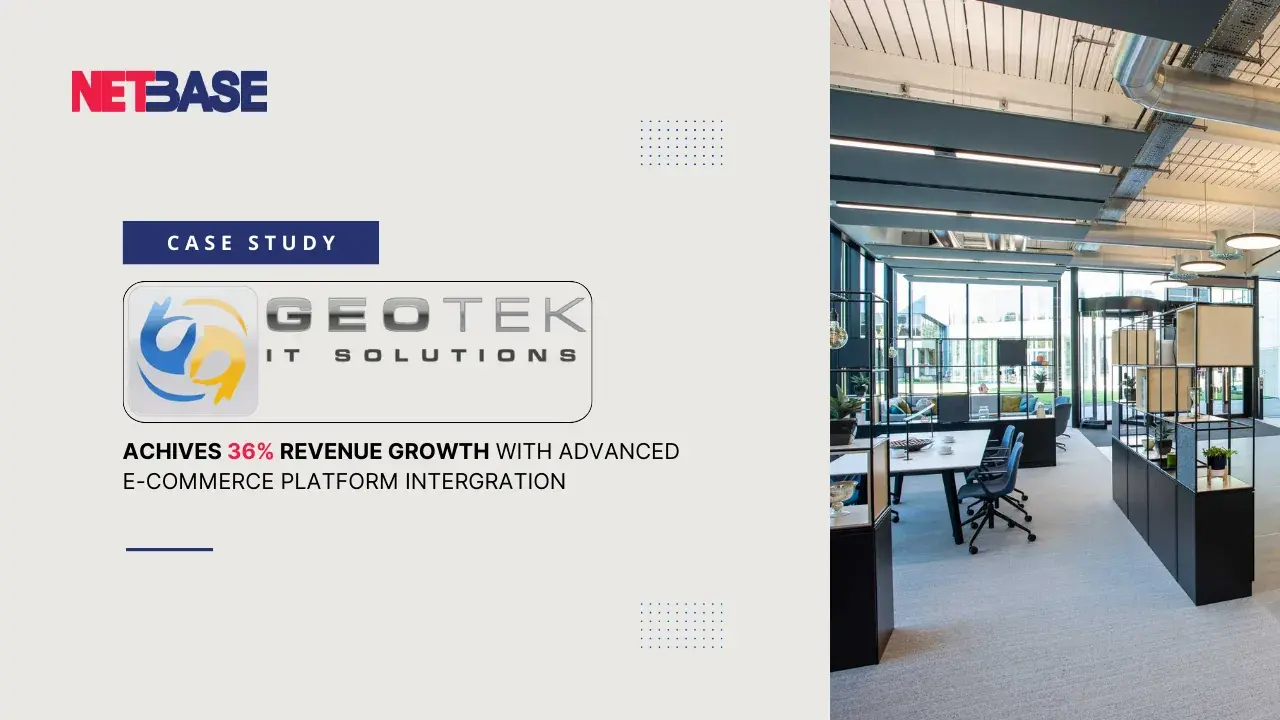
Revenue grew 36% in the first quarter after launch.
Keep ReadingRelated services and solutions
 An AI-augmented dedicated development team in Vietnam that answers for results
Netbase provides dedicated development teams from Vietnam for product companies and enterprises to add engineering capacity without losing control. Teams of 3 to 30 people work only on your product, use AI-assisted engineering under review, report to a named account manager and project manager, typically start within one to two weeks after discovery, and the IP they create is yours.
Learn More
 SaaS product accelerator: launch an AI-ready SaaS on proven Netbase modules
A SaaS product accelerator is a set of reusable Netbase modules for accounts, billing, roles and integrations that helps founders and product teams launch subscription software faster, with room for in-product AI from the first release. Reusing these modules can cut development time by up to 60%, and the approach is proven on Printcart, Netbase's own web-to-print SaaS.
Learn More
Discuss a project
Netbase JSC helps organizations design, build, modernize, and operate digital products and AI-enabled business systems.+84 937 869 689
91 Nguyen Chi Thanh, Dong Da, Hanoi, Vietnam
Get in touch
Tell us what you want to build, modernize, or operate.