

Digital transformation and legacy modernization: what to change first, and where AI helps
Mid-market companies should change the process before the platform: map how work and data flow, fix the costliest steps, then modernize only the systems blocking them. Replatform when the software is sound but its base is ending, refactor when its design slows change, and rebuild only when neither works. AI maps legacy code first, then automates on the modern base.
Book a solution review See the related serviceBy Netbase Consulting and Transformation Desk · Reviewed by David (CEO) · Updated 29 Sep 2026 · 15 min read

This guide is for owners, COOs, CTOs and IT managers of mid-sized companies whose systems have grown up around the business rather than with it: an ageing store, an ERP bent into shape with spreadsheets, integrations nobody fully understands. It explains how to sequence the work so each step pays for the next, how to choose between rebuild, refactor, replatform and the other options, how to modernize a live system without stopping the business, and where AI speeds up the work or extends the result. It closes with two commerce examples and a risk register you can adapt.
In this guide
- Why sequence matters more than technology
- The three layers of change
- A sequencing model for mid-market companies
- Rebuild, refactor or replatform: the decision
- Signals that point to each route
- Modernizing a live system step by step
- Data, integrations and search visibility
- Two commerce examples
- Where AI fits in a modernization programme
- Timelines and what moves them
- A modernization risk register
- Common mistakes
- Limitations of this guide
- Frequently asked questions
- How this guide was made
- Next step
Why sequence matters more than technology
Digital transformation fails less often because of the wrong technology than because of the wrong order. Three patterns recur:
- Platform first, process later. A new system is bought or built, and the old workarounds are copied into it. The company pays for a new platform and keeps the old costs.
- Everything at once. A big-bang replacement touches every team, every integration and every customer at the same date. When it slips, the whole business waits.
- Modernizing what does not matter. Effort goes to the system with the oldest technology rather than the one that blocks revenue, service or cost.
A mid-market company rarely has the spare budget or management attention to recover from these. The discipline is to decide what the business must do differently, then change only the systems that stand in the way, in an order where every step is useful on its own.
The three layers of change
-
Process
- Question it answers
- How should work flow, and who decides?
- Typical work
- Removing duplicate steps, redesigning approvals, defining data ownership
- Owner
- Operations and business owners
-
Systems
- Question it answers
- Which applications support the process, and how do they connect?
- Typical work
- Integrations, retiring tools, consolidating data, automating hand-offs
- Owner
- IT and process owners together
-
Platform
- Question it answers
- What technology do the systems run on, and can it be supported?
- Typical work
- Upgrades, replatforming, refactoring, cloud moves, rebuilding
- Owner
- Technology leadership
Most transformation budgets are spent at the platform layer, while most of the value is released at the process and systems layers. Work top-down when you plan, and bottom-up only when a platform is at risk: an unsupported version, a security exposure or a vendor exit that forces the timetable.
A sequencing model for mid-market companies
A practical sequence has five stages. Each ends with something the business can use, so the programme can pause without leaving half-finished work behind.
-
Baseline
Map processes, systems, integrations and data; measure cycle times, errors and costs
- What it produces
- A current-state map and the few measures that matter
-
Process redesign
Remove duplicate steps, agree data owners, define the target process
- What it produces
- A target process and the system changes it requires
-
Stabilize and retire
Fix critical risks, retire unused tools, secure what must stay
- What it produces
- Fewer systems, lower risk, a cleaner starting point
-
Modernize the blockers
Replatform, refactor or rebuild the systems that block the target process
- What it produces
- Supported platforms where they matter most
-
Extend
Add automation, analytics, new channels or AI on the modernized base
- What it produces
- New capability without re-opening old problems
Netbase delivers this kind of programme through a six-step delivery lifecycle, from discovery and architecture planning through agile execution to rollout and ongoing support. Stages 1 and 2 above sit inside discovery; the modernization itself runs in agile sprints with weekly reviews and outcome-based milestones, remote-first from Hanoi in English, with security designed into each slice rather than tested at the end.
For a planning template that turns these stages into a mid-market roadmap, see our digital transformation roadmap guide. When the question is where to start and what to prioritize, digital transformation consulting turns the baseline into a delivery-ready plan. Where companies skip legacy stages, see digital and AI transformation in emerging markets.
Rebuild, refactor or replatform: the decision
"Rebuild or refactor" is usually framed as two options. In practice there are more, and the cheapest good answer is often not a code change at all. AWS Prescriptive Guidance lists seven migration strategies, the "7 Rs": retire, retain, rehost, relocate, repurchase, replatform and refactor (re-architect). For application modernization in a mid-market company, five of them matter most, plus the full rebuild.
| Option | What it means | Choose it when | Main risk |
|---|---|---|---|
| Retire | Switch the system off and archive its data | Nobody depends on it, or its job moves into another system | Hidden users or reports discovered late |
| Retain | Keep it as it is for now | It works, it is supported, and it blocks nothing | Deferring a problem that grows |
| Repurchase | Replace it with a packaged product or SaaS | The job is standard and a product does it well | Forcing a distinctive process into a generic tool |
| Replatform | Move it to a supported base with limited code change | The software fits the business but its platform or version is ending | Extensions and customizations that do not carry over |
| Refactor | Restructure the code and architecture, keeping behaviour | The system is valuable but hard and slow to change | Scope creep; refactoring without a business target |
| Rebuild | Write a new system for the same job | The design cannot support the target process and no product fits | Cost, time and relearning rules the old system held |
AWS notes that refactoring is the most complex and costly strategy and recommends, for large migrations, moving first and modernizing after. The same logic helps a mid-market company: separate "get onto a supported base" from "redesign the application" unless one cannot happen without the other.
Five questions settle most decisions:
- Does the system still fit the target process? If yes, replatform or retain. If no, repurchase, refactor or rebuild.
- Is the platform supported and secure? If not, the timetable is set for you; replatform first.
- Is the job distinctive to your business? If not, a packaged product is usually cheaper to own.
- Can the change happen in slices? If yes, prefer incremental modernization over a single cut-over.
- Who knows the rules the old system enforces? If nobody, budget discovery before any rebuild.
Signals that point to each route
An assessment rarely produces one clear answer, but some findings point strongly one way.
-
The platform or framework is out of security support, but the business rules still fit
- Points towards
- Replatform
- Check before you commit
- Which extensions and custom modules carry over, and which need replacing
-
Small changes take weeks, tests are missing, but the rules are valuable and documented
- Points towards
- Refactor, in slices
- Check before you commit
- A business target for each slice, so refactoring does not become open-ended
-
The target process needs data or workflows the current design cannot hold
- Points towards
- Rebuild, or repurchase if the job is standard
- Check before you commit
- Who knows the rules the old system enforces, and how they will be captured
-
The system works, is supported and blocks nothing on the roadmap
- Points towards
- Retain, and review yearly
- Check before you commit
- The date its platform support ends
-
Few people use it and another system could absorb its job
- Points towards
- Retire
- Check before you commit
- Hidden users, reports and integrations
Mixed findings are normal: many programmes replatform first to regain security support, then refactor the parts that change most. The legacy system assessment checklist lists the evidence to collect before you use this table.
Modernizing a live system step by step
Most mid-market systems cannot stop while they are replaced: orders keep arriving and staff keep working. Martin Fowler's Strangler Fig pattern describes the alternative to a big-bang replacement: build new components around the old system and move functionality across gradually, until the old system can be switched off. It reduces risk and delivers value along the way.
In practice:
-
Put a routing layer in front
Requests reach either the old or the new component, so functions can move one at a time.
-
Move a thin slice first
Choose a function with clear boundaries and visible value, such as product search, checkout or order status.
-
Keep one source of truth per record
Decide which system owns each type of data at each stage, and sync the rest.
-
Rehearse every cut-over
Run the migration on a copy, compare results, and keep a tested rollback.
-
Retire deliberately
Remove the old function once the new one has run through a full business cycle.
When modernization is not optional, for example when a platform version reaches end of life, the incremental path still applies to what surrounds the move: data cleanup, extension replacements and integrations can be prepared before the cut-over date. The legacy modernization service describes how Netbase plans inventory, rehearsal, staged cut-over and rollback.
Data, integrations and search visibility
Three areas cause most modernization surprises. Inventory them before choosing an option.
-
Data
- What to inventory
- Entities, volumes, quality, history kept, who owns each record
- Typical surprise
- Years of duplicate customers or inconsistent product data
-
Integrations
- What to inventory
- Every system that sends or receives data, how and how often
- Typical surprise
- A nightly export that a finance report silently depends on
-
Extensions and custom code
- What to inventory
- Each module, what it does, whether a supported equivalent exists
- Typical surprise
- Business rules living in an unmaintained plug-in
-
Search visibility
- What to inventory
- URLs, redirects, structured data and pages that earn traffic
- Typical surprise
- Lost rankings after URLs change without redirects
-
People and training
- What to inventory
- Who uses each function, and how their work will change
- Typical surprise
- Staff rebuilding the old workarounds on the new system
For online stores, search visibility and order continuity are the two risks that most often decide whether a replatform is judged a success. Our custom e-commerce platform guide covers the replatforming decision and migration planning for stores in more depth.
Two commerce examples
Replatforming: Netztech. Netztech's store ran on Magento 1 and needed a move to Magento 2 without starting over. Netbase migrated it to Magento 2 Commerce. The migration took 35 working days and included an extension migration of 11 modules, covering installation, configuration, customization and data transfer. No performance metric is published for this project; it illustrates the scope and schedule of a replatform where the business model stayed the same.
Read the Netztech migration record
Rebelo AG reported revenue up 39% in the first year
Conversions in personalized segments rose 53% at Rebelo AG
Rebelo AG reported productivity up 25%
Netztech moved from Magento 1 to Magento 2 Commerce in 35 working days
Modernizing without replatforming: Rebelo AG. Rebelo AG, a Portuguese company founded in 1983, did not need a new platform. Its customers could not picture their designs on the finished product, so they hesitated before ordering. Netbase added 3D product previews to the existing online store. Rebelo reported revenue up 39% in the first year, engagement up 98%, conversions in personalized segments up 53% and productivity up 25%. The lesson: target the process blocker first; the platform decision can wait until it becomes the blocker.
Both examples come from online retail and commerce, where the cost of a failed cut-over is counted in lost orders. Read how Netbase approaches storefronts, marketplaces and order operations in retail and e-commerce, and when a store is growing into a multi-vendor model, the e-commerce marketplace solution shows the platform options and the EU fashion marketplace case shows one such move.
Plan the next step with a Netbase consultant
Where AI fits in a modernization programme
AI plays two roles in modernization. As a tool, it shortens the slowest early work: explaining undocumented modules, drafting a list of the business rules old code enforces, proposing field mappings between old and new data models, and drafting characterization tests that pin current behaviour before anything changes. Engineers and analysts verify every output, and legacy code goes only to AI tools the company has approved. As a capability, AI belongs to stage 5: document capture, assistants, forecasting or recommendations added once data and integrations can support them. Run it as a governed stream of the roadmap, with an owner per use case and a person approving outputs that reach customers or finance. Each item below states how mature it is at Netbase.
-
In delivered work
Product recommendation engine
Built for 4over4 from browsing and purchase history.
-
Available capability
AI-assisted legacy analysis and AI features on the modernized base
Machine learning, NLP, computer vision, generative AI and AI with IoT; beyond the 4over4 features they are not yet tied to a published case.
Timelines and what moves them
Netbase's typical ranges for e-commerce builds are 1 to 3 months for a small store, 4 to 6 months for a mid-sized one and 6 to 12 months or more for an enterprise platform. These are typical ranges, not quotes. A replatform with few customizations can be faster, as the Netztech schedule shows; a rebuild with many integrations sits at the upper end.
What moves a modernization timeline:
- the number of extensions, custom modules and integrations;
- data volume and quality, and how much history must move;
- how many URLs, reports and downstream consumers depend on the old system;
- how long the business can accept a freeze on changes during cut-over;
- how quickly business owners can make process decisions.
A modernization risk register
-
Hidden business rules in old code
- Likelihood signal
- Nobody can explain certain behaviours
- Mitigation
- Discovery sessions with users; tests written against current behaviour
- Owner
- Solution architect
-
Data loss or corruption
- Likelihood signal
- Poor data quality, many sources of truth
- Mitigation
- Data cleanup first; rehearsed migrations with reconciliation reports
- Owner
- Data owner
-
Broken integrations
- Likelihood signal
- Undocumented exports and scheduled jobs
- Mitigation
- Integration inventory; parallel run before cut-over
- Owner
- IT lead
-
Revenue dip after launch
- Likelihood signal
- URL changes, new checkout, new search
- Mitigation
- Redirect maps, performance tests, staged rollout
- Owner
- E-commerce manager
-
Adoption failure
- Likelihood signal
- Staff not involved in design
- Mitigation
- Training, champions per team, feedback loop after launch
- Owner
- Process owner
-
Scope creep
- Likelihood signal
- "While we are at it" requests
- Mitigation
- A written target process and a change budget
- Owner
- Programme owner
-
Vendor or skills lock-in
- Likelihood signal
- Only one person or supplier can change the system
- Mitigation
- Documentation, shared repositories, knowledge transfer
- Owner
- Technology leader
-
AI output taken as fact
- Likelihood signal
- AI summaries of old code or data mappings accepted without checks
- Mitigation
- Characterization tests and analyst review before migration
- Owner
- Solution architect
Review the register at every stage change. A risk without an owner is still a risk; it is just unmanaged.
Common mistakes
- Buying a platform to fix a process problem. The new system inherits the old workarounds.
- Big-bang cut-overs for systems that could move in slices. One date carries every risk at once.
- Refactoring without a business target. Cleaner code that changes no measure is hard to fund twice.
- Rebuilding without discovery. The old system's unwritten rules reappear as defects.
- Forgetting search visibility. A store that loses its rankings loses the revenue the new platform was meant to grow.
- Ending the programme at launch. Training, rollout and optimization are where adoption is won.
Limitations of this guide
This is practical guidance from Netbase delivery experience, not original research. The migration strategies come from AWS guidance written for cloud migrations and are applied here to application modernization in general; the Strangler Fig pattern is a general architecture approach. Timelines are typical ranges that depend on scope. The AI uses described beyond the 4over4 features are capabilities, not measured results. The Netztech record describes scope and schedule only, and the Rebelo AG results were reported by the client for that project and depend on its baseline and market.
Frequently asked questions
The process, unless the platform is unsupported or insecure; then stabilize or replatform first and redesign after.
When the system cannot support the target process, no packaged product fits, and the job is distinctive enough to be worth owning.
Replatforming moves software to a supported base with limited code change; refactoring restructures the code and architecture while keeping behaviour.
It depends on extensions, custom code and data. Netztech's took 35 working days with 11 extension modules.
Usually, by moving functions in slices behind a routing layer, rehearsing each cut-over and keeping a rollback.
Yes, mostly in discovery and migration: explaining old code, drafting business-rule lists, data mappings and tests. It does not remove verification; every AI output is checked against the running system before it shapes the new one.
With a baseline of processes, systems and measures, then a short list of blockers ranked by business impact.
How this guide was made
The Netbase Editorial Team wrote this guide from Netbase's published delivery lifecycle, migration and case-study pages and from public guidance by AWS and Martin Fowler. David (CEO) reviewed every Netbase fact. External sources are cited with access dates. Drafting used AI assistance (Claude). Its purpose is to help a mid-market company modernize in an order where every step pays for the next.
Next step
Share your current systems, the processes that hurt most and any platform deadlines, and we will book a solution review to rank the blockers and propose the first modernization step. You can also see the related service or browse more Netbase insights.
Work behind this guide
Rebelo, AG, a Portuguese offset and digital printer founded in 1983, lost orders because customers could not picture their designs on boxes and mugs.
Keep Reading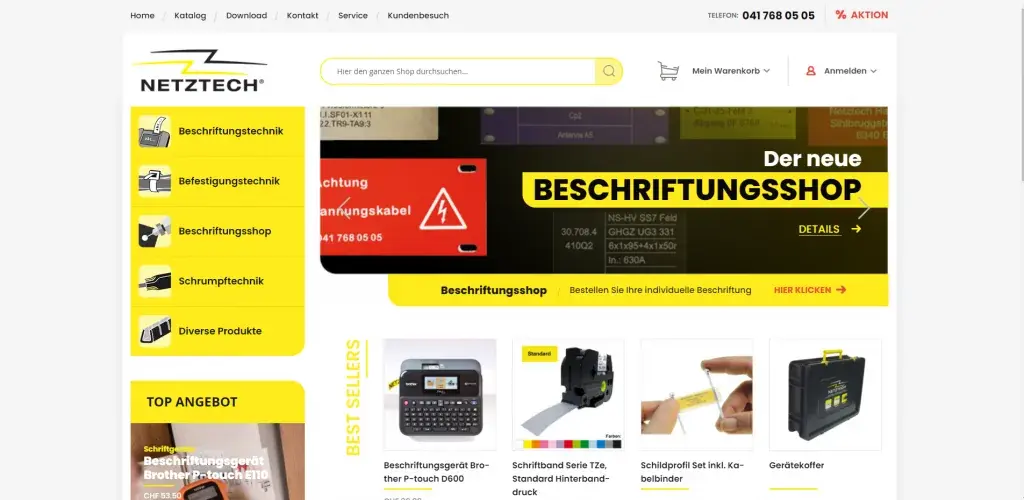
Netbase migrated all store data, rebuilt 11 extensions, applied a new design and finished in 35 working days.
Keep ReadingRelated services and solutions
 AI-enabled digital transformation consulting that ends in a delivery plan
Netbase provides digital transformation consulting for mid-market companies to turn operational problems into a prioritized roadmap with a delivery path, not a strategy deck. We map your workflows, systems and data, rank every change by business value and risk, including where AI can remove manual work, and hand over a plan the same team can start building.
Learn More
 AI-assisted legacy modernization that keeps your orders and data safe
Netbase provides legacy application modernization services for commerce and operations teams to move ageing platforms, such as Magento 1 stores, onto supported technology without losing orders, customers or data. AI speeds up code analysis and data mapping; every migration runs on a written, human-approved plan with rehearsal, staged cut-over and rollback, proven by Netztech's move to Magento 2.
Learn More
 Multi-vendor marketplace development: vendors, catalog, payouts and AI search on one platform
A multi-vendor marketplace is a commerce platform where many independent sellers list, sell and get paid through one storefront. Netbase's marketplace solution covers vendor onboarding, a shared catalog, split payments and payouts, with AI for search, listing enrichment and fraud checks. For an EU fashion-tech marketplace, Netbase's work grew gross merchandise value (GMV) 47% and cut vendor onboarding time 60%.
Learn More
Discuss a project
Netbase JSC helps organizations design, build, modernize, and operate digital products and AI-enabled business systems.+84 937 869 689
91 Nguyen Chi Thanh, Dong Da, Hanoi, Vietnam
Get in touch
Tell us what you want to build, modernize, or operate.