

Mobile product accelerator for AI-ready apps: reusable foundations for auth, push, offline and payments
A mobile app accelerator is a set of reusable app foundations, covering sign-in, push notifications, offline data and payments, that Netbase configures for each new product, so the build starts on what makes your app different, such as AI search, personalisation or on-device AI. It is a growth capability, delivered as custom development with cross-platform React Native skills.
Review this solution for your workflow View relevant workReviewed by David (CEO) · Updated 17 Sep 2026

What the accelerator is, and what it is not
It helps founders, product owners and digital leads launch an iOS and Android app without paying again for the plumbing every app needs, starting from proven foundations that Netbase configures and extends for your product.
It is not a white-label app, an app builder or a Netbase product you licence as a finished app. Screens, flows and business logic are built for you through mobile app development.
This is a growth capability. Netbase has hired React Native developers alongside business analysts, project managers and testers, and it holds the "Top Mobile App Developers 2020" badge from Clutch, but a dedicated mobile app case has not yet been published. The accelerator sits in the digital products family.
Why first app releases run late
-
- Current state
- The first months go on login, notifications and settings screens
- Target state
- Commodity foundations configured in the first sprints
-
- Current state
- The app breaks when the connection drops
- Target state
- Offline storage and sync designed in from the start
-
- Current state
- Payments added late, then rejected in store review
- Target state
- Payment flows chosen to match store and card rules up front
-
- Current state
- Every release is a manual, risky event
- Target state
- An automated build, test and release pipeline for both stores
-
- Current state
- Security is checked just before launch
- Target state
- Security requirements set against a mobile standard from day one
-
- Current state
- No data on how people use the app
- Target state
- Analytics and crash reporting live from the first beta
How an accelerated app build runs
The workflow, step by step:
-
Frame
Define users, the core job, the business model and the launch metric.
-
Select foundations
Pick the reusable modules the app needs and mark every feature that must be custom.
-
Configure
Set up the chosen foundations with your brand, data model and accounts.
-
Build what is unique
Design and engineer the screens and logic that set the product apart.
-
Harden
Test on real devices, run security checks and prepare store listings and privacy details.
-
Launch
Release to beta testers, then to the App Store and Google Play.
-
Measure and extend
Track adoption and crashes, and plan the next release on the same foundations.
Capability modules
Email, phone, social or company sign-in → Verifies users and manages sessions → Secure accounts and roles
Events from your backend → Sends targeted notifications → Timely user updates
Data changed without a connection → Stores locally and resolves conflicts on reconnect → An app that keeps working
Cart, subscription or invoice → Uses store billing or a card provider as rules require → Completed, compliant payments
User preferences → Stores and syncs choices → Consistent experience across devices
App events and errors → Collects and reports → Usage and stability data
Content, users, orders → Lets your team manage the app → No developer needed for daily changes
Code changes → Builds, tests and ships to both stores → Repeatable releases
Reusing productized modules can cut development time by up to 60%. The Netbase module library also includes an e-commerce accelerator and an AI chatbot and WorkChat integrator that an app can reuse.
AI features users now expect in an app
People now expect an app to understand what they type, say and photograph. The foundations leave room for these features, each with a privacy rule agreed in the blueprint.
-
On-device and offline AI
Image labelling, text scanning and smart suggestions that run on the phone and keep working without a connection, so personal data can stay on the device.
-
AI search
Search that understands intent, typos and photos, served from your own catalog or content.
-
Personalisation
Home screens, offers and notifications ordered by behaviour, with consent and opt-out stored in the profile module.
-
In-app assistant
Chat or voice help with orders, bookings and account questions, starting from the AI chatbot module and handing over to your staff.
AI also helps us build the app: it drafts device test cases and groups crash reports by likely cause, and engineers approve every fix. On-device or cloud models are chosen per feature.
AI in this solution
Where AI already runs in delivered work, and where it is offered as a growth capability.
-
In delivered commerce work
A recommendation engine
Suggests related products on 4over4's online printing store; web commerce, not a mobile app.
-
Available capability
On-device AI, AI search and personalisation
Image recognition, smart search, chat assistance and personalization plugged into the foundations; not yet tied to a published mobile case.
Integrations, data, security and deployment
-
Integrations
Apps connect to your backend, commerce platform, CRM, payment providers, maps and analytics through documented APIs. For framework choices, see frontend and mobile.
-
Store rules
Apple's App Review Guidelines require in-app purchase to unlock digital features and content, so the payment module picks store billing or a card provider per product. Google Play requires new apps and updates to target Android 16 (API level 36) from 31 August 2026, and the release pipeline keeps up.
-
Security
Requirements are set against the OWASP Mobile Application Security Verification Standard, which covers storage, cryptography, authentication, network, platform, code, resilience and privacy. Card data stays with a payment provider certified under PCI DSS, the baseline standard for protecting payment account data.
-
Data boundary
User data stays in your backend and your store accounts; only what a feature needs is kept on the device, encrypted.
-
Deployment
Apps ship under your Apple and Google developer accounts, and the backend runs in your cloud account.
Implementation phases, roles and support
-
Discovery
Users, the core job, platforms, integrations and the launch metric; read our mobile product development guide to prepare.
-
Blueprint
Foundations to reuse, custom scope, architecture and release plan.
-
Build
Milestone releases on the configured foundations.
-
Test and launch
Device testing, security checks and store submission.
-
Grow
Measure, fix and add the next set of features.
A typical team combines a business analyst, a designer, React Native and backend developers, QA and a project manager. The blueprint stays lean: the first release is the smallest one that can move the launch metric. Each Agile sprint ends with a weekly review on a test build installed on real phones, the backend is API-first so web, app and AI services share one data model, and the team works remote-first from Hanoi in English. Companion apps for connected devices use the same API layer. Timeline drivers are the number of custom screens, integrations, offline needs and payment rules. Most Netbase projects are delivered on fixed-price contracts, with scope and price agreed after discovery.
Configuration, customization, IP and lock-in
-
Configured
Sign-in methods, notification types, offline scope, payment method, analytics events, branding and store listings.
-
Customized
Screens, flows, business logic, integrations and anything that differentiates the product.
-
Ownership
You own the IP Netbase creates for your custom development, and the app ships under your store accounts. Netbase productized modules are licensed, not transferred.
Technologies we build with



Industry variants and use cases
Retail and e-commerce
Companion shopping apps with saved carts, order tracking and loyalty; see retail and e-commerce.
Retail and e-commerceCustom and personalized products
Design previews and ordering on the phone, reusing web design-tool logic.
B2B ordering
Trade customers reorder, check stock and track deliveries from the field.
Service businesses
Booking, member and field-team apps that must work offline.
SaaS companions
Mobile access to an existing web product's key tasks.
Related work: RB Marketplace, Dey Page and USticker
Netbase built the customer shopping app of RB Marketplace, a live multi-vendor marketplace: Google, Facebook and Apple sign-in, Firebase push alerts for orders and deals, product comparison, a persistent cart and checkout, all on the marketplace's own API. For Dey Page, a business directory in Nigeria, Netbase built one React Native app for iOS and Android with consumer and business-owner modes, push notifications and deep links. No usage figures are published for either app.
For USticker, Netbase enhanced the e-commerce payment flow and the online design tool of a custom sticker store. Customers who used the design tool converted 40% better, completed designs rose 32% in six months, retention rose 25%, online-order revenue 15%, and page load time fell 21%. USticker is web commerce work, not a native app launch: it proves the payment and interactive design modules the accelerator reuses. Read the USticker case study and see more in our work.
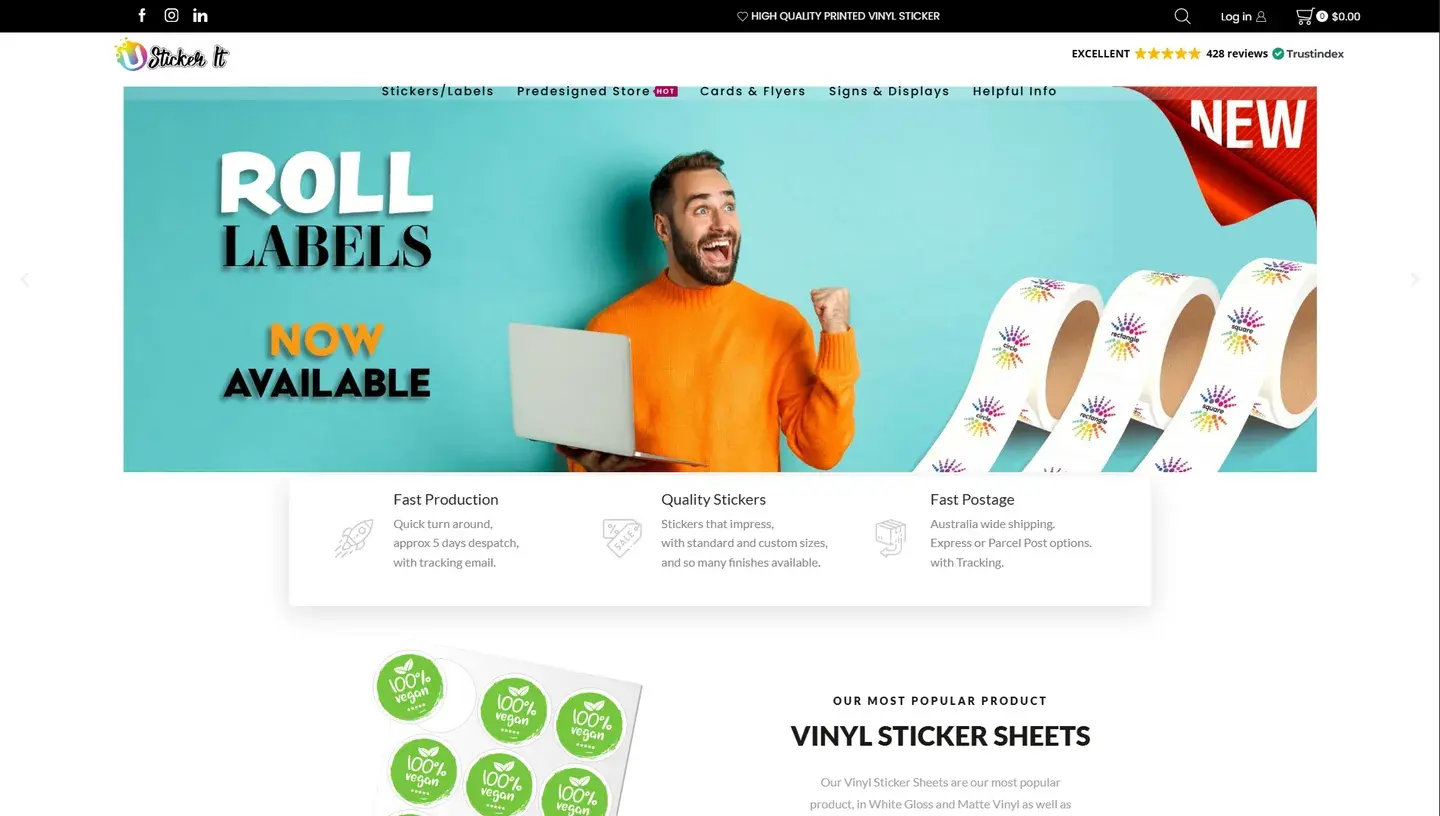
USticker, a family-owned sticker printer in Western Sydney, wanted customers to set background images and colors in its online design tool and to check out faster.
Keep Reading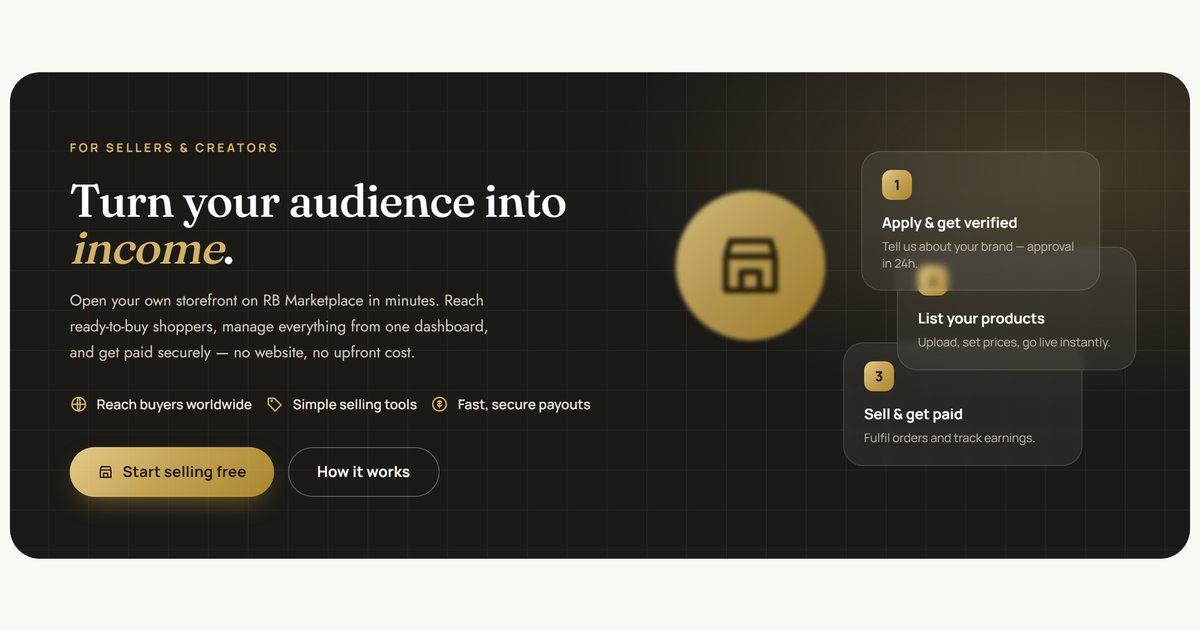
Vendors apply, get approved and sell from their own storefronts; shoppers buy on the web or in the app, with push alerts for orders and deals.
Keep Reading
People find businesses by state, city and category; businesses earn a field-verified Location-Confirmed Badge; and a React Native app gives consumers and business owners the same platform on iOS and Android.
Keep ReadingFrequently asked questions
Cross-platform with React Native suits most business apps; native is chosen when a feature needs deep device access. The blueprint records the choice and why.
Module reuse can cut development time by up to 60%. We estimate your figure in discovery, based on how much of the app the foundations cover.
You do. It is published under your store accounts, and you own the IP created for it.
Some can. Image labelling, text scanning and simple suggestions run on the device, even offline. Larger assistants call a model through your backend, which limits and logs the data it sends.
Services behind this solution
 Mobile app development with AI features for commerce and product teams
Netbase provides mobile app development for retailers, startups and product teams to reach customers on the phone they already use: cross-platform React Native apps and mobile-optimized commerce that loads fast, converts and uses AI where the phone makes it useful. We scope each app in discovery, reuse your existing backend and APIs, and plan the store release with you.
Learn More
Related solutions and next step
Explore the other Netbase solutions or view relevant work. Send us your app idea, target users and must-have features, and we will review this solution for your workflow.
Discuss a project
Netbase JSC helps organizations design, build, modernize, and operate digital products and AI-enabled business systems.+84 937 869 689
91 Nguyen Chi Thanh, Dong Da, Hanoi, Vietnam
Get in touch
Tell us what you want to build, modernize, or operate.