

Machine learning and predictive AI tied to a business metric
Netbase builds machine learning models that predict something a business acts on: which products a customer will likely want, how demand will move, which orders or accounts need attention. Each model is tied to one agreed business metric, validated on your own data and monitored after launch. Beyond the recommendation engine delivered for 4over4, machine learning is a growing capability.
Book a solution review View relevant workReviewed by David (CEO) · Updated 17 Sep 2026

Have data and a decision that a prediction could improve? Book a solution review.
What machine learning development includes
A predictive model is only useful when its output reaches a screen, a list or a workflow where someone acts on it. Machine learning development therefore covers the whole path: framing the decision, preparing the data, training and validating the model, putting it into the product or back office, and checking that it keeps working as data changes. It belongs to our AI & Data family.
Included
- Framing the decision and the business metric
- Data audit, feature preparation and labelling rules
- Baseline comparison against simple rules
- Model training, validation and error analysis
- Integration into storefront, back office or reports
- Monitoring of data drift and model quality
Not included
- Models with no decision or owner attached
- Buying third-party data sets on your behalf
- Guaranteed uplift, revenue or accuracy figures
- Fully automated decisions about people without review
- Academic research with no production target

When to use it, and when another route fits
Machine learning pays off when a decision repeats often, the data about it exists, and a better guess changes the result.
Good fit
- Thousands of customers, products or orders with history
- Recommendations, demand, churn or risk ranking
- A team ready to act on the prediction
- A metric that can be measured before and after
Another route fits better
- Too little history to learn from: start with rules and collect data
- The rule is already known and stable: automate the rule
- Nobody will change what they do based on the output
- The goal is a one-off analysis: a report may be enough
For order handling behind a store, rule-based commerce operations automation often comes first and produces the clean data a model needs later. Every other route is in the services directory.
Outcomes and buyer jobs
Commerce and operations leaders hire machine learning development to:
Recommendations draw on browsing and purchase history.
Demand estimates replace guesswork in purchasing and scheduling.
Accounts, orders or payments that need attention are ranked for review.
The agreed metric is compared with a baseline, not with a demo.
Drift and quality checks flag when a model needs retraining.
Capability modules and deliverables
The decision, the metric, the users of the prediction and the review rules
Sources, history depth, quality issues and privacy constraints
A simple rule or statistic the model has to beat
Trained and validated model with error analysis by segment
API or batch output into storefront, back office or dashboards
Drift, quality and business-metric tracking with retraining triggers
Delivery process, team and governance
Machine learning work follows our six-step delivery lifecycle:
-
Discovery and strategic alignment
We agree the decision, the metric and how the prediction will be used.
-
Team assembly and architecture planning
An architect plans data access, training environment and serving path.
-
Agile execution with outcome-based milestones
The first milestone is a validated model compared with the baseline on held-out data.
-
Modular and productized components
Commerce, reporting and integration modules carry the prediction to users.
-
Training, rollout and optimization
The model starts with a test group or a shadow period before full rollout.
-
Ongoing support and co-building
Drift checks and retraining keep the model current.
Teams of 3 to 30 people typically start one to two weeks after discovery. Delivery is lean and Agile: a baseline and a small model first, weekly reviews in English, KPI dashboards, a named account and project manager, and predictions served through an API your systems call. Security practices include role-based access control, TLS in transit and AES at rest, secure code review and version control; customer data is handled under GDPR alignment and CCPA practices, and NDAs and DPAs are available on request.
We frame model risk with the NIST AI Risk Management Framework, whose Measure function covers testing and tracking a model's trustworthiness over time. Where a model ranks people, for example for credit, the European Commission's summary of the EU AI Act lists credit decisions among high-risk uses, so we flag those cases for legal review.
AI in this service
Machine learning changes routine decisions from fixed rules to ranked, data-driven suggestions, while people keep the final say where outcomes affect customers. Our practice keeps data sets, features and model versions under version control, compares every model with a baseline, reviews errors by segment and logs predictions for audit. AI-assisted coding and test generation support the engineering, and every change is reviewed.
-
In delivered work
Product recommendation engine
Delivered for 4over4's online printing store, based on browsing and purchase history.
-
In delivered work
MLOps pipeline
Training, evaluation, release and monitoring of models, delivered for a client that is not named.
-
Available capability
Demand forecasting, churn and risk ranking
Predictive use cases we design and build; not yet tied to a published machine learning case.
Engagement models and commercial variables
Most Netbase projects are delivered on fixed-price contracts agreed after discovery; for machine learning, a fixed-price first phase that ends with a validated model and a baseline comparison is the usual start. Milestone-based, monthly team retainer and KPI-linked terms are also offered. We do not publish rate cards.
What moves effort and cost: data quality and history depth, the number of sources to join, labelling needs, whether predictions run in real time or in batches, integration points and privacy requirements.
Technology as an implementation choice
Model choice follows the problem. A gradient-boosted model, a statistical forecast or a large pretrained model can each be the right answer, and the simplest one that beats the baseline wins. Netbase is model-agnostic: we work with models from OpenAI, Anthropic (Claude), Google (Gemini) and Meta (Llama), among other commercial and open-weight models, and choose per project. Predictions reach users through the commerce platforms we deliver, including WooCommerce, Magento 2, Laravel and headless commerce. The components we compare, with maturity labels, are on our data and AI stack page.
Industry applications
Retail and e-commerce. Recommendations, search ranking, stock planning and order risk review are the most common predictive use cases, and stores already hold the history to train them.
Printing and packaging. Template suggestions, reorder timing and production load estimates are natural candidates where order volumes are high.
 Retail and ecommerce: AI-enabled storefronts, marketplaces and order operations
Netbase helps retailers and online merchants modernize storefronts, marketplaces and order operations, and adds AI where it pays: search, recommendations, catalog enrichment and order exceptions, with your team approving what shoppers see. Results are published: Geo-Tek IT Solutions grew revenue 36% in the first quarter after its new ecommerce platform launched, and an EU fashion marketplace grew GMV 47%.
Learn More
Proof: delivered recommendations and commerce data foundations
Evidence maturity: machine learning and predictive analytics is a growth capability. The named machine learning work is 4over4's recommendation engine; Netbase also delivered an MLOps pipeline for a client that is not named, and the Geo-Tek record is platform proof.
Delivered AI: MLOps pipeline (anonymised client). Netbase built the data, training, evaluation, release and monitoring steps as AI consultant, engineer and integrator. The record publishes no client name, models or results. See the anonymised record.
Delivered AI: 4over4 (online printing, United States). Netbase built a recommendation engine based on browsing and purchase history as part of a wider store project. Read the 4over4 case.
Platform proof: Geo-Tek IT Solutions (Cyprus). An online design platform built to fit the company's existing systems, not an AI project. After launch, order processing time fell 30% and revenue grew 36% in the first quarter, with repeat transactions up 24%: the kind of clean order data a predictive model starts from. Read the Geo-Tek case.
More projects are in our work.
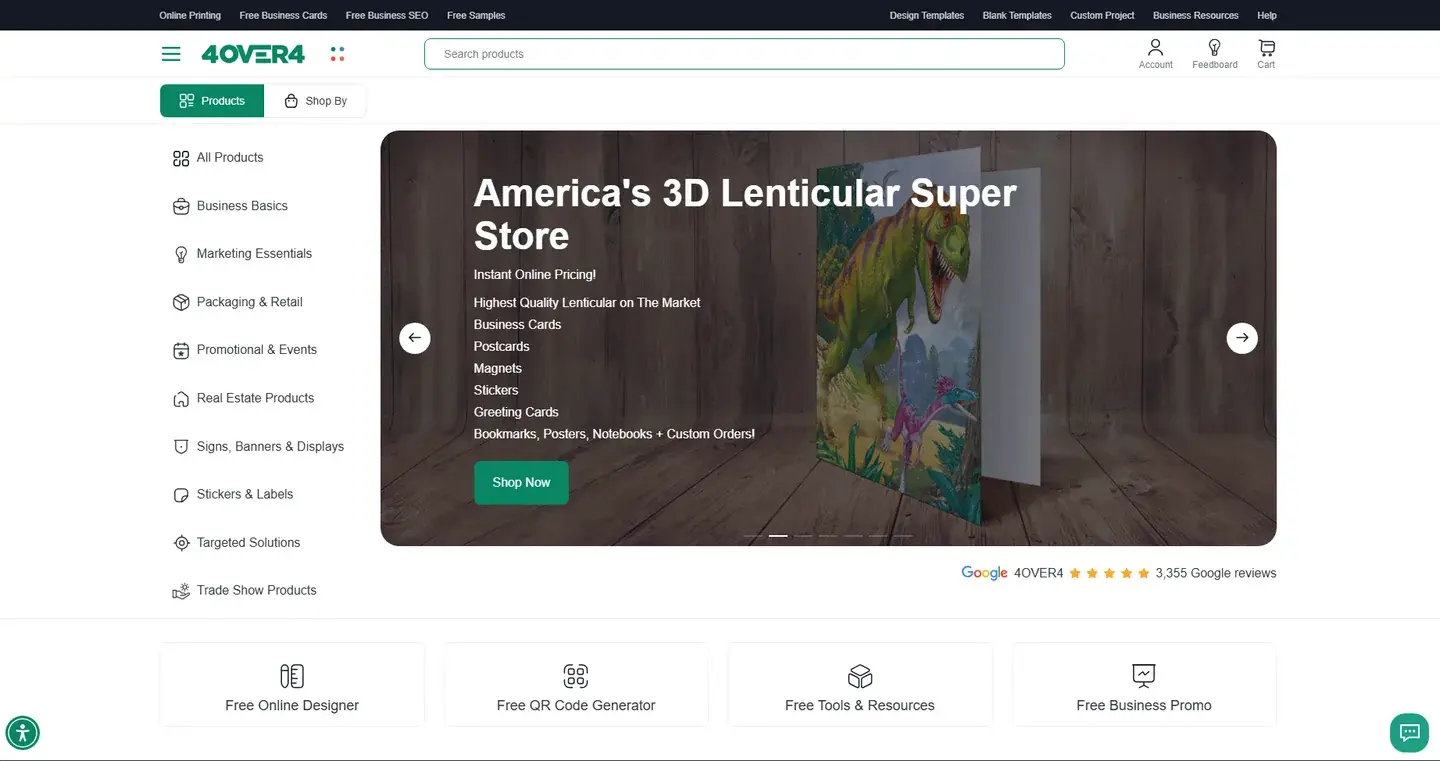
Netbase JSC reworked checkout, search and navigation, automated Adobe Illustrator (.ai) to SVG file conversion and added recommendations.
Keep Reading
Geo-Tek IT Solutions, a printing and design-services company in Cyprus, needed an online design platform that worked on every device and fitted its existing systems.
Keep Reading
This anonymous portfolio record describes only the kind of AI system and what Netbase did; it publishes no client name, logo, location, dates, models, figures or results.
Keep ReadingBuyer FAQ
It depends on the decision. The data audit in discovery tells you whether a model is realistic now or whether rules should come first.
It is validated on data it has not seen and compared with a simple baseline before launch, then tracked against the agreed metric.
Only where you decide it may. Decisions that affect customers or money can keep a human review step.
Drift monitoring flags the change, and the model is retrained or rolled back.
You own the IP created for you, including models trained on your data. Netbase productized modules are licensed, not transferred.
Building an accurate model nobody uses. We start from the decision and the people who act on it.
Related solutions
 AI-assisted ecommerce operations automation: from paid order to delivered parcel
Ecommerce operations automation removes the manual order, production and fulfilment steps behind a storefront: routing, file preparation, status updates and back-office sync, with AI flagging risky orders and triaging exceptions. It suits merchants and online printers whose order volume has outgrown their staff. In delivered work, 4over4 cut design-file production time 40% and Geo-Tek cut order processing time 30%.
Learn More
Service owner and next step
This service is owned by David, Netbase's Chairman, founder and CEO, and maintained by the Netbase Editorial Team. Name the decision you want to improve and the data you hold: book a solution review, or view relevant work first.
Discuss a project
Netbase JSC helps organizations design, build, modernize, and operate digital products and AI-enabled business systems.+84 937 869 689
91 Nguyen Chi Thanh, Dong Da, Hanoi, Vietnam
Get in touch
Tell us what you want to build, modernize, or operate.