

Software development outsourcing to Vietnam: a buyer's guide to AI-augmented delivery
Outsourcing software development to Vietnam works when you buy a governed team, not hours. Price the cost drivers (seniority, team size, overlap and duration), write IP ownership into the contract, agree an overlap window and one English-speaking owner, check how the team uses AI under human review, and pick the team model that matches how settled your scope is.
Book a solution review See the related serviceBy Huy Nguyen (David), Founder & CEO · Updated 29 Sep 2026 · 16 min read

This guide is for founders, CTOs, product owners and operations leaders weighing a Vietnamese delivery partner for the first time, or replacing one that did not work out. Netbase is a Vietnamese consulting and software company, so we have an interest; the checklist works just as well for comparing us with anyone else.
In this guide
- Why companies choose Vietnam for software delivery
- What drives the cost of an outsourced team
- Team models and commercial terms
- AI-augmented delivery: what to expect from an outsourced team
- Time-zone overlap and communication
- Nearshore or offshore: Vietnam compared with Eastern Europe
- Intellectual property, contracts and data protection
- Risks and how to contain them
- How to evaluate a Vietnam software partner: the vendor checklist
- How a first engagement should run
- Worked example: 4over4
- What delivery record exists, and what does not
- Common mistakes
- Limitations of this guide
- Frequently asked questions
- How this guide was made
- Next step
Why companies choose Vietnam for software delivery
Buyers usually arrive with a capacity problem, not a geography preference: a roadmap the in-house team cannot deliver, or a hiring market that is too slow or too expensive. Vietnam enters the shortlist for four practical reasons.
- A working day that suits several markets. Vietnam runs on UTC+7 all year, with no daylight saving change. Its afternoon meets the European morning, most of its day overlaps East Asia and Australia, and handoffs with the Americas can run overnight.
- An established legal base for software IP. Vietnam's Law on Intellectual Property (Law No. 50/2005/QH11) covers copyright, patents, designs and trademarks, and the country has been a member of the Berne Convention since 2004 and of the WTO TRIPS Agreement since January 2007, according to WIPO. A good contract still matters, but it sits on familiar foundations.
- An emerging-market cost base. Engineering costs generally sit below those of the main Western hubs. The saving is real only when it buys senior reviewers and QA, not a larger unsupervised team.
- A mature services industry. Vietnamese companies have delivered web, commerce and SaaS work for overseas clients for years, with written specifications, sprint reviews and English documentation.
We give no market statistics here: salary surveys and rankings date quickly. Ask each vendor for their own evidence instead: delivered projects, client references and how long their teams stay together.
What drives the cost of an outsourced team
The price per person is the most visible number and the least useful one. What you pay for is working software, and these drivers decide how much of it each month buys.
-
Seniority mix
- Why it moves the total
- Senior engineers cost more but make fewer expensive mistakes
- How to control it
- Pay for seniority where decisions are made: architecture, integration, review
-
Team size
- Why it moves the total
- Every extra person adds communication overhead
- How to control it
- Start small, with the roles the next milestone needs
-
Overlap requirement
- Why it moves the total
- Shifted hours or extended cover add cost
- How to control it
- Agree a fixed daily overlap window
-
Scope stability
- Why it moves the total
- Changing scope in a fixed-price contract becomes change requests
- How to control it
- Match the commercial model to how settled the scope is
-
Duration
- Why it moves the total
- Short engagements carry onboarding cost with little payback
- How to control it
- Plan for at least one full release cycle
-
Rework and quality
- Why it moves the total
- Bugs found late cost more than skipped QA saves
- How to control it
- Put QA in the team from day one
Netbase does not publish rate cards. A useful proposal turns your roadmap into a team shape, a timeline and a commercial model, so you compare vendors on the cost of an outcome rather than a day rate. Someone on your side must also own product decisions and answer questions within a day; without that person, no vendor model saves the budget.
Team models and commercial terms
Netbase offers four ways to engage: dedicated development teams, project-based development, on-demand support and fully managed delivery. Netbase leads with consulting, solutions and custom development, and delivers most projects on fixed-price contracts after discovery, with team models as a secondary option.
| Model | Best when | You control | Watch out for |
|---|---|---|---|
| Dedicated development team | The roadmap is long and priorities change | Backlog and priorities, sprint by sprint | You must stay involved every week |
| Project-based development | Scope is clear and the outcome can be specified | Acceptance criteria and milestones | Late scope changes become change requests |
| On-demand support | You need fixes, updates or small changes after launch | What gets done from a queue | Not suited to building a new product |
| Fully managed delivery | You want one partner accountable for the outcome | Goals and KPIs | Needs clear outcome measures up front |
Commercial terms follow the model: a fixed price for a defined project, milestone payments for staged work, a monthly retainer for dedicated teams, or KPI-linked terms where outcomes can be measured. Onsite work is available on request at extra cost. Compare the two most common choices in dedicated team vs fixed price, or see how Netbase staffs and governs dedicated development teams.
Team shape. A delivery team at Netbase ranges from 3 to 30 people and combines business analysts, project managers, solution architects, developers, QA engineers and UI/UX designers. Work typically starts within one to two weeks after discovery.
AI-augmented delivery: what to expect from an outsourced team
Engineers now use AI assistants to draft code, tests and documentation, and buyers increasingly want AI features in the product itself. Neither is a reason to skip governance.
In how the team works. Expect AI help with code review, test drafts, documentation and grouping of bug reports. Each is a draft: an engineer reviews every suggestion, and the person who merges a change answers for it. Judge the team by accepted releases and defect trends, not by hours.
In what the team builds. Assistants over your documents, AI search, document capture and recommendations are now ordinary scope items. Ask for delivered examples. Netbase delivered a recommendation engine for 4over4, and has delivered retrieval-augmented knowledge assistants, document AI, MLOps pipelines, a WhatsApp AI chatbot and AI content moderation for clients it does not name.
Terms to agree in writing:
- Which AI tools and models may touch your code and data; Netbase chooses them per project rather than locking you to one vendor.
- Whether any code or data may leave your environment, and a commitment that it is not used to train third-party models.
- Human review before merge, licence checks on generated code, and who approves AI features that act on customers, prices or money.
Security by design. Code review, dependency scanning, secrets kept out of repositories and role-based access belong in the pipeline from the first sprint, not in a pre-launch fix.
Time-zone overlap and communication
Distance is rarely the problem in remote-first delivery; unmanaged time zones are. Decide in advance which hours both sides are online.
| Your location | Natural overlap with Vietnam (UTC+7) | Practical pattern |
|---|---|---|
| Western and Central Europe | Vietnamese afternoon meets the European morning | Daily stand-up in the European morning; questions answered the same day |
| Australia and East Asia | Most of the working day | Work as one team, with live collaboration all day |
| North America | Little or none in normal hours | A short agreed window at the edge of each day, plus written handoffs |
Whatever the overlap, name one owner on each side, end every day with a written handoff, and review progress weekly against a KPI dashboard. At Netbase, delivery communication runs in English over Slack, Zoom and client dashboards, with a dedicated account manager and project manager. The Hanoi head office works Monday to Saturday, 9:00 to 18:15 Vietnam time (UTC+7), with Sunday off; the overlap window is agreed in discovery.
Nearshore or offshore: Vietnam compared with Eastern Europe
For a buyer in Germany, Austria or Switzerland, the real alternative to Vietnam is usually a nearshore team in Poland, Romania or elsewhere in Central and Eastern Europe. Compare them on these factors rather than on day rates.
-
Time difference to Germany
- Nearshore (Central and Eastern Europe)
- None to one hour
- Offshore (Vietnam)
- Five hours in the German summer and six in winter; Vietnam keeps UTC+7 all year
-
Shared working hours
- Nearshore (Central and Eastern Europe)
- The whole working day
- Offshore (Vietnam)
- A Vietnamese afternoon against a German morning: with Netbase's office hours, about three hours in winter and four in summer
-
Language
- Nearshore (Central and Eastern Europe)
- English is common; some teams offer German
- Offshore (Vietnam)
- English at Netbase; no German-speaking delivery team
-
Travel
- Nearshore (Central and Eastern Europe)
- Short flights and same-day visits
- Offshore (Vietnam)
- Long-haul; onsite work at Netbase is on request at extra cost
-
Data protection
- Nearshore (Central and Eastern Europe)
- Inside the EU (Poland, Romania): GDPR applies directly
- Offshore (Vietnam)
- Outside the EU with no adequacy decision: a data processing agreement plus a transfer mechanism such as standard contractual clauses
-
Cost
- Nearshore (Central and Eastern Europe)
- Rates below German levels
- Offshore (Vietnam)
- Usually lower rates again; compare the cost of an outcome, including coordination and rework
One German nearshore provider puts the extra correction effort on offshore projects at 10% to 30%. Treat that as a vendor's estimate, not a measurement, but take the point: an offshore team in Vietnam pays off when the scope is written down, reviewed weekly and handed over in writing; a nearshore team pays off when the work needs many live conversations a day or German-speaking engineers. For a long-running team, see how an AI-first offshore development center is set up and governed.
Intellectual property, contracts and data protection
A clear contract removes most of the IP risk. Separate three kinds of material.
-
Custom code and designs built for you
- Typical ownership
- Assigned to you
- What to put in writing
- Assignment on payment, delivery of source code and documentation
-
The vendor's reusable modules or products
- Typical ownership
- Licensed to you, not transferred
- What to put in writing
- Licence scope, term, updates and what happens if you part ways
-
Open-source and third-party components
- Typical ownership
- Owned by their authors under their licences
- What to put in writing
- A list of components and their licences before release
At Netbase, the client owns the IP created in custom development; Netbase productized modules and Business Division products are licensed, not transferred. Protecting IP when outsourcing covers the clauses in depth. In practice:
- Keep the repository and cloud accounts in your own name from the first commit, with the vendor given role-based access.
- Sign NDAs with the company, and confirm that every contributor works under one.
- Agree a data processing agreement when the team will touch personal data; for EU or EEA data processed outside it, the European Commission's standard contractual clauses are the usual transfer mechanism.
- Plan the exit on day one: documentation, handover sessions and credential rotation.
Netbase security practice covers secure code review, TLS in transit and AES at rest, role-based access control, MFA for admin dashboards, vulnerability scanning, penetration testing and disaster recovery, with NDAs, DPAs and SLAs on request. Netbase also holds ISO 27001 certification and a SOC 2 Type II attestation; both cover Netbase's own operations, not your product or its hosting.
Risks and how to contain them
-
Misunderstood requirements
- Early signal
- Questions stop after the first week
- Containment
- Discovery with written acceptance criteria and a clickable prototype
-
Hidden seniority gap
- Early signal
- The same bugs come back
- Containment
- Named senior reviewers, and code review visible to you
-
Team churn
- Early signal
- New faces every month
- Containment
- Ask how the vendor keeps teams together and records knowledge
-
Quality left to the end
- Early signal
- Test effort appears only before release
- Containment
- QA inside the team and automated regression tests
-
Vendor lock-in
- Early signal
- Only the vendor can deploy or explain the system
- Containment
- Your repository, your accounts, documented deployments
-
Uncontrolled AI use
- Early signal
- Code or client data pasted into unapproved AI tools
- Containment
- An approved-tools list, no training on your data, and human review of generated code
Most failures trace back to the first two rows; time spent in discovery turns the rest into routine governance.
How to evaluate a Vietnam software partner: the vendor checklist
Use these questions in your first calls. The first three are specific to a partner in Vietnam; the rest apply to any vendor. A vendor who answers them concretely, with names and examples, is worth a second meeting.
-
Can we verify your company?
The legal name and enterprise code, which you can check on Vietnam's National Business Registration Portal, plus a real office address and founding year
-
Who employs the team, and where does it work?
Staff employed by the company in a named office, with any subcontracting disclosed up front
-
Which language does the team work in every day?
The language of tickets, reviews and documentation, not only of sales calls
-
Who owns the code you write for us, and when?
Assignment of custom IP, with licensed components listed separately
-
Who will be on our team, and who leads it?
Named roles, the solution architect and the project manager
-
How do we see progress and quality?
Weekly reviews, a KPI dashboard, access to the backlog and repository, QA in the team and automated tests
-
How do you protect our data and access?
Security practices, NDAs, a DPA on request, access control and MFA
-
Which projects like ours have you delivered?
Named work with scope and, where published, results
-
How do we leave if we need to?
Documentation, handover sessions and no dependency on vendor-held accounts
-
How does your team use AI, and on what terms?
Named tools, data rules, human review before merge and delivered AI examples
For the security row, security questions to ask a software development partner lists the evidence to request.
Turn the answers into a decision
Score every answer on this table from 0 to 2: a concrete answer with a name or example scores 2, a general promise scores 1, and silence scores 0. Shortlist only vendors that score at least 1 on IP, security and the exit row; a strong score elsewhere does not offset a weak one there. Before signing a scope, call one reference the vendor names, not one it curates, and ask what went wrong as often as what went right. A small paid pilot, such as one feature or a documented bug fix, shows real delivery, review speed and communication faster than another round of calls.
How a first engagement should run
Keep the first engagement small enough to finish and real enough to matter.
-
Discovery
Goals, users, constraints, integrations and the KPIs the team will report against, ending in a scope, a team shape and a plan you can check.
-
Team start
With discovery done, the team typically starts within one to two weeks.
-
First release
Choose a slice that reaches real users, not a demo, and measure it.
-
Review and decide
Keep, resize or change the model with evidence in hand.
For a new SaaS product, the SaaS product accelerator packages Netbase's reusable modules for accounts, tenants, roles and billing, and the SaaS platform engineering guide covers the architecture decisions to settle before the first sprint.
Worked example: 4over4
4over4 runs an online printing store and worked with Netbase on its e-commerce platform: conversion and checkout work, search, automated conversion of Adobe Illustrator (.ai) files to SVG, and a recommendation engine. As reported in the published case study, revenue grew 82% within six months, conversion rose 48%, average order value rose 35% and fulfilment time fell 50%.
Revenue grew 82% within six months at 4over4
Conversion rose 48% at 4over4
Average order value rose 35% at 4over4
Fulfilment time fell 50% at 4over4
The lesson for outsourcing buyers is the scope: a Vietnamese team working inside a live commerce business, on revenue-critical flows. The figures reflect the whole project, not any single feature. Read the 4over4 case, or see retail and e-commerce.
Plan the next step with a Netbase consultant
What delivery record exists, and what does not
Netbase JSC was founded in 2012, works from its only office, the head office in Hanoi, and has served 500+ clients. It is a consulting company first; outsourced teams are one delivery option, not its main offer. Its published record is strongest in commerce and web-to-print, including 50+ custom web-to-print platforms. It has no office or team outside Vietnam and does not offer Japanese, Korean, German or Chinese as a delivery language. Judge any vendor, including us, by the checklist above.
Common mistakes
- Buying the lowest day rate. A cheaper team that needs twice the supervision is not cheaper.
- No product owner on the client side. Offshore teams stall when decisions wait. If no one owns technology decisions, a fractional CTO can.
- Fixed price on an unsettled scope. Every discovery becomes a change request.
- Repositories and cloud accounts in the vendor's name. It turns a parting of ways into a rescue project.
Limitations of this guide
This is practical guidance from Netbase delivery experience, not market research, and it gives no salary, rate or market statistics. Legal points are general, not legal advice; have your own counsel review IP, data-transfer and liability terms. The 4over4 results were reported for the whole engagement and depend on that client's baseline.
Frequently asked questions
It depends on seniority, team size, overlap, scope stability and duration. Compare proposals for the same outcome rather than day rates. Netbase does not publish rate cards.
With Netbase, the client owns the IP created in custom development. Productized modules and Business Division products are licensed, not transferred.
At Netbase, work typically starts within one to two weeks after discovery.
It can deliver more in a sprint, but review, integration and testing still take time. Compare proposals on the cost of an outcome, and ask how AI use is governed.
Nearshore when the work needs all-day overlap or German-speaking engineers; Vietnam when the scope is defined and the roadmap runs on written handoffs and a few shared hours a day.
No. Netbase works only from its Hanoi head office, in English, and serves other markets remotely, with onsite visits on request.
A fixed-price project for a clear, bounded scope, which is how most Netbase projects run; a dedicated team for a changing roadmap.
How this guide was made
The Netbase Editorial Team wrote this guide from Netbase's published delivery, engagement and security pages, the 4over4 case study, and public sources on Vietnam's IP framework and EU data transfers. David (CEO) reviewed every Netbase fact. Drafting used AI assistance (Claude).
Next step
Share your roadmap, your current team and the hours you need covered, and we will book a solution review to propose a team shape, a model and a first milestone. You can also see the related service or browse more Netbase insights.
Work behind this guide
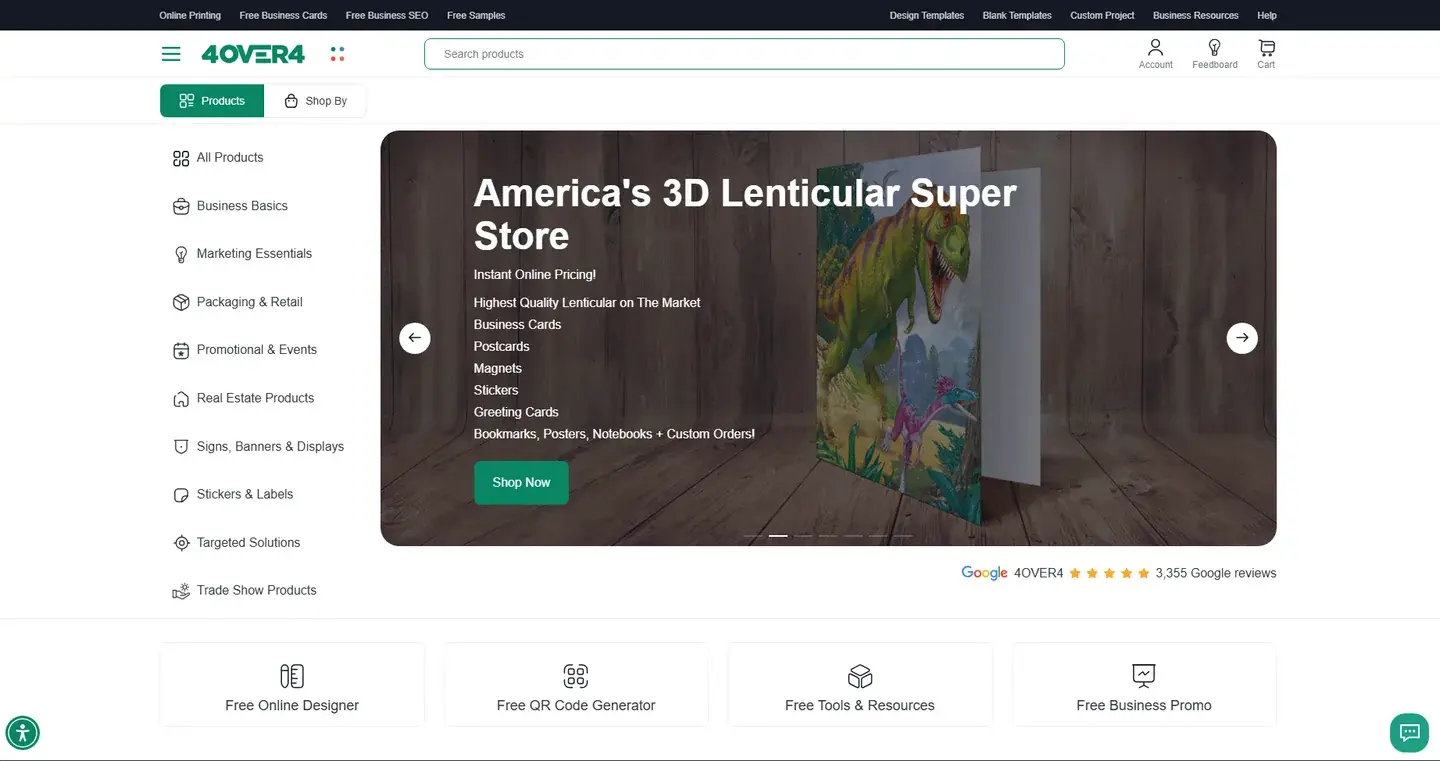
Netbase JSC reworked checkout, search and navigation, automated Adobe Illustrator (.ai) to SVG file conversion and added recommendations.
Keep ReadingRelated services and solutions
 An AI-augmented dedicated development team in Vietnam that answers for results
Netbase provides dedicated development teams from Vietnam for product companies and enterprises to add engineering capacity without losing control. Teams of 3 to 30 people work only on your product, use AI-assisted engineering under review, report to a named account manager and project manager, typically start within one to two weeks after discovery, and the IP they create is yours.
Learn More
 SaaS product accelerator: launch an AI-ready SaaS on proven Netbase modules
A SaaS product accelerator is a set of reusable Netbase modules for accounts, billing, roles and integrations that helps founders and product teams launch subscription software faster, with room for in-product AI from the first release. Reusing these modules can cut development time by up to 60%, and the approach is proven on Printcart, Netbase's own web-to-print SaaS.
Learn More
Discuss a project
Netbase JSC helps organizations design, build, modernize, and operate digital products and AI-enabled business systems.+84 937 869 689
91 Nguyen Chi Thanh, Dong Da, Hanoi, Vietnam
Get in touch
Tell us what you want to build, modernize, or operate.