

AI-enabled software product engineering from discovery to operation
Netbase provides software product engineering for companies that need a web, SaaS, mobile or custom platform built and kept running, with AI features and AI-assisted engineering where they pay off. We cover the full lifecycle, from discovery to operation, and the same team stays accountable for architecture, delivery and handover, so nothing important gets lost between phases.
Book a solution review View relevant workReviewed by David (CEO) · Updated 17 Sep 2026

4over4 reported revenue up 82% within six months
Conversion up 48% on the 4over4 store
Design-tool users converted 40% more often
Completed designs rose 32% in six months
What Product Engineering covers
A product is not finished at launch; it is finished when it earns its keep. Product engineering at Netbase covers everything between the first discovery workshop and the tenth release: product and architecture decisions, user experience, frontend and backend development, testing, deployment, knowledge transfer and continuous improvement.
It includes new builds, rebuilds of platforms that no longer scale, and new features on top of an existing product. It does not include staffing a single role or marketing a finished product. If you need people rather than an outcome, our service families include team-based routes.
Services in this family
-
Custom software development
Build software around a workflow no package fits
Typical deliverable Production system with documentation and handover
-
Web application development
Launch or rebuild a browser-based product
Typical deliverable Web application, admin tools and release pipeline
-
SaaS development
Turn a product idea into a subscription business
Typical deliverable MVP, then a multi-tenant SaaS platform
-
Mobile app development
Put the product in customers' pockets
Typical deliverable Mobile app connected to the same backend
-
Legacy modernization
Replace a platform that holds the business back
Typical deliverable Migration plan and a modernized platform
SaaS development, mobile app development and legacy modernization have their own pages. All three can be scoped in a solution review.

When product engineering fits
Choose this family when you want one partner to own the outcome, not just the tickets: a clear product goal, a budget holder who can make decisions, and a need for architecture, delivery and support in one place. If the scope is still unclear, start with discovery; it is the first step of every engagement anyway.
Another route fits better when:
- you only need one or two extra engineers inside your own process;
- the product is a standard store or site that an off-the-shelf package already covers;
- nobody on your side can own product decisions during delivery.
What you receive
Every engagement ends with assets your team can keep using: the running product, architecture and decision records, test results for each milestone, deployment and operating notes, and a handover session with the people who built it.
Technologies we build with







Proof: products that moved the numbers
4over4 (United States). An online printing store had healthy traffic but too few orders. Netbase reworked checkout, search and navigation and automated file handling behind the storefront. 4over4 reported revenue up 82% within six months, conversion up 48%, average order value up 35% and production time down 40%. Read the 4over4 case.
USticker (Australia). Customers wanted more control inside the online design tool, and checkout had to be faster and secure. Netbase built background customization with real-time preview and integrated a secure payment gateway. Design-tool users converted 40% more often, completed designs rose 32% in six months and page load time fell 21%. Read the USticker case.
Both products live in printing and packaging, where customers design before they buy. The same capability powers our product personalization solution. See every project in our work.
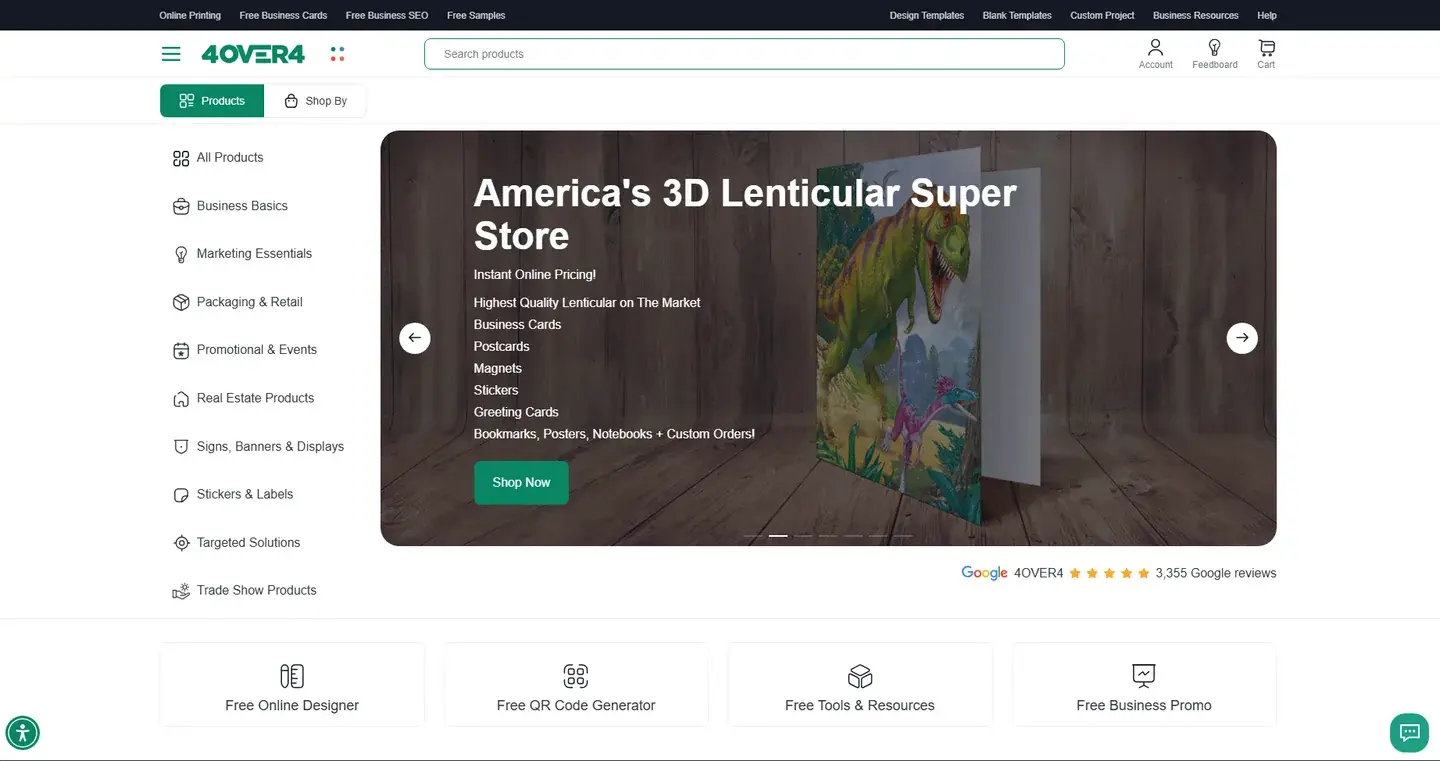
4over4, a US online printing store, had steady traffic but too few orders.
Keep Reading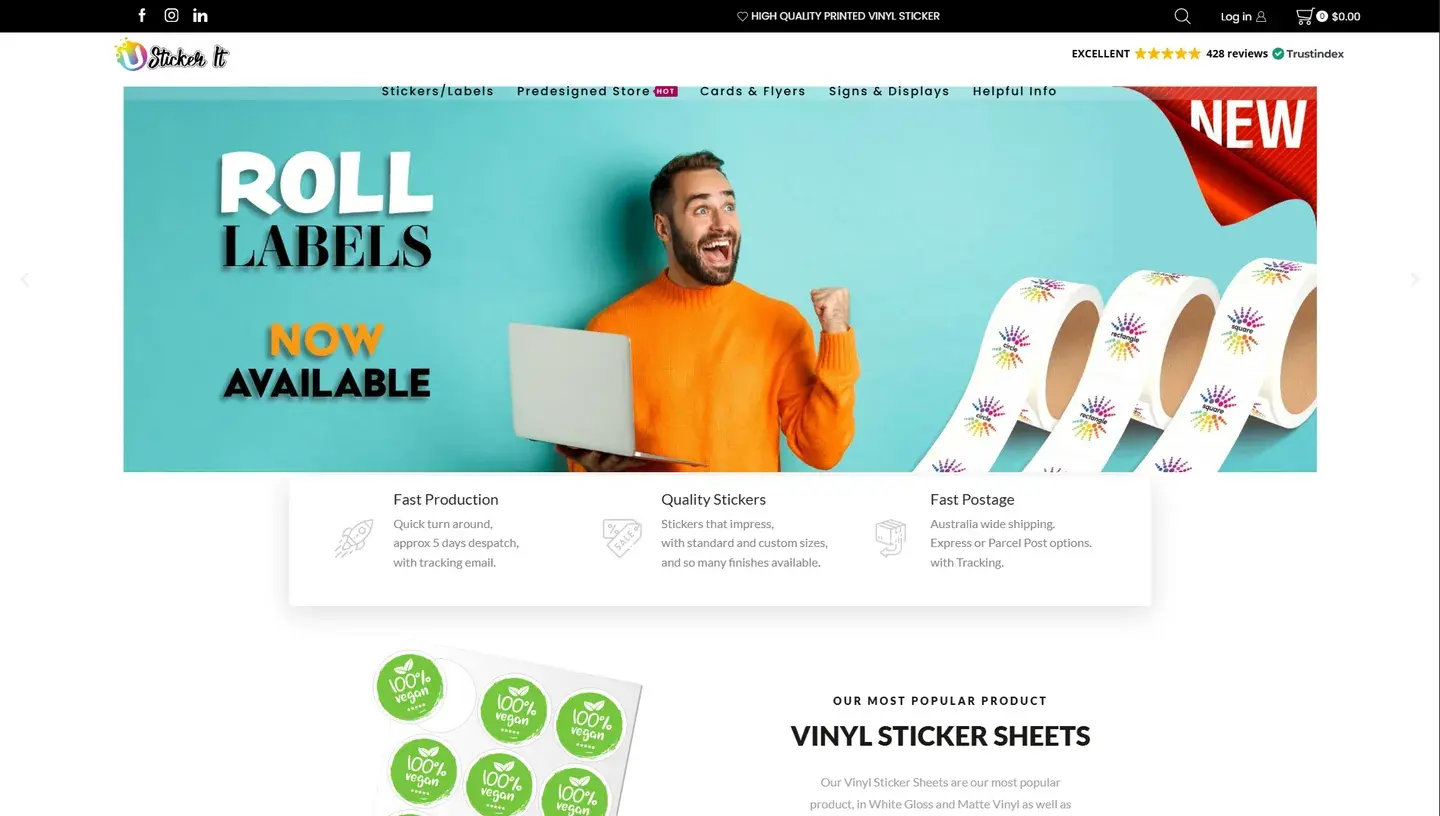
Netbase JSC built the feature and integrated a secure payment gateway.
Keep ReadingHow we engage
Most Netbase projects are delivered on fixed-price contracts agreed after discovery. Every product runs on our six-step delivery lifecycle, compressed here into four moves.
-
Discovery and alignment
We agree the product goal, users, constraints and the metrics that define success.
-
Team and architecture
We assemble a team of 3 to 30 people, combining business analysts, project managers, solution architects, developers, QA and UI/UX, and plan the architecture. Work typically starts within one to two weeks after discovery.
-
Agile build
Delivery runs in outcome-based milestones, reusing modular, productized components where they remove risk.
-
Rollout and operation
Training, rollout and optimization, then ongoing support and co-building as the product grows.
The working model is Agile and remote-first: sprints with weekly reviews, a lean first release that tests the riskiest assumption, English communication from our Hanoi team, API-first architecture that leaves room for mobile, IoT and AI services, and security designed in from the first sprint.
AI in this family
Every product in this family is scoped with AI in mind: search, recommendations, assistants and document capture for your users, and AI-assisted code review, test generation and incident triage in our delivery, with engineers accountable for every change. Where AI runs in delivered work, and where it is a growth capability:
-
In delivered work
Recommendation engine
Delivered for 4over4's online printing store.
-
Available capability
AI features inside web, SaaS and mobile products
Machine learning, NLP, computer vision, generative AI and AI with IoT that Netbase offers; not yet tied to a published product engineering case.
Typical timelines
Typical ranges, depending on scope, integrations and review speed:
- SaaS MVP
- 8–12 weeks
- Mid-tier SaaS product
- 3–6 months
- Enterprise SaaS platform
- 6–12+ months
- Small e-commerce build
- 1–3 months
- Mid-sized e-commerce platform
- 4–6 months
- Enterprise e-commerce platform
- 6–12+ months
Technology choices
We pick technology for the product, not the other way round. Interfaces come from our frontend and mobile stack; services, data and integrations from our backend platforms. Each choice is recorded with its reason, so your team can maintain it after handover.
Buyer FAQ
For custom development, you own the IP created for you. Netbase productized modules and Business Division products are licensed, not transferred.
Work typically starts within one to two weeks after discovery.
Yes. Discovery covers the current codebase and architecture before we commit to a plan.
Usually, yes. AI integration starts with one journey, connects a model through an API and measures the result before widening it.
Rollout, training and optimization, followed by ongoing support and co-building.
Related solutions
 Product personalization software with AI design suggestions: let shoppers design what they buy
Product personalization software lets shoppers design custom products online, adding their own text, images and options with a live preview and AI design suggestions before they buy. Netbase builds it into commerce platforms: at USticker, shoppers using the design tool converted 40% better, and Indieprint cut design errors 28% with automated print-ready files.
Learn More
Next step
Have a product to build, rebuild or rescue? Book a solution review, or view relevant work first.
Discuss a project
Netbase JSC helps organizations design, build, modernize, and operate digital products and AI-enabled business systems.+84 937 869 689
91 Nguyen Chi Thanh, Dong Da, Hanoi, Vietnam
Get in touch
Tell us what you want to build, modernize, or operate.