

AI-assisted legacy modernization that keeps your orders and data safe
Netbase provides legacy application modernization services for commerce and operations teams to move ageing platforms, such as Magento 1 stores, onto supported technology without losing orders, customers or data. AI speeds up code analysis and data mapping; every migration runs on a written, human-approved plan with rehearsal, staged cut-over and rollback, proven by Netztech's move to Magento 2.
Book a solution review View relevant workReviewed by David (CEO) · Updated 17 Sep 2026

Netztech moved to Magento 2 Commerce in 35 working days
11 extension modules migrated in the Netztech move
Rebelo reported revenue up 39% in the first year
Engagement rose 98% at Rebelo
Running a platform nobody wants to touch? Book a solution review.
What legacy modernization includes
A legacy application is one the business depends on but can no longer change safely: out of support, fragile on every upgrade, with custom code that outlived its authors. Modernization moves it onto a supported base while the business keeps trading. The service belongs to our Product Engineering family.
Included
- Platform migration and replatforming, such as Magento 1 to Magento 2
- Data migration of products, customers, orders and history
- Extension and custom-module migration, replacement or retirement
- Refactoring of custom code onto supported patterns
- Rewiring integrations to ERP, CRM, payment and shipping
- URL redirects, cut-over rehearsal and rollback planning
- Post-launch stabilization and support
Not included
- A full rebuild when the current platform is healthy
- Content rewriting and catalogue photography
- Third-party platform and extension licences
- Hosting-only contracts
- Hardware and office network replacement
When to modernize, and when another route fits
Modernization pays off when the platform itself has become the risk. It is the wrong answer when the platform is fine and something else is broken.
Good fit
- The platform or framework is at end of life or out of security support
- Every upgrade breaks extensions or custom code
- Small changes take weeks because nobody trusts the code
- Orders, stock or customers are still re-keyed by hand
Another route fits better
- Only the design looks dated: a redesign on the current platform is cheaper
- The only gap is one missing integration: scope an integration project
- You are launching a new business model: start a new product build
- Nobody on your side can make decisions during the migration
Choosing the modernization route
-
Upgrade in place
- What changes
- Versions and dependencies, same platform
- When it fits
- The platform is still supported and the code is sound
-
Replatform
- What changes
- The platform, with data and features carried across
- When it fits
- The platform is at end of life, as Magento 1 was
-
Refactor
- What changes
- The structure of custom code, step by step
- When it fits
- The business logic is valuable but hard to change
-
Rebuild
- What changes
- Everything, reusing data and lessons
- When it fits
- The old system no longer matches how you sell or operate
Discovery ends with a written route recommendation and its reasons. Other routes are in the services directory.
Outcomes and buyer jobs
Teams hire legacy modernization to:
Unsupported software stops receiving fixes.
Orders, customer accounts, order history and search-engine URLs survive the move.
New features ship in days on a supported base instead of weeks of workarounds.
Valuable features, data and integrations are carried across, not thrown away.
Capability modules and deliverables
Inventory of code, data, extensions, integrations and URLs, with a risk register and a route recommendation
Sequence, data mapping, freeze window, cut-over runbook and rollback criteria
Migration scripts, test loads and reconciliation reports that compare record counts and values
A keep, replace or rebuild decision for every extension, recorded in a decision log
Custom code moved onto supported patterns, with tests written around it first
A rehearsed go-live, redirect map, monitoring and a hypercare period
The plan protects orders and data. Migrations are rehearsed on a copy of production, order intake is frozen only for the final delta, records are checked old against new, and a rollback point is agreed in advance, so a failed check means a delayed launch, not lost orders.
Delivery process, team, quality and security
Every modernization follows our six-step delivery lifecycle:
-
Discovery and strategic alignment
In a migration, discovery is the inventory of code, data, extensions, integrations and URLs.
-
Team assembly and architecture planning
A team of 3 to 30 people, combining business analysts, project managers, solution architects, developers, QA and UI/UX. Work typically starts within one to two weeks after discovery.
-
Agile execution with outcome-based milestones
In a migration, execution is the rehearsed migration.
-
Modular and productized components
Proven modules are reused where they remove risk and time.
-
Training, rollout and optimization
In a migration, rollout is the staged cut-over.
-
Ongoing support and co-building
Post-launch stabilization, then support as the platform grows.
Governance stays visible through weekly reviews, KPI dashboards and a dedicated account manager and project manager, with progress in Jira or GitHub that you can check at any time. Modernization is also the moment to fix security by design: secure code review, TLS, role-based access and an API-first layer that lets new channels, mobile apps and AI services reach the modernized core without another rewrite.
How AI speeds up modernization, and what it adds after
Legacy work is mostly reading: old code, undocumented data and forgotten integrations. AI reads faster than people, so we use it to shorten discovery and migration, while engineers approve every mapping, refactor and cut-over decision.
AI in our migration practice:
-
Code and dependency analysis
AI summarises modules, finds dead code and drafts the extension inventory for an architect to confirm.
-
Data mapping and reconciliation
Suggested field mappings and anomaly reports on test loads, checked record by record.
-
Test generation before refactoring
Characterisation tests drafted from current behaviour, reviewed before code changes.
-
Documentation recovery
Readable notes on business rules buried in old code.
AI your modernized platform can use, added through AI integration:
- Catalog and content clean-up. Duplicates flagged and product data enriched during migration, approved by your team.
- Search, recommendations and support assistants. Added through APIs once the platform is modern enough to host them.
- Operational forecasting. Stock and order trends from the history the migration preserved.
AI in this service
Where AI already runs in delivered work, and where it is offered as a growth capability.
-
In delivered commerce work
Recommendation engine
Built for 4over4's online printing store, not for a modernization project.
-
Available capability
AI search, forecasting and assistants on a modernized platform
Machine learning, NLP and generative AI that Netbase offers; not yet tied to a published modernization case.
Engagement models and commercial variables
Most Netbase projects are delivered on fixed-price contracts agreed after discovery, and a defined migration runs as project-based development with milestone payments. A longer programme across several systems suits a dedicated team on a monthly retainer. We do not publish rate cards; a solution review turns your inventory into a proposal.
What moves effort and time: the number of extensions and custom modules, data volume and quality, integrations, the number of URLs to redirect, and how long order intake may pause. For scale, Netztech's Magento 1 to Magento 2 Commerce migration took 35 working days and included 11 extension modules.
Technology as an implementation choice
The target platform follows your catalogue, order volume and team, not our preference. Netbase has delivered commerce on WooCommerce, Magento 2, Laravel and headless commerce, and works across a wider stack from Shopware and Shopify to Odoo and Symfony. The trade-offs between them are on our commerce and enterprise platforms page. For custom work, the IP created for you is yours, including migration scripts and refactored code.
Technologies we build with








Industry applications
Most of our modernization work serves retail and e-commerce businesses: B2B and B2C sellers whose store, catalogue and order flow have outgrown the platform they started on. When the modernized platform needs to host several sellers, it can grow into one of our e-commerce and marketplace platforms instead of a second migration later.
 Retail and ecommerce: AI-enabled storefronts, marketplaces and order operations
Netbase helps retailers and online merchants modernize storefronts, marketplaces and order operations, and adds AI where it pays: search, recommendations, catalog enrichment and order exceptions, with your team approving what shoppers see. Results are published: Geo-Tek IT Solutions grew revenue 36% in the first quarter after its new ecommerce platform launched, and an EU fashion marketplace grew GMV 47%.
Learn More
Proof: modernization in production
Netztech. Netztech's store ran on Magento 1 and needed a supported future without starting over. Netbase migrated it to Magento 2 Commerce in 35 working days, including an extension migration of 11 modules covering installation, configuration, customization and data transfer. It is cited for scope and schedule; no performance metric is published. Read the Netztech migration case.
Rebelo AG (Portugal). Modernization is not always replatforming. Rebelo, a printer founded in 1983, kept its store and added 3D product previews. Rebelo reported revenue up 39% in the first year, engagement up 98%, personalised-segment conversions up 53% and productivity up 25%. Read the Rebelo AG case.
More migrations and rebuilds are in our work.
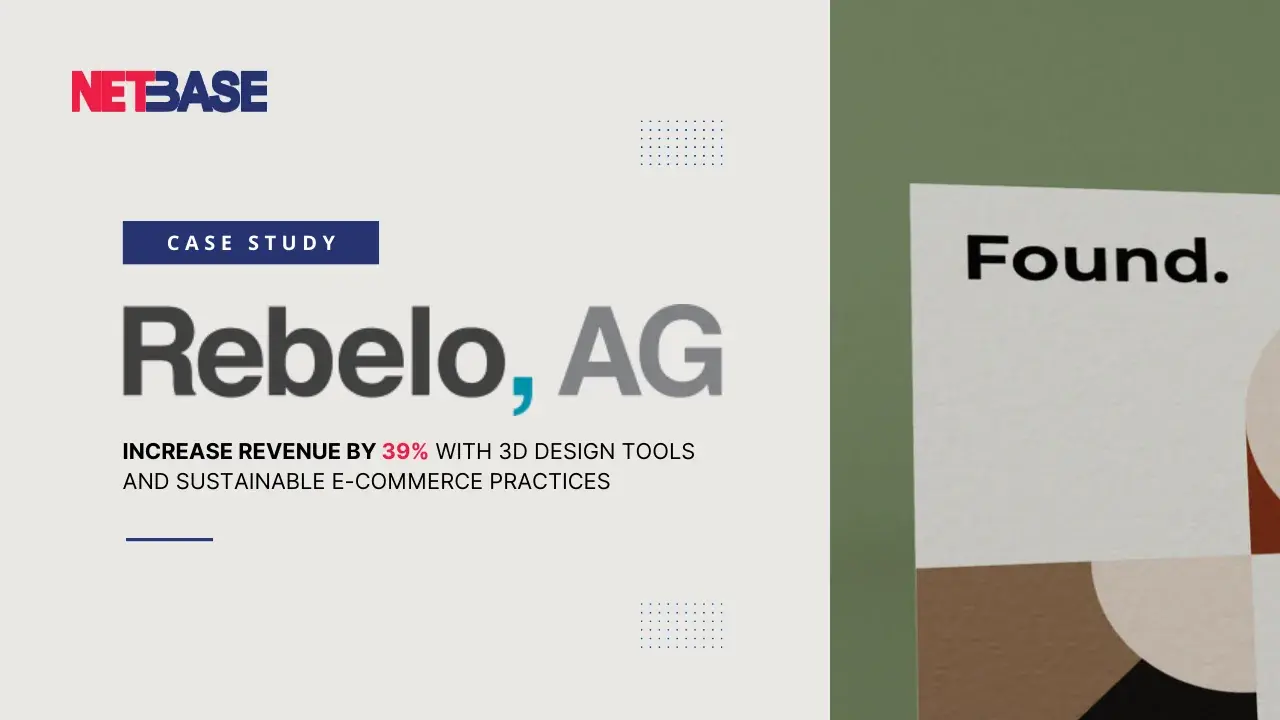
Rebelo, AG, a Portuguese offset and digital printer founded in 1983, lost orders because customers could not picture their designs on boxes and mugs.
Keep Reading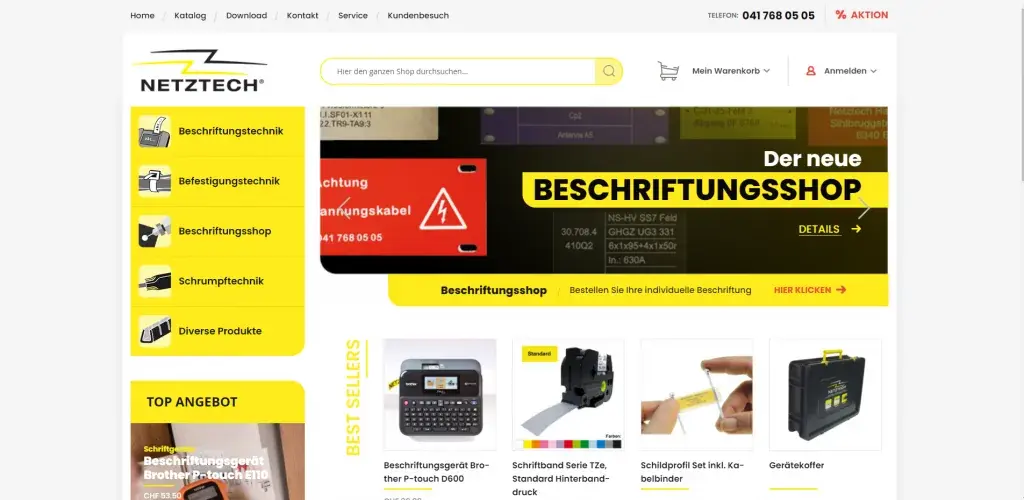
Netztech Handels AG, a Swiss supplier of labeling, fastening and shrink technology, moved its busy online store from Magento 1 Community Edition to Magento 2 Commerce with Netbase JSC.
Keep ReadingBuyer FAQ
It depends on extensions, custom code and data. Netztech's migration took 35 working days with 11 extension modules; we confirm your schedule after the assessment.
The plan is built to prevent it: migrations are rehearsed, reconciled record by record and cut over with an agreed rollback point.
Every old URL is mapped and redirected, so bookmarks and search traffic land on the right page.
You own the IP created for you in custom development. Netbase productized modules are licensed, not transferred.
Yes. A refactor can replace one part at a time while the rest keeps running.
No. AI drafts analyses, mappings and tests; engineers review each one, and production data moves only through the rehearsed, reconciled migration.
Hidden dependencies: an old extension or script nobody documented. The assessment inventory exists to find them first.
Related solutions
 Multi-vendor marketplace development: vendors, catalog, payouts and AI search on one platform
A multi-vendor marketplace is a commerce platform where many independent sellers list, sell and get paid through one storefront. Netbase's marketplace solution covers vendor onboarding, a shared catalog, split payments and payouts, with AI for search, listing enrichment and fraud checks. For an EU fashion-tech marketplace, Netbase's work grew gross merchandise value (GMV) 47% and cut vendor onboarding time 60%.
Learn More
Related insights

Mid-market companies should change the process before the platform: map how work and data flow, fix the costliest steps, then modernize only the systems blocking them. Replatform when the software is sound but its base is ending, refactor when its design slows change, and rebuild only when neither works. AI maps legacy code first, then automates on the modern base.
Service owner and next step
This service is owned by David, Netbase's Chairman, founder and CEO, and maintained by the Netbase Editorial Team. Our guide to digital transformation and modernization covers sequencing and the rebuild-or-refactor decision. Ready to leave the old platform behind? Book a solution review, or view relevant work first.
Discuss a project
Netbase JSC helps organizations design, build, modernize, and operate digital products and AI-enabled business systems.+84 937 869 689
91 Nguyen Chi Thanh, Dong Da, Hanoi, Vietnam
Get in touch
Tell us what you want to build, modernize, or operate.