

AI integration services: add AI to the products and systems you already run
Netbase provides AI integration services for companies that want AI inside the store, ERP, CRM, mobile app or internal tool they already run, without rebuilding it. We connect language model APIs and retrieval over your data to existing workflows through a controlled integration layer, with evaluation, guardrails, cost limits and privacy rules agreed before launch. It is a growth capability.
Book a solution review View relevant workReviewed by David (CEO) · Updated 17 Sep 2026

What AI integration includes
Most businesses do not need a new AI product. They need the systems they already rely on to answer, draft, classify and recommend. AI integration is the engineering work that adds those abilities safely: the right data reaches the model, the result reaches the right screen or workflow, and a person stays in control where it matters. It belongs to our AI & Data family.
Included
- Use-case scoping inside an existing product or system
- LLM API integration behind your own service layer
- Retrieval over company data with access rules
- AI features in e-commerce, ERP, CRM and mobile apps
- A model gateway for routing, logging and fallbacks
- Evaluation sets, guardrails and cost limits
- Monitoring and model-change procedures
Not included
- Training a foundation model from scratch
- A new stand-alone AI product (see generative AI development)
- Replacing your ERP, CRM or store
- Guaranteed accuracy or time-saved figures
- Resale of model subscriptions
How it differs from nearby services. Generative AI development builds new generative features and products. Systems and API integration keeps business systems in agreement with each other. AI integration sits between them: it adds AI to systems that already work, using the same API discipline. When answers must come from large document collections, enterprise knowledge RAG goes deeper on retrieval.

When to use it, and when another route fits
Good fit
- A live store, ERP, CRM or app where staff or customers repeat text-heavy work
- Data the feature needs is already held in your systems
- A person can review AI output where it carries risk
- Several teams want AI across the business
Another route fits better
- The product does not exist yet: start with product engineering
- The data is scattered and unowned: fix the data first
- The output must be exact every time with no review
- You need a company-wide programme: see AI transformation
Outcomes and buyer jobs
Product, IT and operations leaders commission AI integration to:
Features plug into existing screens and workflows through APIs.
Retrieval pulls from catalogs, orders, tickets and documents, within each user's access rights.
Personal and confidential data follows agreed rules on what may leave your systems.
Usage limits, caching and model routing make the cost per request visible.
The integration layer lets a model change without touching the product.
Capability modules and deliverables
Target tasks, success measures, review rules and data inventory
One service layer for model calls, with keys, logging, routing and fallbacks
Indexing, access filtering and source references in answers
AI in e-commerce search and content, ERP documents, CRM replies or mobile app flows
Multi-step tasks calling your APIs with approval steps and activity logs
Test sets from your examples; checks for prompt injection, data leakage and unsafe output
Budgets, caching, usage dashboards and alerts
Typical integrations. In e-commerce: product descriptions, AI search and recommendations, order-status replies. In ERP: invoice and document capture, forecasting inputs. In CRM: reply drafts, call and ticket summaries, lead notes. In mobile apps: assistants, image and voice input.
Delivery process, team and governance
-
Discovery and strategic alignment
We pick one workflow, agree the measure and map the data, systems and review points.
-
Team assembly and architecture planning
A solution architect designs the gateway, retrieval and data rules; the team is sized to the scope.
-
Agile execution with outcome-based milestones
A lean pilot runs on real data first, reviewed weekly, before wider rollout.
-
Modular and productized components
Reusable modules such as the AI chatbot and WorkChat integrator are used where they fit.
-
Training, rollout and optimization
Users learn how to review AI output; evaluation scores and costs are watched after launch.
-
Ongoing support and co-building
New use cases reuse the same gateway and guardrails.
Governance follows every Netbase project: weekly reviews, KPI dashboards and a named account manager and project manager, working remote-first in English. Security is designed in: role-based access control, TLS in transit, AES at rest and secure code review, with NDAs and DPAs on request. We check AI features against the OWASP Top 10 for LLM Applications.
Data privacy by default. We agree which data may reach a model, mask or exclude personal data where possible, and use API or business terms under which the provider does not train on your data, where the vendor offers that option; terms are confirmed per project.
AI in this service
AI is the subject of this service, and we also use AI-assisted engineering to read existing code and draft integration tests, with an engineer reviewing every change before merge.
-
In delivered work
Recommendation engine
Added to 4over4's established online printing store: AI integrated into a live commerce business.
-
Available capability
AI integration into existing systems
LLM, retrieval and agent integration into stores, ERP, CRM and apps; not yet tied to a published integration case beyond 4over4.
Engagement models and commercial variables
Most Netbase projects are delivered on fixed-price contracts agreed after discovery, and a scoped first integration fits that model. Milestone-based, monthly team retainer and KPI-linked terms are also offered; see engagement models. The custom integration code built for you is yours. We do not publish rate cards.
What moves effort and cost: the number of systems and data sources, the quality of existing APIs, access rules, languages, expected request volume and the review steps required.
Technology as an implementation choice
Netbase is model-agnostic. We work with models from OpenAI, Anthropic (Claude), Google (Gemini) and Meta (Llama), among other commercial and open-weight models, and choose per use case for data residency, cost, latency and quality. Gateways and connectors are built on the backend platforms we use in production, and commerce integrations draw on the WooCommerce, Magento 2, Laravel and headless platforms we deliver.
Technologies we build with




Industry applications
Retail and e-commerce. Product content, AI search, recommendations and customer replies inside existing stores.
See the commerce experience solutions
Operations-heavy businesses. Document capture, ticket triage and reporting in ERP and CRM; our guide to AI automation for business operations and the enterprise systems integration guide show where to start.
Fast-digitising markets. Mobile-first stores and wallets make AI integration a natural next step; see our guide to digital and AI transformation in emerging markets.
 Retail and ecommerce: AI-enabled storefronts, marketplaces and order operations
Netbase helps retailers and online merchants modernize storefronts, marketplaces and order operations, and adds AI where it pays: search, recommendations, catalog enrichment and order exceptions, with your team approving what shoppers see. Results are published: Geo-Tek IT Solutions grew revenue 36% in the first quarter after its new ecommerce platform launched, and an EU fashion marketplace grew GMV 47%.
Learn More
Proof: AI and integrations in production
Evidence maturity: AI integration is a growth capability. The named delivered AI is 4over4's; Geo-Tek shows the system integration work AI features build on.
4over4 (online printing, United States). An online printing store established in 1999. Netbase added a recommendation engine based on browsing and purchase history to a store project that also automated design-file conversion. Read the 4over4 case.
Geo-Tek IT Solutions (Cyprus). A design platform that works on every device and is connected to the company's internal systems, the integration layer later AI features rely on. Read the Geo-Tek case.
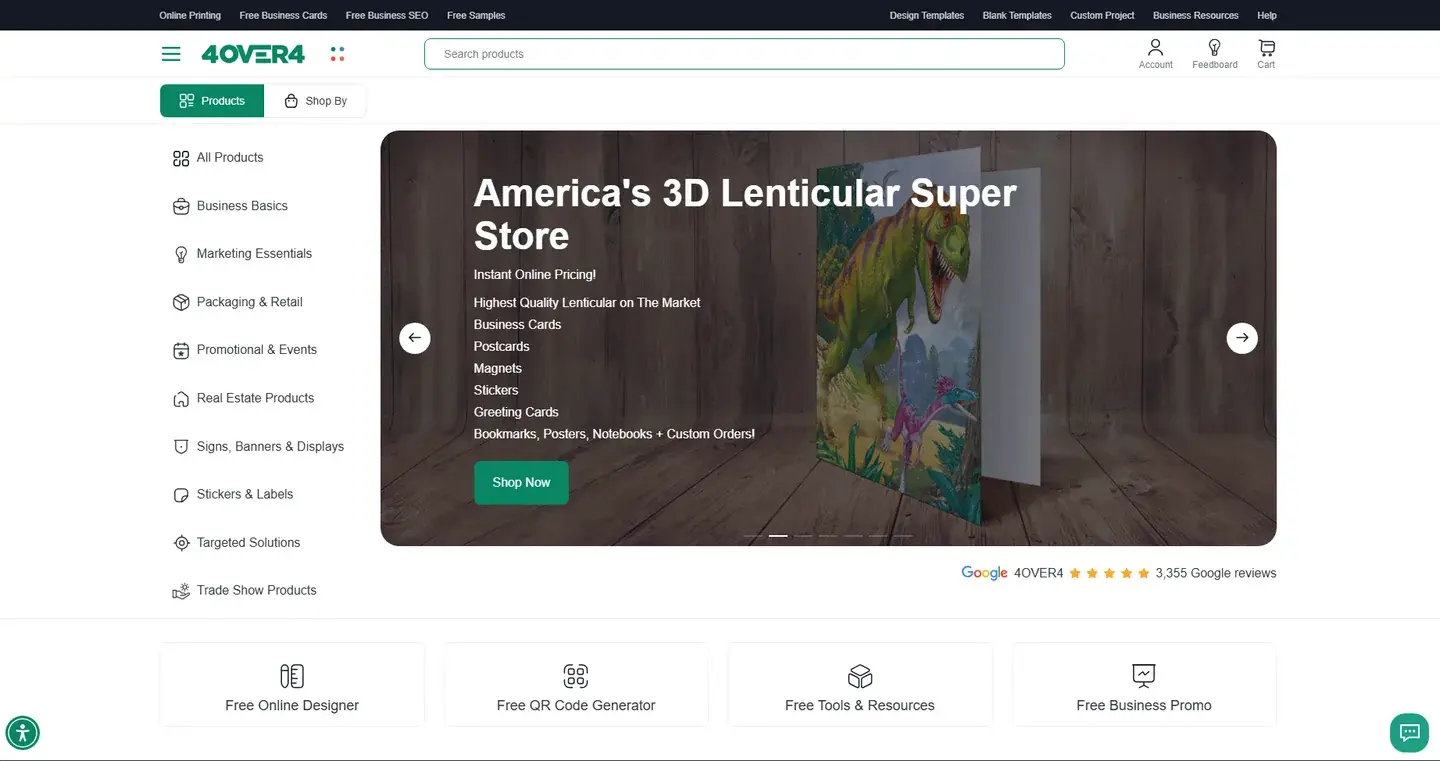
Netbase JSC reworked checkout, search and navigation, automated Adobe Illustrator (.ai) to SVG file conversion and added recommendations.
Keep Reading
Geo-Tek IT Solutions, a printing and design-services company in Cyprus, needed an online design platform that worked on every device and fitted its existing systems.
Keep ReadingBuyer FAQ
Usually, yes. If the system has an API or a database we can reach safely, AI features can be added without replacing it.
Not by default. We use API or business terms that exclude training on your data where the vendor offers them, and agree which data may reach a model at all.
The one that fits the use case on quality, cost, latency and data residency. The gateway lets you change it later.
With per-feature budgets, caching, smaller models for simple tasks and dashboards that show cost per request.
Answers are grounded in your data, tested against an evaluation set before release, and reviewed by a person where they carry risk.
Only through scoped APIs, with approval steps for actions that change orders, money or customer records, and a log of every action.
Related solutions
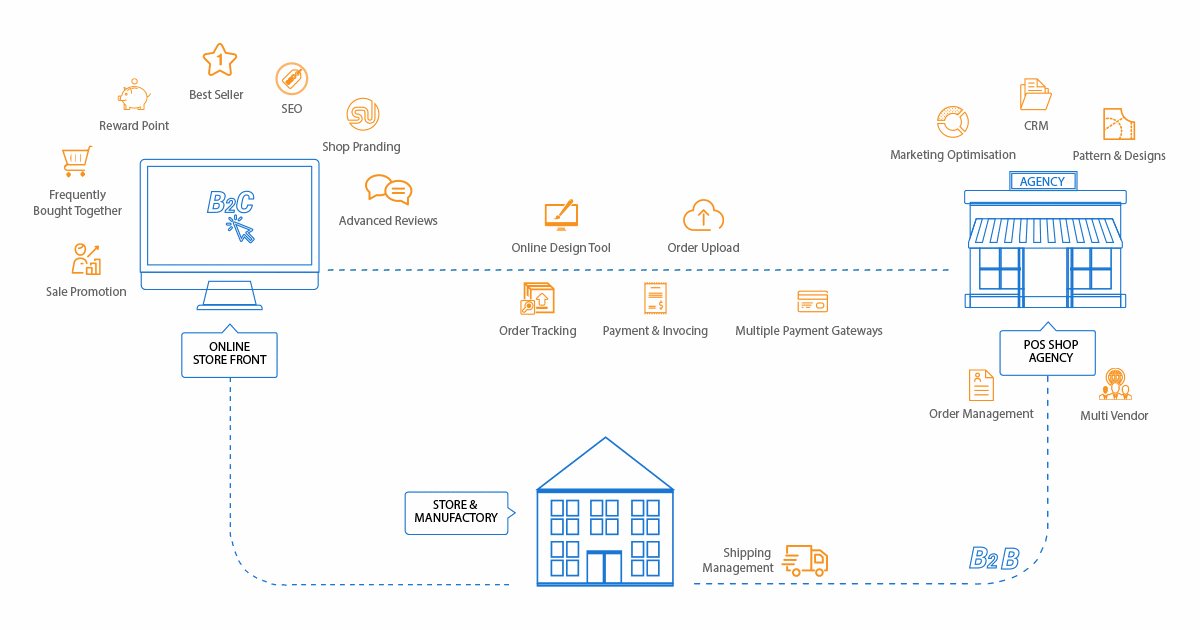 AI-enabled commerce experience solutions for print and commerce businesses
Commerce experience solutions are the Netbase family of platforms for print and commerce businesses: web-to-print ordering, multi-vendor marketplaces, product personalization and commerce operations automation, with AI for design help, search and recommendations. Each one starts from how your customers buy and how your team fulfils orders, and combines custom engineering with reusable Netbase modules.
Learn More
Service owner and next step
This service is owned by David, Netbase's Chairman, founder and CEO, and maintained by the Netbase Editorial Team. Want AI inside the systems you already run? Book a solution review, or view relevant work first.
Discuss a project
Netbase JSC helps organizations design, build, modernize, and operate digital products and AI-enabled business systems.+84 937 869 689
91 Nguyen Chi Thanh, Dong Da, Hanoi, Vietnam
Get in touch
Tell us what you want to build, modernize, or operate.