

AI transformation services: from strategy and pilots to AI at scale
Netbase provides AI transformation services for leadership teams that want AI to change how the business runs, not just produce experiments. We set the AI ambition and operating model, rank use cases by value and readiness, run governed pilots, scale what works and track the value, with change management from the first month. It is a growth capability at Netbase.
Book a solution review View relevant workReviewed by David (CEO) · Updated 17 Sep 2026

What an AI transformation programme includes
Many companies already have AI pilots. Few have changed a core process with them, because nobody owns the operating model, the data work or the people side. An AI transformation programme closes that gap. It sits in our Strategy & Consulting family and connects strategy to delivery in one plan.
Included
- AI ambition, value case and programme roadmap
- Operating model: owners, AI team, decision rights and funding
- Prioritised use-case portfolio with data and risk checks
- Governed pilots with baselines and stop-or-scale gates
- Scale-up into production systems and daily work
- Change management, training and adoption tracking
- AI governance and value tracking
Not included
- A one-off AI trend presentation
- Replacing your management team
- Buying licences on your behalf
- Guaranteed savings or headcount figures
- Legal opinions on AI regulation
How it differs from nearby services. AI strategy and readiness is an assessment: it ends with a ranked, governed roadmap. Digital transformation consulting redesigns workflows and systems, with AI as one option among several. AI transformation is the programme that follows the roadmap: it runs the pilots, changes the operating model and keeps going until AI is part of how work is done. When the job is adding AI features to one product or system, AI integration is the faster route.

When to use it, and when another route fits
Good fit
- Several departments want AI and need one programme
- Pilots exist but none has reached daily operations
- Leaders must report AI value and risk to a board
- Processes, data and roles must change together
Another route fits better
- You have no agreed AI priorities yet: start with a readiness assessment
- One feature in one product: choose AI integration
- No executive sponsor will own the programme
- The question is only which AI tool to buy
Without a technology leader to own the programme, a fractional CTO or CIO can lead it for an agreed term, and fractional AI leadership adds an AI-specialist advisor.
Outcomes and buyer jobs
Leadership teams hire an AI transformation partner to:
Each use case has an owner, a production path and a date to decide on scale.
Budgets follow evidence: every pilot has a baseline, a success measure and a stop-or-scale gate.
Decision rights, the AI team, data owners and review steps are written down.
Training, new roles and changed procedures are planned with the teams that do the work.
Use cases are screened for personal data, customer impact and regulatory exposure.
A value register tracks each use case against its baseline, so the board sees results, not activity.
Capability modules and deliverables
AI goals tied to business measures, and a staged budget
Owners, AI team shape, decision rights, funding and vendor rules
Ranked candidates with value, data readiness, risk and effort
Scoped pilots with baselines, human review points and gate criteria
Production integration, monitoring, support and rollout plans
Stakeholder map, training, role changes and adoption measures
AI policy, risk register, review cadence and a value register
Delivery process, team and governance
The programme runs in stages, each closed by a decision with written evidence:
-
Strategy and ambition
We agree the business goals, the AI ambition and how value will be measured.
-
Operating model
Owners, the AI team, decision rights and funding rules are set before pilots start.
-
Prioritised use cases
Candidates are scored on value, data readiness, risk and effort; the top few go forward.
-
Pilots
Each pilot tests one assumption in real work, with people reviewing AI output.
-
Scale
Pilots that meet their gate move into production systems, procedures and training.
-
Run and improve
The value register, risk register and portfolio are reviewed on a fixed cadence.
Stages map to our six-step delivery lifecycle, from discovery and strategic alignment to ongoing support and co-building. Delivery is Agile, with increments reviewed weekly on KPI dashboards and a named account manager and project manager. The method is lean: discovery first, the smallest pilot that proves value, and no budget for use cases that do not move a measure. Work runs remote-first from Hanoi in English, with security designed in (role-based access control, TLS in transit, AES at rest) and AI reached through documented APIs, so models can change without rebuilding the processes around them.
We use the NIST AI Risk Management Framework (AI RMF 1.0) as a neutral structure: its Govern, Map, Measure and Manage functions map to the programme's owners, use-case context, value and risk measures, and controls.
AI in this service
AI supports the programme work itself: AI-assisted tools summarise interviews, cluster use cases and draft policies, and a consultant reviews every output before it reaches you. Netbase applies the ISO/IEC 42001 AI management system framework to its own AI delivery practice.
-
In delivered work
Recommendation engine
Built for 4over4's online printing store; the reference for taking an AI feature into daily commerce operations.
-
Available capability
Enterprise AI transformation programmes
Operating model, portfolio, pilots and scale-up led by Netbase; not yet tied to a published programme case.
Engagement models and commercial variables
Most Netbase projects are delivered on fixed-price contracts agreed after discovery, and each programme stage can be scoped that way. Milestone-based, monthly team retainer and KPI-linked terms are also offered; see engagement models. We do not publish rate cards.
What moves effort and cost: the number of business units and use cases, the state of the data, how many systems each pilot touches, regulated or personal data, and how fast process owners can take decisions.
Technology as an implementation choice
The programme should not lock you into one AI vendor. Netbase is model-agnostic and chooses models per use case for data residency, cost, latency and quality. Pilots connect to your systems through APIs on the backend platforms we build on, and AI products such as assistants and agents are covered in our digital products.
Technologies we build with




Industry applications
Retail and e-commerce. Product content, search, recommendations, customer service and order exceptions are common first use cases, followed by forecasting and back-office work.
Emerging markets. Companies that go mobile-first and cloud-first can put AI into new processes instead of retrofitting old ones; our guide to digital and AI transformation in emerging markets covers payments, localisation and data rules.
If you want to score readiness yourself first, use our enterprise AI readiness assessment. For what is changing, read technology trends 2026 and its guides to AI governance, agentic commerce readiness and the AI-first offshore development center.
 Retail and ecommerce: AI-enabled storefronts, marketplaces and order operations
Netbase helps retailers and online merchants modernize storefronts, marketplaces and order operations, and adds AI where it pays: search, recommendations, catalog enrichment and order exceptions, with your team approving what shoppers see. Results are published: Geo-Tek IT Solutions grew revenue 36% in the first quarter after its new ecommerce platform launched, and an EU fashion marketplace grew GMV 47%.
Learn More
Proof: delivered AI and transformation work
Evidence maturity: AI transformation is a growth capability. No stand-alone programme is published yet; the records below show delivered AI and the platform change a programme builds on.
4over4 (online printing, United States). Netbase built a recommendation engine from browsing and purchase history inside a wider store project. Read the 4over4 case.
Geo-Tek IT Solutions (Cyprus). A design platform rebuilt for every device and connected to internal systems: the kind of integrated foundation AI use cases depend on. Read the Geo-Tek case.
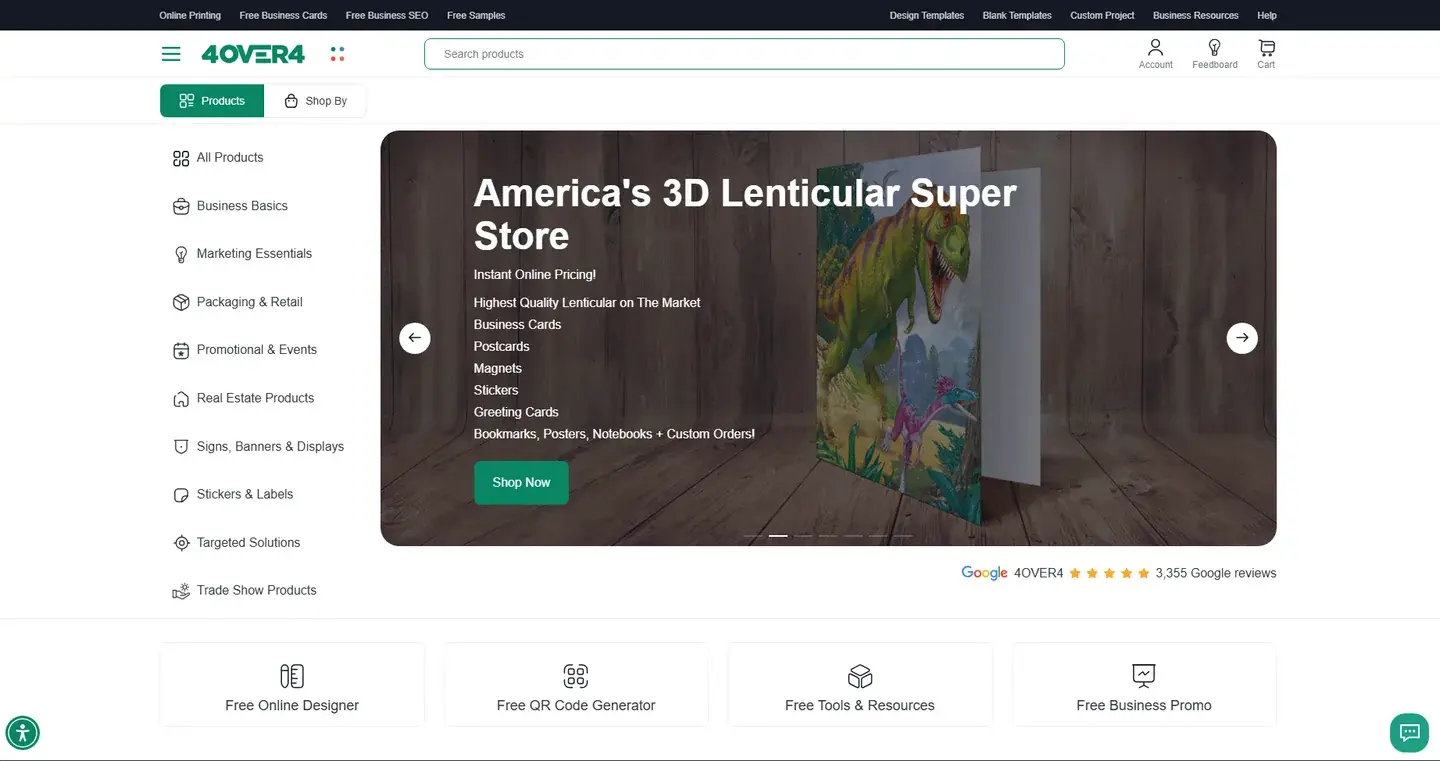
4over4, a US online printing store, had steady traffic but too few orders.
Keep Reading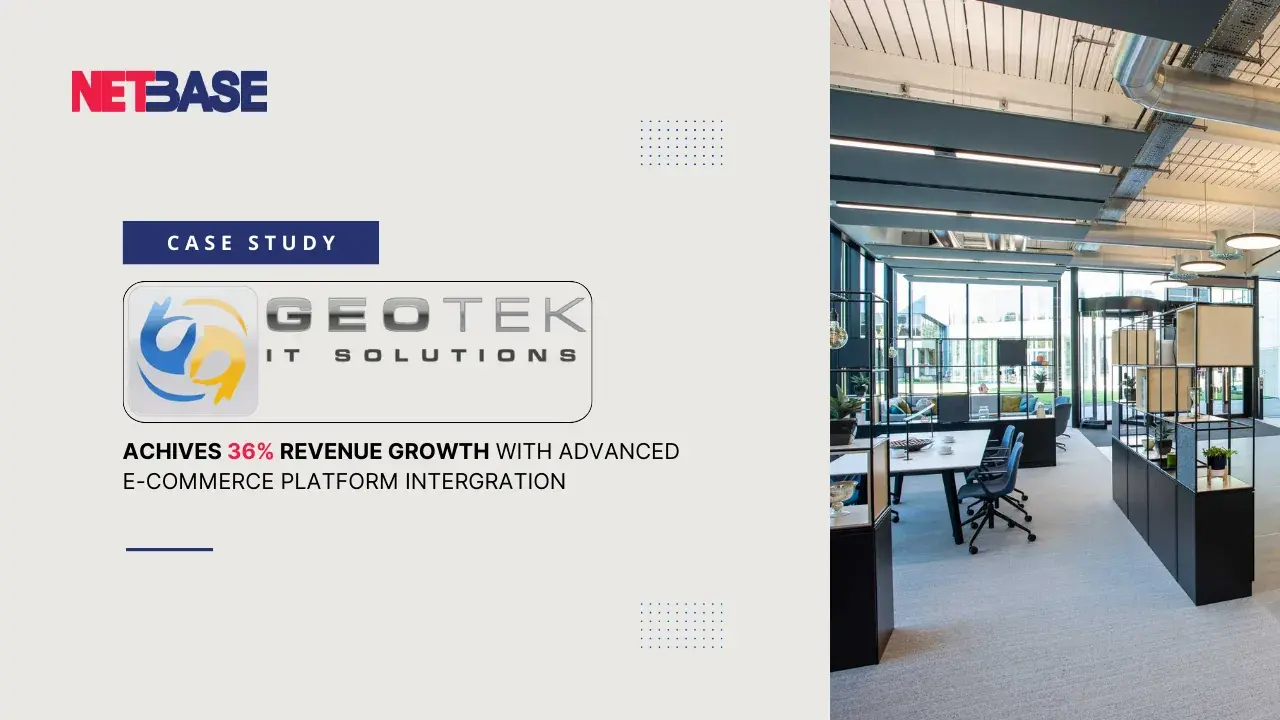
Geo-Tek IT Solutions, a printing and design-services company in Cyprus, needed an online design platform that worked on every device and fitted its existing systems.
Keep ReadingBuyer FAQ
A strategy decides what to do and in what order. A transformation programme does it: it runs pilots, changes roles and processes, and tracks value until AI is part of daily work.
It runs in stages. The first stage and its gate are agreed in discovery; later stages are funded on the evidence each gate produces.
No. Data readiness is scored per use case, and the data work a use case needs becomes part of its plan.
Every use case has a change plan: who is affected, what training they need, which procedures change and how adoption is measured.
Yes. Netbase can lead the programme while your teams or other vendors build parts of it under the same gates.
Scaling a pilot before its value is proven. Stop-or-scale gates with a baseline prevent that.
Related solutions
 Digital product accelerators for SaaS, mobile and AI products
Digital product accelerators are Netbase-built modules and delivery patterns that help founders and product teams launch SaaS, mobile and AI products faster. Instead of rebuilding accounts, billing, workflows and integrations from scratch, you reuse proven components, spend engineering time on what makes your product different, including the AI features buyers now expect, and own the custom code built for you.
Learn More
Service owner and next step
This service is owned by David, Netbase's Chairman, founder and CEO, and maintained by the Netbase Editorial Team. Ready to move AI from pilots into how your business runs? Book a solution review, or view relevant work first.
Discuss a project
Netbase JSC helps organizations design, build, modernize, and operate digital products and AI-enabled business systems.+84 937 869 689
91 Nguyen Chi Thanh, Dong Da, Hanoi, Vietnam
Get in touch
Tell us what you want to build, modernize, or operate.