

AI automation for business operations: select, govern, measure
Start AI automation with one high-volume, checkable process, not a platform. Measure the baseline first, automate the predictable steps with rules, add AI only where inputs are unstructured, keep people approving money, customer-facing and irreversible actions, and judge success by time, errors and cost per case against that baseline, with security designed in.
Book a solution review See the related serviceBy Huy Nguyen (David), Founder & CEO · Updated 29 Sep 2026 · 17 min read

This guide is for operations leaders, COOs, finance and customer-service managers and the technology leads who support them. It answers four questions in the order you will meet them: which process to automate first, how much autonomy to give the software, how to prove the return, and how to keep data and systems safe. It covers the ideas that are often sold separately under other names (workflow automation, intelligent process automation, process intelligence, AI-powered CRM, the "robotic workforce") and puts them in one decision path.
In this guide
- What AI automation means in operations
- Choosing the first process
- Discover the process before you automate it
- Designing human approval
- Governance that fits an operations team
- Measuring ROI without wishful numbers
- Security and data protection
- A delivery path from pilot to scale
- Where AI sits in Netbase delivery
- What Netbase has delivered
- Common mistakes
- Limitations of this guide
- Frequently asked questions
- How this guide was made
- Next step
What AI automation means in operations
"AI automation" covers a spectrum. Most successful programmes use several points on it within the same process, one step at a time.
| Level | What it does | Good at | Weak at |
|---|---|---|---|
| Rule-based workflow automation | Moves data and triggers steps along fixed paths | Predictable, auditable, cheap to run | Breaks when inputs are messy or rules multiply |
| Screen and task automation | Imitates a person clicking through systems without an API | Bridging old systems quickly | Fragile when screens change |
| AI steps inside a workflow | Reads, classifies, extracts or drafts at one step | Emails, PDFs, images, free text | Needs confidence thresholds and review |
| AI agents | Decide which step comes next and call tools within limits | Varied, open-ended cases | Cost, latency and control need careful design |
Anthropic's engineering guidance on agents draws the same line: workflows orchestrate models and tools through predefined code paths, while agents let the model direct its own process and tool use. Its advice is to add that complexity only when it demonstrably improves outcomes. Our comparison of AI agents vs workflow automation turns that into a decision table per task.
The practical consequence: "fixed" rule-based automation is not the old way to be replaced. It is the backbone that makes AI steps safe, because it records what happened, enforces the order of steps and holds the approval queue.
Choosing the first process
The first automation should succeed visibly and teach the organization how to run the next one. Score candidate processes before anyone talks about models or tools.
| Criterion | Strong candidate | Weak candidate |
|---|---|---|
| Volume | Hundreds of similar cases a week | A few cases a month |
| Repetition | The same steps most of the time | Every case is different |
| Input format | Emails, forms, PDFs or images in a few known types | Anything, in any format |
| Checkability | A rule or a person can tell whether the output is right | Nobody can explain a correct answer |
| Cost of an error | Recoverable, or caught before it reaches a customer | Irreversible, legal or safety-critical |
| Ownership | One owner who can change the process | Owned by several departments and no one |
| Data access | Systems with APIs or exports you control | Data locked in systems nobody can reach |
Typical first candidates, by function:
-
Order operations
- Candidate process
- Order checks, exception routing, status updates
- Where AI helps
- Reading customer notes and attachments
-
Customer service
- Candidate process
- Triage, routing and draft replies for common questions
- Where AI helps
- Classifying intent and drafting answers for approval
-
Finance
- Candidate process
- Invoice matching, payment reconciliation, supplier queries
- Where AI helps
- Extracting fields from invoices and emails
-
Sales and CRM
- Candidate process
- Lead qualification, CRM updates after calls or emails, proposal drafts
- Where AI helps
- Summarizing conversations into structured records
-
Supply chain
- Candidate process
- Supplier confirmations, delivery exceptions, stock alerts
- Where AI helps
- Reading supplier emails and flagging mismatches
-
Production and fulfilment
- Candidate process
- File checks, job preparation, dispatch updates
- Where AI helps
- Checking artwork or documents against rules
For order and fulfilment work behind an online store, a rule-based commerce operations automation is often the right first step; AI steps can be added where orders arrive with messy inputs.
A scoring sheet for the shortlist
Once three to six candidates pass the criteria above, score them on one sheet so the choice can be explained to finance and to the teams that will not go first.
Knock-out filter first. Drop any candidate where a wrong output would be irreversible, legally significant or safety-critical, where nobody owns the process, or where the data cannot be reached this quarter. These are not bad ideas; they are bad first ideas.
Score the survivors from 1 to 5 on five criteria, with weights agreed before anyone scores. The weights below are illustrative.
-
Value
- Question
- How much time, error or cost per case moves if this works?
- Illustrative weight
- 30%
-
Data readiness
- Question
- Is the input available, in a few known formats, with examples of correct outputs?
- Illustrative weight
- 25%
-
Checkability
- Question
- Can a rule or a person tell quickly whether an output is right?
- Illustrative weight
- 20%
-
Time to proof
- Question
- Can a shadow-mode pilot show results within one quarter?
- Illustrative weight
- 15%
-
Reuse
- Question
- Will the integration, review queue or data work serve the next use case?
- Illustrative weight
- 10%
Pick the highest total that one team can run end to end. A slightly lower score owned by one motivated team beats a higher score that needs three departments to agree. Write the stop rule before the start: name the baseline, the measure and the result below which the pilot stops, so the first use case produces a decision either way.
A common result: invoice or order-email triage scores high on value, data readiness and checkability and wins; a customer-facing agent that issues refunds scores well on value but fails the knock-out filter, and waits until approval controls and logs have proven themselves on the first use case.
Test the winner before you fund it
A high score is a hypothesis. Before approving budget, take 20 to 30 real cases from the last month and ask the process owner to label the correct output for each. Confirm that every system involved can be read through an API or export you control, write the baseline (minutes per case, error rate, backlog) on one page and name who reviews exceptions and how fast. If a check fails, the next candidate moves up. The AI readiness assessment tests the same conditions across the whole organization.
Discover the process before you automate it
Automating a process you have not measured produces a faster version of the same problems. Before design, establish four things:
-
The real flow
Map the steps as they happen, not as the procedure says. System logs, ticket histories and a week of shadowing a team show where work waits and where it loops back. Process-intelligence tools do this at scale from event logs; for a first process, a careful manual map is enough.
-
The volumes
Cases per week, the share that follows the main path, and the types of exception.
-
The baseline
Time per case, error or rework rate, cost per case and the time a case waits between steps. This is the number every later claim is measured against.
-
The decision points
Where a person decides something, what information they use, and who is accountable when it goes wrong.
Discovery often shows that the biggest saving is not AI at all: a duplicated check removed, a form redesigned so data arrives structured, or two systems connected so nobody re-keys an order. Take those wins first. They make the remaining automation smaller and more reliable.
Designing human approval
The core design question is not "can the AI do this?" but "what may it do without asking?". Set an autonomy level per step, not per system.
| Autonomy level | The software | A person | Use for |
|---|---|---|---|
| Suggest | Proposes an answer or next step | Decides every case | New automations, in shadow mode |
| Draft for approval | Prepares the action ready to send or post | Approves or edits each one | Customer replies, refunds, price changes |
| Act, with sampled review | Acts on routine cases | Reviews a sample and all low-confidence cases | High-volume, low-risk steps with a proven record |
| Act within limits | Acts alone below set thresholds | Handles exceptions and reviews the logs | Mature steps where errors are cheap and reversible |
The OWASP Top 10 for LLM Applications 2025 names the failure this table prevents. It calls it Excessive Agency: damaging actions taken in response to unexpected, ambiguous or manipulated model outputs. It traces the risk to three root causes, excessive functionality, excessive permissions and excessive autonomy, and its mitigations include human approval for high-impact actions, minimal permissions and authorization checks enforced in the downstream systems rather than left to the model.
Translated into operations rules:
- Give each automation only the tools it needs. A triage step that routes emails does not need permission to issue refunds.
- Act with the permissions of a role, not an administrator. Downstream systems still check whether the action is allowed.
- Keep approval on money, contracts, customer promises and anything irreversible, however good the accuracy looks.
- Start in shadow mode. The automation proposes, a person decides, and accuracy is measured on real cases before any step runs alone.
- Always keep a manual fallback and a way to switch the automation off without stopping the business.
Our guide to AI agent security and human approval turns these rules into identity, approval-gate and logging controls. Our agentic AI architecture guide then places that gate inside the control loop and designs the state a paused run needs to resume.
Governance that fits an operations team
AI governance does not need a new department. It needs owners, a small set of rules and evidence that the rules are followed. The NIST AI Risk Management Framework, released as version 1.0 in January 2023 and intended for voluntary use, organizes the work into four functions: Govern, Map, Measure and Manage. NIST added a Generative AI Profile (NIST AI 600-1) in July 2024. For an operations automation, the functions translate into plain tasks.
-
Govern
A named process owner, an approval policy per autonomy level, and a record of who changed what
-
Map
The process map, the data used, the people affected and what goes wrong if the output is wrong
-
Measure
Accuracy on real cases, exception rates, time and cost per case, compared with the baseline
-
Manage
Thresholds that send cases to people, a rollback path, and a review when measures drift
Keep the paperwork proportionate. A one-page record per automation (owner, purpose, data, autonomy level, measures, fallback) and a monthly review of its dashboard cover most operational needs. Regulated decisions, such as credit, employment or health, need more, and legal advice.
Measuring ROI without wishful numbers
AI automation business cases often fail because they count hours "freed" rather than cost removed or capacity used. Measure the same way before and after.
What to measure. Time per case, cases per person per day, error and rework rate, time to resolution, cost per case, and the share of cases handled without manual work.
What to count as cost. Build and integration effort, licences and model usage, hosting, the review time people still spend, monitoring and maintenance, and the time the process owner spends on the programme.
How to read the result. The return is the change in cost per case multiplied by volume, plus the value of fewer errors and faster resolution, minus the running cost of the automation. If the freed time is not redeployed, the saving is capacity, not cash; say so in the business case.
When to decide. Set the measurement window before the pilot starts, long enough to include normal peaks and exceptions, and agree in advance what result means scale, adjust or stop.
We publish no general ROI figure for AI automation, because the honest answer depends on your volumes, error costs and baseline. Treat any vendor's universal percentage the same way.
Security and data protection
An automation that reads email and writes to business systems is a new privileged user. Treat it like one.
- Minimize data. Send the model only the fields a step needs; mask what it does not.
- Scope credentials. Separate credentials per automation, least privilege, rotated and stored outside the code.
- Log every action. Inputs, outputs, decisions, approvals and who approved, so an auditor can follow any case.
- Treat inputs as untrusted. Emails and documents can carry instructions meant for the model. Validate outputs before they reach a system that acts on them.
- Agree data handling in writing. Where data is processed, whether a model provider may retain it, and what the data processing agreement says.
Netbase delivery follows a set of security practices: secure code review and version control, TLS in transit and AES at rest, role-based access control, MFA for admin dashboards, vulnerability scanning and penetration testing, and disaster recovery, with NDAs, DPAs and SLAs on request and contributors under NDA.
A delivery path from pilot to scale
-
Discovery
Process map, baseline, candidate steps, autonomy plan
- Exit criterion
- A scored process and a written measurement plan
-
Build and shadow
Rules for predictable steps, AI steps where needed, approval queue
- Exit criterion
- Accuracy on real cases meets the agreed threshold
-
Assisted operation
Drafts and routine actions with approval
- Exit criterion
- Time and error measures improve against baseline
-
Scaled operation
Higher autonomy for proven steps, sampled review
- Exit criterion
- Stable measures over the agreed window
-
Next process
Reuse the integrations, logging and approval patterns
- Exit criterion
- A second process scored and planned
The second automation is cheaper than the first because the plumbing already exists: connections to email, storefront, ERP or CRM, the approval queue and the monitoring dashboard. Plan the first one so those pieces are reusable.
Netbase's productized module library includes a workflow automation toolkit and an AI chatbot and WorkChat integrator, alongside a CRM and B2B sales engine, Smart ERP Light, a real estate digital toolkit and an e-commerce accelerator. Where one fits, a build can start from it. The agentic AI automation service describes how Netbase runs discovery, shadow mode and rollout: agile iterations with weekly reviews, a remote-first team working in English from Hanoi, and security designed into each integration from the first stage.
If the process runs on an ageing platform, automation on top of it may simply preserve the problem. The digital transformation and modernization guide covers how to decide what to change first. Before choosing a first process, the enterprise AI readiness assessment checks data, skills and governance maturity.
Where AI sits in Netbase delivery
Netbase works across machine learning, natural language processing, computer vision, generative AI and AI with IoT. These are capability areas offered on request. The named AI work is the 4over4 project; Netbase has also delivered document AI platforms, RAG knowledge assistants, MLOps pipelines, a WhatsApp AI chatbot with CRM integration and AI content moderation on a classifieds marketplace, for clients that are not named, recorded anonymously with the AI service pages. We work with models from OpenAI, Anthropic (Claude), Google (Gemini) and Meta (Llama), among other commercial and open-weight models, chosen per process.
-
In delivered work
WhatsApp AI chatbot
Customer conversations on WhatsApp Business feeding leads and follow-up workflows into a CRM, delivered for a client that is not named.
-
In delivered work
Product recommendation engine
Built for 4over4 from browsing and purchase history.
-
Available capability
Machine learning, NLP, computer vision, generative AI and AI with IoT
AI capability areas Netbase offers; beyond the delivered projects above, not yet tied to a published case.
What Netbase has delivered
4over4, online printing. Netbase built a recommendation engine based on browsing and purchase history and automated the conversion of Adobe Illustrator (.ai) design files to SVG, so customers could finalize designs without waiting for manual file fixes. As reported in the published case study, design-file production time fell 40% and order fulfilment time 50%, with 200+ new templates created in three months. The results reflect the whole engagement, including checkout and search work, not the recommendation engine alone.
Design-file production time fell 40% at 4over4, across the whole engagement
Order fulfilment time fell 50% at 4over4
200+ new templates were created in three months
The pattern generalizes to many online businesses: an operational bottleneck (manual file fixes) removed by an AI step inside a rule-based order flow, with people still handling the exceptions. See how this applies to online stores and marketplaces in retail and e-commerce.
Netbase has also delivered a document AI platform and a RAG knowledge assistant for clients that are not named; the anonymous records describe the scope without client names or results. The design decisions behind such an assistant are in our RAG architecture guide.
Plan the next step with a Netbase consultant
Common mistakes
- Starting with a platform instead of a process. Tools without a scored process become shelfware.
- No baseline. Without "before" numbers, nobody can prove the "after".
- Too much autonomy too early. Skipping shadow mode trades a small delay for a public mistake.
- AI where a rule would do. A model that reads structured data adds cost and uncertainty for nothing.
- Broad credentials. An automation with administrator rights turns one bad output into an incident.
- Counting freed hours as savings. Capacity is only money when it is used.
Limitations of this guide
This is practical guidance from Netbase delivery experience, not original research, and it gives no general ROI figure. The NIST, OWASP and Anthropic references describe general frameworks and practices; how they apply depends on your processes, data and regulations, and nothing here is legal advice. The 4over4 results were reported for the whole engagement and depend on that client's baseline. Netbase's AI capability areas are stated as offered capabilities, separate from delivered, published work.
Frequently asked questions
A high-volume, repetitive process with checkable outputs, recoverable errors and a single owner. Score candidates with the table above.
Use rules for structured, predictable steps and AI only where inputs need reading or judgement. Most processes need both.
Set an autonomy level per step, start in shadow mode, keep approval on high-impact actions and log everything.
A first process can show measurable change after its shadow and assisted stages. Agree the measurement window before the pilot starts.
Only if the design minimizes data, scopes credentials, logs actions and agrees data handling in writing. Ask where data is processed and retained.
Usually, through APIs or exports. Where no API exists, screen automation can bridge the gap until the system is modernized.
How this guide was made
The Netbase Editorial Team wrote this guide from Netbase's published AI, module-library and security pages, the 4over4 case study and public frameworks from NIST, OWASP and Anthropic. David (CEO) reviewed every Netbase fact. External sources are cited with access dates. Drafting used AI assistance (Claude). Its purpose is to help an operations team pick, govern and measure its first automations without overpaying for autonomy it does not need.
Next step
Pick the process that costs your team the most time and share a week of examples. We will book a solution review to score it, measure the baseline and propose the first automation. You can also see the related service or browse more Netbase insights.
Work behind this guide
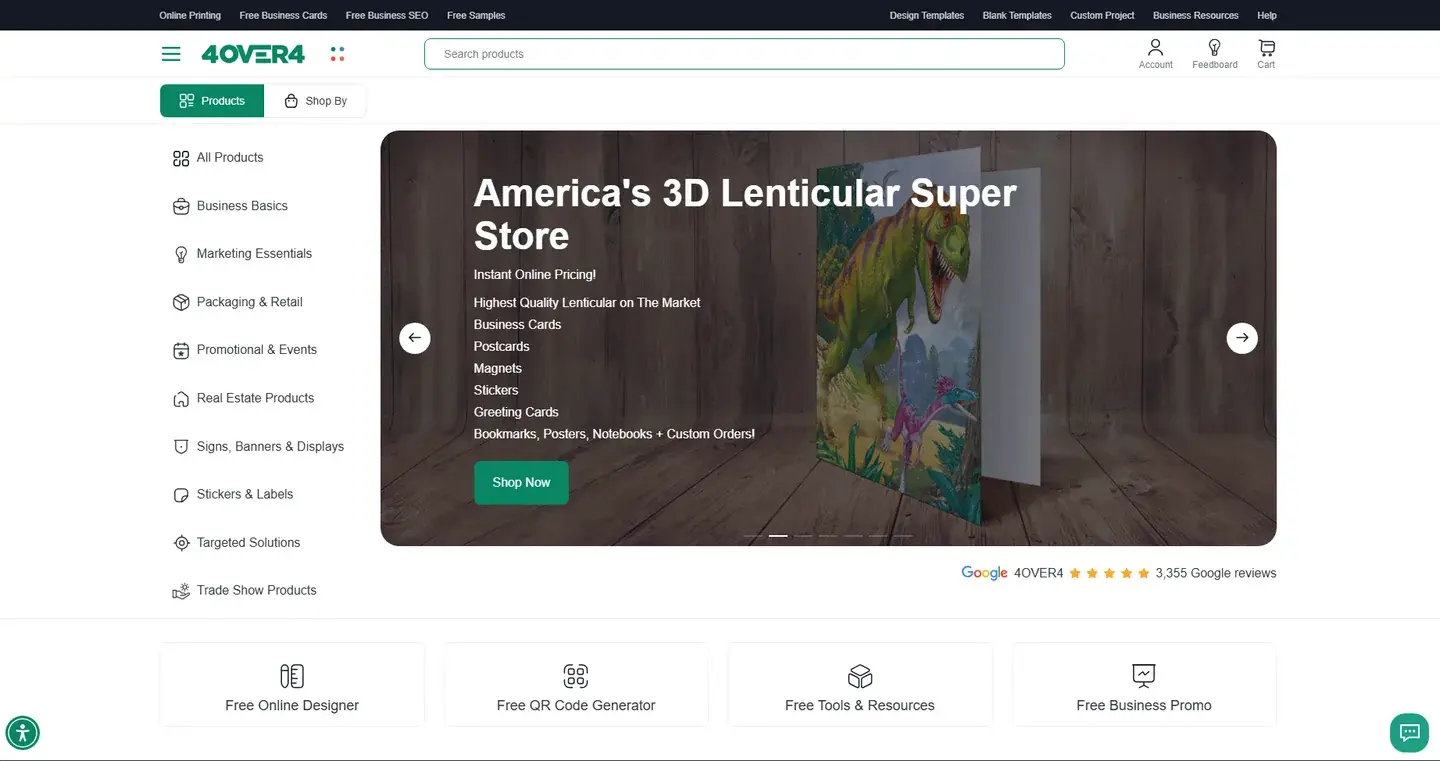
4over4, a US online printing store, had steady traffic but too few orders.
Keep ReadingRelated services and solutions
 AI automation and agents that keep people in charge
Netbase provides AI automation and agent development for operations teams that want repetitive, multi-step work done by software while people keep approval over the decisions that matter. We combine rule-based workflow automation with AI steps where they add value, design the human approval points in, and measure return against a baseline taken before the build.
Learn More
 AI-assisted ecommerce operations automation: from paid order to delivered parcel
Ecommerce operations automation removes the manual order, production and fulfilment steps behind a storefront: routing, file preparation, status updates and back-office sync, with AI flagging risky orders and triaging exceptions. It suits merchants and online printers whose order volume has outgrown their staff. In delivered work, 4over4 cut design-file production time 40% and Geo-Tek cut order processing time 30%.
Learn More
Discuss a project
Netbase JSC helps organizations design, build, modernize, and operate digital products and AI-enabled business systems.+84 937 869 689
91 Nguyen Chi Thanh, Dong Da, Hanoi, Vietnam
Get in touch
Tell us what you want to build, modernize, or operate.