

Technology trends 2026: what mid-market leaders should act on
The trends that matter most for mid-market companies in 2026 are AI moving from pilots into daily operations, AI agents becoming customers and colleagues, and the governance, security and delivery models needed to keep both under control. Act on one process, one data foundation and one governance baseline before chasing every new tool.
Book a solution review Read our visionBy Huy Nguyen (David), Founder & CEO · Updated 17 Sep 2026 · 13 min read

This page is for founders, CEOs, CTOs, CIOs and operations leaders at mid-market companies and scale-ups in the United States, Europe, Asia-Pacific and emerging markets. It maps fifteen technology and delivery trends for 2026 to 2028, says what each one changes for a buyer, and points to deeper guides. It reflects public reports and announcements available in September 2026 and Netbase's point of view as a consulting-led software company; where Netbase has delivered something, we say so, and where we are still building, we say that too. Our own direction is set out in the Netbase vision.
In this guide
- Five shifts behind fifteen trends
- The trend map at a glance
- AI moves from pilots into operations
- Commerce meets AI agents
- Governance, security and trust
- Delivery changes shape
- Markets and devices
- Cost, data and sustainability
- What to do in the next twelve months
- Where Netbase stands
- Limitations of this page
- Frequently asked questions
- How this page was made
- Next step
Five shifts behind fifteen trends
- AI goes operational. The question is no longer whether to use AI but which process it runs, who approves it and how it connects to real systems.
- Agents become buyers and users of your systems. Shopping agents, support agents and internal agents all need clean data, APIs and rules they can read.
- Trust becomes a deliverable. Regulation, customer questionnaires and new attack surfaces make governance and security part of the product.
- Delivery changes shape. AI-assisted engineering, hybrid teams and capability centres change how software is built and who builds it.
- Growth shifts to new markets and devices. Mobile-first users in emerging markets, connected devices at the edge and cost pressure on cloud and AI all reshape the roadmap.
The trend map at a glance
| Trend | What changes for buyers | Where to go deeper |
|---|---|---|
| 1. Agentic AI in operations | Agents take multi-step work, but few reach production | AI agent vs workflow automation |
| 2. AI transformation | Processes and roles are redesigned around AI | AI transformation |
| 3. AI integration | Models must reach ERP, CRM and commerce data safely | AI integration |
| 4. Agentic commerce | Catalogues, checkout and payments must serve AI agents | Agentic commerce readiness |
| 5. AI governance | EU AI Act dates and buyer due diligence reach deployers | AI governance for mid-market companies |
| 6. AI-augmented delivery | Faster output, but only strong processes keep it stable | Quality engineering |
| 7. Composable and API-first | Systems must be callable by people and agents | Systems and API integration |
| 8. Mobile-first emerging markets | Light, bilingual, affordable apps win users | Mobile app development |
| 9. IoT, edge and physical AI | Devices and AI move into operations | IoT development |
| 10. Zero trust and AI security | Agents and APIs widen the attack surface | Application security |
| 11. AI-ready data | Governed data decides model usefulness | Data engineering |
| 12. FinOps and sovereign cloud | AI bills and data residency need owners | Managed cloud services |
| 13. Green software | Carbon per transaction becomes a question | Measure with ISO/IEC 21031 |
| 14. AI-first offshore centres | Outsourcing and capability centres blend with AI | AI-first offshore development center |
| 15. Agile, remote and fractional | Skills turn over; leadership is shared | How we work |
AI moves from pilots into operations
Agentic AI (trend 1). McKinsey's November 2025 State of AI survey reports that 88% of respondents' organisations use AI regularly in at least one business function, yet only 23% are scaling an agentic AI system anywhere in the enterprise, with a further 39% experimenting. Deloitte's Tech Trends 2026 puts agents in production at 11% of organisations, and argues that the gap comes from automating human-designed processes instead of redesigning them. Gartner lists multiagent systems among its top strategic technology trends for 2026. The practical lesson is to pick one process, keep a workflow backbone and give agents narrow tools with human approval; our comparison of AI agents and workflow automation sets out the choice step by step, and our agentic AI automation service builds it.
AI transformation (trend 2). Deloitte names the IT operating model among its five trends for 2026: AI is changing how the technology function works and what it delivers. For a mid-market company this is less about a large programme and more about deciding, process by process, where AI changes the work. That is the job of AI transformation and our wider digital transformation consulting.
AI integration (trend 3). Models create value only when they can read and act on business systems. The Model Context Protocol, an open way to connect AI applications to tools and data, joined the Agentic AI Foundation under the Linux Foundation in December 2025. Postman's 2025 State of the API report found that 82% of organisations have adopted some level of API-first development, but only 24% of developers design APIs with AI agents in mind, and 51% name unauthorised or excessive API calls from agents as their top security worry. Integration is where AI integration and systems and API integration meet. Netbase works with the major commercial and open-weight models, chosen per project, and has delivered retrieval-augmented knowledge assistants for clients who are not named, such as the RAG knowledge assistant record.
Commerce meets AI agents
Agentic commerce (trend 4). Three open protocols now describe how AI agents shop. Stripe and OpenAI released the Agentic Commerce Protocol in September 2025, in which merchants keep control of what is sold, the brand, fulfilment and returns. Google announced the Agent Payments Protocol the same month, using signed mandates to prove what a shopper authorised. Shopify and Google published the Universal Commerce Protocol in January 2026, covering catalogue, checkout and orders. For merchants the storefront is becoming data: product attributes, variants, prices, stock and policies that an agent can read and trust. Our agentic commerce readiness guide turns that into a checklist.
Composable and API-first (trend 7). The same shift rewards stores and platforms whose functions are exposed as clean APIs. Composable and headless architectures make it easier to add a new channel, such as an agent, without rebuilding the core; our enterprise systems integration guide covers ownership, retries and reconciliation. Netbase has delivered commerce on WooCommerce, Magento 2, Laravel and headless commerce through its ecommerce development service, and for 4over4 its conversion work, which included a recommendation engine, lifted revenue 82% within six months.
Governance, security and trust
AI governance (trend 5). The EU AI Act applies in phases: prohibited practices from February 2025, general-purpose AI obligations from August 2025, general application from 2 August 2026, and, after the 2026 AI Omnibus, high-risk rules for sensitive areas from 2 December 2027 and for AI embedded in products from 2 August 2028. Most mid-market companies are deployers of AI, not model providers, but their customers already ask how AI is governed. An AI management system standard gives a structure for those answers, and Netbase applies the ISO/IEC 42001 AI management system framework to its own AI delivery practice. Our practical AI governance starter explains what to put in place first.
Zero trust and AI security (trend 10). NIST's zero trust architecture moves protection from network perimeters to individual resources and verifies every request. Gartner's 2026 list adds AI security platforms and preemptive cybersecurity. Agents that can call tools and APIs need least privilege, logging and approval for high-impact actions. Netbase's security practices, from secure code review to MFA for admin dashboards, are on security and compliance, and application security assurance tests them on client systems.
Delivery changes shape
AI-augmented delivery (trend 6). DORA's 2025 State of AI-assisted Software Development found AI use among technology professionals at 90%, with AI now improving delivery throughput but still increasing instability. AI amplifies the process a team already has. That is why review, tests and release gates matter more, not less; see our quality engineering and testing service and the six steps of how we work.
AI-first offshore delivery (trend 14). Deloitte's Global Outsourcing Survey 2024 found that 78% of organisations use global in-house centres, 80% plan to maintain or increase third-party outsourcing and 83% already use AI as part of outsourced services. Buyers blend models instead of choosing one. We explain the combination in the AI-first offshore development center.
Agile, remote collaboration and fractional leadership (trend 15). The World Economic Forum's Future of Jobs Report 2025 finds that employers expect 39% of workers' core skills to change by 2030. Teams work across locations and learn continuously; Netbase has delivered remotely in English from Hanoi for years, and most of its projects come from clients outside Vietnam, mainly in the United States and Europe. Senior leadership is shared too: Netbase leaders can join a client's executive team or board as an independent fractional CIO or CTO. The ways to co-work with us are on Partner with Netbase.
Markets and devices
Mobile-first emerging markets (trend 8). GSMA reported in September 2026 that 4.8 billion people use mobile internet on their own device while 3.4 billion do not, and that an entry-level smartphone costs the poorest 20% in low- and middle-income countries 44% of monthly income. Southeast Asia's digital economy was forecast to pass $300 billion in gross merchandise value in 2025, according to e-Conomy SEA 2025. Products for these users must be light, affordable and local: bilingual interfaces, right-to-left scripts and local payments. Netbase has scoped and built a bilingual Arabic and English web-to-print platform and a bilingual English and Nepali classifieds platform; mobile app development is where that work continues.
IoT, edge and physical AI (trend 9). IoT Analytics counted 21.1 billion connected IoT devices at the end of 2025 and forecasts 39 billion by 2030. Gartner lists physical AI and Deloitte AI-enabled robots among their 2026 trends. For Netbase this is a strategic area we are opening project by project through IoT development; we publish no delivered IoT case yet.
Cost, data and sustainability
AI-ready data (trend 11). Gartner's 2026 list includes domain-specific language models, which depend on governed, reachable domain data. Most AI disappointments trace back to data that is scattered, stale or unowned; data engineering comes before the model.
FinOps and sovereign cloud (trend 12). The FinOps Foundation's State of FinOps 2026 reports that 98% of respondents now manage AI spend, up from 63% a year earlier. Deloitte warns that falling token prices hide rising usage bills, and Gartner names geopatriation, moving workloads to sovereign or regional clouds, as a 2026 trend. Netbase builds on AWS, Google Cloud, DigitalOcean and Cloudflare, and managed cloud services keep cost and residency owned.
Green software (trend 13). ISO/IEC 21031:2024, the Software Carbon Intensity specification, measures carbon per functional unit, such as per transaction. Few mid-market buyers ask for it yet; expect it in procurement questionnaires. Netbase publishes no carbon measurement of its own at this stage.
What to do in the next twelve months
-
Pick one process
Choose a process with volume, clear rules and a measurable cost, and decide step by step where rules, an AI step or an agent fits.
-
Make your data reachable
Name the system of record for customers, products, orders and documents, and expose it through documented APIs.
-
Set a governance baseline
Keep an inventory of AI use, a risk rating per use, human approval for high-impact actions and a supplier questionnaire.
-
Make your catalogue agent-readable
Clean product attributes, variants, prices, stock and policies before shopping agents arrive.
-
Secure the new surface
Apply least privilege, logging and rate limits to every API and agent tool.
-
Choose the delivery shape
Decide what stays in-house, what a partner builds and how AI-assisted delivery is reviewed.
-
Own the cost
Put AI and cloud spend on a dashboard with a named owner before usage grows.
Where Netbase stands
Proven. Commerce and web-to-print platforms, integrations and the delivered AI features for 4over4, plus anonymised AI projects such as retrieval-augmented knowledge assistants, document AI and MLOps pipelines for clients who are not named.
Growing. AI transformation and AI integration across every service, agentic automation, agentic commerce, AI governance practice and AI-first offshore delivery. These are offered capabilities; where no case is published, we say so.
Vision. IoT and AI at the edge, and new partnerships in fields we have not worked in yet. We are investing in them and will publish evidence as it exists, as described in our vision.
Limitations of this page
- Survey figures come from their publishers' samples and definitions; they describe markets, not any single company, and none of them measures Netbase.
- Regulation and protocols change quickly. The EU AI Act dates reflect the European Commission page as read in September 2026; take legal advice for your case.
- The Gartner trend names are taken from press coverage of the 2026 list; Gartner's own pages were not readable by our tools.
- This page is reviewed quarterly.
Plan the next step with a Netbase consultant
Frequently asked questions
Usually AI in one operational process, together with the data and governance baseline it needs. The other trends depend on those foundations.
For narrow, well-governed tasks, yes. Surveys show most organisations are still experimenting, so start with one process, human approval and full logging.
It can, when AI systems or their outputs are used in the EU. Check your role as provider or deployer with legal counsel.
They shape where we invest and what we propose, and each new service is labelled as proven, growing or vision until evidence exists.
How this page was made
The Netbase Editorial Team compiled this page from public analyst reports, standards bodies, regulators and protocol announcements, read in September 2026, and from Netbase's verified facts. David (CEO) reviewed every Netbase statement. Drafting used AI assistance (Claude). Figures are attributed to their publishers and are not Netbase results.
Next step
Tell us which trend is closest to your next decision, and we will book a solution review to turn it into one scoped pilot. You can also see how we approach digital products, read where retail and ecommerce is heading, or browse more Netbase insights.
Work behind this guide
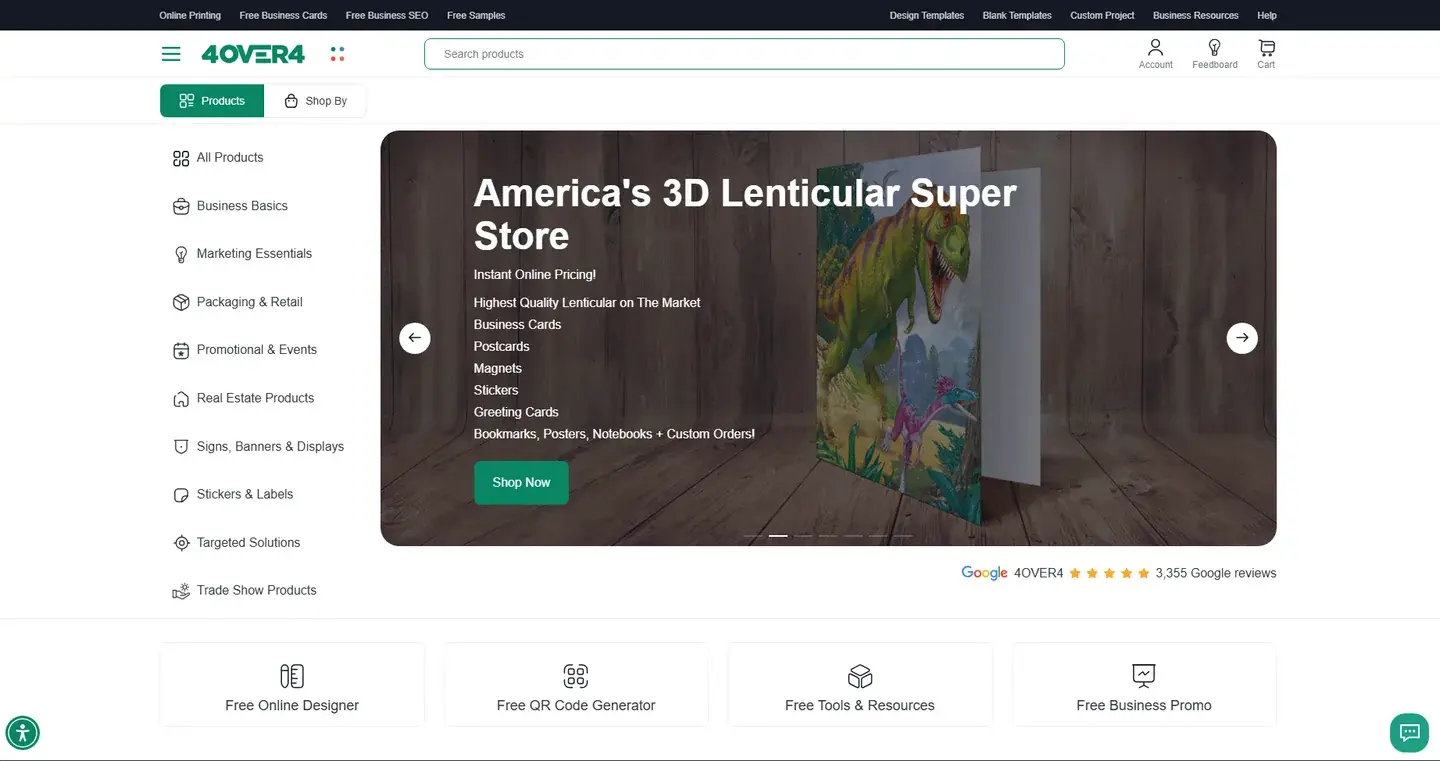
4over4 reported 82% higher e-commerce revenue and a 48% higher conversion rate.
Keep Reading
Netbase delivered a retrieval-augmented generation (RAG) knowledge assistant for a client, in a role that combined AI consulting, engineering and integration.
Keep ReadingRelated services and solutions
 AI-enabled digital transformation consulting that ends in a delivery plan
Netbase provides digital transformation consulting for mid-market companies to turn operational problems into a prioritized roadmap with a delivery path, not a strategy deck. We map your workflows, systems and data, rank every change by business value and risk, including where AI can remove manual work, and hand over a plan the same team can start building.
Learn More
 AI automation and agents that keep people in charge
Netbase provides AI automation and agent development for operations teams that want repetitive, multi-step work done by software while people keep approval over the decisions that matter. We combine rule-based workflow automation with AI steps where they add value, design the human approval points in, and measure return against a baseline taken before the build.
Learn More
 Digital product accelerators for SaaS, mobile and AI products
Digital product accelerators are Netbase-built modules and delivery patterns that help founders and product teams launch SaaS, mobile and AI products faster. Instead of rebuilding accounts, billing, workflows and integrations from scratch, you reuse proven components, spend engineering time on what makes your product different, including the AI features buyers now expect, and own the custom code built for you.
Learn More
Discuss a project
Netbase JSC helps organizations design, build, modernize, and operate digital products and AI-enabled business systems.+84 937 869 689
91 Nguyen Chi Thanh, Dong Da, Hanoi, Vietnam
Get in touch
Tell us what you want to build, modernize, or operate.