

Data engineering platforms for reporting and AI
Netbase builds data pipelines and analytics foundations for companies whose data is spread across a store, an ERP, a CRM and spreadsheets. We collect it, clean it, model it and check its quality, so reports agree with each other and AI projects start from data people trust. Data engineering is a capability we are growing alongside the platforms we deliver.
Book a solution review View relevant workReviewed by David (CEO) · Updated 17 Sep 2026

Tired of three reports giving three different numbers? Book a solution review.
What data engineering includes
Every analytics or AI project eventually meets the same problem: the data it needs lives in several systems, uses different identifiers and arrives late or incomplete. Data engineering is the work of moving that data into one place, shaping it into models that match how the business thinks, and proving it is correct. The legacy term for much of this was big data application development; today the question is less about volume and more about reliable, governed data. It belongs to our AI & Data family.
Included
- Data source inventory and ownership
- Batch and near-real-time pipelines from business systems
- A warehouse or lakehouse with documented data models
- Data quality checks, alerts and reconciliation
- Metric definitions and reporting data sets
- Access control, retention and lineage
- Feature and training data sets for AI projects
Not included
- Manual data entry or clean-up by hand
- Replacing your ERP, CRM or store
- Buying data from third parties
- Advice on accounting or tax treatment
When to use it, and when another route fits
Data engineering pays off when decisions depend on data from more than one system.
Good fit
- Sales, stock and finance figures disagree between reports
- Leaders want dashboards that combine store, ERP and CRM data
- An AI or forecasting project needs clean history
- Data volumes have outgrown spreadsheets
Another route fits better
- One system holds all the data: its built-in reports may be enough
- The need is a live exchange between systems: see the integration hub
- There is no owner for metric definitions
- A single export answers the question once
Every other route is in the services directory.
Outcomes and buyer jobs
Finance, operations and product leaders hire data engineering to:
Revenue, orders and stock are defined once and used everywhere.
Pipelines refresh reporting data on a schedule.
Quality checks catch missing or inconsistent records and alert an owner.
Training and feature data sets come from documented, governed sources.
Access, retention and lineage are designed in, not added later.
Capability modules and deliverables
Sources, owners, volumes, refresh needs and data protection constraints
Tested extraction and loading jobs with retries and alerts
Documented tables for orders, customers, products, stock and finance
Automated checks and reconciliation against source totals
Agreed metric definitions and reporting data sets
Access roles, retention rules and lineage records
Delivery process, team and governance
Data engineering follows our six-step delivery lifecycle:
-
Discovery and strategic alignment
We list the questions the data must answer and the sources that hold it.
-
Team assembly and architecture planning
An architect designs the pipelines, the storage and the data models.
-
Agile execution with outcome-based milestones
One subject area, such as orders, goes live and reconciles with its source before the next begins.
-
Modular and productized components
Connectors and reporting modules are reused where they fit.
-
Training, rollout and optimization
Analysts and managers learn the models and metric definitions.
-
Ongoing support and co-building
New sources and subject areas are added in planned releases.
Teams of 3 to 30 people typically start one to two weeks after discovery. Delivery is Agile and remote-first, in English, one subject area at a time, with weekly reviews, KPI dashboards, a named account and project manager, and API-first pipelines. Security practices include role-based access control, MFA for admin dashboards, TLS in transit and AES at rest, secure code review, vulnerability scanning and disaster recovery; NDAs and DPAs are available on request. Personal data follows GDPR alignment, HIPAA-aligned methods and CCPA practices, and the NIST Privacy Framework helps structure how that data is identified and governed.
Lineage matters as soon as a figure is questioned. We record which job produced which table, and open standards such as OpenLineage, an open framework for collecting data lineage, keep that record portable between tools.
AI in this service
AI depends on data engineering more than on anything else: a model trained on inconsistent history repeats the inconsistency. AI also helps the work itself. We use AI-assisted tools to draft transformation code, suggest data quality tests and document tables, and an engineer reviews and tests every output. Data sets used for training are versioned so a model can be traced back to the data behind it.
-
In delivered work
Product recommendation engine
Delivered for 4over4, based on browsing and purchase history: the kind of AI feature that relies on well-prepared commerce data.
-
In delivered work
MLOps pipeline
Versioned training data, evaluation and monitoring for models, delivered for a client that is not named.
-
Available capability
Training data sets and feature pipelines for AI
Data foundations we design and build for AI projects; not yet tied to a published data engineering case.
Engagement models and commercial variables
Most Netbase projects are delivered on fixed-price contracts agreed after discovery; for data engineering, a fixed-price first subject area that reconciles with its source is the usual start. Milestone-based, monthly team retainer and KPI-linked terms are also offered for ongoing additions. We do not publish rate cards.
What moves effort and cost: the number and age of source systems, data volume and refresh frequency, how clean the source data is, the number of subject areas and metrics, and data protection requirements.
Technology as an implementation choice
We choose storage and pipeline tools by volume, refresh needs, budget and the team that will run them, from a managed warehouse to a lighter database for a mid-sized business. Hosting runs on AWS, Google Cloud, DigitalOcean or Cloudflare, without any cloud partner tier claimed. Sources are often the commerce platforms we deliver, including WooCommerce, Magento 2, Laravel and headless commerce. For AI on top of the data, Netbase works with models from OpenAI, Anthropic (Claude), Google (Gemini) and Meta (Llama), among other commercial and open-weight models, chosen per project. The components we compare are on our data and AI stack page.
Industry applications
Retail and e-commerce. Orders, customers, products, stock and marketing spend come from different systems. A shared data model gives one view of sales and margin and the history recommendations need.
Other industries. Netbase has also delivered projects for clients in travel and hospitality, healthcare, real estate, manufacturing and logistics, and events; these clients are not named. Booking, patient, property and shipment data raise the same questions of consistency, access and retention.
 Retail and ecommerce: AI-enabled storefronts, marketplaces and order operations
Netbase helps retailers and online merchants modernize storefronts, marketplaces and order operations, and adds AI where it pays: search, recommendations, catalog enrichment and order exceptions, with your team approving what shoppers see. Results are published: Geo-Tek IT Solutions grew revenue 36% in the first quarter after its new ecommerce platform launched, and an EU fashion marketplace grew GMV 47%.
Learn More
Proof: commerce platforms and the data they produce
Evidence maturity: data engineering is a growth capability. No stand-alone data engineering project is published yet. The records below show platform delivery that produces and connects business data, and delivered AI that depends on it.
Delivered AI: MLOps pipeline (anonymised client). Netbase built the data, training, evaluation, release and monitoring steps of a pipeline for a client that is not named. The record publishes no client name, data sets or results. See the anonymised record.
Platform proof: Geo-Tek IT Solutions (Cyprus). An online design platform built to fit the company's existing systems. After launch, order processing time fell 30%, revenue grew 36% in the first quarter, engagement rose 35% and repeat transactions 24%. Read the Geo-Tek case.
Delivered AI: 4over4 (online printing, United States). Netbase built a recommendation engine based on browsing and purchase history inside a wider store project. Read the 4over4 case.
More projects are in our work.
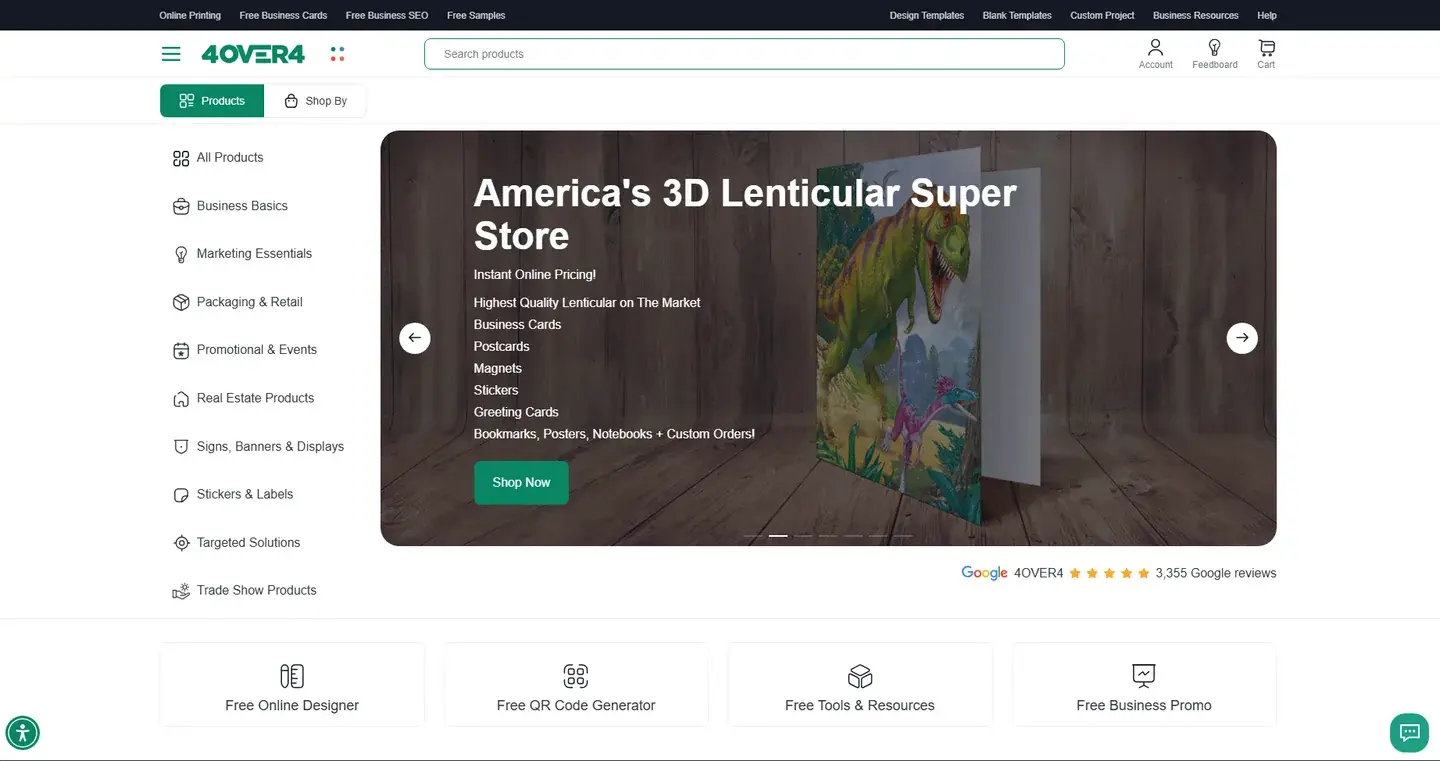
4over4, a US online printing store, had steady traffic but too few orders.
Keep Reading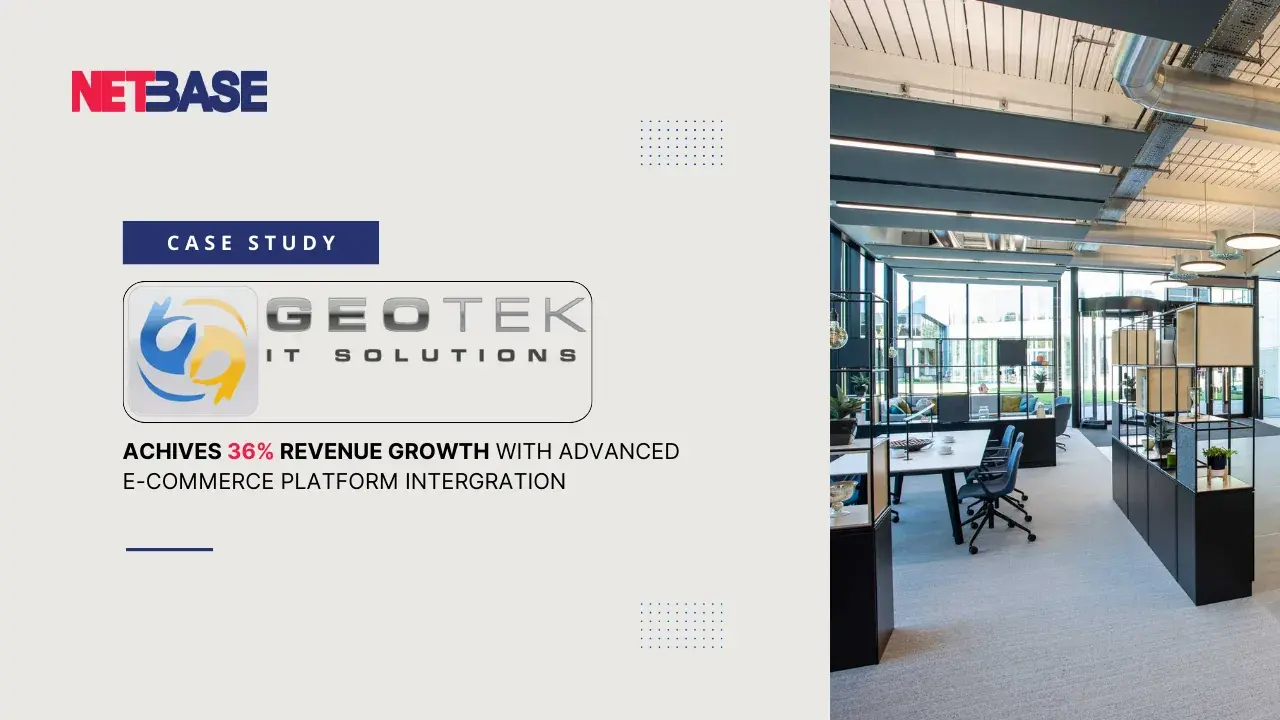
Revenue grew 36% in the first quarter after launch.
Keep Reading
Netbase delivered an MLOps pipeline for a client, in a role that combined AI consulting, engineering and integration.
Keep ReadingBuyer FAQ
Not always. Discovery decides between a warehouse, a reporting database or better use of existing reports, based on volume and questions.
Every subject area reconciles with its source system before it is used, and quality checks run on each refresh.
Yes. Older systems are read through their databases, exports or APIs, and each connection has a documented failure path.
Access roles are agreed in discovery and enforced in the platform, with retention rules for personal data.
Yes. Documented, versioned data sets are the starting point for AI integration: recommendations, forecasting and assistants.
Loading everything before agreeing definitions. We start with one subject area and its metrics.
Related solutions
 Enterprise integration hub ready for AI agents: one monitored layer for commerce, ERP and CRM data
An enterprise integration hub is a central layer that moves orders, customers, stock and invoices between your commerce, ERP and CRM systems, with monitoring, retries and replay in one place, and scoped APIs that AI agents can call safely. Netbase builds it as a custom layer on the stack you already run, starting from the flows that break most often.
Learn More
Service owner and next step
This service is owned by David, Netbase's Chairman, founder and CEO, and maintained by the Netbase Editorial Team. Bring the report that nobody trusts, and we will trace where its numbers come from: book a solution review, or view relevant work first.
Discuss a project
Netbase JSC helps organizations design, build, modernize, and operate digital products and AI-enabled business systems.+84 937 869 689
91 Nguyen Chi Thanh, Dong Da, Hanoi, Vietnam
Get in touch
Tell us what you want to build, modernize, or operate.