

AI automation and agents that keep people in charge
Netbase provides AI automation and agent development for operations teams that want repetitive, multi-step work done by software while people keep approval over the decisions that matter. We combine rule-based workflow automation with AI steps where they add value, design the human approval points in, and measure return against a baseline taken before the build.
Book a solution review View relevant workReviewed by David (CEO) · Updated 17 Sep 2026

Have a workflow that eats your team's week? Book a solution review.
What AI automation includes
Most operational work follows a pattern: something arrives, someone reads and checks it, updates a system and tells the next person. Workflow automation handles the predictable parts of that chain. An AI agent goes further: it can read an unstructured email or file, decide which step comes next and call the right tool, within limits you set. Agentic AI automation is the service that decides which mix fits your process and builds it into the systems you already use. It belongs to our AI & Data family.
Included
- Process discovery and a measured baseline
- Rule-based workflow automation
- AI steps for reading, classifying and drafting
- Agents that call your tools within set permissions
- Human approval queues and exception handling
- Audit logs, monitoring and a rollback path
- Integration with email, storefront, ERP, CRM and files
Not included
- Fully autonomous decisions on money, contracts or people without review
- Replacing core systems such as your ERP or CRM
- General AI training for staff with no workflow in scope
- Research projects with no production target
- Guaranteed savings or headcount figures

When to use it, and when another route fits
AI automation earns its cost when volume is high, steps are repetitive and the inputs are messy enough that plain rules keep breaking.
Good fit
- Hundreds of similar requests, orders or documents each week
- Inputs arrive as emails, PDFs or images, not clean forms
- A clear owner who can approve changes to the process
- Decisions that can be checked against a rule or a person
Another route fits better
- A handful of cases a month: better tools or a checklist may do
- Inputs are already structured: rule-based automation alone is cheaper
- No one owns the process end to end
- Decisions nobody can explain or audit
Our guides on AI agents versus workflow automation and AI readiness help you choose. For order and fulfilment work behind a store, the rule-based commerce operations automation solution is often the better first step. Other routes are in the services directory.
Outcomes and buyer jobs
Operations teams hire AI automation to:
Data moves between inbox, storefront and back office automatically.
Routine cases flow straight through; only exceptions wait for a person.
Refunds, credit, pricing and anything customer-facing pass an approval step.
Every action is logged, so audits and fixes are straightforward.
Time per case, error rate and cost per case are compared with the baseline.
Capability modules and deliverables
Process map, volumes, exception types and a measured baseline
Rules versus AI decision per step, approval points and permissions
Rule-based flows for the predictable steps
Reading, classifying, extracting and drafting, with confidence thresholds
An agent that plans steps and calls approved tools within set limits
Review queues, escalation rules and a manual fallback
Audit logs, accuracy checks and a dashboard against the baseline
Reusable starting points
Netbase's productized module library includes a workflow automation toolkit and an AI chatbot and WorkChat integrator, alongside a CRM and B2B sales engine, Smart ERP Light, a real estate digital toolkit and an e-commerce accelerator. Where one fits, the build starts from it; the modules are licensed, and the custom work built for you is yours.
Delivery process, team, quality and security
Automation projects run on the Netbase six-step delivery lifecycle:
-
Discovery and strategic alignment
The process, its volumes and exceptions, and the baseline the automation is measured against.
-
Team assembly and architecture planning
A team of 3 to 30 people, combining business analysts, project managers, solution architects, developers, QA and UI/UX. Work typically starts within one to two weeks after discovery.
-
Agile execution with outcome-based milestones
Each milestone ends in a working automation you can review.
-
Modular and productized components
Proven modules are reused where they remove risk and time.
-
Training, rollout and optimization
People learn the new flow, and steps go live in stages.
-
Ongoing support and co-building
Rules and models are tuned as volumes and inputs change.
Every automation starts in shadow mode: it proposes, a person decides, and accuracy is measured before any step runs alone. Delivery is Agile and remote-first, in English, with weekly reviews, KPI dashboards and a named account and project manager, and agents reach your systems only through scoped, logged APIs. Security practices include secure code review, TLS in transit and AES at rest, role-based access control, MFA for admin dashboards, and vulnerability scanning. NDAs and DPAs are available on request. Our AI agent security, agentic AI architecture and RAG architecture guides go deeper into these controls.
AI in this service
Where AI already runs in delivered work, and where it is offered as a growth capability. Beyond 4over4, Netbase has delivered RAG knowledge assistants and document AI for clients that are not named; their anonymised records are linked in the evidence below.
-
In delivered work
Product recommendation engine
Delivered for 4over4 in the same project.
-
Available capability
Machine learning, NLP, computer vision, generative AI and AI with IoT
AI capability areas Netbase offers; beyond the 4over4 features they are not yet tied to a published case.
Engagement models and commercial variables
Most Netbase projects are delivered on fixed-price contracts agreed after discovery. A first automation usually runs as a project-based engagement with milestones; a programme of several workflows suits a dedicated team or an AI transformation programme, and fully managed delivery keeps the automations tuned after launch. Milestone-based, monthly team retainer and KPI-linked terms are also offered. We do not publish rate cards.
What moves effort and cost: the number of steps and systems, how messy the inputs are, how many exceptions exist, data protection requirements and how much autonomy you want to allow.
Technology as an implementation choice
We pick the simplest tool that does the job: rules where rules work, a model where reading or judgement is needed, and an agent only where the steps genuinely vary. We work with models from OpenAI, Anthropic (Claude), Google (Gemini) and Meta (Llama), among other commercial and open-weight models, chosen per workflow. The components we use for models, orchestration, data and monitoring, and the trade-offs between them, are on our data and AI stack page. An enterprise AI agent platform is on our roadmap as a strategic vision offer; until then, agents are built per workflow.
Industry applications
Printing and packaging. Artwork arrives in every format, orders need checking against print rules and customers ask the same status questions all day. File checks, order triage and status replies are natural first candidates.
Commerce and back-office operations. Order exceptions, supplier emails, invoice matching and CRM updates follow the same read-check-update pattern. Our guide to AI automation for business operations walks through where to start.
 Printing and packaging: online ordering, AI artwork checks and production handoff
Netbase helps print and packaging businesses move ordering, artwork approval and production handoff online, with AI where files go wrong, so customers configure, design, proof and pay in one flow and the press floor receives clean jobs. Six published print-commerce case studies and 50+ custom web-to-print platforms, across apparel, packaging, signage, promotional merchandise and B2B portals, back this page.
Learn More
Evidence: delivered AI and automation foundations
The capability areas above are delivered on request; the AI work tied to a named Work item is the 4over4 project, shown here separately from automation, and anonymised AI projects for unnamed clients, a RAG knowledge assistant, a document AI platform and a WhatsApp AI chatbot with CRM integration, are recorded without client names or results.
Delivered AI: 4over4 (online printing, United States). Netbase built a recommendation engine based on browsing and purchase history and, as automation rather than AI, converted Adobe Illustrator (.ai) design files to SVG, so customers could finalize designs without waiting for manual file fixes. As reported by 4over4, design-file production time fell 40% and order fulfilment time 50%, with 200+ new templates created in three months. The results reflect the whole project, including checkout and search work, not the recommendation engine alone. Read the 4over4 case.
Automation foundation: Printcart (Netbase Business Division). Printcart, the web-to-print platform Netbase builds and runs, turns online orders into print-ready files and routed fulfillment without manual hand-offs. It is rule-based automation rather than AI, and it shows the order, file and status plumbing an agent needs before it can act. See the Printcart record.
More projects are in our work.
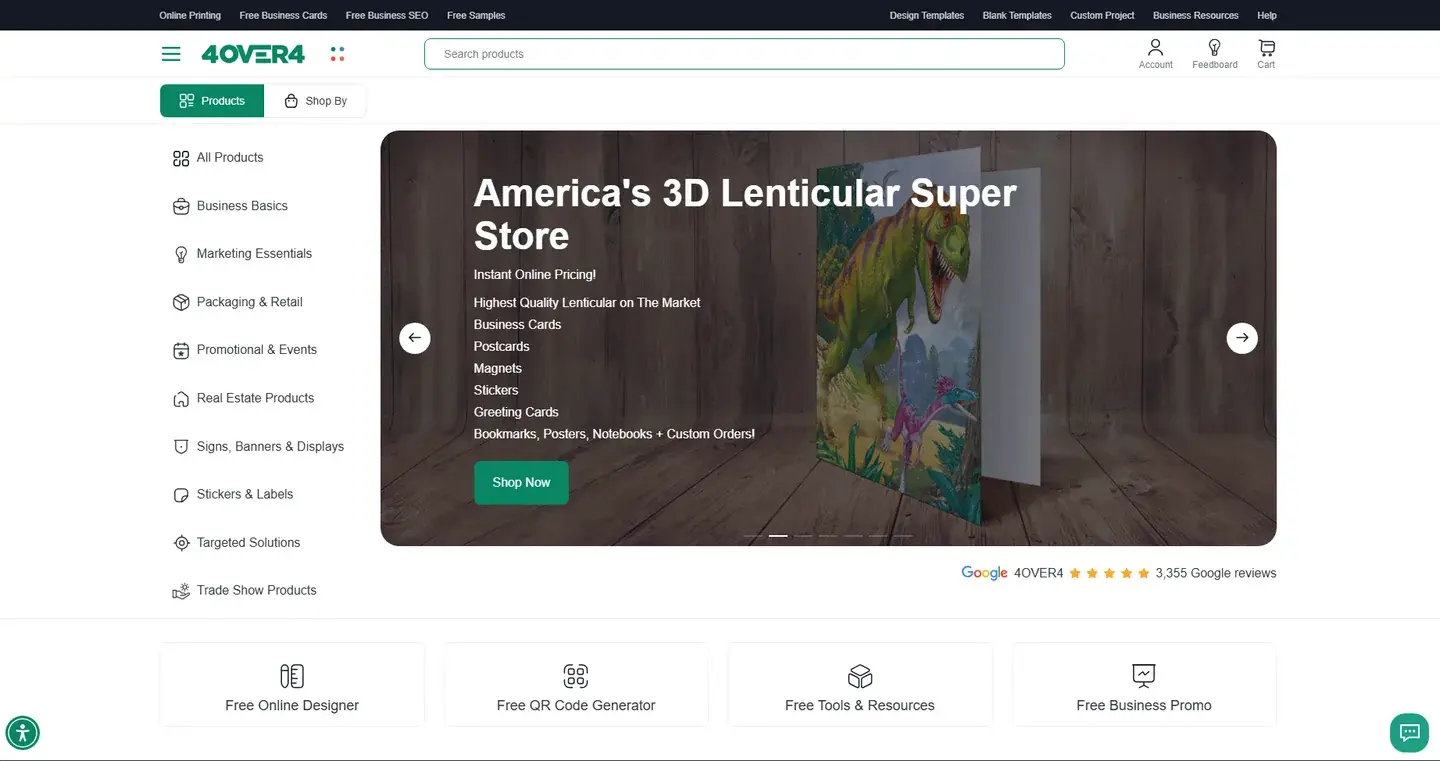
4over4 reported 82% higher e-commerce revenue and a 48% higher conversion rate.
Keep Reading
Printcart is Netbase's own web-to-print SaaS, and this record shows what we built.
Keep ReadingBuyer FAQ
Only where you decide it may. Every automation starts in shadow mode, and risky actions keep an approval step permanently.
We measure time per case, error rate and cost per case before the build, then compare the same numbers after rollout.
Low-confidence cases go to a person, every action is logged, and each automation has a manual fallback and a rollback path.
Yes. Integration with email, storefront, ERP, CRM and file storage is planned in discovery.
You own the IP created for you. Netbase productized modules are licensed, not transferred.
Data handling is agreed in discovery and written into the DPA; we design the automation to process only the data it needs.
Related solutions
 AI-assisted ecommerce operations automation: from paid order to delivered parcel
Ecommerce operations automation removes the manual order, production and fulfilment steps behind a storefront: routing, file preparation, status updates and back-office sync, with AI flagging risky orders and triaging exceptions. It suits merchants and online printers whose order volume has outgrown their staff. In delivered work, 4over4 cut design-file production time 40% and Geo-Tek cut order processing time 30%.
Learn More
Related insights

Start AI automation with one high-volume, checkable process, not a platform. Measure the baseline first, automate the predictable steps with rules, add AI only where inputs are unstructured, keep people approving money, customer-facing and irreversible actions, and judge success by time, errors and cost per case against that baseline, with security designed in.
Service owner and next step
This service is owned by David, Netbase's Chairman, founder and CEO, and maintained by the Netbase Editorial Team. Pick one workflow that eats your team's week and send us a sample: book a solution review, or view relevant work first.
Discuss a project
Netbase JSC helps organizations design, build, modernize, and operate digital products and AI-enabled business systems.+84 937 869 689
91 Nguyen Chi Thanh, Dong Da, Hanoi, Vietnam
Get in touch
Tell us what you want to build, modernize, or operate.