

Choosing an AI consulting partner: strategy firm, build partner or platform vendor
A strategy firm fits when the missing piece is the roadmap and the business case; a build partner fits when a scoped system has to ship and run; a platform vendor fits when a configurable product already covers the workflow. Match the gap in your own situation to the archetype, not to whichever firm pitched first.
Book a solution review See the related serviceBy Huy Nguyen (David), Founder & CEO · Updated 10 Oct 2026 · 11 min read

This guide is for operations and technology leaders starting an AI initiative without an in-house AI team, and for buyers who already have a shortlist and need a repeatable way to test fit before an RFP. It assumes AI automation itself is already the right move; for how to pick the first process, set human approval and measure ROI once a partner is engaged, see the AI automation for business operations guide. This page answers a narrower, earlier question: which kind of outside partner should run that work, and what should the shortlist call test?
In this guide
- Why "best AI consulting firm" lists do not answer this
- The decision matrix: match the archetype to the gap
- What each archetype is actually built to do
- Running the shortlist call
- Where AI fits
- What delivery record exists, and what does not
- Alternatives: other ways to structure the engagement
- Limits of this guide
- Frequently asked questions
- Next step
Why "best AI consulting firm" lists do not answer this
Search "how to choose an AI consulting partner" and the results are checklists published by firms that want to be on your shortlist: ask for references, watch for buzzwords. Augusto Digital's buyer guide is representative — a useful red-flag list (solution-first discovery, no failed-project stories, vendor lock-in) that still treats "AI consulting partner" as one category. A breakdown on GetAOB sorts firms into five delivery models by scale and cost, which helps build a shortlist but still does not say which model a given situation calls for.
Neither genre starts from the buyer's gap. A firm strong at writing a 40-page AI roadmap and a firm strong at shipping a production agent solve different problems, and a buyer who skips to "which firm has the best case studies" risks hiring a strong firm for the wrong job.
The decision matrix: match the archetype to the gap
Score the actual gap in your own initiative, then read down the column with the most matches.
| Signal in your situation | Strategy firm fits | Build partner fits | Platform vendor fits |
|---|---|---|---|
| What is missing | A board-ready business case, use-case priority list or governance baseline | A scoped system with no internal engineering capacity to build or run it | A workflow a configurable product already covers end to end |
| Decision owner's confidence | Unsure which process or use case to start with | Already knows the first process; needs it built | Already knows the product category; needs it configured |
| Build risk tolerance | Low: a report is lower-risk than committing engineering spend before the plan is set | Accepted: the team is ready to commit to a working system | Low: the buyer wants proven configuration over custom risk |
| Time to first result wanted | Can wait for a diagnostic phase before anything ships | Wants a working pilot in weeks, not a report in months | Wants a live tool in days, inside the vendor's product |
| Ownership after the engagement | A roadmap the buyer's own team or a later build partner executes | A system the buyer's team can run and extend, with a documented hand-over | Whatever the vendor's product lets the buyer configure and own |
| Biggest failure mode to guard against | A report with no one assigned to execute it | A build that ships the wrong thing because no one validated the use case first | Advice and architecture that always points back to the vendor's own product |
A split score usually means the first engagement should combine strategy and build rather than hire the two separately and hand off between them: a validated first use case built by the same team that scoped it removes the handoff risk in both directions.
What each archetype is actually built to do
A strategy or advisory firm is built to produce a plan: a prioritised use-case portfolio, a governance baseline, a board-level business case. That is real value when the open question is "what should we automate first", not "can someone build it". The trade-off is execution risk: a strategy-only engagement can leave the buyer holding a report with no one assigned to build it, and the firm that wrote the roadmap is rarely accountable for whether the built system works.
A build partner is built to ship and run a scoped system: discovery of the real workflow, a governed implementation, and a hand-over the buyer's own team can maintain. The trade-off mirrors the strategy firm's: a build-only partner will build what it is asked to build even when the brief targets the wrong process, so the use case still needs validating before engineering spend commits.
A platform or product vendor with services attached is built to get the buyer live inside its own product fast, using pre-built connectors and templates. That is real value when the workflow genuinely fits an off-the-shelf shape. The trade-off: the vendor's advice tends to point toward its own product regardless of fit, and a workflow that does not fit the product's shape gets bent to fit it rather than built to match the business.
Running the shortlist call
-
Name the gap first
, using the matrix above, before talking to any firm — a plan, a build, or a configuration.
-
Ask who does the work after signature
, not who pitches. A proposal signed by senior staff but delivered by a different, junior team is the most common mismatch.
-
Ask for a system running in production today
, not a slide deck, and ask to speak to that client directly.
-
Ask how the firm avoids recommending its own stack regardless of fit
A model-agnostic answer names which commercial and open-source AI tools and models it works with per project, without claiming an exclusive partnership.
-
Ask what hand-over looks like
Documentation, workshops and a maintainable system mark a partner that transfers capability; a firm that cannot describe a hand-over is building a dependency.
-
Write the fit into the contract
named roles, the engagement model (fixed-price, milestone-based or retainer) and who owns the system and its IP after delivery.
Where AI fits
The archetype choice does not change the governance a buyer should expect once AI touches real data and decisions: a named reviewer on AI-assisted changes, a written policy on what trains on the buyer's data, and human approval on consequential actions. Ask every firm on the shortlist, regardless of archetype, the same questions on this point before signature.
-
In delivered work
Product recommendation engine
Built for 4over4's online printing store from browsing and purchase history; a named, published case carried from scoping through to a live AI feature on one team.
-
In delivered work
RAG knowledge assistant
Beyond 4over4, Netbase has delivered retrieval-augmented knowledge assistants, document AI and MLOps pipelines for other clients (not named); see the RAG architecture guide for how one such system is structured.
-
Available capability
Model-agnostic AI tooling
Netbase works with the major commercial and open-source AI tools and models, chosen per project; tooling policy scales with team size, not yet tied to a published case.
What delivery record exists, and what does not
Netbase positions itself as a consulting-first partner that combines strategy and build, so this guide's own standard applies to us too.
- Strategy and build on one team. Netbase leads with consulting, solutions, custom development and AI-enabled transformation; dedicated-team staffing is a secondary option. The strategy and consulting service and the AI automation service run from the same delivery organisation, so a validated use case moves into build without a handoff to a different firm.
- Continuity on a long strategy-to-build programme. Since 2020, Netbase has worked as offshore development and managing partner on a multi-tenant cloud ERP for a US client (not named): phase one covered CRM, messaging, HR, a knowledge base and API integrations, with a retail extension planned for phase two. The team that scoped the architecture has run it since, not a plan handed to a separate builder.
- A named commerce AI case. For 4over4's online printing store, Netbase delivered a recommendation engine from browsing and purchase history, alongside conversion, checkout and search work; revenue grew 82% within six months, reported in the published 4over4 case study. The figures reflect the whole engagement and depend on that client's baseline.
- Anonymised AI delivery beyond 4over4. Netbase has also delivered RAG knowledge assistants, document AI and MLOps pipelines for other clients; described only by the kind of system and Netbase's role, with no client name, count or result figure.
- Commercial terms. Most Netbase projects run on fixed-price contracts agreed after discovery; milestone-based, retainer and KPI-linked terms are also offered where they fit better.
What does not exist. Netbase publishes no ranking or named comparison against another AI consulting firm, no win-rate or proposal-acceptance figure, and no published count of strategy-only or build-only engagements split out from combined ones.
Alternatives: other ways to structure the engagement
| Route | Strength | Choose it when |
|---|---|---|
| Strategy firm, then a separate build partner | Independent validation of the plan before committing build spend | Governance or procurement rules require the two to be separate vendors |
| One partner for strategy and build | No handoff risk; the team accountable for the plan is accountable for the system | Speed to a working first use case matters more than vendor independence between the two phases |
| Platform vendor with configuration services | Fastest path to live if the workflow fits the product | An off-the-shelf shape genuinely matches the process, with no custom integration gap |
| In-house team with a build partner for capacity | Full control of the roadmap, external help only for execution capacity | A real AI/product team already exists and the gap is hands, not direction |
Netbase runs the combined strategy-and-build row through its strategy and consulting service and AI automation service; see the AI readiness assessment framework to score whether the gap is strategy, build or governance before the first call, and AI agent vs workflow automation once a build is underway.
Limits of this guide
- The decision matrix scores the gap in your own situation; it does not rank or score any named firm.
- "Strategy firm", "build partner" and "platform vendor" are not registered categories a firm advertises itself under; many firms blur the line in their own marketing, so test the archetype with the shortlist-call questions above rather than the firm's own label.
- No win rate, price, engagement count or satisfaction figure is claimed for any firm, including Netbase, beyond what is published in the case referenced above.
Plan the next step with a Netbase consultant
Frequently asked questions
It depends on whether the same accountable team carries the use case from plan into build, not on the marketing claim. Ask who does the work after signature; a "combined" offer that hands the brief to a different build team has not removed the handoff risk.
Only if the workflow's shape genuinely matches the product's configuration options; forcing a custom process into a fixed shape usually costs more in workarounds than a scoped build would have cost directly.
Not first. Match the archetype to the gap, then compare commercial terms within the shortlist that already fits; comparing price across mismatched archetypes compares different jobs, not different quotes for the same job.
Enough to compare answers on the same questions, typically two to three; one leaves no comparison, and beyond three or four rarely changes the decision once the archetype is matched to the gap.
Next step
Score your own initiative against the matrix above, then book a solution review and we will scope it as strategy, build, or both on one accountable team.
Work behind this guide
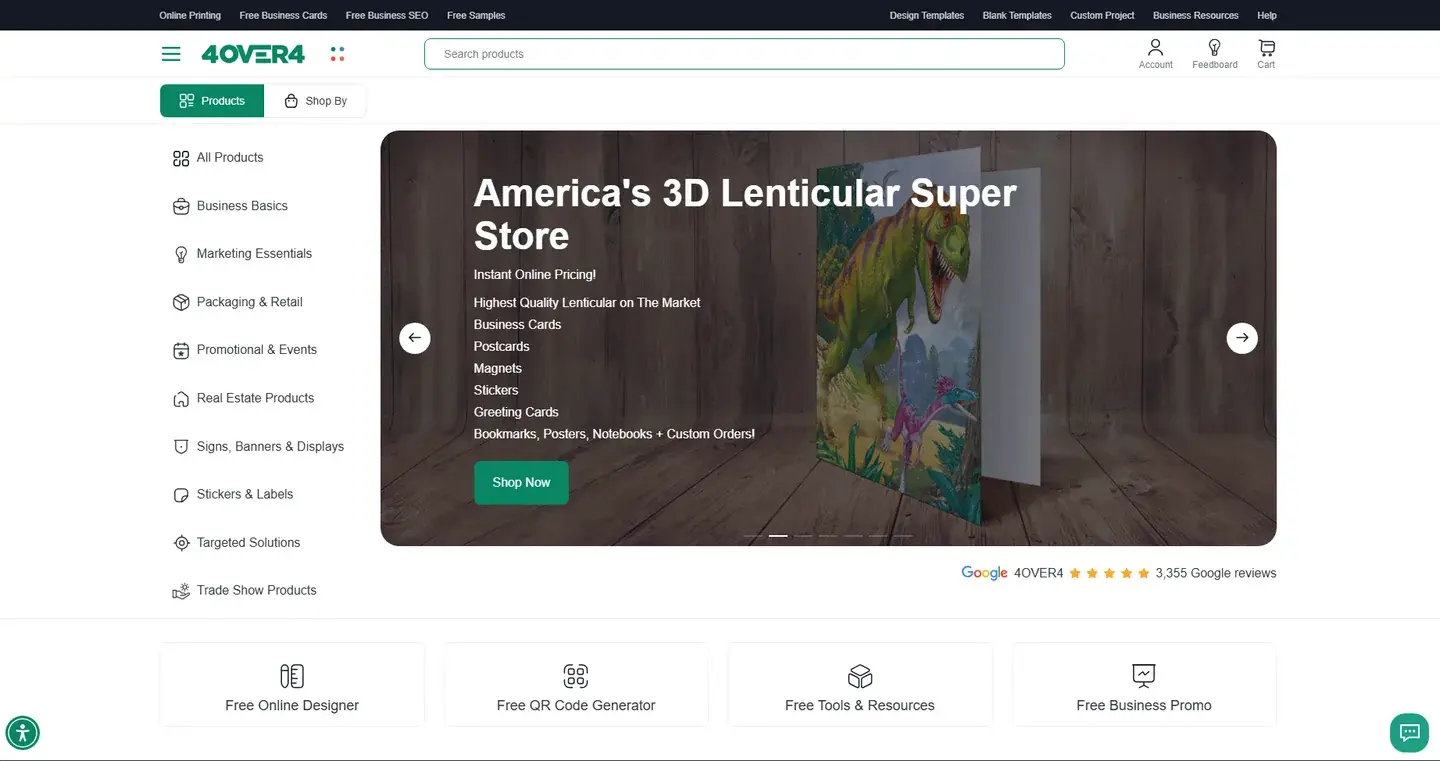
Netbase JSC reworked checkout, search and navigation, automated Adobe Illustrator (.ai) to SVG file conversion and added recommendations.
Keep Reading
This anonymous portfolio record describes only the kind of AI system and what Netbase did; it publishes no client name, logo, location, dates, model choice, figures or results.
Keep ReadingRelated services and solutions
 AI automation and agents that keep people in charge
Netbase provides AI automation and agent development for operations teams that want repetitive, multi-step work done by software while people keep approval over the decisions that matter. We combine rule-based workflow automation with AI steps where they add value, design the human approval points in, and measure return against a baseline taken before the build.
Learn More
 AI-assisted ecommerce operations automation: from paid order to delivered parcel
Ecommerce operations automation removes the manual order, production and fulfilment steps behind a storefront: routing, file preparation, status updates and back-office sync, with AI flagging risky orders and triaging exceptions. It suits merchants and online printers whose order volume has outgrown their staff. In delivered work, 4over4 cut design-file production time 40% and Geo-Tek cut order processing time 30%.
Learn More
Discuss a project
Netbase JSC helps organizations design, build, modernize, and operate digital products and AI-enabled business systems.project@netbasejsc.com
+84 937 869 689
91 Nguyen Chi Thanh, Dong Da, Hanoi, Vietnam
Get in touch
Tell us what you want to build, modernize, or operate.