

AI agents vs workflow automation: how to choose for each task
Use rule-based workflow automation when the steps are known and the inputs are structured: it is cheaper, predictable and easy to audit. Use an AI agent only when the steps genuinely vary and the input needs reading or judgement, and fence it with narrow permissions and human approval. Most operations need both, chosen step by step.
Book a solution review See the related serviceBy Netbase AI and Automation Engineering Desk · Reviewed by David (CEO) · Updated 17 Sep 2026 · 10 min read

This comparison is for operations and technology leaders deciding how to automate a specific process, and for anyone being sold "agentic AI" as a replacement for existing automation. It sets out the evaluation criteria, an evidence table, a decision table by task type, five scenarios from commerce and back-office work, and the limits of the recommendation. For the wider question of which process to automate first and how to govern and measure it, read our AI automation for business operations guide.
The two approaches in one paragraph each
Workflow automation runs a defined sequence: when an order arrives, check these fields, route it by these rules, update these systems, notify this person. It can include AI steps, such as extracting fields from an invoice, but the path is set in advance by people. Anthropic's engineering guidance describes workflows as systems where models and tools are orchestrated through predefined code paths.
An AI agent receives a goal and decides how to reach it: which information to look up, which tool to call next, when it is done. The same guidance describes agents as systems where the model dynamically directs its own process and tool use. That flexibility is the point, and also the cost: more model calls, more latency, and behaviour that is harder to predict and test.
Evaluation criteria
We compare the two on six criteria that decide real projects:
- Task type. Are the steps known in advance, or do they vary with each case?
- Input structure. Does data arrive in fields, or as free text, documents and images?
- Risk of error. What does a wrong action cost, and can it be undone?
- Cost to run. What does each case cost in compute, model usage and review time?
- Control and audit. Can you explain and reproduce what happened in any given case?
- Change over time. How easily does it adapt when the process or the inputs change?
Evidence table
| Criterion | Rule-based workflow automation | AI agent | Basis |
|---|---|---|---|
| Task type | Best for known, repeatable steps | Best for open-ended tasks whose steps cannot be predicted | Anthropic, workflows vs agents |
| Input structure | Needs structured inputs, or an AI step to structure them | Can work from unstructured inputs directly | General practice |
| Risk of error | Errors come from wrong rules and are repeatable, so they are found and fixed | Errors can come from unexpected, ambiguous or manipulated outputs | OWASP LLM06:2025 Excessive Agency |
| Cost to run | Low and predictable per case | Higher per case; agents trade latency and cost for flexibility | Anthropic, building effective agents |
| Control and audit | Every path is defined and testable in advance | Needs logging, permission limits and approval steps to be auditable | OWASP LLM06:2025; NIST AI RMF |
| Change over time | Each new case type needs a new rule | Adapts to new variations, but needs monitoring for drift | NIST AI RMF, Measure and Manage functions |
Two external points carry most weight. Anthropic's guidance recommends starting with the simplest solution and adding agentic complexity only when it demonstrably improves outcomes. OWASP traces the main agent risk, excessive agency, to excessive functionality, permissions and autonomy, and recommends human approval for high-impact actions and authorization checks in downstream systems. NIST's AI Risk Management Framework, a voluntary framework organized into Govern, Map, Measure and Manage, gives the structure for monitoring either approach once it runs.
Decision table by task type
| Task | Recommended approach | Why |
|---|---|---|
| Moving structured data between systems | Workflow automation | Known steps, structured input; an agent adds cost and no value |
| Routing by clear rules (region, product, value) | Workflow automation | Rules are auditable and cheap to change |
| Extracting fields from invoices, forms or emails | Workflow with an AI step | The path is fixed; only the reading needs a model |
| Classifying and drafting replies to customer messages | Workflow with an AI step and approval | Reading needs AI; sending stays with a person at first |
| Investigating an exception across several systems | AI agent with read-only tools | Steps vary per case; read-only access limits the damage |
| Resolving exceptions that change money or orders | AI agent proposes, a person approves | Judgement helps, but the action is high-impact |
| Research or triage across open-ended sources | AI agent | Open-ended, and the output is advice rather than an action |
| Regulated decisions about people (credit, hiring, health) | Neither alone; human decision with assistive tools | Legal duties and explainability outweigh speed |
The pattern: fix the path wherever you can, use AI for reading and judgement inside it, and give an agent freedom only where the path cannot be fixed, with permissions that match the risk.
Scenarios
Order routing for an online store. Orders arrive through the storefront with structured fields. Rules route them to the right warehouse or production queue and update the customer. This is workflow automation; an agent would be slower, costlier and harder to test. The rule-based commerce operations automation solution covers this kind of order, file and fulfilment flow.
Supplier emails about delivery changes. Emails arrive in every format. A workflow receives each one, an AI step extracts supplier, order and new date, rules match it to the purchase order, and a person confirms mismatches. Hybrid: the path is fixed, the reading is AI.
Customer "where is my order?" messages. An AI step classifies intent and drafts a reply from order data; the workflow sends routine answers after a trial period with approval, and escalates complaints. Hybrid, with autonomy that grows only as measured accuracy allows.
Investigating failed payments or stuck orders. Each case needs different lookups across storefront, payment provider and ERP. An agent with read-only tools gathers the facts and proposes a fix; a person applies it. This is where an agent earns its cost, because the steps genuinely vary.
Artwork and design-file preparation for print orders. Files arrive in many formats and must be converted and checked against print rules. A workflow handles the order and job flow; an AI step converts or checks the artwork. The 4over4 project below is an example of an AI step placed inside an order process.
Across retail and commerce, the same split appears in marketing operations, catalogue updates and returns. See how Netbase approaches these workflows in retail and e-commerce.
Cost and control in practice
- Budget per case, not per project. A workflow's cost per case is close to fixed. An agent's varies with how many steps and model calls a case needs; measure it in the pilot.
- Count review time as cost. An agent whose outputs all need checking may cost more than the manual process it replaced.
- Design permissions before prompts. Decide which tools each agent may call and with which role. Read-only first, write access only for proven, reversible actions.
- Log decisions, not only results. For agents, record the inputs, tool calls and reasoning summary for each case, so failures can be traced.
- Keep the workflow as the backbone. Even agent-led processes benefit from a workflow that starts cases, enforces approval and records outcomes.
When the systems themselves are the obstacle, for example an ageing platform without APIs, neither approach will fix it for long. Our digital transformation and modernization guide covers what to change first, and AI governance for mid-market companies sets the approval and logging rules agents need. For the permission and approval controls in detail, see AI agent security and human approval; once you choose an agent, our agentic AI architecture guide places its checkpoints in the control loop.
How Netbase approaches the choice
Netbase works across machine learning, natural language processing, computer vision, generative AI and AI with IoT; these are capability areas offered on request. The named AI work is 4over4's recommendation engine; Netbase has also delivered RAG knowledge assistants and a WhatsApp AI chatbot with CRM integration for clients that are not named, recorded anonymously with the AI service pages. We work with models from OpenAI, Anthropic (Claude), Google (Gemini) and Meta (Llama), among other commercial and open-weight models, chosen per task.
4over4, online printing. Netbase built a recommendation engine and automated the conversion of Adobe Illustrator (.ai) design files to SVG, a rule-based step, so customers could finalize designs without waiting for manual file fixes. As reported in the case study, design-file production time fell 40% and order fulfilment time 50%, with 200+ new templates in three months. The results cover the whole engagement, not one feature alone. The design choice matters here: an AI step and a rule-based step inside a defined order flow, not an autonomous agent. Read the 4over4 case.
Netbase's productized module library includes a workflow automation toolkit and an AI chatbot and WorkChat integrator, alongside a CRM and B2B sales engine, Smart ERP Light, a real estate digital toolkit and an e-commerce accelerator. The agentic AI automation service decides per step whether rules, an AI step or an agent fits, and builds the approval points in, in short agile iterations reviewed weekly. Agents are only as reliable as the interfaces they call; the enterprise systems integration guide explains the API-first foundation they need. The anonymised RAG knowledge assistant record shows an AI step outside commerce, and our enterprise AI readiness assessment checks whether data, skills and governance are ready.
-
In delivered work
WhatsApp AI chatbot
An AI chatbot that works inside defined conversation flows and syncs leads to a CRM, delivered for a client that is not named.
-
In delivered work
Product recommendation engine
Built for 4over4 from browsing and purchase history.
-
Available capability
Machine learning, NLP, computer vision, generative AI and AI with IoT
AI capability areas Netbase offers; beyond the delivered projects above, not yet tied to a published case.
Recommendation limits
- This comparison covers operational processes. It does not cover conversational products, research assistants or software development agents, where the balance can differ.
- Model capability, cost and latency change quickly; the per-case cost gap between the two approaches should be measured in your pilot, not assumed from this page.
- Regulated decisions carry legal duties that neither approach removes. Take legal advice.
- The external sources describe general guidance and risks; they do not certify any product or approach, including ours.
- Netbase's AI capability areas are stated as offered capabilities, separate from the delivered 4over4 work.
Plan the next step with a Netbase consultant
Frequently asked questions
No. Agents extend what can be automated; workflows remain the cheaper, more controllable choice for known steps, and often the backbone that agents run inside.
You can, but it is usually cheaper to start with a workflow and add AI where rules keep breaking.
Narrow tools, least-privilege roles, human approval for high-impact actions, full logging and a manual fallback.
Next step
Send us one process and a sample of real cases, and we will book a solution review to mark each step as rules, an AI step or an agent. You can also see the related service or browse more Netbase insights.
Work behind this guide
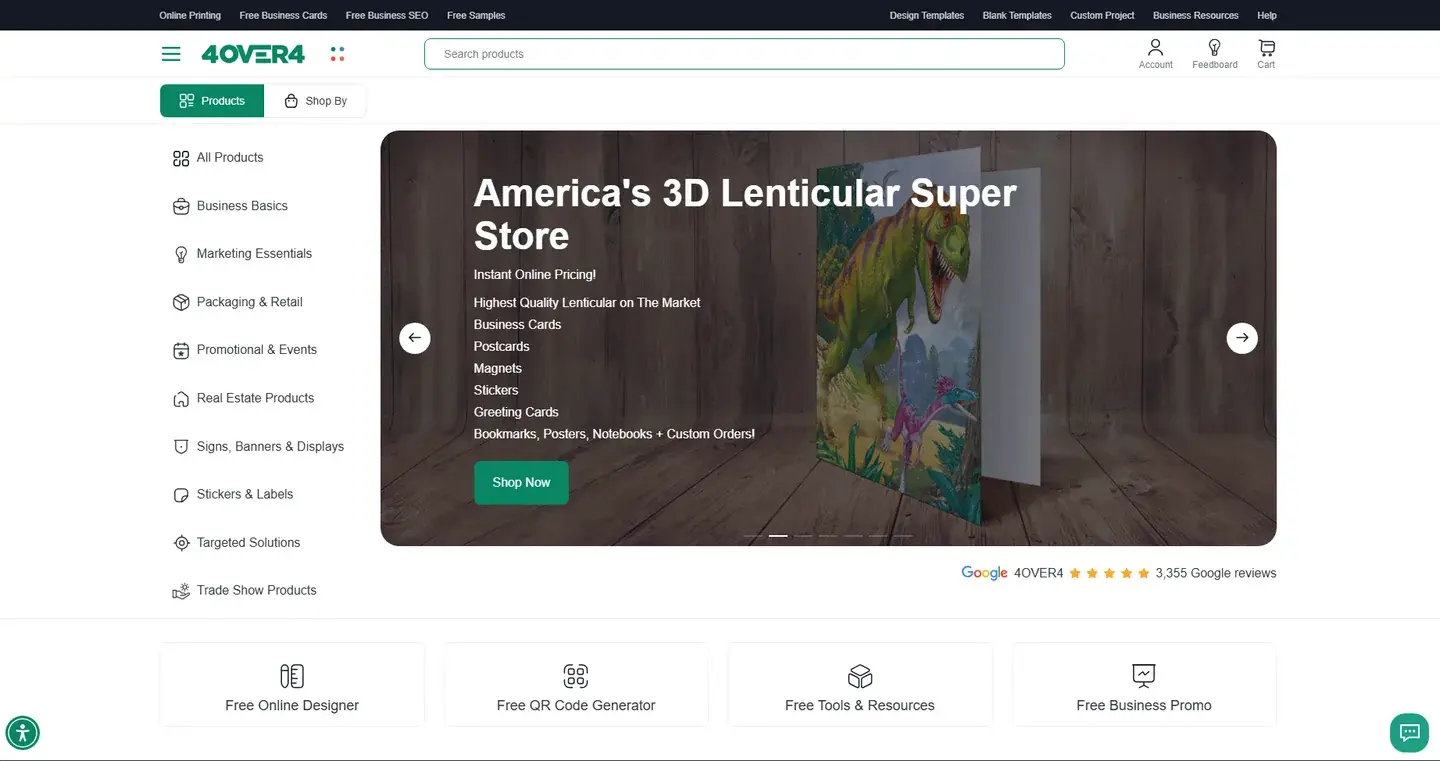
Netbase JSC reworked checkout, search and navigation, automated Adobe Illustrator (.ai) to SVG file conversion and added recommendations.
Keep ReadingRelated services and solutions
 AI automation and agents that keep people in charge
Netbase provides AI automation and agent development for operations teams that want repetitive, multi-step work done by software while people keep approval over the decisions that matter. We combine rule-based workflow automation with AI steps where they add value, design the human approval points in, and measure return against a baseline taken before the build.
Learn More
 AI-assisted ecommerce operations automation: from paid order to delivered parcel
Ecommerce operations automation removes the manual order, production and fulfilment steps behind a storefront: routing, file preparation, status updates and back-office sync, with AI flagging risky orders and triaging exceptions. It suits merchants and online printers whose order volume has outgrown their staff. In delivered work, 4over4 cut design-file production time 40% and Geo-Tek cut order processing time 30%.
Learn More
Discuss a project
Netbase JSC helps organizations design, build, modernize, and operate digital products and AI-enabled business systems.+84 937 869 689
91 Nguyen Chi Thanh, Dong Da, Hanoi, Vietnam
Get in touch
Tell us what you want to build, modernize, or operate.