

Measuring AI automation ROI after launch
You prove an AI automation still pays off after launch by tracking the same baseline metric on a fixed cadence for each live process, re-baselining only when its rules change, and separating its effect from any concurrent pricing, staffing or system change — not by checking ROI once at launch and never reading it again.
Book a solution review See the related solutionBy Huy Nguyen (David), Founder & CEO · Updated · 9 min read

This guide is for operations leaders, COOs and finance leads who already chose and launched an automation using the AI automation pillar's process-selection and approval-design chapters, and now need an ongoing answer rather than the pillar's one-time pilot-decision reading. It picks up after the pilot: an agentic AI automation programme is already live in at least one process, and the question has moved from "should we fund it" to "is it still paying off."
In this guide
- How is this different from the ROI check the pillar already runs?
- The post-launch tracking framework: one row per live process
- How do you keep two automations from sharing credit for one result?
- How to run the tracking framework
- Where AI fits
- What delivery record exists, and what does not
- Alternatives: the pillar's pilot check, this page's post-launch tracking, or both
- Limits of this guide
- Frequently asked questions
- Next step
How is this different from the ROI check the pillar already runs?
The pillar's "Measuring ROI without wishful numbers" section sets up one reading: a baseline, a fixed pilot window, and a decision at the end of it to scale, adjust or stop. That reading answers the funding question once. It does not say what to track in month four of a scaled automation, when to re-baseline after a rule change, or how to keep two or three live automations from being credited for a result a price change or a staffing move actually produced. This page is the tracking discipline that continues after that first decision, not a second way to make it.
The post-launch tracking framework: one row per live process
Record the baseline before each process is automated — the pillar's "Discover the process before you automate it" chapter already asks for it — then track the matching metric on the same cadence after launch. Each row below matches one of the pillar's own "Typical first candidates, by function."
| Function | Baseline (from discovery) | Metric to track after launch | Re-baseline when |
|---|---|---|---|
| Order operations | Time per case, exception rate, cost per case | Same three metrics, plus the share of cases closed without manual touch | The exception-routing rules change |
| Customer service | Time per case, error/rework rate | First-response time, resolution rate without escalation, rework rate | The autonomy level moves (for example from "draft for approval" to "act, with sampled review") |
| Finance | Time per case, error rate on invoice or payment matching | Match rate, exception queue size, time to resolve a mismatch | The source system, vendor list or matching rules change |
| Sales and CRM | Time per case, data-entry error rate | CRM-record completeness, time from call to logged record | The qualification criteria or CRM fields change |
| Supply chain | Time per case, exception rate on supplier confirmations | Exceptions caught before versus after a delivery date, time to flag a mismatch | A supplier integration or alert threshold changes |
| Production and fulfilment | Time per case, error rate on file or job checks | Escalation rate, time per escalated case | The check rules or the automation's confidence threshold change |
How do you keep two automations from sharing credit for one result?
You keep them separate by fixing a review window for each process before launch, listing every other change made in that window — a price change, a marketing push, a staffing change, a platform migration — and crediting a process's metric only to the extent nothing else in the list could explain the move. Reporting one blended "AI automation saved us $X" number hides which process, if any, actually produced it; reporting function by function, against each function's own baseline, is the only way a finance reviewer can check the claim.
How to run the tracking framework
-
List every live automation as its own row
, using the function table above; do not merge two processes into one reading because they share a department.
-
Carry the baseline forward from discovery
If a process skipped formal discovery, record a short retroactive baseline from the last normal month before launch rather than skipping measurement.
-
Fix the review window before you read a result
Public guidance on post-launch AI tracking warns that reading too early usually captures the ramp-period dip, not the automation's real effect; a staged read (an early check on adoption and exception rates, then a financial read once the process has run a full normal cycle) avoids that trap.
-
Track the same metric, the same way, on the same cadence
, until the review date.
-
Re-baseline only on a material rule change
a new autonomy level, an integration swap, a changed threshold — because the old baseline no longer describes the process being measured.
-
Report function by function
, with the concurrent-change list attached, not as one combined AI-automation number.
-
Feed a drifting or worsening metric to the right guide
, not back into this framework: drift detection for a quiet accuracy slide, or incident response and rollback for a metric that has already gone wrong.
Where AI fits
Each function row above tracks what its automation actually does, whatever point on the automation spectrum it uses — the pillar's rule-based, AI-step and agent levels all produce a baseline-and-after reading the same way.
Netbase's AI practice is model-agnostic, working with major commercial and open-source models chosen per project, including models from OpenAI, Anthropic, Google and Meta — relevant here because the "licence and model usage" line in each function's running cost belongs in a vendor/API cost category, not a named model.
-
In delivered work
Product recommendation engine
Built from browsing and purchase history; production time fell 40% and fulfilment time 50%, with 200+ new templates in three months, across the whole engagement — the one published before/after figure this framework can point to.
-
In delivered work
Document AI platform
Field extraction and classification delivered for a client that is not named, the kind of launched system this framework's finance-function row would track.
-
Available capability
Automated anomaly flags on tracked metrics
Flagging automatically when a function's post-launch metric moves outside its own baseline range is a machine-learning feature Netbase offers on request, not yet tied to a published project.
What delivery record exists, and what does not
Netbase runs weekly reviews and KPI dashboards with a dedicated account and project manager on its delivery engagements generally, the same review discipline this framework asks a process owner to keep for one automated function. The only published before/after figures for a delivered automation feature are 4over4's: a recommendation engine shipped alongside an automated Adobe Illustrator (.ai) to SVG file conversion — file-format workflow automation, not artificial intelligence — and together the project's registered results show production time down 40% and 200+ templates live within three months. Beyond 4over4, Netbase has delivered a document AI platform, a RAG knowledge assistant, MLOps pipelines, a WhatsApp AI chatbot with CRM integration and AI content moderation on a classifieds marketplace, for clients that are not named and with no published before/after figure for any of them. What does not exist: a published Netbase record of running this six-function tracking framework end to end for a named client, and no ROI percentage, payback period or accuracy figure is published anywhere on this page beyond the registered 4over4 numbers.
Alternatives: the pillar's pilot check, this page's post-launch tracking, or both
| Option | Strength | Risk | Choose it when |
|---|---|---|---|
| The pillar's one-time pilot ROI check only | Answers the funding question once, simply | Gives no ongoing signal once the automation scales or a second process launches | You have one automation still in its pilot window and have not yet decided to scale |
| This page's post-launch tracking only | Shows which live process moved which metric, on an ongoing basis | Assumes the pilot funding decision is already behind you | You already decided to fund and scale, and need a recurring read, not a one-time one |
| Both together (recommended once a process moves past its pilot) | The pilot check justifies the first spend; this framework keeps proving the spend was worth repeating | More metrics to own and report over time | You are reporting to stakeholders who ask both "did the pilot work" and "is it still working" |
Limits of this guide
- This framework tracks what to measure and when to re-baseline; no ROI percentage, payback period or benchmark is published here beyond the registered 4over4 numbers.
- It does not replace the pillar's one-time pilot ROI check; it starts after that decision is made and at least one process is live.
- A short review window can show adoption lag, not failure, which is why the steps above fix the window before reading a result; reading early is a common and avoidable cause of a false "it didn't work" conclusion.
- This guide does not cover finance-team treatment of AI spend (depreciation, capitalisation, tax); apply the function-level rows above on top of your own finance method for that.
- This guide does not say what to do once a tracked metric comes back worse than baseline; see drift detection or incident response and rollback for that decision.
Plan the next step with a Netbase consultant
Frequently asked questions
Only while a single automation is still inside its pilot window. Once you decide to scale it, add a second process, or change its autonomy level, the pilot's one-time reading no longer tells you whether the live system is still paying off; you need the recurring per-function tracking above.
Baseline and track each one on its own row in the function table, and list the other automation as a concurrent change in both rows' reports; launching them together does not let you combine their metrics into one number.
Check adoption and exception-rate signals early, but hold the financial read until the process has run a full normal cycle, including its usual peaks and exceptions; reading before that window closes usually captures the ramp-period dip, not the automation's real effect.
The process owner named during discovery owns the metric; finance reviews the cost side using the pillar's cost categories. Neither owns it alone, because the metric needs process knowledge to interpret and cost discipline to report.
Next step
List the automations you have already launched, baseline the ones that skipped discovery, and book a solution review to check your tracking plan against our automation delivery experience. See the related commerce operations automation solution, or browse more Netbase insights.
Work behind this guide
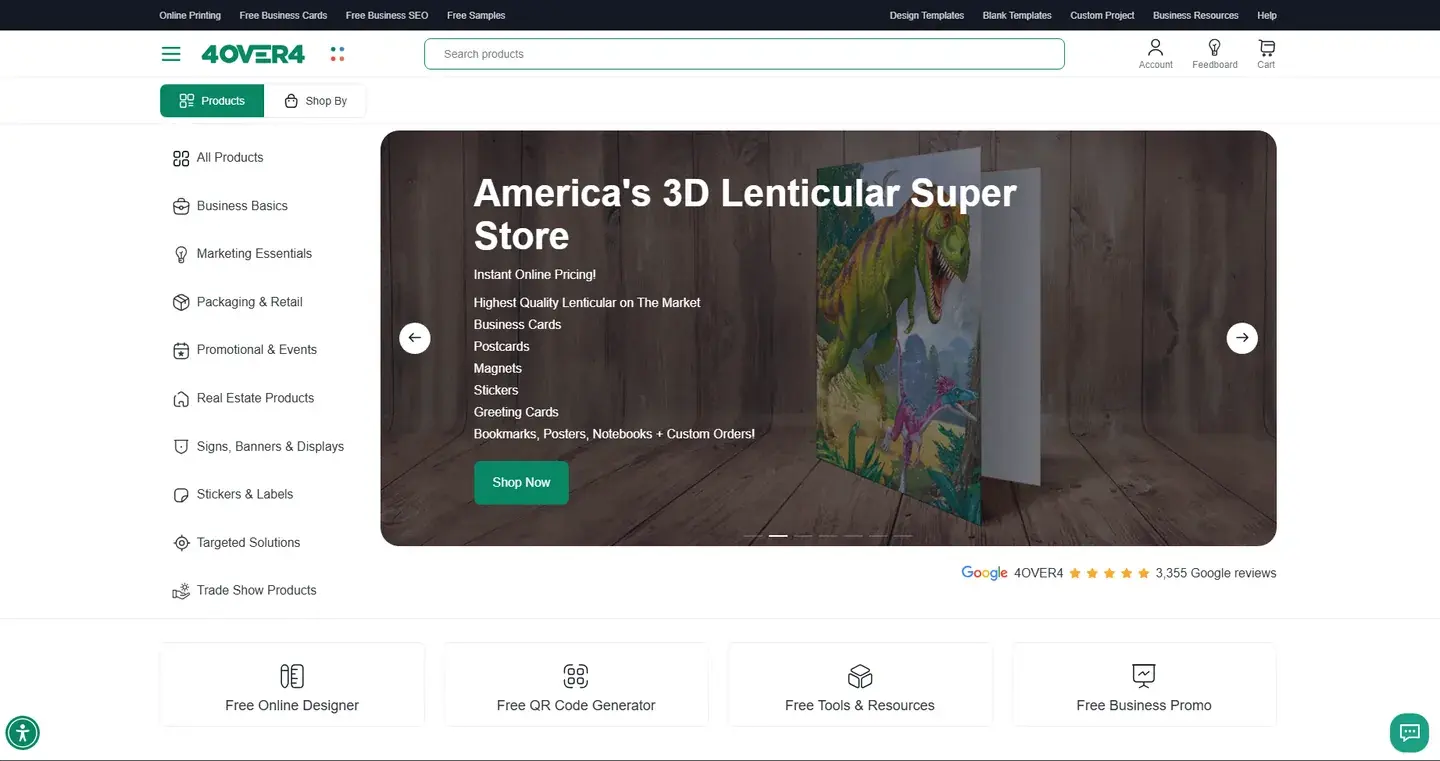
Within six months 4over4 reported 82% higher e-commerce revenue and a 48% higher conversion rate.
Keep ReadingRelated services and solutions
 AI automation and agents that keep people in charge
Netbase provides AI automation and agent development for operations teams that want repetitive, multi-step work done by software while people keep approval over the decisions that matter. We combine rule-based automation with AI where it adds value, build in human approval, and measure return against a baseline.
Learn More
 AI-assisted ecommerce operations automation: from paid order to delivered parcel
Ecommerce operations automation removes the manual order, production and fulfilment steps behind a storefront: routing, file preparation, status updates and back-office sync, with AI flagging risky orders and triaging exceptions. It suits merchants and online printers whose order volume has outgrown their staff. In delivered work, 4over4 cut design-file production time 40% and Geo-Tek cut order processing time 30%.
Learn More
Work with Netbase remotely
Every Netbase engagement is delivered remotely, so clients in any country and any industry can work with us; Netbase has worked with clients in 80 countries. Contracts and invoices are issued by Netbase JSC, and payment is made by bank transfer to Netbase JSC's company account or PayPal Business. Talk to the CEO, Huy Nguyen (David), on WhatsApp or by email.
Discuss a project
Netbase JSC helps organizations design, build, modernize, and operate digital products and AI-enabled business systems.project@netbasejsc.com
+84 937 869 689
91 Nguyen Chi Thanh, Dong Da, Hanoi, Vietnam
Get in touch
Tell us what you want to build, modernize, or operate.