

Generative AI development with evaluation and human review
Netbase builds generative AI features for product and operations teams: drafting, summarising, rewriting and content generation inside the software your people and customers already use. Every feature ships with an evaluation set, a human review step where output matters and limits on cost. Generative AI is a capability we are growing, and we label its maturity honestly.
Book a solution review View relevant workReviewed by David (CEO) · Updated 17 Sep 2026

Have a feature idea that needs a model to write or summarise? Book a solution review.
What generative AI development includes
A generative AI feature is more than a call to a model. It needs the right context from your data, instructions that are versioned like code, checks on what comes back, a place where a person approves or edits the result, and monitoring once real users arrive. It belongs to our AI & Data family.
Included
- Use-case scoping and a written quality bar
- Prompt, context and output design, versioned in code
- Integration into your web app, back office or workflow
- Evaluation sets built from your real examples
- Human review and edit steps in the user interface
- Guardrails for prompt injection and data leakage
- Usage, cost and quality monitoring
Not included
- Training a foundation model from scratch
- Publishing AI output with no review where it carries risk
- Guaranteed accuracy or time-saved figures
- Resale of model subscriptions

When to use it, and when another route fits
Generative AI earns its place when people spend time writing or reading text that follows recognisable patterns.
Good fit
- Staff draft similar descriptions, replies or summaries every day
- Content already exists that the model can ground its answers in
- A person can check the draft faster than write it
- The feature sits inside a product you control
Another route fits better
- The output must be exactly right every time with no review
- The task is a calculation or a lookup: use rules or a query
- Nobody owns the quality of the output
- You only need a chat subscription for a few staff
Two packaged routes may fit better than a custom feature. For answers from company documents, see the AI knowledge assistant; for replies to customers with hand-off to agents, see customer service AI. Every other route is in the services directory.
Outcomes and buyer jobs
Product and operations leaders commission generative AI development to:
Staff start from a grounded draft instead of an empty field.
Drafts wait for review wherever output reaches customers.
An evaluation set shows how the feature behaves on your own examples.
Usage limits, caching and model choice keep cost per request visible.
The feature is built so the model can change without a rewrite.
Capability modules and deliverables
Target tasks, examples of good and bad output, and review rules
The data sources, retrieval rules and instructions the model receives
API, user interface and workflow integration with edit and approve steps
Test cases from your data, scored before each release
Input and output checks for injection, leakage and unsafe content
Logs of prompts, versions, cost and reviewer edits
Reusable starting points
Netbase's productized module library includes an AI chatbot and WorkChat integrator and a workflow automation toolkit. Where one fits, the build starts from it; the modules are licensed, and the custom work built for you is yours.
Delivery process, team and governance
Generative AI work follows our six-step delivery lifecycle:
-
Discovery and strategic alignment
We collect real examples, agree the quality bar and decide where review is required.
-
Team assembly and architecture planning
An architect designs the context, the model interface and the fallback when the model fails.
-
Agile execution with outcome-based milestones
Each milestone is scored against the evaluation set, not only demoed.
-
Modular and productized components
Reusable modules cover chat, workflow and integration plumbing.
-
Training, rollout and optimization
Users learn to review and edit drafts; the feature goes live to a small group first.
-
Ongoing support and co-building
Prompts, context and model choices are tuned as reviewer edits show where output falls short.
Teams of 3 to 30 people typically start one to two weeks after discovery. Sprints are Agile and remote-first from Hanoi, in English, with weekly reviews, KPI dashboards and a named account and project manager; models are called through an API layer, so the provider can change. Security practices include secure code review and version control, role-based access control, TLS in transit and AES at rest, and vulnerability scanning; NDAs and DPAs are available on request.
We test against published risk lists. The OWASP Top 10 for LLM Applications (2025) ranks prompt injection first and sensitive information disclosure second, and NIST AI 600-1, the Generative AI Profile of the AI RMF (July 2024), sets out generative AI risks and suggested actions.
AI in this service
In this service AI is both the product and part of the delivery. Our engineers use AI-assisted code completion and test generation, and every change passes code review. For the feature itself, prompts and model settings are versioned, an evaluation set runs before each release, reviewer edits are logged as feedback, and cost per request is monitored.
-
In delivered work
WhatsApp AI chatbot
A language-model chatbot on WhatsApp Business synced with a CRM, delivered for a client that is not named.
-
In delivered work
Product recommendation engine
Delivered for 4over4 in the same project.
-
In delivered work
RAG knowledge assistant
A language model answering from company documents with cited sources, delivered for a client that is not named.
-
Available capability
Generative AI features for drafting, summarising and content
A capability we are growing; not yet tied to a published generative AI case.
Engagement models and commercial variables
Most Netbase projects are delivered on fixed-price contracts agreed after discovery; for generative AI, a fixed-price first release with an agreed evaluation set is the usual start. Milestone-based, monthly team retainer and KPI-linked terms are also offered for ongoing tuning. We do not publish rate cards.
What moves effort and cost: how many tasks the feature covers, how much context it must retrieve, where review is required, the expected request volume, data protection rules and the languages involved.
Technology as an implementation choice
Netbase is model-agnostic. We work with models from OpenAI, Anthropic (Claude), Google (Gemini) and Meta (Llama), among other commercial and open-weight models, including open-weight models hosted in your own cloud, and choose per project for quality on your evaluation set, data residency, latency and cost. The components and their maturity labels are on our data and AI stack page.
Industry applications
Printing and packaging. Product descriptions for large template catalogues, artwork briefs, quote replies and proof comments are text-heavy tasks with clear patterns and a person who can check them.
Commerce and customer operations. Order-status replies, return explanations and internal summaries of customer history suit drafting with review. The European Commission's summary of the EU AI Act says people should be told when they interact with a chatbot, so customer-facing features disclose that AI is involved.
 Printing and packaging: online ordering, AI artwork checks and production handoff
Netbase helps print and packaging businesses move ordering, artwork approval and production handoff online, with AI where files go wrong, so customers configure, design, proof and pay in one flow and the press floor receives clean jobs. Six published print-commerce case studies and 50+ custom web-to-print platforms, across apparel, packaging, signage, promotional merchandise and B2B portals, back this page.
Learn More
Proof: delivered AI and the platform it runs beside
Evidence maturity: generative AI development is a growth capability. Beyond the anonymised RAG knowledge assistant and a WhatsApp AI chatbot with CRM integration, both for clients that are not named, no generative AI project is published yet. The records below show the AI Netbase has delivered and the kind of platform a generative feature plugs into.
Delivered AI: 4over4 (online printing, United States). Netbase built a recommendation engine based on browsing and purchase history inside a wider store project. Read the 4over4 case.
Platform proof: Printcart (Netbase Business Division). A web-to-print and print-on-demand platform with an online design tool that turns orders into print-ready files and routed fulfilment. It is not an AI product; it is the kind of workflow where generated content would need review before production. See the Printcart record.
More projects are in our work.
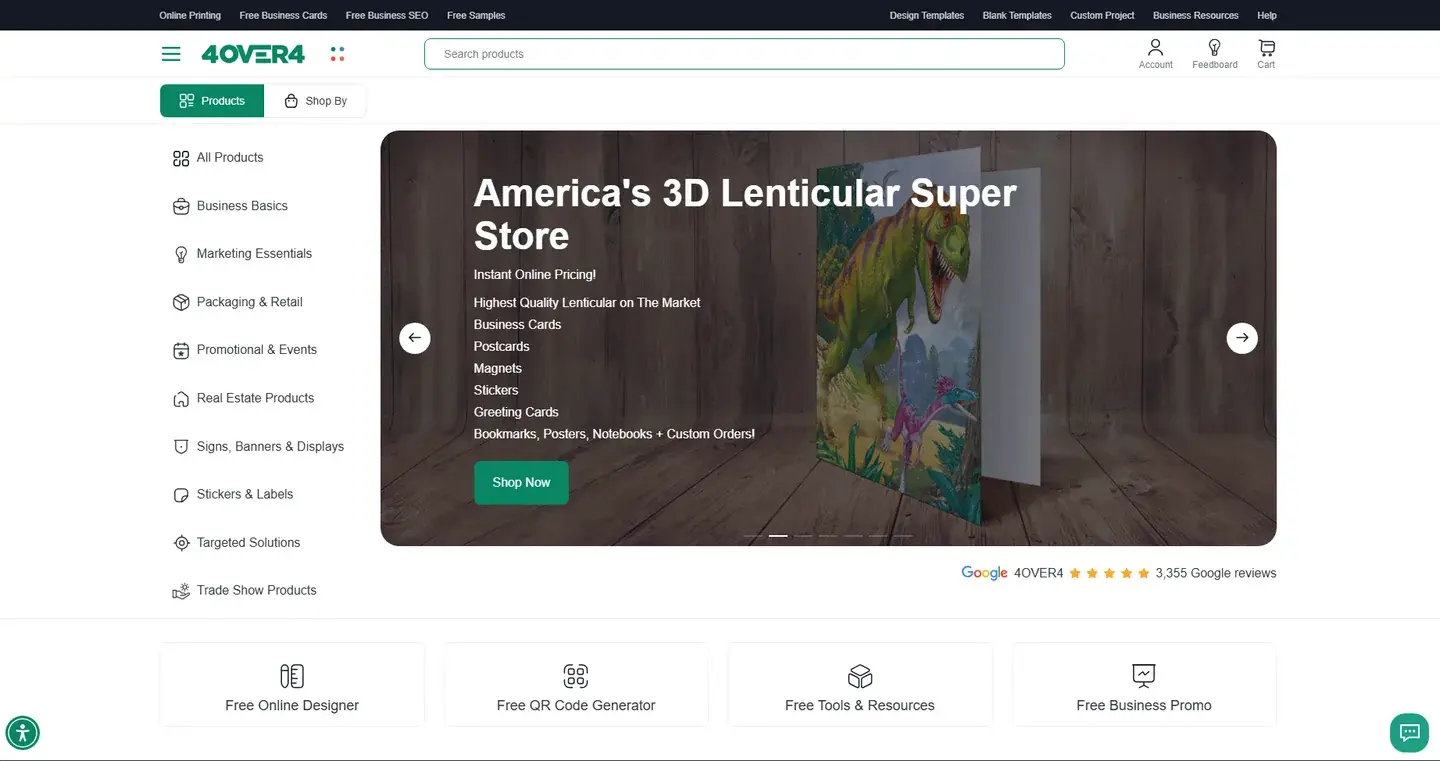
Netbase JSC reworked checkout, search and navigation, automated Adobe Illustrator (.ai) to SVG file conversion and added recommendations.
Keep Reading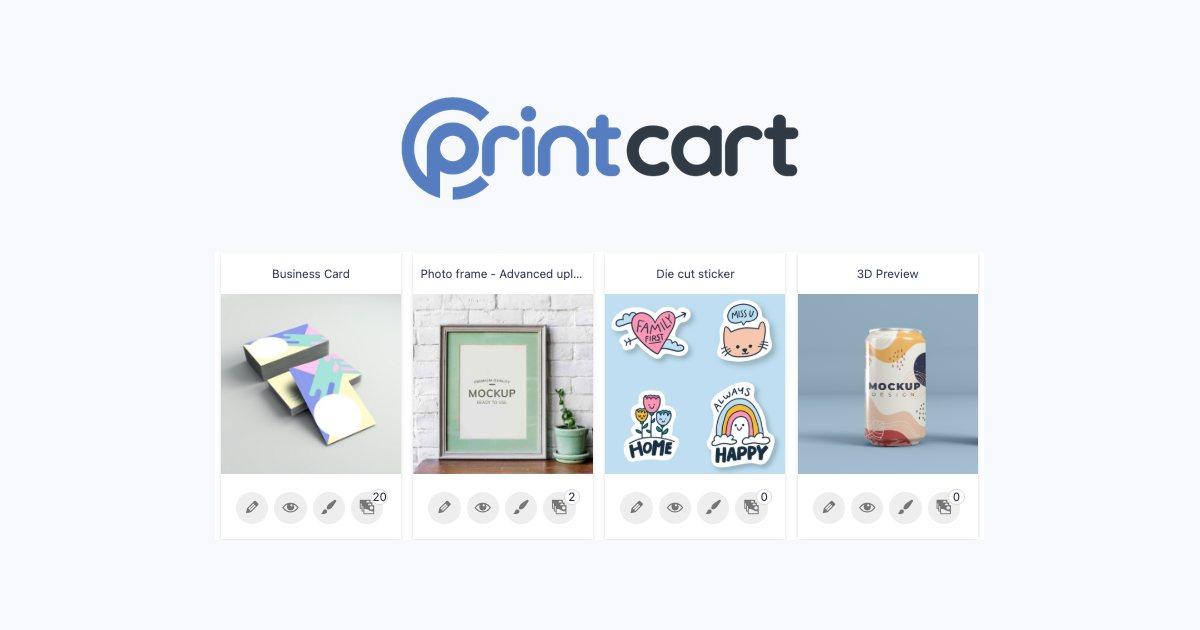
Printcart is Netbase's own web-to-print SaaS, and this record shows what we built.
Keep Reading
Netbase delivered a retrieval-augmented generation (RAG) knowledge assistant for a client, in a role that combined AI consulting, engineering and integration.
Keep ReadingBuyer FAQ
The one that performs best on your evaluation set within your data and cost limits. Netbase is model-agnostic.
Data handling is agreed in discovery and written into the DPA, and we configure providers and hosting to match it.
An evaluation set from your own examples is scored before each release, and reviewer edits are tracked after launch.
The feature grounds answers in your data where possible, shows its sources, and keeps a person in the loop wherever output carries risk.
You own the IP created for you. Netbase productized modules are licensed, not transferred.
Shipping a demo. Without an evaluation set and a review step, quality problems only appear in front of users.
Related solutions
 AI knowledge assistant: answers from company knowledge, with sources and access control
An AI knowledge assistant is an internal tool that answers employees' questions from your company's own documents and systems, cites the source behind every answer and shows each person only what they may see. Netbase offers it as a growth capability, designed with retrieval, evaluation and human review from the first pilot, and has delivered one for an unnamed client.
Learn More
Service owner and next step
This service is owned by David, Netbase's Chairman, founder and CEO, and maintained by the Netbase Editorial Team. Bring a few real examples of the writing your team does every day: book a solution review, or view relevant work first.
Discuss a project
Netbase JSC helps organizations design, build, modernize, and operate digital products and AI-enabled business systems.+84 937 869 689
91 Nguyen Chi Thanh, Dong Da, Hanoi, Vietnam
Get in touch
Tell us what you want to build, modernize, or operate.