Web application development with AI built in where it converts
Netbase provides web application development for product and commerce teams that need fast, maintainable web apps and storefront front ends, with AI search, assistants and automation added where they measurably help. Since 2012 Netbase has worked with 500+ businesses across 80 countries; according to its published case studies, PrintLeo's page load improved 35% and 4over4's conversion rose 48%.
A web application is the part of your business customers and staff actually touch: the storefront, the customer portal, the design tool, the admin screen that runs orders. When it is slow or fragile, every other investment underperforms. This service builds and rebuilds those applications, and it sits in our Product Engineering family.
Included
New web applications, portals and admin tools
Storefront front ends, including headless commerce
Rebuilds and performance work on existing web apps
Frontend and backend development with APIs
Accessibility, speed and cross-browser testing
Release pipeline, documentation and handover
Not included
Brochure sites a website builder already covers
Hosting-only or infrastructure-only projects
Marketing campaigns, SEO content or ad management
Native-only mobile apps with no web product
Stock theme installs with no custom work
Every application we build is designed to be handed over. Source code, architecture records and a working release pipeline mean your own team, or any future vendor, can keep shipping without reverse-engineering the system.
When to use it, and when another route fits
Choose this service when the browser is where your product lives or where your revenue is made, and speed, reliability or maintainability now limits growth.
Traffic arrives but too few visitors finish the journey
A simple marketing site: a website builder is cheaper
Conversion problem vs. a brochure site
Pages are slow and every change risks breaking something
Only store configuration on a hosted platform
Fragile code vs. platform settings
A portal or tool staff and customers use every day
A native mobile experience is the main need
A web tool vs. a mobile app
A headless front end on top of an existing commerce engine
No product owner available to make decisions
A front-end build vs. no decider
Not sure this is the right route? The services directory compares every option.
Outcomes and buyer jobs
Buyers hire web application development to:
Turn existing traffic into orders
Faster pages and shorter journeys lift conversion without buying more traffic.
Make change safe again
A clean architecture and test suite let the team ship weekly instead of fearing releases.
Give customers self-service
Configurators, design tools and portals replace email and phone.
Keep ownership
The custom code built for you is your IP.
Capability modules and deliverables
Friction points, speed baseline and prioritized fixes
Flows and screens for every key journey, desktop and mobile
Responsive, accessible front end, including headless storefronts
Business logic, data model and the APIs the front end calls
Page-speed baseline, fixes and a before-and-after comparison
Automated regression tests and release test reports
Release pipeline, operating notes and knowledge transfer
Larger redesigns can run first as a UI/UX design engagement.
Delivery process, team and governance
Every web application runs on our six-step delivery lifecycle: discovery and strategic alignment; team assembly and architecture planning; agile execution with outcome-based milestones; modular and productized components; training, rollout and optimization; and ongoing support and co-building.
In practice:
01
Measure
We baseline speed, conversion and errors before we change anything.
02
Design and plan
Journeys, architecture and milestones are agreed with your product owner.
03
Build and test
Releases ship in milestones, each one tested before it goes live.
04
Launch and improve
We compare results with the baseline and keep optimizing.
Teams range from 3 to 30, combining business analysts, project managers, solution architects, developers, QA and UI/UX; work typically starts one to two weeks after discovery. Sprints end in weekly reviews over Slack or Zoom, the backlog lives in Jira or GitHub, and the back end is built API-first so a mobile app or AI service can use the same endpoints later. Security is designed in from the first sprint: code review, role-based access and TLS by default.
Where AI improves a web application
A web app already holds the signals AI needs: searches, clicks, orders and support questions. We use them for features customers notice, and keep a person in charge of anything that changes a price, an order or an account.
For your users and staff:
Search that understands intent
Semantic search and suggestions so visitors find the right product or record on the first try.
Recommendations
Related products, templates or next steps based on behaviour, the kind of engine delivered for 4over4.
Chat and self-service support
An assistant that answers from your help content and hands over to a person when it is unsure.
Content and catalog enrichment
Draft descriptions, alt text and attributes for an editor to approve.
Admin summaries
Daily digests of orders, errors and customer feedback for the operations team.
For faster, safer delivery:
AI-assisted code review. Suggestions flag risky changes; an engineer decides.
Generated regression tests. Journey tests drafted from user stories, then reviewed and kept in the suite.
Log and error triage. Clustering of production errors so fixes start with the most frequent failures.
AI in this service
Where AI already runs in delivered work, and where it is offered as a growth capability.
Machine learning, NLP and generative AI that Netbase offers; not yet tied to a published web application case.
Engagement models and commercial variables
Most Netbase projects are delivered on fixed-price contracts agreed after discovery; milestone-based, monthly team retainer and KPI-linked terms are also offered. A new web application usually runs as project-based development; a long roadmap suits a dedicated team; a live application can move to on-demand support after launch. What moves effort and cost: journeys and user roles, integrations, content and data migration, accessibility and review speed. Existing applications usually start with a short journey audit, so the first budget goes to the fixes with the largest impact. We do not publish rate cards.
Technology as an implementation choice
Framework choices come from our frontend and mobile stack and are made for speed, maintainability and the team that will own the code. Per-stack pages cover React and Next.js, Angular, Vue.js and progressive web apps. For commerce front ends, Netbase has delivered on WooCommerce, Magento 2, Laravel and headless commerce. Headless is a choice, not a default: we recommend it when the front end must change faster than the commerce engine behind it.
Planning a subscription product rather than a single application? Our SaaS platform engineering guide covers multi-tenancy, integration and release questions.
Which technologies does Netbase use for web application development?
The languages, frameworks, platforms and tools Netbase engineers choose from for this work, grouped by layer.
Backend
Laravel
PHP
Node.js
NestJS
Python
GraphQL
Frontend
React
Next.js
Vue.js
Angular
TypeScript
Tailwind CSS
Data & AI
MySQL
PostgreSQL
Redis
Elasticsearch
Cloud & DevOps
AWS
Google Cloud
Docker
Kubernetes
Cloudflare
NGINX
Tools & QA
GitHub
GitLab
Jira
Playwright
Industry applications
Our deepest web application work is in printing and packaging, where the storefront has to carry a design tool, live previews and complex product options without slowing down. That experience is packaged as our web-to-print platform. The same disciplines of speed, clean journeys and safe releases apply to any business whose customers order, configure or self-serve in the browser.
Netbase helps print and packaging businesses move ordering, artwork approval and production handoff online, with AI where files go wrong, so customers configure, design, proof and pay in one flow and the press floor receives clean jobs. Netbase has delivered 50+ custom web-to-print platforms across apparel, packaging, signage, promotional merchandise and corporate B2B portals.
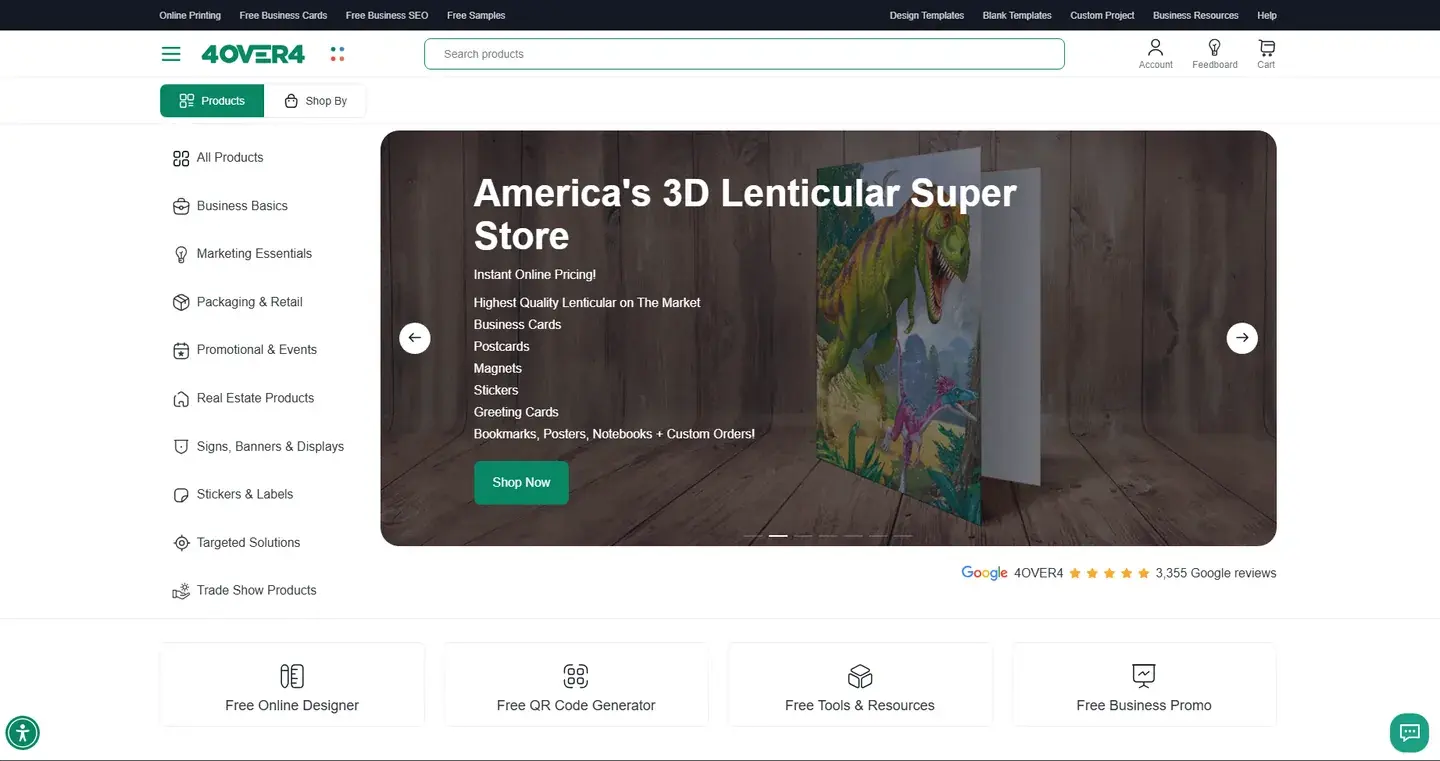
4over4 (United States). An online printing store had healthy traffic but too few orders. Netbase reworked checkout, search and navigation and automated file handling behind the storefront. 4over4 reported revenue up 82% within six months, conversion up 48% and average order value up 35%; production time fell 40%. Read the 4over4 case.
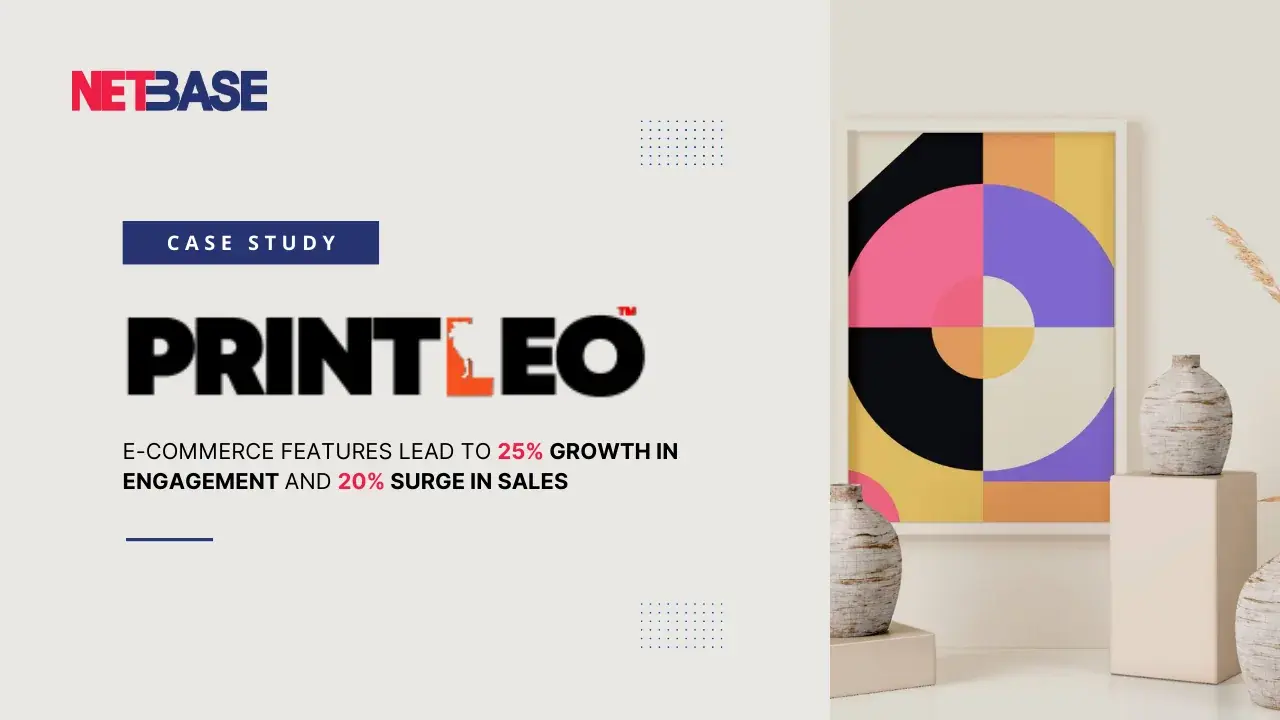
PrintLeo. A printing and advertising company needed real-time product customization and a faster, more stable website. Netbase delivered the storefront with integrated design tools and performance work. Page load improved 35%, bounce rate fell 40%, engagement rose 25% and online sales revenue grew 20%. Read the PrintLeo case.
Dey Page (Nigeria). A mobile-first business directory with state and category pages, reviews and WhatsApp click-to-chat, on the same back end as its app. See the Dey Page record.
Classifieds marketplace (founder not named). A bilingual web app with paid ad posting, payments and AI filtering that flags offensive content for admin review. See the classifieds record.
The last two are scope records without published results. More results are in our work.
4over4: conversion and design-workflow optimization
The same work also automated Adobe Illustrator (.ai) to SVG file conversion and added product recommendations for shoppers.
Most web applications run on fixed-price contracts with milestones agreed in discovery, and work typically starts within one to two weeks after it, per Netbase's record across clients in 80 countries.
You own the IP created for you, per Netbase's hybrid working model. Netbase productized modules and Business Division products are licensed, not transferred.
Often, yes: we start with a speed and journey baseline, then decide between targeted fixes and a rebuild. PrintLeo's page load became 35% faster, according to Netbase's case studies.
Support after launch covers training, rollout and optimization, then ongoing support and co-building, per Netbase's lifecycle. See maintenance and support for how live software is looked after.
Yes, usually without a rebuild: through AI integration, AI search, recommendations or a support assistant connect through APIs, starting where the baseline shows the most friction. 4over4, with a Netbase-built recommendation engine, reported conversion up 48%, according to Netbase's case studies.
The biggest risk in a rebuild is losing what already works. A baseline, regression tests and staged releases protect it, according to CEO Huy Nguyen (David).
Yes. Every Netbase engagement, including Web application development work, is delivered remotely from our head office in Hanoi, and clients in any country can engage us. Netbase has worked with clients in 80 countries. Onsite work is available on request.
Yes. Clients in any industry can engage Netbase for Web application development work, and it is delivered remotely. Netbase has worked with clients in 80 countries. Tell us your industry and we will say plainly whether we have delivered similar work.
You pay the company, not an individual. Contracts and invoices for Web application development work are issued by Netbase JSC, and payment is made by bank transfer to Netbase JSC's company account or by PayPal Business.
Talk to the CEO, Huy Nguyen (David). Message him on WhatsApp or by email with what you need for Web application development work; every other channel is on the contact page. WhatsApp +84 937 869 689 · project@netbasejsc.com
A web-to-print platform is an online ordering, design and prepress workflow that helps print businesses sell custom products: customers configure, design and approve their order online, AI can suggest layouts and catch artwork problems, and production receives a print-ready file. Netbase has delivered 50+ custom web-to-print platforms across apparel, packaging, signage, promotional merchandise and corporate B2B portals.
This service is owned by David (CEO), Netbase's founder, and maintained by the Netbase Editorial Team. Is your web application slowing the business down? Book a solution review, or view relevant work first.
Their Quick response in every step was impressive.
Olof ChristenssonCEO, Skelderwikens Brygghus AB, Sweden Read on Clutch
Work with Netbase remotely
Every Netbase engagement, including Web application development work, is delivered remotely, so clients in any country and any industry can work with us. Netbase has worked with clients in 80 countries. Contracts and invoices are issued by Netbase JSC, and payments go to the company: bank transfer to Netbase JSC's company account or PayPal Business. Your first contact is the CEO, Huy Nguyen (David), by WhatsApp or email.
Netbase JSC uses essential cookies to run this site and its live chat and to remember your choice. Analytics (Google Analytics) and marketing (Cloodo Leadflow) cookies are set only if you accept them. Privacy Policy
Customize preferences
Netbase JSC uses essential cookies to run this site and its live chat and to remember your choice. Analytics (Google Analytics) and marketing (Cloodo Leadflow) cookies are set only if you accept them.





























 Printing and packaging: online ordering, AI artwork checks and production handoff

 Web-to-print platform with AI design assistance, from online design to a print-ready order