

Frontend and mobile technology for AI-enabled products: where each fits
Netbase uses modern JavaScript front ends for headless storefronts, rich product interfaces and AI features such as assistants and smart search, browser-based design editors for custom products, and cross-platform mobile when an app must reach iOS and Android from one codebase. When pages are mostly content and standard checkout, a commerce platform theme is simpler and cheaper to run.
Review technology fit See related workReviewed by David (CEO) · Updated 17 Sep 2026

Customers who used the design tool converted 40% better
Completed designs rose 32% in six months
Page load fell 21% at USticker
What this family covers, and why buyers consider it
The front end is where buyers judge a product. This family covers three jobs:
-
Web front ends
Storefronts, customer portals and admin interfaces built as JavaScript applications, often on top of a separate commerce or API back end. Headless commerce is one of the platform types Netbase delivers.
-
Online design editors
Browser tools where shoppers add text, images and templates to a product and see a live preview before they buy.
-
Cross-platform mobile
One codebase for iOS and Android apps, for field teams, loyalty programs or repeat ordering.

When to choose it, and when not to
A headless or custom front end adds a second codebase to build, host and keep current. It pays off only when the experience it enables is worth that ongoing cost.
Choose it when
- Shoppers personalize products and need a live preview
- Several channels (web, app, kiosk) share one back end
- Page speed and interaction drive revenue
- The brand needs a custom experience the theme cannot deliver
- An app adds real value: offline use, push, device features
Choose something simpler when
- Products are standard and need no configuration
- One storefront serves one market
- A platform theme already meets speed targets
- The team has no front-end skills to maintain a separate app
- A responsive website covers the same job
Implementation patterns we use
Keep the commerce platform's storefront and add targeted components, such as a product designer or a faster checkout step. Lowest risk, fastest to ship.
A JavaScript front end talks to the commerce back end through its API. It suits multi-channel brands and teams that release the storefront independently.
An editor runs inside the product page, applies design rules as the shopper works and hands a production file to the order. This is the core of product personalization.
One shared codebase with native modules only where the device demands it, connected to the same APIs as the website.
Trade-offs to weigh
-
Cost
Custom front ends cost more to build and run than a theme
-
Performance
Can be faster, but image-heavy editors need careful loading work
-
Scale
Front ends scale easily; the limits usually sit in APIs and search
-
Security
More public endpoints to protect; tokens and uploads need controls
-
Talent
JavaScript skills are widely available; editor and 3D skills are rarer
-
Maintenance
Frameworks release often; plan regular dependency upgrades
Accessibility belongs on this list too. Editors and checkouts should be designed against the Web Content Accessibility Guidelines from the start, not patched later.
How Netbase applies it across services and solutions
Front-end work is delivered through web application development and shapes our commerce solutions. Two of the Netbase Business Divisions, Printcart and CMSmart, put online product design at the centre of their products, so editor patterns are tested in software we run ourselves before they reach client builds.
For print businesses the editor is one part of a larger system that also covers catalog, prepress and production. Our web-to-print platform guide explains how the pieces fit.
AI in front-end work
Whether built new or added through AI integration, AI reaches users through the interface: chat and search panels, streamed answers, generated design suggestions and camera features in apps. Each needs loading states, a fallback and a clear label for AI output, and AI-assisted UI tests are reviewed before they join the suite.
-
In delivered work
Recommendation engine
Built for 4over4's online printing store from browsing and purchase history.
-
Available capability
Assistant, AI search and vision interfaces
Offered on request; not yet tied to a published case.
Versions, ecosystem and verification
-
React
- Vendor
- Open-source React project, created at Meta
- Version line checked
- 19.x
-
React Native
- Vendor
- Open-source React project, created at Meta
- Version line checked
- 0.87 stable at verification
-
Node.js (build tooling)
- Vendor
- OpenJS Foundation
- Version line checked
- 24 Active LTS; 22 Maintenance LTS
-
WooCommerce and Magento 2 storefronts
- Vendor
- Automattic; Adobe
- Version line checked
- per the commerce platform in use
-
Shopify themes
- Vendor
- Shopify
- Version line checked
- vendor-managed
Netbase claims no technology-vendor partner tier or vendor certification for these technologies. Versions were verified on 2026-09-15; each project pins its own versions at kickoff.
Technologies we build with



Work examples, expert and next steps
- USticker, Western Sydney, Australia. Netbase extended the online design tool with background images, colours and real-time preview, and sped up image loading. Customers who used the design tool converted 40% better, completed designs rose 32% in six months and page load fell 21%. Read the USticker case study.
- Apps on commerce and directory APIs. The RB Marketplace shopping app runs on the marketplace API, and Dey Page ships one React Native codebase for iOS and Android.
Expert owner: David, founder and CEO of Netbase, reviews this page and the technology choices on client builds.
Compare families on the technologies overview, or send us your stack and goals and we will review technology fit.
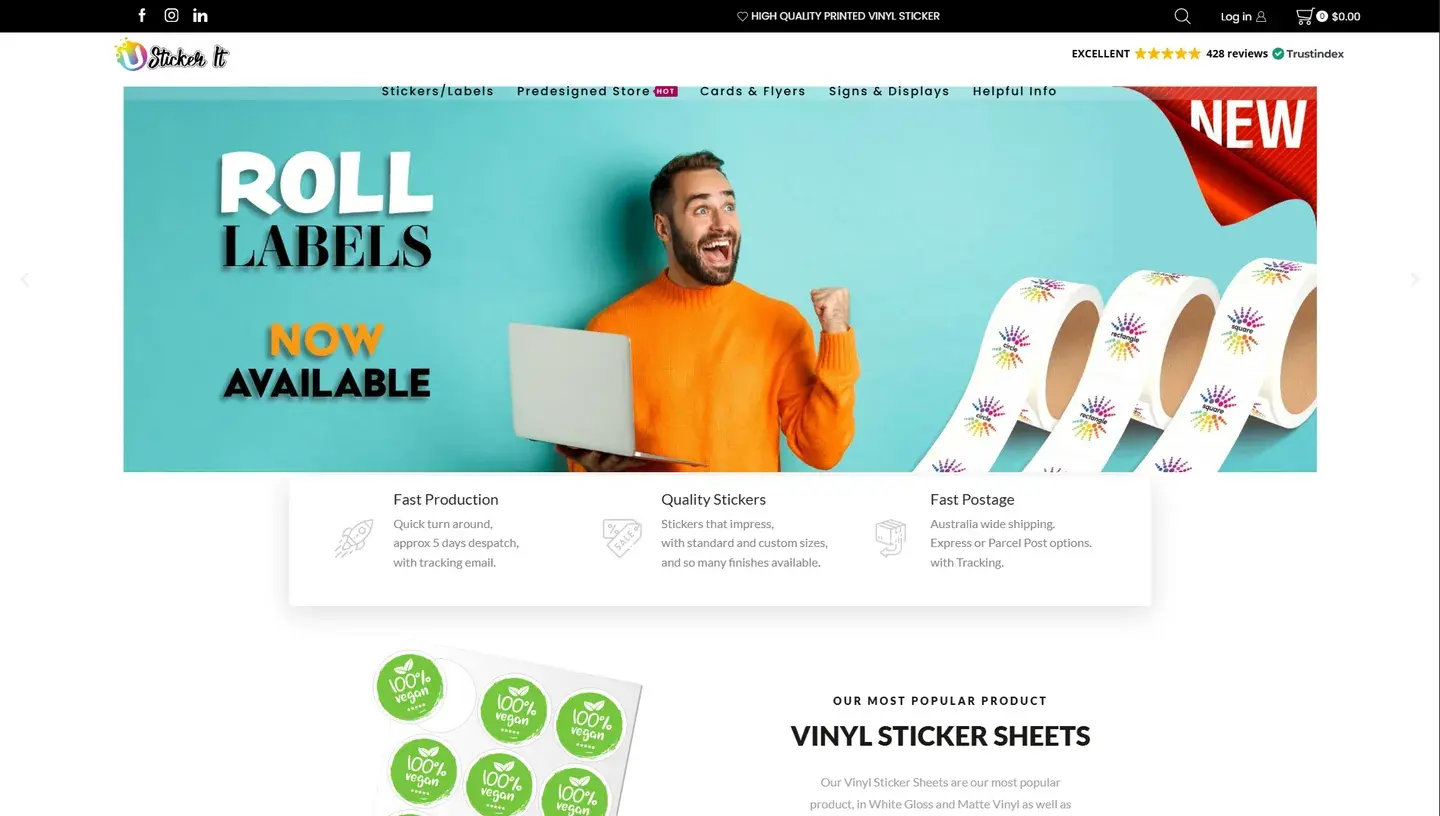
USticker, a family-owned sticker printer in Western Sydney, wanted customers to set background images and colors in its online design tool and to check out faster.
Keep ReadingPlan the next step with a Netbase consultant
Where Netbase applies this stack
 Web application development with AI built in where it converts
Netbase provides web application development for product and commerce teams to ship fast, maintainable web apps and storefront front ends, adding AI search, assistants and automation where they measurably help. Print-commerce clients show what that is worth: PrintLeo's page load improved 35%, and 4over4's conversion rose 48% after Netbase reworked the journeys its customers use to order.
Learn More
 Product personalization software with AI design suggestions: let shoppers design what they buy
Product personalization software lets shoppers design custom products online, adding their own text, images and options with a live preview and AI design suggestions before they buy. Netbase builds it into commerce platforms: at USticker, shoppers using the design tool converted 40% better, and Indieprint cut design errors 28% with automated print-ready files.
Learn More
Related insights

Web-to-print software must do four jobs: sell print products with rule-based pricing, let buyers design online, turn every design into a print-ready file, and pass the order to your MIS or ERP. AI assists design and repairs rough uploads. Buy when a product fits your workflow, build when the workflow is your edge, and measure ROI against a baseline.
Discuss a project
Netbase JSC helps organizations design, build, modernize, and operate digital products and AI-enabled business systems.+84 937 869 689
91 Nguyen Chi Thanh, Dong Da, Hanoi, Vietnam
Get in touch
Tell us what you want to build, modernize, or operate.