

Large or boutique Vietnam IT vendor: how to match vendor size to the job
A large Vietnamese vendor brings scale, bench depth and formal process; a boutique or mid-size partner brings senior attention, speed and continuity on one account. Pick by project stage, governance load, continuity need and integration complexity, not by headcount or awards, and you avoid both an overbuilt process and a team that outgrows its vendor.
Book a solution review See the offshore development center modelBy Huy Nguyen (David), Founder & CEO · Updated 9 Oct 2026 · 11 min read

This guide is for founders, product leads, CTOs and procurement leads comparing shortlisted Vietnamese vendors of different sizes for the same project. It assumes you already know why Vietnam is on the list; for the cost drivers, team models, IP terms and a vendor-honesty checklist that applies to any vendor regardless of size, see the Vietnam outsourcing guide. This page answers a narrower question: once Vietnam is the market, how big should the vendor be?
In this guide
- Why "which vendor" and "how big a vendor" are different questions
- The decision matrix: match size to the job
- What each size is actually built to do
- A sequencing plan for the decision
- Where AI fits
- What delivery record exists, and what does not
- Alternatives: other ways to right-size the engagement
- Limits of this guide
- Frequently asked questions
- Next step
Why "which vendor" and "how big a vendor" are different questions
Most public comparisons of Vietnamese IT vendors are rankings: company A, B and C ordered by scale, awards or review count. Second Talent's "Top 10 Software Development Outsourcing Companies in Vietnam" and MOR Software's own outsourcing overview are typical of the genre — useful for building a shortlist, silent on which size fits your project. Neither publishes a decision rule for a buyer who already has three vendors of different sizes on the table and needs to pick one.
Size changes four things a ranking does not show: how many people stand between you and the engineer writing your code, how much process the vendor insists on before work starts, how likely the same people stay on your account for a year, and how well the vendor absorbs a scope that keeps changing. None of those show up in a "top 10" list.
The decision matrix: match size to the job
Score your own project against each row, then read down the column with the most matches.
| Signal | Boutique or mid-size vendor fits | Large vendor fits |
|---|---|---|
| Project stage | MVP, early product, or a scope still being discovered | A defined, multi-team programme with a fixed architecture |
| Governance load | Light: one product owner, weekly reviews | Heavy: multiple stakeholders, formal audit trail, security questionnaires |
| Continuity need | High: the same two or three engineers must stay on the account | Lower: documented handover absorbs some rotation |
| Integration complexity | A handful of systems, one platform | Many systems, multiple business units, a phased rollout |
| Decision speed needed | Fast: a change request should not need a change board | Can tolerate a formal change-control process |
| Seniority access | You want direct access to the architect or lead engineer | You accept a layered team with an account manager as the usual contact |
| Compliance and audit | Standard NDAs, DPAs and security practice are enough | Named industry compliance history and a formal audit trail are required |
No row decides alone. A project that scores mostly in one column has a clear answer; a split score usually means a mid-size vendor, sized between the two, is the safer default — large enough to carry a real programme, small enough that the same people stay on it.
What each size is actually built to do
A large vendor carries more people across more accounts, so it spreads fixed costs — security, compliance, account management, bench capacity — over many clients. That is real value on a programme that needs several specialisms at once or must prove a formal process to its own auditors. The trade-off is depth of attention per account: a six-person build rarely gets a large vendor's most senior people, and scope changes often travel through more layers before they reach the engineer doing the work.
A boutique or mid-size vendor carries fewer accounts per senior person, so the same architect or lead engineer who scoped the work is often still the one reviewing it months later. That continuity and shorter decision chain suit a project whose scope is still being discovered, or where the client wants to reach a named engineer directly rather than an account manager. The trade-off is ceiling: a boutique vendor can struggle once a programme needs five specialisms at once, a formal audit trail, or more bench than it carries.
Treat "boutique" and "large" as a spectrum, not two boxes: a vendor with 30 to 80 people can sit in the middle, carrying more bench than a true boutique while keeping fewer layers than an enterprise-scale firm.
A sequencing plan for the decision
-
Score the project against the matrix above
before looking at any vendor, so the size you need is not anchored to whoever pitched first.
-
Shortlist two or three vendors in the size range the score points to
, not the size with the most marketing reach.
-
Ask each vendor for its team shape for your specific scope
, not its company headcount: who leads, how many people, and whether that team stays assigned to your account.
-
Run a small paid pilot
one feature or a documented bug fix — and judge review speed, seniority of whoever actually writes the code, and how a scope change is handled.
-
Re-check the governance and continuity rows after the pilot
A vendor that looked boutique-sized in sales calls can still route your account through a different team once signed; the pilot is where that shows.
-
Write the fit into the contract
, not just the proposal: named roles, a continuity clause if the same people must stay on the account, and the change-control process that matches the governance row you scored.
The Vietnam outsourcing guide's vendor checklist and its 0-2 scoring method test honesty and delivery evidence for any vendor you shortlist here; run both checks together before signing.
Where AI fits
Vendor size changes how AI governance is enforced, not whether it should exist. A large vendor usually has a written AI-tooling policy audited across accounts; a boutique vendor usually governs it informally, through the same two or three people who review every merge. Ask either size the same three questions: which AI tools and models touch your code and data, whether a named person reviews every AI-assisted change before merge, and whether your code or data trains a third-party model.
-
In delivered work
Product recommendation engine
Built for 4over4's online printing store from browsing and purchase history; proof that a mid-size Vietnamese partner can deliver AI inside a live commerce business, not only inside a large vendor's bench.
-
Available capability
AI-assisted delivery governance
Netbase works with the major commercial and open-source AI tools and models, chosen per project; tooling policy and merge review scale with team size, not yet tied to a published case.
What delivery record exists, and what does not
Netbase is itself a Vietnamese vendor in the middle of the spectrum this guide describes, so we show our own record rather than ask you to take the framework on faith.
- Team shape. Netbase delivery teams run from 3 to 30 people, combining business analysts, project managers, solution architects, developers, QA and UI/UX, with work typically starting one to two weeks after discovery — closer to the boutique or mid-size end than to an enterprise-scale bench.
- Continuity on a long programme. Since 2020, Netbase has worked as offshore development and managing partner on a multi-tenant cloud ERP for a US client (not named), through a first phase covering CRM, messaging, HR, a knowledge base and API integrations, with a retail extension planned for a second phase. The engagement record is in the cloud ERP portfolio record; see also how a comparable programme is set up in the AI-first offshore development center guide.
- A named commerce case. For 4over4's online printing store, Netbase delivered conversion and checkout work, search and a recommendation engine; revenue grew 82% within six months, as reported in the published 4over4 case study. The figures reflect the whole engagement, not a single feature, and depend on that client's baseline.
- Positioning and terms. Netbase leads with consulting, solutions and custom development; most projects run on fixed-price contracts after discovery, with dedicated teams, project-based development, on-demand support and fully managed delivery offered as engagement models. The client owns the IP created in custom development. Delivery communication runs in English, with weekly reviews, a KPI dashboard and a dedicated account manager and project manager. Security practice covers code review, TLS in transit, role-based access, MFA and vulnerability scanning, with NDAs and DPAs on request.
- Scale context. Founded in 2012, Netbase has served 500+ clients; the 2023 company profiles put the share of projects from clients outside Vietnam at 85%.
What does not exist. Netbase publishes no comparison of its own delivery against a named large competitor, no vendor-size benchmark, no switching-cost study and no figure for how often a continuity clause has been invoked. The cloud ERP programme's second phase is planned, not completed, and no duration or headcount is published for it.
Alternatives: other ways to right-size the engagement
| Route | Strength | Choose it when |
|---|---|---|
| Pure boutique vendor | Deepest continuity, fastest decisions, direct access to seniority | The project is small enough that one team covers it end to end |
| Mid-size vendor (the sweet spot for most product teams) | More bench than a boutique, fewer layers than an enterprise vendor | The score in the matrix above splits between the two extremes |
| A large vendor's dedicated pod | Enterprise process and compliance with a stable, named team carved out of a bigger bench | Compliance or audit history is mandatory, but you still want continuity |
| Large vendor plus a boutique specialist | Programme scale from the large vendor, deep attention on one hard component from a boutique partner | A specific piece (an AI feature, a tricky integration) needs senior focus the main programme cannot spare |
| In-house team with contractors | Full control, no vendor hand-off | A core team already exists and only needs capacity, not a new relationship |
Netbase runs the boutique-to-mid-size end of this table through dedicated development teams or a scoped offshore development center for a longer-lived programme; either model stays consulting-first, with a fixed-price default agreed after discovery rather than open-ended staffing. Whichever size you pick, the commercial model is a separate decision: see dedicated team vs fixed price.
Limits of this guide
- Vendor size is one input, not the whole decision; the Vietnam outsourcing guide's checklist still has to pass regardless of size.
- "Boutique", "mid-size" and "large" are not registered headcount bands; treat the matrix as a scoring method, not a classification you can look up.
- No duration, cost, success rate or switching-cost figure is claimed for any vendor size; none is published anywhere Netbase can source.
Plan the next step with a Netbase consultant
Frequently asked questions
Risk shifts rather than shrinks. A boutique vendor concentrates key-person risk (fewer people hold the context); a large vendor concentrates process and hand-off risk (more layers between you and the work). The continuity and governance rows in the matrix above tell you which risk your project tolerates better.
Some mid-size vendors absorb growth by adding people to the same account; a true boutique vendor more often reaches a ceiling and either turns away the extra scope or brings in a second team that breaks the continuity you chose it for. Ask directly how many people the vendor has added to one account before, and what changed when it did.
Usually, but not always: some large vendors run a lighter-weight pod model for a single client. Verify it with the team-shape question in the sequencing plan above rather than assuming from company size alone.
Not automatically. A large vendor reduces the risk of the vendor itself disappearing, but it does not reduce discovery risk on an unsettled scope. Score the project first; a safe-looking large vendor is still a poor fit for an MVP whose requirements are still moving.
Next step
Score your own project against the matrix above, then book a solution review and we will size the engagement model to it, boutique-style or scaled. See how Netbase runs a longer-lived programme in the offshore development center model.
Work behind this guide
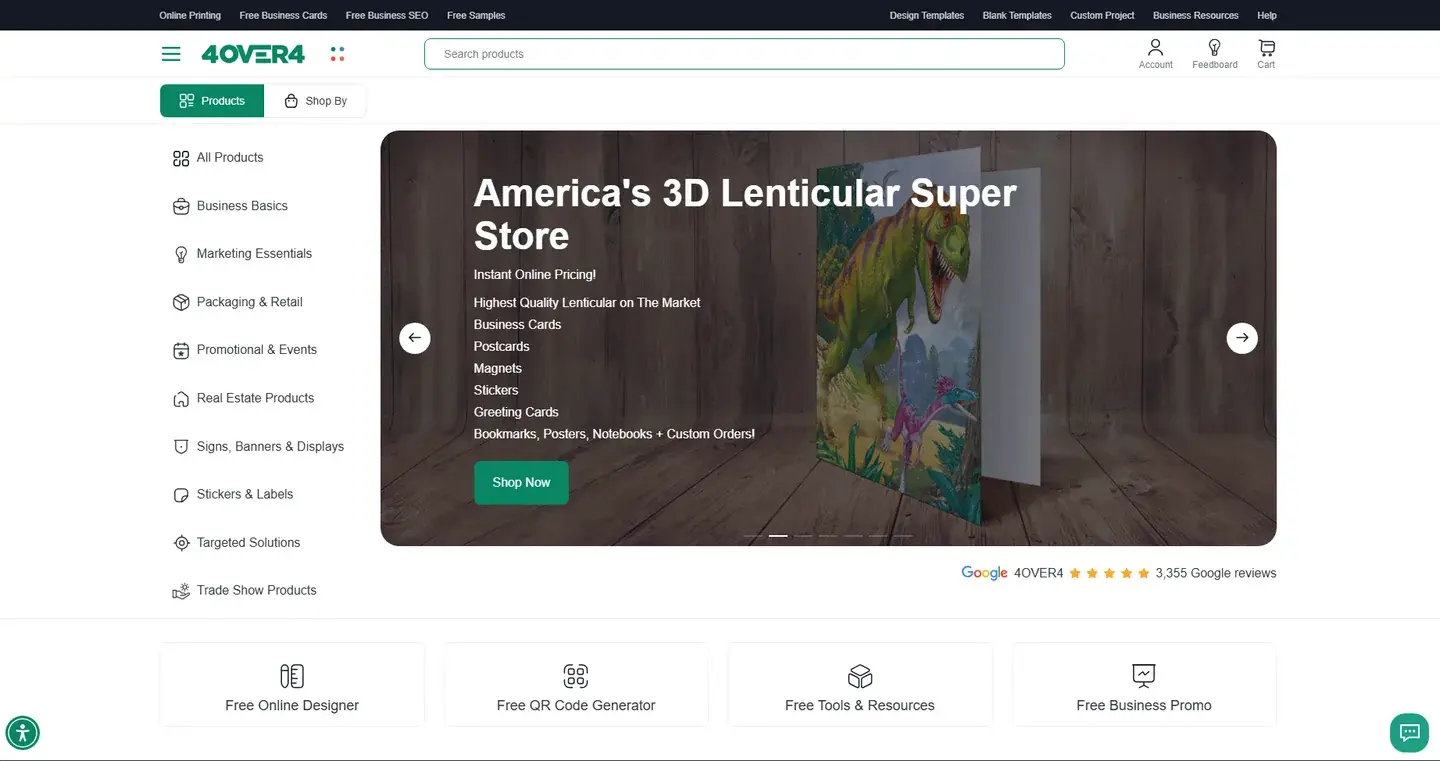
4over4, a US online printing store, had steady traffic but too few orders.
Keep Reading
The first phase, for agencies, brought CRM, messaging, HR, a knowledge base, work management and API integrations into one platform.
Keep ReadingRelated services and solutions
 An AI-enabled offshore development center in Hanoi, when a long roadmap needs one
An offshore development center (ODC) in Vietnam is a long-running engineering team that a partner abroad staffs, manages and documents for your product roadmap. Netbase runs ODC teams from its only office, in Hanoi, with AI-assisted engineering, weekly governance and knowledge transfer built in. When the work has a defined outcome, a fixed-price project usually fits better.
Learn More
 Custom cloud ERP with AI forecasting and document capture: projects, finance, HR and CRM in one system
A custom cloud ERP from Netbase is one browser-based system where a growing company runs its projects, finance, HR and customer relationships on shared data, with AI that reads invoices and forecasts demand and cash. It suits SMEs that have outgrown spreadsheets but not their own way of working, on the foundation of Cloodo Workspace, which Netbase built and runs.
Learn More
Discuss a project
Netbase JSC helps organizations design, build, modernize, and operate digital products and AI-enabled business systems.project@netbasejsc.com
+84 937 869 689
91 Nguyen Chi Thanh, Dong Da, Hanoi, Vietnam
Get in touch
Tell us what you want to build, modernize, or operate.