

Fixed-price software packages for SMEs: five package shapes scoped by milestone
A fixed-price software package for an SME is a common business system, such as an online store with WhatsApp ordering, a marketplace, a booking site, a print store or a cloud ERP, bought as a few milestones with written acceptance tests. Netbase scopes these shapes this way, and sets each fixed price only after discovery.
Book a solution review See the marketplace solutionBy Huy Nguyen (David), Founder & CEO · Updated · 11 min read

This guide is for owners and managers of small and mid-sized businesses who want one of these systems on a fixed scope. It sits in our series on choosing a delivery partner, and the systems themselves are delivered through our custom software development service.
In this guide
- What makes a software package fixed-price rather than a fixed guess?
- Which five package shapes cover most SME needs?
- Package, subscription, custom build or team: which fits?
- When is a package the wrong buy?
- How do you buy a package, step by step?
- Where AI fits
- What delivery record exists, and what does not?
- Alternatives: other ways to get an SME system
- Limits of this guide
- Frequently asked questions
- Next step
What makes a software package fixed-price rather than a fixed guess?
A package is only fixed-price in a useful sense when three things are written down before work starts: the scope as a list of user journeys, the milestones that deliver them, and the acceptance test each milestone must pass on working software. Without those, a "package" is a quote padded for the unknown.
The second condition is a clear exclusion list. A good package says what it does not include. Exclusions keep the price fixed: each excluded item can become its own milestone later.
The third condition is ownership. For custom development the client owns the code created for it, while reusable modules a partner brings are licensed, not transferred. A package should say which parts are which, so you know what you can take to another team.
Which five package shapes cover most SME needs?
The scope map below is the core of this guide. Prices are not listed: they depend on the scope and are set in a written estimate.
-
Online store with WhatsApp
- Milestones
- Discovery and catalogue structure; store and checkout; WhatsApp ordering, order updates and team inbox; launch and handover
- Acceptance evidence
- A test order placed on the site and over WhatsApp reaches the same order list; template messages approved
- Left outside the fixed price
- Migration of old orders; extra payment or shipping providers; a native app
-
Multi-vendor marketplace
- Milestones
- Discovery and commission rules; buyer storefront; vendor onboarding and product management; commission, payouts and admin moderation; launch
- Acceptance evidence
- A test vendor is approved, lists a product, receives an order and requests a payout
- Left outside the fixed price
- Vendor recruitment; a mobile app; extra payout countries
-
Booking platform
- Milestones
- Discovery and resource model; availability and booking flow; payments, reminders and cancellations; staff or partner admin; launch
- Acceptance evidence
- A booking, a change and a cancellation run end to end with the right notifications
- Left outside the fixed price
- Channel manager or marketplace listings; complex dynamic pricing
-
Web-to-print store
- Milestones
- Discovery and product families; online designer and templates; print pricing and print-ready output; order routing; launch
- Acceptance evidence
- A customer designs a product, approves a proof and the order arrives as a print-ready file
- Left outside the fixed price
- Integration with a print MIS; new product families beyond the agreed list
-
Cloud ERP, CRM and HRM rollout
- Milestones
- Process discovery; module configuration; data import; integrations; training and go-live
- Acceptance evidence
- Each agreed process runs in the system with real sample data, and users sign off after training
- Left outside the fixed price
- Custom modules beyond configuration; historical data clean-up
Each milestone ends with a demo on working software against the agreed acceptance test, in the sense of an increment that meets a Definition of Done. Anything in the right-hand column can be bought later as its own milestone, so the first package stays small.
Package notes buyers usually miss
- Online store with WhatsApp. Order updates over WhatsApp use the WhatsApp Business Platform with approved templates and customer opt-in, so plan template approval inside the milestone, not after launch. WaCRM, a Netbase brand, gives a store a team inbox and order automation on its WhatsApp number when a ready-made product is a better fit than a custom integration.
- Marketplace. Split payments and payouts are usually handled by a payment provider's platform product, such as Stripe Connect; the package should name which provider and which payout countries are in scope. Recruiting the first sellers is the operator's job, as most marketplace build guides stress.
- Booking platform. Whether you book rooms, people, seats or time slots decides most of the work; settle it in discovery.
- Web-to-print store. Printcart Store for WooCommerce, from Printcart, a Netbase brand, is the ready-made route when the store runs on WooCommerce and needs a product designer with print-ready files.
- Cloud ERP rollout. Configuration and data import are the package; custom modules are a separate decision, covered in our guide to custom versus off-the-shelf ERP.
Package, subscription, custom build or team: which fits?
| Option | Strength | Risk | Choose it when |
|---|---|---|---|
| Subscription tool | Fast start, no build | Fees continue, limited fit, data and workflows stay on the vendor's terms | Your process matches the tool and you do not need to own the system |
| Fixed-price package | Known scope, milestones and acceptance before work starts | Changes outside the scope become change requests | The system is a common shape and your process can be described in discovery |
| Full custom build | Fits an unusual process exactly | Longer discovery and more decisions for the buyer | No package shape matches the core of how you work |
| Dedicated team | Priorities can change every week | The buyer steers the backlog and carries more delivery risk | The system is already live and needs continuous change |
A common path is to start with a package and move to a small retainer for changes once the system is in daily use. Our guide to dedicated teams versus fixed price compares the last two options in depth, and engagement models lists the options Netbase offers.
When is a package the wrong buy?
A package is the wrong buy in four cases. Your process is not yet settled, so no acceptance test can be written. The system is a test of a new market, where the next step depends on what users do, which fits the stage plan in our lean MVP guide better. A subscription tool already does the job and you have no reason to own the code. Or the "package" would need so many add-ons that the exclusion list is longer than the scope; at that point it is a custom build and should be scoped as one.
How do you buy a package, step by step?
-
Write the business process in one page
Who orders, approves and fulfils, and what the customer is told.
-
Pick the closest package shape
Use the scope map above; if two shapes apply, such as a store and an ERP, buy them as two packages in sequence.
-
Run a short discovery
Users, products, payments, integrations and data, ending in a scope a partner can price. Our sibling guide on what a consulting company does before code explains this step.
-
Agree milestones and acceptance tests in writing
One test per milestone, run on working software, signed by both sides before work starts.
-
Read the exclusion list as carefully as the scope
Move anything you cannot live without into the scope now, or plan it as a later milestone.
-
Confirm ownership
Which code you own, which modules are licensed, and where the source code and admin access are handed over.
-
Plan the first month after launch
Who fixes defects, who answers staff questions and how changes are requested.
Where AI fits
AI belongs in a package only where it does a defined job with a test. In a WhatsApp store, that can be AI-drafted replies that a staff member approves; in a marketplace, flagging listings for moderation; in a cloud ERP, reading supplier documents into draft records. Each is scoped as its own milestone with an acceptance test, such as answer quality on an agreed set of questions. In delivery, AI-assisted coding and test generation can speed up a milestone, but engineers review every change. Netbase works with the major commercial and open-source AI tools and models, chosen per project.
- In delivered work
WhatsApp AI chatbot with CRM integration
An AI chatbot on WhatsApp Business synchronised with the client's CRM for lead capture, delivered in milestones for a client that is not named.
- In delivered work
Recommendation engine
Product suggestions from browsing history and previous purchases, built for 4over4's online store.
- Available capability
AI modules added to an SME package
Reply drafting, moderation and document capture scoped as package milestones; not yet tied to a published SME package case with figures.
What delivery record exists, and what does not?
- Commercial model. Most Netbase projects are delivered on fixed-price contracts, with milestone-based, monthly team retainer and KPI-linked models also offered. Each milestone gets a written outcome and acceptance criteria agreed before it starts.
- Marketplace. Netbase built RB Marketplace, a multi-vendor marketplace with a buyer storefront, vendor registration with admin approval, product and order management, commission deductions and payout requests.
- WhatsApp and CRM. Netbase builds and runs WhatsApp messaging on the WhatsApp Business Platform inside CRM systems, with approved templates, opt-in broadcasts and conversation sync. WaCRM and Storelly are products built by Netbase JSC.
- Booking. Netbase built an event booking platform for a client in the events sector that is not named.
- Web-to-print. Netbase has delivered 50+ custom web-to-print platforms, and runs Printcart, a web-to-print and print-on-demand platform that turns online orders into print-ready files.
- Cloud ERP. Netbase works as offshore development partner on a multi-tenant cloud ERP delivered as SaaS to small and mid-sized businesses for a US client that is not named. The Cloodo digital workplace includes CRM, HRM, Cloud ERP and AI modules.
- What does not exist. Netbase publishes no package price, no standard package duration and no results figures for SME packages. The five shapes are how Netbase scopes the work, not priced products; every fixed price is set in an estimate after discovery.
Alternatives: other ways to get an SME system
| Route | Selection criterion | Trade-off |
|---|---|---|
| Subscription tool, configured in house | Standard process, staff with time to set it up | Lowest start effort; limits show when the process grows |
| Package from a delivery partner | Common shape, need for a fixed scope and ownership | Discovery first; changes go through change control |
| Productized modules plus custom work | Standard parts (accounts, CRM, catalogue) plus one unusual workflow | Modules are licensed, not owned |
| Full custom build | Unusual core process | More discovery and decisions |
Netbase serves the last three routes. Consulting, solutions and custom development lead; dedicated teams are a secondary option. Netbase runs a six-step lifecycle from discovery and strategic alignment to ongoing support and co-building, and its productized module library includes a CRM and B2B sales engine, Smart ERP Light and an e-commerce accelerator. For the marketplace shape, see our multi-vendor marketplace solution; the event booking, web-to-print and cloud ERP solutions cover the other shapes.
Limits of this guide
- It describes package shapes, not quotes; every scope and price is set after discovery.
- Regulated sectors add compliance work that this guide does not list.
Plan the next step with a Netbase consultant
Frequently asked questions
Yes, when the system is a common shape and the process can be written down. The fixed price covers named milestones, each with an acceptance test on working software, and the exclusion list says what is not included.
It should include the scope as user journeys, the milestones, one acceptance test per milestone, an exclusion list, the ownership terms for code and licensed modules, and the support arrangement after launch.
The price depends on the scope found in discovery: products, payment providers, integrations and data. A price shown before discovery is either padded for the unknown or followed by change requests.
Yes. Each addition is scoped as its own milestone with an acceptance test, or handled through a small monthly retainer once the system is in daily use.
Next step
Describe the system your business needs and we will match it to a package shape and its milestones: ask for a fixed-price estimate.
Work behind this guide
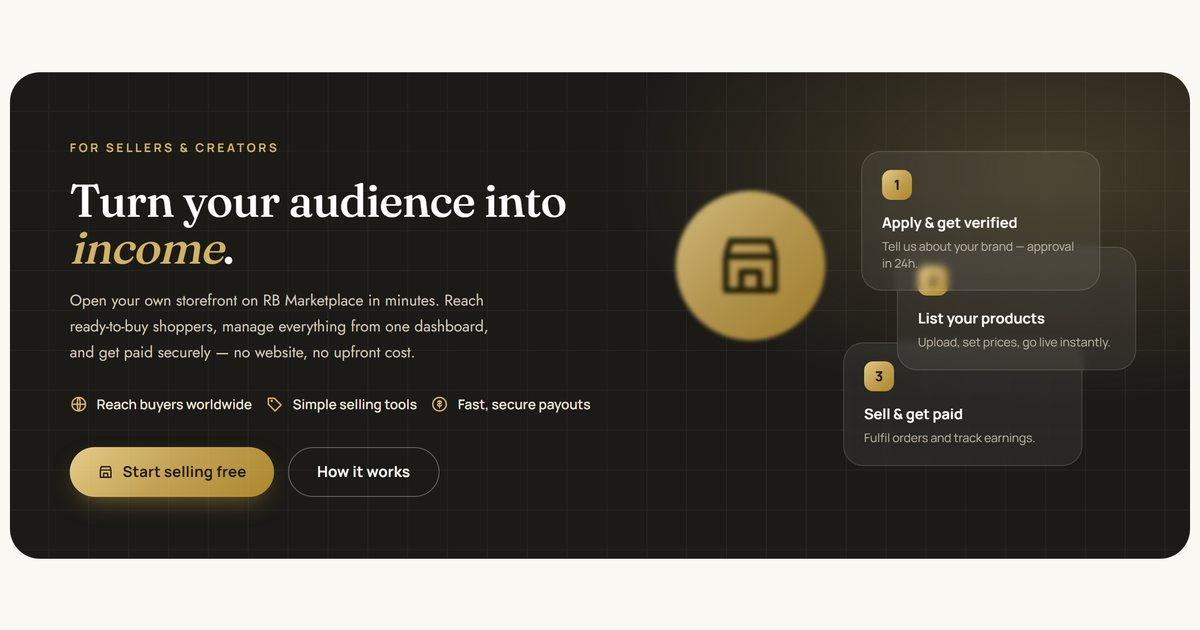
It is live at rbmarketplace.co; no figures are published.
Keep Reading
A business that Netbase does not name, in a country and sector the record does not state, needed customers answered on WhatsApp Business with every lead captured in its CRM.
Keep Reading
A US software company, not named, sells a multi-tenant cloud ERP as SaaS to small and mid-sized businesses.
Keep ReadingRelated services and solutions
 AI-enabled custom software development built around your workflow
Netbase provides custom software development for companies whose workflow no off-the-shelf product fits, from discovery through architecture, build, testing and handover, with AI where it removes manual steps and the IP left with you. Since 2012 Netbase has worked with 500+ businesses across 80 countries; according to the published USticker case study, design-tool users converted 40% more often.
Learn More
 AI-enabled ecommerce development for merchants who outgrew templates
Netbase provides custom ecommerce development for merchants that have outgrown templates, to turn traffic into orders with less manual work, using AI for search, recommendations and catalog work where it pays. We build on WooCommerce, Magento 2, Laravel and headless stacks; 4over4, whose store gained an AI recommendation engine, reported 82% more revenue within six months.
Learn More  Web-to-print platform with AI design assistance, from online design to a print-ready order
A web-to-print platform is an online ordering, design and prepress workflow that helps print businesses sell custom products: customers configure, design and approve their order online, AI can suggest layouts and catch artwork problems, and production receives a print-ready file. Netbase has delivered 50+ custom web-to-print platforms across apparel, packaging, signage, promotional merchandise and corporate B2B portals.
Learn More  Multi-vendor marketplace development: vendors, catalog, payouts and AI search on one platform
A multi-vendor marketplace is a commerce platform where many independent sellers list, sell and get paid through one storefront. Netbase's marketplace solution covers vendor onboarding, a shared catalog, split payments and payouts, with AI for search, listing enrichment and fraud checks. For an EU fashion-tech marketplace, Netbase's work grew gross merchandise value (GMV) and cut vendor onboarding time.
Learn More Related insights

A large Vietnamese vendor brings scale, bench depth and formal process; a boutique or mid-size partner brings senior attention, speed and continuity on one account. Pick by project stage, governance load, continuity need and integration complexity, not by headcount or awards, and you avoid both an overbuilt process and a team that outgrows its vendor.

AI-native software development: what changes for the buyer in scope, speed, review and contract terms
AI-native software development changes the buyer's work more than the buyer's risk: scope must be written as testable acceptance criteria, speed rises in build and test but not in decisions, every AI-written change needs a named human reviewer, and the contract needs AI terms. Netbase delivers this way under human review, mostly on fixed-price milestones.

AI-augmented vs AI-native software companies: how to tell them apart in a proposal
An AI-augmented software company lets its developers use AI tools when they choose, while an AI-native company builds its whole delivery process around AI output that engineers review against written specifications and tests. You can tell them apart in a proposal by checking eight pieces of evidence; this Netbase checklist lists them and applies to every vendor.

What a software development consulting company does before anyone writes code
Before code, a software development consulting company should frame the problem, run discovery, record the architecture decisions, write scope with acceptance criteria and turn all of it into a milestone-based proposal. At Netbase JSC, most projects are then delivered on a fixed price, so each of these steps has to produce a document the buyer can check.
Work with Netbase remotely
Every Netbase engagement is delivered remotely, so clients in any country and any industry can work with us; Netbase has worked with clients in 80 countries. Contracts and invoices are issued by Netbase JSC, and payment is made by bank transfer to Netbase JSC's company account or PayPal Business. Talk to the CEO, Huy Nguyen (David), on WhatsApp or by email.
Discuss a project
Netbase JSC helps organizations design, build, modernize, and operate digital products and AI-enabled business systems.project@netbasejsc.com
+84 937 869 689
91 Nguyen Chi Thanh, Dong Da, Hanoi, Vietnam
Get in touch
Tell us what you want to build, modernize, or operate.