

How to Verify a Software Development Company's Claims Before You Sign
To verify a software development company's claims, match each claim to the document that proves it, check that document with someone other than the company, and write down what it still cannot prove. Netbase JSC suggests the same four checks for every shortlist: certifications, references, delivery records and AI usage.
Book a solution review See Netbase security and complianceBy Netbase Delivery and Quality Desk · Reviewed by David (CEO) · Updated · 11 min read

This guide is for founders, CEOs, procurement and IT leads with a shortlist of two or three companies. It is the long form of the "How to verify any company on this list" section in the Netbase market guides, part of the partner-selection series that starts with choosing a large or boutique Vietnam IT vendor, and it applies before any custom software development contract is signed.
In this guide
- Why is a claim on a website not evidence?
- Which evidence proves which claim?
- How do you check a security certificate or a SOC 2 report?
- A verification sequence for a shortlist
- Where AI fits
- How should you read an anonymised case record?
- What delivery record exists, and what does not
- Alternatives: which verification method fits your risk?
- Limits of this guide
- Frequently asked questions
- Next step
Why is a claim on a website not evidence?
A badge, a client logo or a sentence such as "AI-powered delivery" is written by the company that benefits from it. It may be true, out of date, or true for a different team, office or product. Evidence is something a third party produced or something you can run, read or call yourself.
Published vendor-selection guides agree on the direction: ask for the certificate, not the logo; call a reference, not read a testimonial; see working software, not slides. They rarely give the full chain per claim type: which document proves it, who confirms it independently, and where the proof stops. The matrix below adds it.
Which evidence proves which claim?
The matrix covers four claim types. "Independent check" means a step the company cannot control. "What it cannot prove" is the gap you still close with a pilot, a contract clause or a reference call.
| Claim type | Ask for | Independent check | What it cannot prove |
|---|---|---|---|
| Security certification (ISO/IEC 27001) | The certificate with the legal entity name, the standard, the scope statement and the validity dates | Confirm the issuing certification body and that it is accredited; check that the entity on the certificate is the one signing your contract | That your project team follows the controls, or that the code it writes is secure |
| Attestation report (SOC 2) | The SOC 2 report itself under NDA, or a SOC 3 report that is meant for general use | Read the auditor's opinion, the period covered and any exceptions; check which services and systems are in scope | Anything outside the report period or the services named in it |
| References | Two or three past clients of similar size and scope, with direct contact details | Call them without the company present; ask what went wrong and how it was handled | How the company will behave on a project of a different type or size |
| Delivery records | Case records with scope, stack, role and the company's part of the work; a running build or product you can use | Open the live product; ask the reference which parts the company built | Results the client measured, unless the client confirms them |
| AI usage | Where AI is used in delivery, who reviews the output, which models and tools, and how your code and data are handled | Ask for a sample of a reviewed change or a written AI-use statement that will enter the contract | That the stated review happens on every change; only a pilot or an audit right shows that |
Two rules follow from the matrix. A claim with no document behind it is a question, not a fact. A claim with a document but no independent check is a lead, not a proof.
How do you check a security certificate or a SOC 2 report?
ISO/IEC 27001 is the international standard for an information security management system. A certificate says that an accredited body audited that system for a stated scope. Read the scope line first: a certificate can cover one office, one product or the whole company, and only the first sentence of the scope tells you which.
A SOC 2 report is different. The AICPA describes SOC 2 as a report on controls relevant to security, availability, processing integrity, confidentiality or privacy, and a SOC 3 report as a shorter version for general use that can be freely distributed. A SOC 2 report is usually shared only under NDA, so a company that will not show a SOC 2 report without an NDA is behaving normally. A company that will not show it at all, or only shows a badge, has not given you evidence.
A certificate also proves less than it seems. It covers the company's own operations, not the software it builds for you. The secure-development practice of the team is a separate question, and the NIST Secure Software Development Framework is a useful neutral list to ask against. The security questions to ask a development partner turn that list into twelve questions.
A verification sequence for a shortlist
-
List every claim you rely on
Copy each sentence that would change your decision: certifications, client names, project types, AI capability.
-
Sort the claims into the four types
Certifications, references, delivery records and AI usage each need a different document.
-
Ask for the documents in one written request
Send the same request to every company on the shortlist, so you can compare how each one answers.
-
Run the independent check for each document
Confirm certificate details, read report scope and exceptions, call references alone, open live products.
-
Write down the gap for each claim
Use the last column of the matrix. A gap tells you what to test.
-
Close the largest gap with a pilot or a clause
A short paid discovery or pilot shows the real team and the real review process; an audit right or an acceptance clause covers what a pilot cannot.
-
Carry the verified claims into the contract
A certification the company relied on in the proposal, a named role or an AI-use statement belongs in the signed terms.
If a document raises a warning sign rather than a gap, the guide to software development company red flags rates each sign by severity and lists what clears it.
Where AI fits
AI helps the buyer check claims faster, and it is also one of the claims to check. On the buyer's side, an AI assistant can extract every factual claim from three proposals, flag where a certificate scope does not match the contracting entity and draft the reference-call questions; a person still makes each call and judges each answer. On the company's side, ask how AI-assisted delivery is reviewed. The NIST AI Risk Management Framework is a neutral checklist for the governance questions: who is accountable, how risks are measured and how outputs are monitored.
Netbase works with the major commercial and open-source AI tools and models, chosen per project. The delivered AI feature named with a client is 4over4's recommendation engine, which suggests products from browsing history and previous purchases. Beyond it, Netbase has delivered AI projects for clients that are not named, including retrieval-augmented knowledge assistants, document AI and MLOps pipelines. A buyer can test an AI claim the same way as any other: ask for the reviewed change, then check it in a pilot. The checklist of human review gates for AI-built software lists the gates to ask about.
- In delivered work
Document AI platform
A document AI project delivered for a client that is not named.
- In delivered work
4over4 recommendation engine
Product suggestions from browsing history and previous purchases.
How should you read an anonymised case record?
Many delivery records name no client, because the contract does not allow it. An anonymised record is still useful when it states the industry, the scope, the stack, the company's role and what it did not do. It is weak when it gives a result figure that nobody can confirm. Ask the company whether the client would take a reference call on the same project; if not, treat the record as a description of capability rather than proof of a result. The guide to reading an offshore AI vendor's delivery proof works through this in detail.
What delivery record exists, and what does not
Netbase holds ISO 27001 certification and a SOC 2 Type II attestation for its own operations; these do not extend to a client's product, and Netbase publishes no certificate number, report date, auditor or scope. Consulting, solutions, custom development and AI-enabled transformation are Netbase's lead offers, with dedicated teams and outsourcing as secondary options.
Delivery follows a six-step lifecycle that starts with discovery and strategic alignment and ends with ongoing support. Most Netbase projects are delivered on fixed-price contracts; milestone-based, monthly team retainer and KPI-linked models are also offered. For custom development, the client owns the IP created for it; Netbase productized modules and Business Division products are licensed, not transferred.
What does not exist: Netbase publishes no count of reference calls, no share of projects with a named client and no audited delivery metric. This guide claims none of them, and the security and compliance page states the certification wording Netbase uses.
Alternatives: which verification method fits your risk?
Choose the method by the claim that matters most to your decision.
| Method | Best for | Limit | Choose it when |
|---|---|---|---|
| Document check (certificate, report, case record) | Security and compliance claims | Proves the company's own controls, not your project | You handle personal, payment or health data |
| Reference calls | Behaviour under pressure, honesty about problems | The company chooses who you call | The project is long or the switching cost is high |
| Live product or running build | Whether the company can build what it describes | Shows past work, not your team | The technology or domain is new to you |
| Paid discovery or pilot | The real team, review process and AI use | Takes time and budget before the main contract | The scope is still open or the claim gap is large |
| Contract clauses (audit right, acceptance, IP) | Turning a claim into an obligation | Only as good as your follow-up | A claim cannot be checked before signing |
Most buyers combine two: a document check for the security claim and a pilot or reference call for the delivery claim. The Netbase engagement models page shows where a discovery phase fits before a fixed-price project.
Limits of this guide
- It is a buyer's method, not legal or audit advice; a lawyer or auditor should review the contract and any SOC report you rely on.
- External frameworks are cited from their publishers' pages, accessed 2026-11-21; no company is ranked here.
Plan the next step with a Netbase consultant
Frequently asked questions
Ask for the certificate itself, then confirm the legal entity name, the scope and the validity dates, and check that the certification body that issued it is accredited. Make sure the entity on the certificate is the one that will sign your contract.
Yes, usually under an NDA, because a SOC 2 report is meant for a restricted audience. A SOC 3 report is the short version a company may share freely. A badge on a website is not a substitute for either report.
Two or three is enough when they match your project type and size. Call them without the company present and ask what went wrong, because how a company handled a problem tells you more than a smooth project does.
Ask where AI is used, who reviews the output and how your code and data are handled, then see it in a short pilot. Put the answer in the contract as an AI-use statement.
Next step
Send the claims you need checked, or your own brief, to the Netbase team: book a solution review.
Work behind this guide
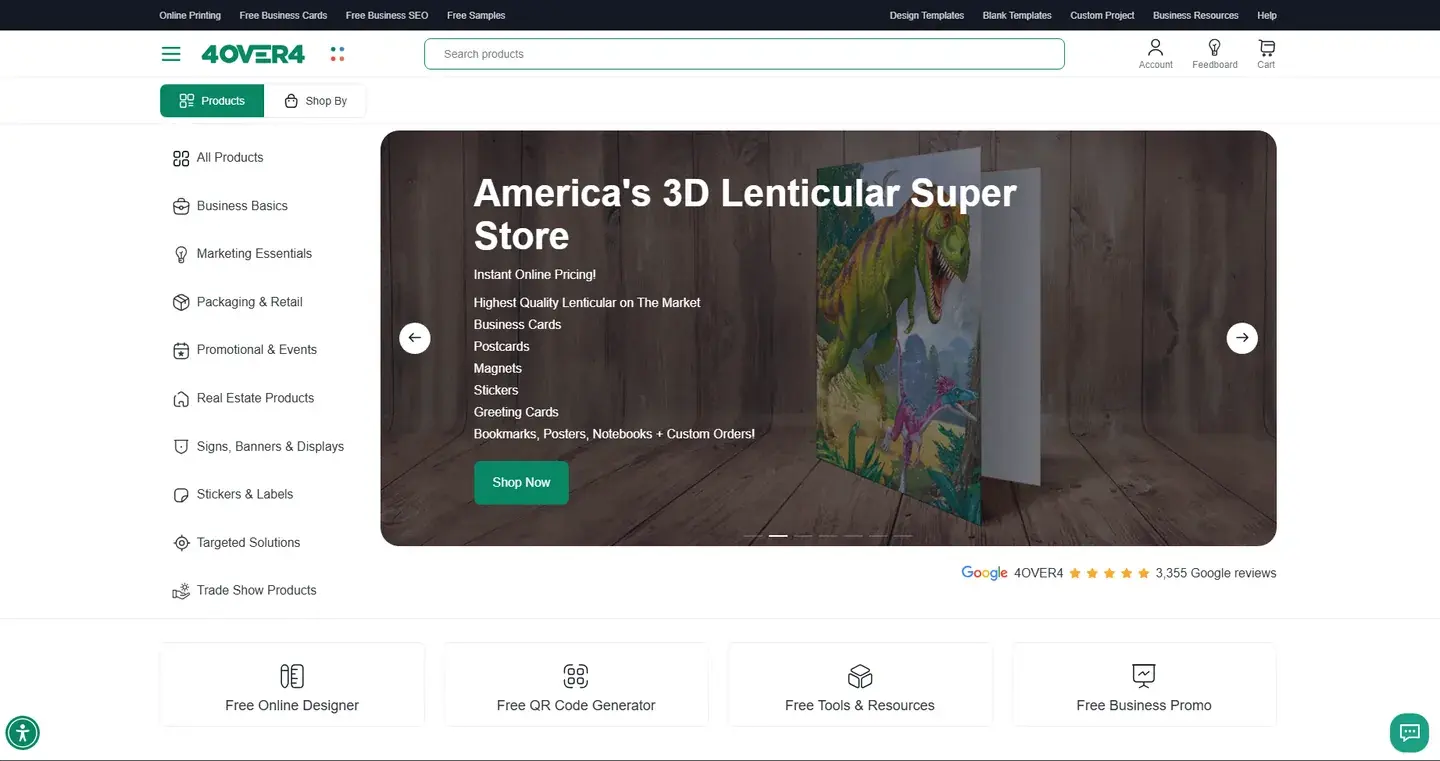
4over4, a US online printing store, reported 82% higher e-commerce revenue within six months after Netbase JSC remotely reworked its checkout, search and navigation.
Keep Reading
Netbase delivered a document AI platform remotely, combining AI consulting, engineering and integration.
Keep ReadingRelated services and solutions
 AI-enabled custom software development built around your workflow
Netbase provides custom software development for companies whose workflow no off-the-shelf product fits, from discovery through architecture, build, testing and handover, with AI where it removes manual steps and the IP left with you. Since 2012 Netbase has worked with 500+ businesses across 80 countries; according to the published USticker case study, design-tool users converted 40% more often.
Learn More
 Application security assurance for web, SaaS and AI features
Netbase provides application security testing for product and engineering leaders to find and fix vulnerabilities before release, including in AI features. We review code with AI-assisted triage, scan dependencies and test running applications, then rank findings and retest fixes. Netbase's own alignment with ISO 27001 and SOC 2 Type II covers Netbase's operations, never your application.
Learn More  Custom cloud ERP with AI forecasting and document capture: projects, finance, HR and CRM in one system
A custom cloud ERP from Netbase is one browser-based system where a growing company runs its projects, finance, HR and customer relationships on shared data, with AI that reads invoices and forecasts demand and cash. It suits SMEs that have outgrown spreadsheets but not their own way of working, on the foundation of Cloodo Workspace, which Netbase built and runs.
Learn More Related insights

A large Vietnamese vendor brings scale, bench depth and formal process; a boutique or mid-size partner brings senior attention, speed and continuity on one account. Pick by project stage, governance load, continuity need and integration complexity, not by headcount or awards, and you avoid both an overbuilt process and a team that outgrows its vendor.

AI-native software development: what changes for the buyer in scope, speed, review and contract terms
AI-native software development changes the buyer's work more than the buyer's risk: scope must be written as testable acceptance criteria, speed rises in build and test but not in decisions, every AI-written change needs a named human reviewer, and the contract needs AI terms. Netbase delivers this way under human review, mostly on fixed-price milestones.

AI-augmented vs AI-native software companies: how to tell them apart in a proposal
An AI-augmented software company lets its developers use AI tools when they choose, while an AI-native company builds its whole delivery process around AI output that engineers review against written specifications and tests. You can tell them apart in a proposal by checking eight pieces of evidence; this Netbase checklist lists them and applies to every vendor.

What a software development consulting company does before anyone writes code
Before code, a software development consulting company should frame the problem, run discovery, record the architecture decisions, write scope with acceptance criteria and turn all of it into a milestone-based proposal. At Netbase JSC, most projects are then delivered on a fixed price, so each of these steps has to produce a document the buyer can check.
Work with Netbase remotely
Every Netbase engagement is delivered remotely, so clients in any country and any industry can work with us; Netbase has worked with clients in 80 countries. Contracts and invoices are issued by Netbase JSC, and payment is made by bank transfer to Netbase JSC's company account or PayPal Business. Talk to the CEO, Huy Nguyen (David), on WhatsApp or by email.
Discuss a project
Netbase JSC helps organizations design, build, modernize, and operate digital products and AI-enabled business systems.project@netbasejsc.com
+84 937 869 689
91 Nguyen Chi Thanh, Dong Da, Hanoi, Vietnam
Get in touch
Tell us what you want to build, modernize, or operate.