

Business process transformation before software implementation: a readiness checklist
Redesign the process before you choose the software. Map how the work actually happens, fix what the map shows is broken, then let that target process set the scope and configuration of the ERP, CRM or custom system, not the reverse. Skipping this step does not save time; it moves the same decisions into the build, where they cost more.
Book a solution review See the business process transformation serviceBy Netbase Consulting and Transformation Desk · Reviewed by David (CEO) · Updated 12 Oct 2026 · 10 min read

This guide is for operations leaders, COOs, CTOs and IT managers scoping a software project at a mid-market company. It gives a self-scoring readiness checklist, a decision matrix for when process work should come first, a four-step sequence, and the trade-offs of doing too little or too much process work before the vendor conversation starts. It links our digital transformation and legacy modernization guide for the broader sequencing question and our business process transformation service for the engagement itself.
In this guide
- Why the order matters
- The process-readiness checklist
- Process-first vs. software-first: the decision matrix
- Sequencing the work in four steps
- Where AI fits, and where it does not
- What delivery record exists, and what does not
- Alternatives: when to skip full process redesign
- Limits of this guide
- Frequently asked questions
- Next step
Why the order matters
A software implementation inherits whatever process it is pointed at. Three things go wrong when the process step is skipped or rushed:
- The software automates the broken process. Re-keying, duplicate approvals and workarounds get a faster interface, not a fix. As one process-design article puts it, "the fastest version of a bad process is still a bad process."
- The vendor's default workflow becomes the decision. A packaged system ships with an opinionated standard process; without a target process of your own to compare it against, "how the software works" quietly replaces "how we decided to work."
- Configuration decisions get made twice. Every ERP, CRM or custom build forces hundreds of small decisions: who approves what, which fields are required, which exceptions exist. Undocumented process questions do not disappear; they resurface as configuration questions during the build, where each one costs a meeting and a delay instead of a line on a process map.
None of this means every project needs a full reengineering programme. It means the process decision should be made on purpose, before the software decision, not discovered by accident during it.
The process-readiness checklist
Score the process you are about to put software around. Each "no" is a reason to do process work before, not during, implementation.
| Check | Yes | No |
|---|---|---|
| A named owner can approve the target process without further escalation | Proceed | Resolve ownership first |
| The current process is mapped, including the exceptions and manual workarounds people actually use | Proceed | Map it before scoping software |
| You can state, in one sentence, what the process should achieve for the customer or the business | Proceed | Define the outcome first |
| You have a baseline measure (cycle time, error rate, volume, cost) to compare against after launch | Proceed | Capture a baseline before launch |
| The people who do the work today have reviewed the target process and raised their objections | Proceed | Run the walkthrough first |
| You can name which steps should be removed, not just automated | Proceed | Separate "remove" from "automate" first |
Two or more "no" answers mean the project should start with process discovery and redesign, not a vendor shortlist. Zero or one "no" usually means the process is well enough understood to let scoping and implementation proceed together, with the open point closed early in discovery.
Process-first vs. software-first: the decision matrix
| Situation | Strength of the case for process work first | Risk of skipping it | Choose |
|---|---|---|---|
| Several teams or systems touch one end-to-end workflow (for example lead to cash, order to delivery) | High: no single owner sees the whole picture today | Each team configures its own piece; hand-offs stay broken | Process first |
| Leadership wants automation or AI but nobody has agreed which steps qualify | High: automation candidates are picked by guess, not evidence | AI or RPA is pointed at the wrong, or a risky, step | Process first |
| One well-specified feature is being added to an otherwise stable, already-mapped process | Low: the process is already known and documented | Minimal; the feature has a clear, bounded scope | Software first |
| A standard job (payroll, expense capture, basic accounting) fits a packaged product's default workflow | Low: the vendor's standard process is an acceptable fit | Minimal, if the team agrees to adapt to the standard flow | Software first, process review light |
| The platform is out of support or insecure and the business rules still fit | Low on process, high on platform | Delay increases security and support risk | Platform first, then process review |
Mixed situations are normal. Many programmes run a short, two-to-three-week process review even in the "software first" cases, just to confirm the checklist above before committing scope.
Sequencing the work in four steps
-
Baseline the current process
Walk the process with the people who run it, end to end, including the exceptions nobody put in the manual. Measure cycle time, rework and hand-offs where data exists.
-
Design and agree the target process
Remove steps that exist only because of the old system, assign an owner and a decision rule to every remaining step, and get the people who do the work to review it before it is final.
-
Translate the target process into system and data requirements
Only once the target process is agreed should the requirements, integration points and data ownership for the software be written down.
-
Scope, build and measure against the baseline
The software project proceeds against the agreed requirements, and the baseline from step 1 is measured again after launch to show whether the redesign worked, not only whether the software was delivered on time.
A standard process notation such as Business Process Model and Notation (BPMN) from the Object Management Group keeps the current- and target-state maps readable by your team and by any vendor who later implements the system.
Where AI fits, and where it does not
AI can speed up steps 1 and 2: summarising interview notes, drafting a first-pass current-state map from system logs, and proposing which steps look removable. Analysts and process owners review every AI-drafted map against the actual walkthrough before it is used; AI output is a draft, not a decision. AI should not decide which steps to automate on its own, and it should not be pointed at a process that has not been through the checklist above, because it will automate the workarounds along with the real work. Once the target process is agreed, automation and AI candidates are ranked by value and risk, often as part of a broader digital transformation programme.
-
In delivered work
Product recommendation engine
Built for 4over4 from browsing and purchase history, an example of AI tied to one redesigned, measured step rather than an entire process.
-
Available capability
AI agents and workflow automation with human approval
Offered once a process is redesigned and its steps are ranked; not yet tied to a published process-transformation case.
-
Available capability
Machine learning, NLP, computer vision and generative AI
AI capability areas Netbase offers project by project, never tied to one vendor or model; not yet tied to a published process-transformation case.
What delivery record exists, and what does not
Netbase's six-step delivery lifecycle starts with discovery and architecture planning before a build begins, and process questions are worked through in that stage rather than during development. The Geo-Tek IT Solutions platform is a published example of process and system changing together: the business's existing operations shaped the platform that replaced them, rather than the platform dictating a new way of working. Cloodo, a Netbase Business Division, similarly connects CRM, HRM, Cloud ERP and AI modules around one shared record instead of separate tools per department.
What does not exist: a published, stand-alone business process reengineering engagement with its own measured before-and-after result, independent of a software build. Business process transformation is a growth capability at Netbase, offered through the business process transformation service; every example above is a software delivery where process questions were resolved as part of that build, not a process-only engagement with its own published case.
Alternatives: when to skip full process redesign
Full process reengineering is not always the right amount of work. Skip or shorten it when:
- The scope is one well-specified feature on an already-mapped, stable process: discovery can confirm fit in a day, not weeks.
- A packaged product's standard workflow is an acceptable fit for a non-differentiating job, and the team is willing to adopt it rather than customise around the old way of working.
- The process is already documented and recently reviewed, and the only open question is which system supports it.
Over-running process work has its own cost: every week spent in workshops delays the software that was supposed to fix the problem, and a redesign with no software outcome in view tends to drift into organisational or headcount questions outside its scope. The business process transformation service scopes discovery with an end date agreed up front for this reason.
Limits of this guide
This is practical sequencing guidance from Netbase's delivery experience and public process-design writing, not original research. The readiness checklist and decision matrix are frameworks for structuring a conversation, not a scoring formula validated against a published dataset. The Geo-Tek and Cloodo references describe scope, not a measured result for a stand-alone process engagement, and business process transformation remains a growth capability rather than a repeatedly measured service line at Netbase.
Plan the next step with a Netbase consultant
Frequently asked questions
Enough to answer the readiness checklist above with mostly "yes": a named owner, a mapped current state, a one-sentence target outcome, a baseline measure and a reviewed target process. Anything less tends to resurface as configuration delay during the build.
A vendor can show you its standard workflow, but that is the vendor's default, not a decision about your business. Use the decision matrix to check whether a standard workflow is an acceptable fit before accepting it as your process.
No. A single well-specified feature on a stable, already-mapped process can go straight to software scoping; the checklist and matrix above are there to tell the two situations apart.
Automating or configuring software around the current broken process, so re-keying, duplicate approvals and workarounds run faster instead of disappearing.
Next step
Share the process that is about to get a new system, and where it is already breaking today, and we will book a solution review to run the readiness checklist with you. You can also read legacy system assessment checklist if the system in question is already live, or digital and AI transformation in emerging markets for the wider adoption picture, or browse more Netbase insights.
Work behind this guide
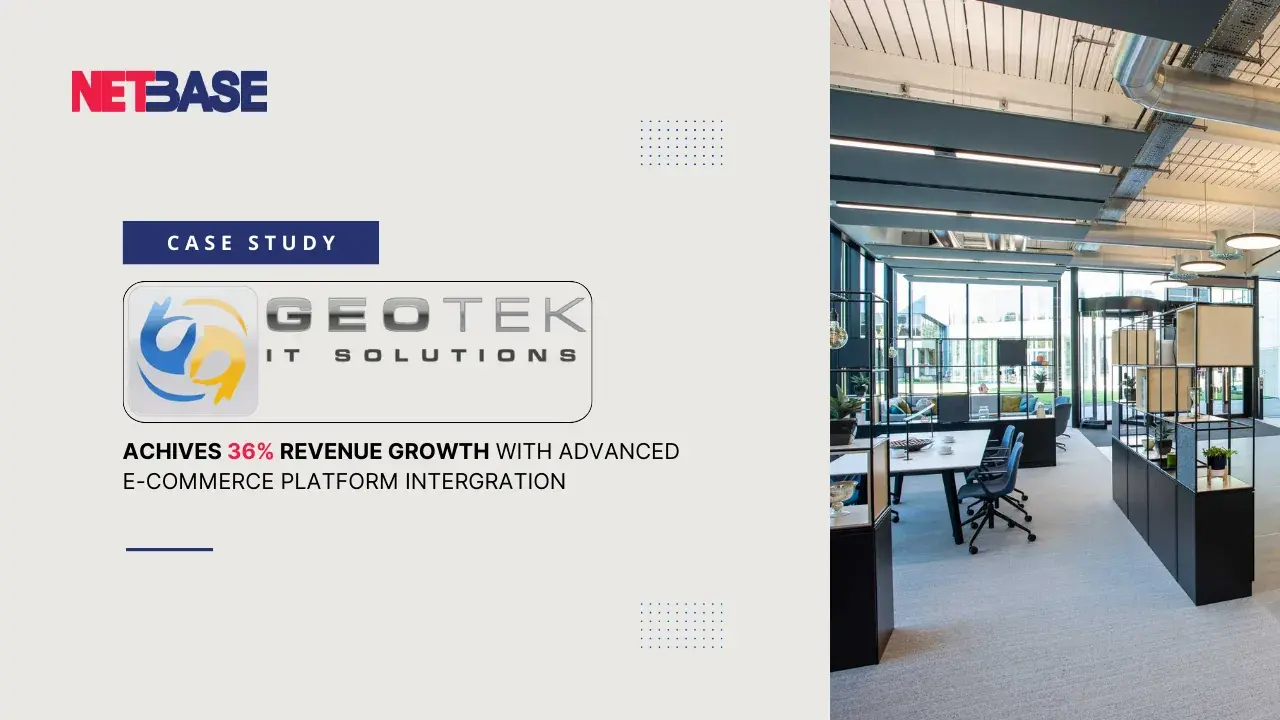
Geo-Tek IT Solutions, a printing and design-services company in Cyprus, needed an online design platform that worked on every device and fitted its existing systems.
Keep ReadingRelated services and solutions
 AI-enabled digital transformation consulting that ends in a delivery plan
Netbase provides digital transformation consulting for mid-market companies to turn operational problems into a prioritized roadmap with a delivery path, not a strategy deck. We map your workflows, systems and data, rank every change by business value and risk, including where AI can remove manual work, and hand over a plan the same team can start building.
Learn More
 AI-assisted legacy modernization that keeps your orders and data safe
Netbase provides legacy application modernization services for commerce and operations teams to move ageing platforms, such as Magento 1 stores, onto supported technology without losing orders, customers or data. AI speeds up code analysis and data mapping; every migration runs on a written, human-approved plan with rehearsal, staged cut-over and rollback, proven by Netztech's move to Magento 2.
Learn More
 Business process transformation that readies workflows for AI and automation
Netbase provides business process transformation consulting for operations leaders to map and redesign a process before any software is built, so AI agents, automation and integration target the steps that actually slow the business down. You get a measured current state, a redesigned target process and a scoped roadmap the same team can deliver.
Learn More
 CRM workflow automation with AI lead scoring, from first lead to paid invoice
CRM workflow automation connects your sales pipeline to the work behind it, so leads, proposals, approvals and invoices move on rules instead of spreadsheets and email threads, with AI scoring leads and summarising conversations. Netbase builds it for sales and operations teams in growing companies from its CRM and B2B sales engine and workflow automation toolkit, behind Cloodo Workspace.
Learn More
Discuss a project
Netbase JSC helps organizations design, build, modernize, and operate digital products and AI-enabled business systems.project@netbasejsc.com
+84 937 869 689
91 Nguyen Chi Thanh, Dong Da, Hanoi, Vietnam
Get in touch
Tell us what you want to build, modernize, or operate.