

Responsible AI and MLOps for AI in production
MLOps and responsible AI keep an AI feature trustworthy after launch. Netbase's practice for monitored, governed AI in production covers evaluation before every release, versioning of models, prompts and data, monitoring of quality and cost, and incident controls with a named owner. It is a growth capability, backed by an MLOps pipeline delivered for an unnamed client.
Book a solution review View relevant workReviewed by David (CEO) · Updated 17 Sep 2026

Running AI features nobody watches? Book a solution review.
What responsible AI and MLOps includes
An AI feature changes after launch even when nobody touches its code: data drifts, providers update models and new misuse appears. MLOps makes those changes visible and controlled. Responsible AI adds the governance: who owns each system, which risks are accepted, where people review decisions, and what happens when something goes wrong. It belongs to our AI & Data family.
Included
- Inventory of AI systems, owners and risk levels
- Evaluation sets and release gates
- Versioning of models, prompts, data and configuration
- Monitoring of quality, drift, safety and cost
- Human review points and override controls
- Incident response, rollback and post-incident review
- Documentation for customers, auditors and regulators
Not included
- Certifying your AI system or company
- Legal opinions on AI regulation
- Running AI with no named owner
- Guaranteed accuracy or availability figures

When to use it, and when another route fits
MLOps and responsible AI pay off once AI influences customers, money or people's work.
Good fit
- Several models or AI features are live or about to launch
- Customers or auditors ask how your AI is governed
- AI spend is growing without a clear view of cost per task
- Agents or automations act on business systems
Another route fits better
- One internal experiment with no users yet
- The first question is which AI to build: start with strategy
- A generic policy document without engineering changes
- Nobody can be named as owner of the AI system
For agents that act across many systems, the platform layer is the enterprise AI agent platform, which applies these controls. Every other route is in the services directory.
Outcomes and buyer jobs
Technology, risk and product leaders look for MLOps and responsible AI to:
An inventory lists each system, its owner, its data and its risk level.
No model, prompt or provider change ships without passing its evaluation set.
Quality, drift, safety and cost are monitored with alerts to an owner.
Usage limits and cost per task are tracked for every AI feature.
Versions, evaluations and incidents are recorded.
Capability modules and deliverables
Systems, owners, data used, users affected and risk category
Test sets, thresholds and automated checks in the release pipeline
Traceable versions of models, prompts, retrieval settings and data sets
Dashboards for quality, drift, safety events, latency and cost
Review queues, override controls and escalation rules
Detection, rollback, communication and post-incident review steps
Delivery process, team and governance
This work follows our six-step delivery lifecycle:
-
Discovery and strategic alignment
We list the AI systems in use or planned, their owners and the decisions they affect.
-
Team assembly and architecture planning
An architect designs the evaluation, versioning and monitoring path for each system.
-
Agile execution with outcome-based milestones
The highest-risk system gets release gates and monitoring first.
-
Modular and productized components
Shared evaluation, logging and dashboard components serve every AI system.
-
Training, rollout and optimization
Owners learn to read the dashboards and run the incident playbook.
-
Ongoing support and co-building
Thresholds, test sets and controls are reviewed as systems and rules change.
Teams of 3 to 30 people typically start one to two weeks after discovery. Work runs remote-first from Hanoi in English, in Agile releases where every model, prompt and data change passes the same gates, with weekly reviews, KPI dashboards and a named account and project manager.
Security practices include secure code review and version control, role-based access control, MFA for admin dashboards, TLS in transit and AES at rest, vulnerability scanning and penetration testing, and disaster recovery; NDAs, DPAs and SLAs are available on request. Netbase holds ISO 27001 certification and a SOC 2 Type II attestation for its own operations and follows GDPR alignment, HIPAA-aligned methods and CCPA practices. These do not extend to your AI systems or hosting, and this service does not certify them.
We structure governance on the NIST AI Risk Management Framework's Govern, Map, Measure and Manage functions. For generative AI, NIST AI 600-1 names risks such as confabulation, information security and human-AI configuration, where people over-rely on AI output. The OWASP Top 10 for LLM Applications (2025) adds unbounded consumption, the operational risk behind runaway cost.
AI in this service
In production, AI changes from a project into an operation with owners, measures and incidents. Our practice is to treat every model, prompt and retrieval setting as a versioned release, run evaluation sets before each change, log inputs and outputs within the agreed data rules, monitor cost per task, and keep a person able to override or switch off each AI feature. AI-assisted tools help triage alerts; an engineer confirms every action. Netbase applies the ISO/IEC 42001 AI management system framework to its own AI delivery practice.
-
In delivered work
Recommendation engine
Delivered for 4over4's online printing store; an AI feature of the kind these controls are designed to keep reliable.
-
In delivered work
MLOps pipeline
Evaluation, release and monitoring controls delivered for a client that is not named.
-
Available capability
Responsible AI governance and incident controls
A capability we are growing; not yet tied to a published governance engagement.
Engagement models and commercial variables
Most Netbase projects are delivered on fixed-price contracts agreed after discovery; here, a fixed-price first phase that sets up the inventory, release gates and monitoring for one high-risk system is the natural start. Monthly team retainer terms suit the ongoing operation, and milestone-based and KPI-linked terms are also offered. We do not publish rate cards.
What moves effort and cost: the number of AI systems and providers, logging and data protection rules, how often systems change, and the documentation your customers or regulators expect.
Technology as an implementation choice
Netbase is model-agnostic: we work with models from OpenAI, Anthropic (Claude), Google (Gemini) and Meta (Llama), among other commercial and open-weight models, chosen per project, and design evaluation and monitoring so a provider or model can be swapped behind the same release gates. Infrastructure runs on AWS, Google Cloud, DigitalOcean or Cloudflare, without any partner tier claimed. The evaluation, monitoring and model components we compare are on our data and AI stack page.
Industry applications
Retail and e-commerce. Recommendations, search ranking and customer service replies shape what shoppers see. Drift monitoring and release gates keep them aligned with the catalogue and policies. Where AI talks to customers, the European Commission's summary of the EU AI Act says people should be made aware they are interacting with a machine.
 Retail and ecommerce: AI-enabled storefronts, marketplaces and order operations
Netbase helps retailers and online merchants modernize storefronts, marketplaces and order operations, and adds AI where it pays: search, recommendations, catalog enrichment and order exceptions, with your team approving what shoppers see. Results are published: Geo-Tek IT Solutions grew revenue 36% in the first quarter after its new ecommerce platform launched, and an EU fashion marketplace grew GMV 47%.
Learn More
Proof: delivered AI and the production platforms it runs beside
Evidence maturity: responsible AI and MLOps is a growth capability. One delivered MLOps pipeline is recorded anonymously; Printcart is platform proof.
Delivered AI: MLOps pipeline (anonymised client). Netbase built its training, evaluation, release and monitoring steps; no client name, models or results are published. See the anonymised record.
Delivered AI: 4over4 (online printing, United States). Netbase built a recommendation engine based on browsing and purchase history inside a wider store project. Read the 4over4 case.
Platform proof: Printcart (Netbase Business Division). A web-to-print and print-on-demand platform that Netbase builds and runs in production. See the Printcart record.
More projects are in our work.
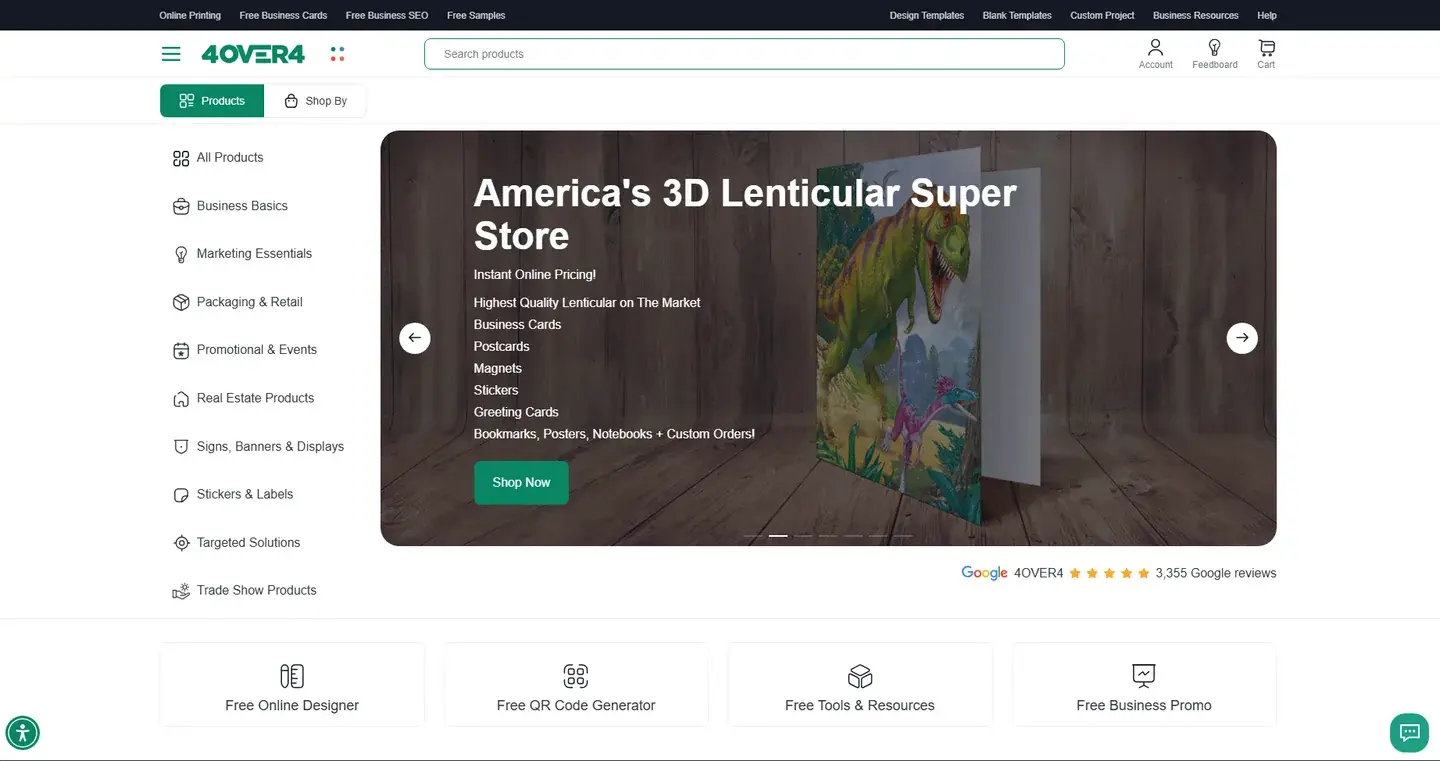
Netbase JSC reworked checkout, search and navigation, automated Adobe Illustrator (.ai) to SVG file conversion and added recommendations.
Keep Reading
Netbase designed, engineered and operates the multi-tenant platform: an online design studio, automatic print-ready files, print order management, and store apps plus an API that plug into any storefront.
Keep Reading
Netbase delivered an MLOps pipeline for a client, in a role that combined AI consulting, engineering and integration.
Keep ReadingBuyer FAQ
No. Netbase's ISO 27001 certification and SOC 2 Type II attestation cover Netbase's own operations. Certification of your systems comes from an audit by a certification body.
Yes, where we can access the system's code, logs and configuration. The inventory and risk register come first.
Every AI feature gets usage limits, cost-per-task tracking and alerts, and evaluation shows whether a cheaper model is good enough.
The playbook names the owner, switches the feature to a safe fallback, records what happened and feeds a post-incident review.
It produces the inventory, risk records and documentation the Act's obligations rely on. Classification of your systems needs legal advice.
Treating launch as the finish line. AI quality changes silently after launch unless someone measures it.
Related solutions
 Enterprise AI agent platform: run AI agents with approvals, audit logs and cost limits
An enterprise AI agent platform is a governed runtime where AI agents plan and carry out multi-step work through approved tools, while approvals, audit logs, access rules and cost limits keep every action accountable. Netbase offers it as a forward-looking solution, built inside your own environment rather than licensed as a product.
Learn More
Service owner and next step
This service is owned by David, Netbase's Chairman, founder and CEO, and maintained by the Netbase Editorial Team. List the AI features you run today and who owns each one: book a solution review, or view relevant work first.
Discuss a project
Netbase JSC helps organizations design, build, modernize, and operate digital products and AI-enabled business systems.+84 937 869 689
91 Nguyen Chi Thanh, Dong Da, Hanoi, Vietnam
Get in touch
Tell us what you want to build, modernize, or operate.