

SaaS MVP architecture and delivery roadmap: what to build first, and how
A SaaS MVP should prove that customers will use and pay for one core job. Build that job end to end on a modular monolith with pooled, database-enforced tenancy, managed sign-in, a payment provider and usage events from day one. With disciplined scope, a first release typically takes 8 to 12 weeks.
Book a solution review See the related solutionBy Netbase Commerce and Platform Engineering Desk · Reviewed by David (CEO) · Updated · 9 min read

This guide is for founders, product owners and CTOs about to commission a first SaaS release. Our SaaS platform engineering guide covers the whole lifecycle from MVP to enterprise scale; this page stays with the first release: what goes in, which architecture decisions are expensive to reverse, and how the weeks are usually spent.
In this guide
- What a SaaS MVP must prove
- Scope: in the MVP, soon after, later
- Eight architecture decisions to make before sprint one
- Delivery roadmap: a typical 8 to 12 weeks
- AI in a SaaS MVP
- Build routes: alternatives and selection criteria
- Launch readiness checklist
- Worked examples: SaaS products Netbase built and runs
- What delivery record exists, and what does not
- Limits of this guide
- Frequently asked questions
- Next step
What a SaaS MVP must prove
An MVP is not a small version of the finished product. It is the least you can ship to learn three things: that a defined customer has the problem, that your core workflow solves it well enough to be used every week, and that someone will pay. Everything else, from custom dashboards to a mobile app, waits until those answers are in.
That focus changes the architecture question. The goal is not to predict every future feature, but to make a small number of deliberate decisions that keep the first release fast to build and do not have to be torn out when the second customer segment arrives.
Scope: in the MVP, soon after, later
| Area | In the MVP | Soon after launch | When larger customers arrive |
|---|---|---|---|
| Accounts | Sign-up, tenant creation, invite users, two or three roles | Self-service role management | Single sign-on, directory sync |
| Core workflow | One job, end to end, done well | The second most requested job | Workflow configuration per tenant |
| Billing | One or two plans through a payment provider, entitlements in code | Plan changes, trials, invoices | Usage-based or negotiated pricing |
| Data | One relational database, tested backups | Import and export | Dedicated data options, residency |
| Integrations | None, or the one customers cannot live without | The next two most requested | Public API and webhooks |
| Admin | Basic support console, tenant search | Usage and health dashboards | Audit logs for customers |
| AI | Only if it serves the core job, metered per tenant | A second AI feature, measured | Tenant controls and data boundaries on request |
If a feature is not needed to prove the core job, it moves right in this table.
Eight architecture decisions to make before sprint one
-
Tenancy
- Sensible MVP default
- One shared database with a tenant key on every row, enforced by database policies, not only by application code
- Revisit when
- A customer needs dedicated data or one tenant dominates load
-
Code structure
- Sensible MVP default
- A modular monolith with clear module boundaries
- Revisit when
- A module needs its own release cycle or scale profile
-
Identity
- Sensible MVP default
- A managed authentication service, tenant membership and roles in your own tables
- Revisit when
- Enterprise buyers ask for single sign-on
-
Billing
- Sensible MVP default
- A payment provider for charging; your code checks entitlements, never plan names
- Revisit when
- Pricing becomes usage-based or negotiated
-
Usage events
- Sensible MVP default
- Emit events per tenant and feature from the first release
- Revisit when
- Always keep; they feed billing, cost and product analytics
-
Environments
- Sensible MVP default
- Infrastructure as code, continuous integration, a staging copy and one-click deploys
- Revisit when
- A second region or a regulated customer appears
-
Observability
- Sensible MVP default
- Logs, errors and metrics tagged with the tenant
- Revisit when
- Support volume grows past what one person can triage
-
Security baseline
- Sensible MVP default
- A named checklist, for example OWASP ASVS level 1, plus MFA for admin access
- Revisit when
- You sell to regulated or enterprise customers
The AWS SaaS Lens and Microsoft's guidance on multitenant solutions both treat tenant isolation, onboarding, identity and metering as first-class design areas; the defaults above are the lightest versions of each that still hold up. Our multi-tenant SaaS architecture article goes deeper into isolation and billing, and cloud cost controls for SaaS shows how usage events become a cost per tenant.
Delivery roadmap: a typical 8 to 12 weeks
An illustrative split of a 12-week plan:
-
Weeks 1 to 2: discovery and design
Name the customer, the core job and the success metric; write the scope table; click through a prototype with three to five target users. A product discovery phase exists to do exactly this.
-
Weeks 3 to 4: foundation
Tenancy, sign-up, roles, environments, CI/CD, logging and the security checklist, all tested before any feature is built on top.
-
Weeks 5 to 8: the core workflow
Build the job end to end in thin slices that users can try every week, with usage events on every step.
-
Weeks 9 to 10: billing, onboarding and hardening
Plans, entitlements, the first-run experience, restore tests and a load check on the core path.
-
Weeks 11 to 12: beta and launch
Onboard the first paying tenants, fix what they hit, and write the next scope table from what they did, not from what they said.
These are Netbase's typical ranges for a SaaS MVP, not a quote; the number of workflows, integrations and compliance needs decides where a project lands. Mid-tier products typically take 3 to 6 months and enterprise platforms 6 to 12 months or more.
AI in a SaaS MVP
Buyers now expect some AI in new SaaS products, but an MVP should include only the AI that serves the core job, such as drafting, summarising or classifying inside the main workflow. Three rules keep it safe to launch: retrieval and prompts only see the current tenant's data, enforced outside the prompt; model calls are metered per tenant so one customer cannot consume a plan's margin; and outputs a user relies on are reviewable before they are saved. Netbase works with the major commercial and open-source AI models, chosen per product rather than tied to one vendor. Each item below states how mature it is at Netbase.
-
In delivered work
Product recommendation engine
Built for 4over4 from browsing and purchase history.
-
Available capability
AI features inside the core workflow
Machine learning, NLP and generative AI features per tenant; beyond the 4over4 features they are not yet tied to a published case.
Build routes: alternatives and selection criteria
| Route | Strength | Weakness | Choose it when |
|---|---|---|---|
| Custom build from scratch | Every line fits your product | Weeks spent on accounts, roles and billing that are not your differentiator | The foundation itself is your product, or you have unusual tenancy needs |
| Start from reusable SaaS modules | Accounts, tenants, roles and billing arrive working; weeks go to the core job | You adopt the modules' conventions; the modules are licensed, not owned | The core job is the differentiator and standard SaaS plumbing is enough |
| No-code or low-code prototype | Days to a clickable test | Hard limits on tenancy, data and scale; usually rebuilt | You still need to prove demand before writing code |
| White-label an existing product | Fastest to market | Little product differentiation; dependent on the vendor | Distribution, not product, is your advantage |
Four criteria decide it: how much of the product is standard SaaS plumbing, how soon you need paying users, who must own which code, and whether the team that builds the MVP will also run it. The SaaS product accelerator is the second route, and protecting IP when outsourcing explains how licensed modules and owned code sit side by side in a contract. Most Netbase projects are delivered on fixed-price contracts agreed after discovery, which suits an MVP with a frozen scope; for the trade-offs, see dedicated team vs fixed price.
Launch readiness checklist
- A new tenant can sign up, invite a colleague and complete the core job without help.
- A second tenant cannot see the first tenant's data, proven by an automated test.
- Payments, plan limits and cancellations work end to end.
- One tenant can be restored from backup into a clean environment.
- Errors and usage are visible per tenant on a dashboard someone watches.
- Admin access uses MFA, and secrets are out of the code.
Worked examples: SaaS products Netbase built and runs
- Cloodo Workspace. A multi-tenant work-management SaaS that Netbase built and operates: company profiles, services, projects and team collaboration, beside CRM, HRM, Cloud ERP and AI modules. Each company works in its own workspace. See the Cloodo Workspace record.
- Cloud ERP for a US client. Since 2020 Netbase has worked as offshore development and managing partner on a multi-tenant cloud ERP sold as SaaS to small and mid-sized businesses; the client is not named.
- Printcart. A web-to-print and print-on-demand platform, one of the Netbase Business Divisions, serving many merchants from one product. See the Printcart record.
Plan the next step with a Netbase consultant
What delivery record exists, and what does not
- What exists. The three records above describe products Netbase built and operates or has developed for years, with their scope, modules and multi-tenant design.
- What does not. None of these records publishes how long its first release took, its launch scope or any usage, revenue or uptime figure, so none is offered here as proof of the 8 to 12 week range. That range is Netbase's published typical timeline, not a measured result.
Limits of this guide
- The defaults suit a business-to-business SaaS with small and mid-sized tenants; consumer apps, marketplaces and regulated products need different trade-offs.
- Timelines are typical ranges, not quotes, and assume a decided scope and a team that can answer product questions within days.
- OWASP ASVS, the AWS SaaS Lens and Microsoft's multitenant guidance are cited as reference frameworks; applying them does not make a product certified or compliant.
Frequently asked questions
Netbase's typical range is 8 to 12 weeks for a disciplined scope: one core job, sign-up, roles, a simple plan and basic admin. Each extra workflow or integration adds time.
Usually not. A modular monolith with clear boundaries is faster to build and operate; split out a service only when a module needs its own release cycle or scale, as our monolith to modular architecture guide explains.
Yes, in its simplest form: a tenant key on every row, enforced by the database. Retrofitting tenancy after launch is far harder than starting with it.
Your custom code is assigned to you; the reusable modules are licensed. Check that the licence lets you run and change the product without the vendor.
Next step
Share your core job, target customer and first-year pricing idea, and we will book a solution review to fix the MVP scope and architecture. You can also see SaaS development, cloud platform engineering or more Netbase insights.
Work behind this guide
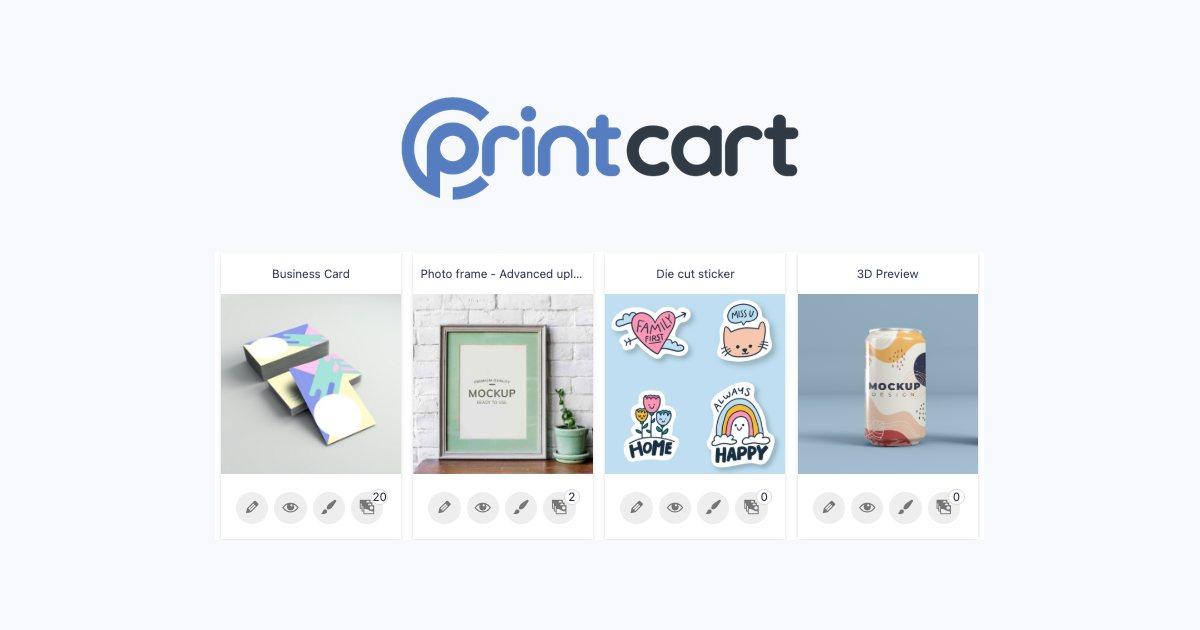
Printcart is Netbase's own web-to-print SaaS, built and run from Vietnam for print businesses that needed online design, print-ready files and order management plugged into any storefront.
Keep Reading
Netbase designs, engineers and operates it remotely; no usage figures are claimed.
Keep Reading
A US software company, not named, sells a multi-tenant cloud ERP as SaaS to small and mid-sized businesses.
Keep ReadingRelated services and solutions
 AI-ready SaaS development from a team that runs its own SaaS
Netbase provides SaaS development services for founders and product teams to launch and scale multi-tenant subscription software with AI features customers will pay for. We build and operate our own SaaS platforms, Printcart and the AI-powered Cloodo workplace, and bring that experience to client products. A typical SaaS MVP takes 8–12 weeks, depending on scope, integrations and review speed.
Learn More
 AI-ready cloud platform engineering for SaaS and commerce workloads
Netbase provides cloud platform engineering for SaaS and commerce teams that need a secure, repeatable home for their software and its AI features, on AWS, Google Cloud, DigitalOcean or Cloudflare. We design the architecture, write the environments as code, connect managed and AI services and hand over a platform your team can run, built the way we run ours.
Learn More
 SaaS product accelerator: launch an AI-ready SaaS on proven Netbase modules
A SaaS product accelerator is a set of reusable Netbase modules for accounts, billing, roles and integrations that helps founders and product teams launch subscription software faster, with room for in-product AI from the first release. Reusing these modules can cut development time by up to 60%, and the approach is proven on Printcart, Netbase's own web-to-print SaaS.
Learn More
Work with Netbase remotely
Every Netbase engagement is delivered remotely, so clients in any country and any industry can work with us; Netbase has worked with clients in 80 countries. Contracts and invoices are issued by Netbase JSC, and payment is made by bank transfer to Netbase JSC's company account or PayPal Business. Talk to the CEO, Huy Nguyen (David), on WhatsApp or by email.
Discuss a project
Netbase JSC helps organizations design, build, modernize, and operate digital products and AI-enabled business systems.project@netbasejsc.com
+84 937 869 689
91 Nguyen Chi Thanh, Dong Da, Hanoi, Vietnam
Get in touch
Tell us what you want to build, modernize, or operate.