

Product discovery that validates AI features and ends in a release roadmap
Netbase provides product discovery workshops for founders and product leaders to turn a product idea into validated scope, architecture options and a release roadmap. We test the problem with real users, prototype the riskiest flows, check whether planned AI features have the data and accuracy they need, and agree what the first release must prove before committing a build budget.
Book a solution review View relevant workReviewed by David (CEO) · Updated 17 Sep 2026

Have an idea, a budget question and too many opinions? Book a solution review.
What product discovery includes
Discovery is the cheapest place to be wrong. A week spent testing an assumption costs less than a month spent building the wrong feature. Our discovery turns a product idea into evidence, a scope and a plan, and it is one of the lead offers of our Strategy & Consulting family.
Included
- Problem framing, goals and success metrics
- User interviews and journey mapping
- Clickable prototypes of the riskiest flows
- Feature list ranked into must, should and later
- Architecture options with written trade-offs
- A release roadmap, estimate and first-release backlog
Not included
- Market sizing reports or investor decks
- Brand identity and marketing campaigns
- Production code for the full product
- Fundraising or legal advice
- App store or platform fees

When to use it, and when another route fits
Discovery fits when the product is new, the market is uncertain, or stakeholders disagree about what version one must do.
Good fit
- A new SaaS, marketplace or mobile product before the first build
- A new product line inside an established business
- Investors or a board need a scoped plan and estimate
- An AI feature whose data and accuracy are still unknown
Another route fits better
- A complete, validated specification that only needs engineers
- A bug fix or a small change to a live product
- No one to decide on scope: a fractional CTO can
- A pure infrastructure or hosting question
Founders and product teams in startups and scale-ups are the most common buyers. Other routes are in the services directory.
Outcomes and buyer jobs
Product leaders hire discovery to:
Interviews and prototype tests replace opinions with evidence from the people who will pay.
A ranked feature list separates what the first release must prove from what can wait.
Options are compared for cost, speed and risk before code exists.
The roadmap comes with an estimate, milestones and the assumptions behind them.
Capability modules and deliverables
Problem statement, target users, goals and success metrics
Interview notes, journey maps and the top pain points
A clickable prototype of the riskiest flows and test findings
A ranked feature list and first-release definition
Two or more options with cost, speed and risk trade-offs
Release plan, milestones, estimate and a first-release backlog
Delivery process, team and governance
Discovery is the first step of our six-step delivery lifecycle, and the rest follows when you are ready:
-
Discovery and strategic alignment
Framing, research and prototyping with your decision makers in the room.
-
Team assembly and architecture planning
A product analyst, a UI/UX designer and a solution architect turn findings into scope and architecture options.
-
Agile execution with outcome-based milestones
The first release is built in milestones tied to what it must prove.
-
Modular and productized components
Proven modules are reused where they save time without limiting the product.
-
Training, rollout and optimization
Launch, measurement and the first round of learning from real users.
-
Ongoing support and co-building
The roadmap is revised as evidence comes in.
Discovery is lean by design: build the smallest prototype that answers the riskiest question, measure what users do with it, learn, and cut the rest from version one. Build teams range from 3 to 30 people, and work typically starts within one to two weeks after discovery. Workshops run remotely in English with your decision makers, and governance includes weekly reviews, KPI dashboards and a dedicated account manager and project manager, over Slack, Zoom and client dashboards. Architecture options are API-first, so a mobile app, integration or AI service can be added without redesigning the core.
AI features we often test in discovery
Most new products include an AI idea. Discovery separates what users value from what only demos well.
-
Assistants and copilots
Does an in-product helper save users real time, and what happens when it is wrong?
-
Smart search and recommendations
Is there enough behaviour data at launch, or should version one use simple rules?
-
Document and image understanding
Can uploads be read reliably enough to skip manual entry?
-
Generated content
Which drafts will users edit and keep, and which need a human review before they are published?
-
Predictions
Is a forecast accurate enough to change a decision?
Each idea leaves discovery with a data check, an accuracy target, a cost per use and a human-review rule, or moves to a later release; AI for an existing product goes to AI integration.
AI in this service
AI changes discovery in two ways. First, AI features get validated like any other feature: we check whether the data exists, what accuracy users need, what happens when the model is wrong and what each call costs, before the feature enters the roadmap. Second, AI-assisted prototyping lets designers produce screens, sample content and test data faster; a designer reviews every screen before a user sees it.
-
In delivered work
Recommendation engine
Delivered for 4over4's online printing store.
-
Available capability
Validating AI features before the first build
Machine learning, NLP, computer vision and generative AI that Netbase offers; not yet tied to a published product discovery case.
Engagement models and commercial variables
Discovery is a short consulting project with a defined end. Most Netbase projects are delivered on fixed-price contracts agreed after discovery, so the roadmap turns into a first release with a fixed scope and price. Milestone-based, monthly team retainer and KPI-linked terms are also offered, and a dedicated development team is a secondary option for a long, open roadmap. You can also take the discovery outputs to your own team. We do not publish rate cards.
Our published typical timelines help set expectations for what comes after discovery, depending on scope and integrations:
- SaaS MVP
- 8–12 weeks
- Mid-tier SaaS product
- 3–6 months
- Enterprise SaaS platform
- 6–12+ months
Technology as an implementation choice
Discovery recommends technology for your product, team and budget; it does not start from a favourite stack. Front-end and mobile choices are compared on our frontend and mobile technologies page. When speed to market matters most, the SaaS product accelerator lets a first release start from proven modules. For custom development, you own the IP created for you; Netbase productized modules are licensed, not transferred.
Technologies we build with



Industry applications
Printing and packaging. Personalized products raise hard product questions: how much design freedom buyers want, which templates sell and where print-ready rules must stop a buyer. Discovery tests those choices with real buyers before the design tool is built.
SaaS and marketplaces. Pricing tiers, onboarding and the first workflow a customer pays for decide whether a subscription product sticks. Discovery puts those choices in front of users early.
 Printing and packaging: online ordering, AI artwork checks and production handoff
Netbase helps print and packaging businesses move ordering, artwork approval and production handoff online, with AI where files go wrong, so customers configure, design, proof and pay in one flow and the press floor receives clean jobs. Six published print-commerce case studies and 50+ custom web-to-print platforms, across apparel, packaging, signage, promotional merchandise and B2B portals, back this page.
Learn More
Proof: products shaped by early decisions
Evidence maturity: product discovery is a growth capability. The records below show products whose early scope decisions Netbase delivered; discovery is not published as a stand-alone engagement.
Printcart (Netbase Business Division). Printcart is the web-to-print and print-on-demand platform Netbase builds and runs. It turns online orders into print-ready files and routed fulfillment, with an online design tool, 1,000+ POD products and 12,400+ vector cliparts, and runs on a merchant's own store or as Shopify, Wix and WooCommerce apps. See the Printcart record.
USticker. A sticker retailer invested in an online design tool. Users of the design tool converted 40% more often, and completed designs rose 32% in six months. Read the USticker case.
More projects are in our work.
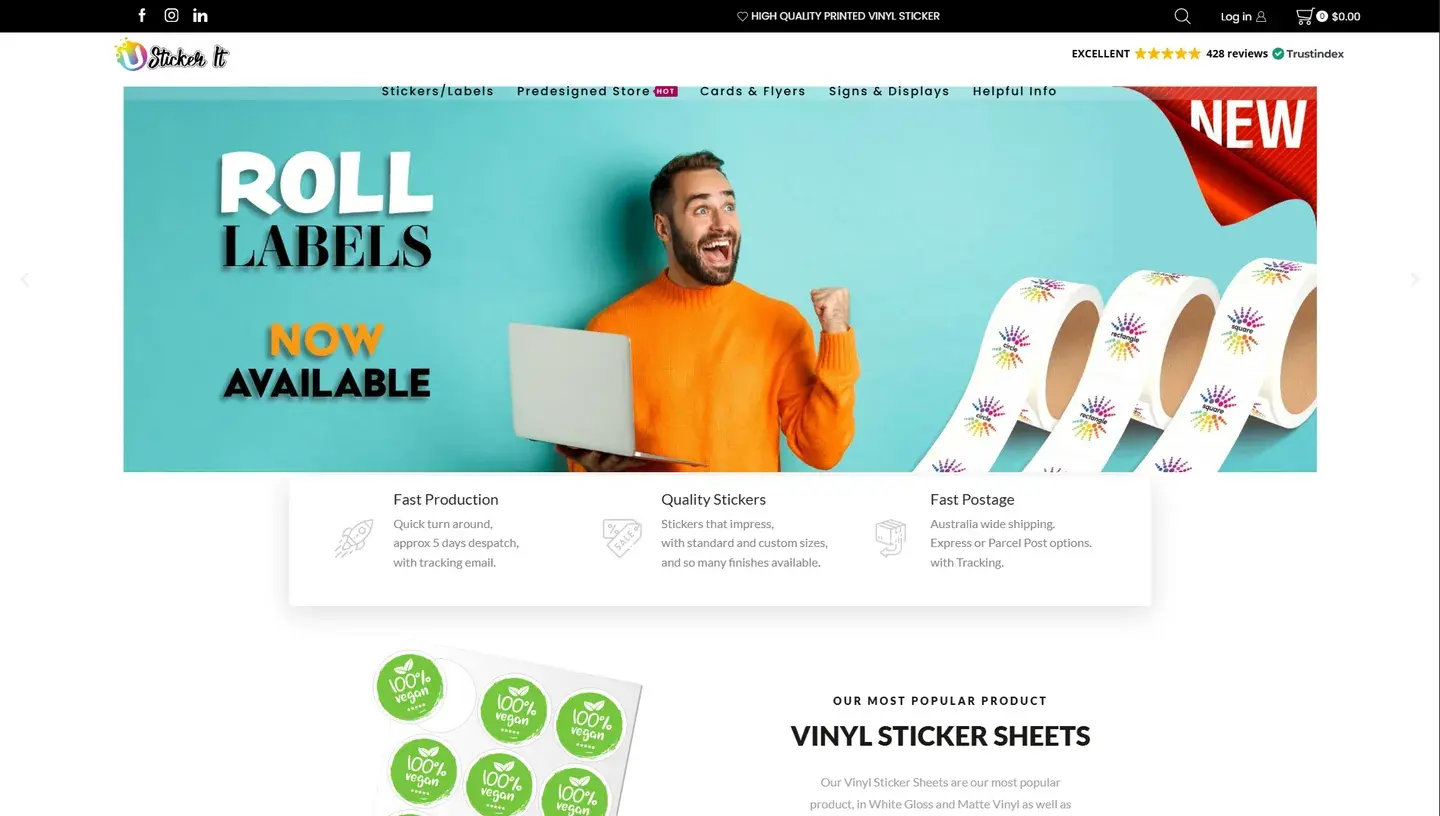
USticker, a family-owned sticker printer in Western Sydney, wanted customers to set background images and colors in its online design tool and to check out faster.
Keep Reading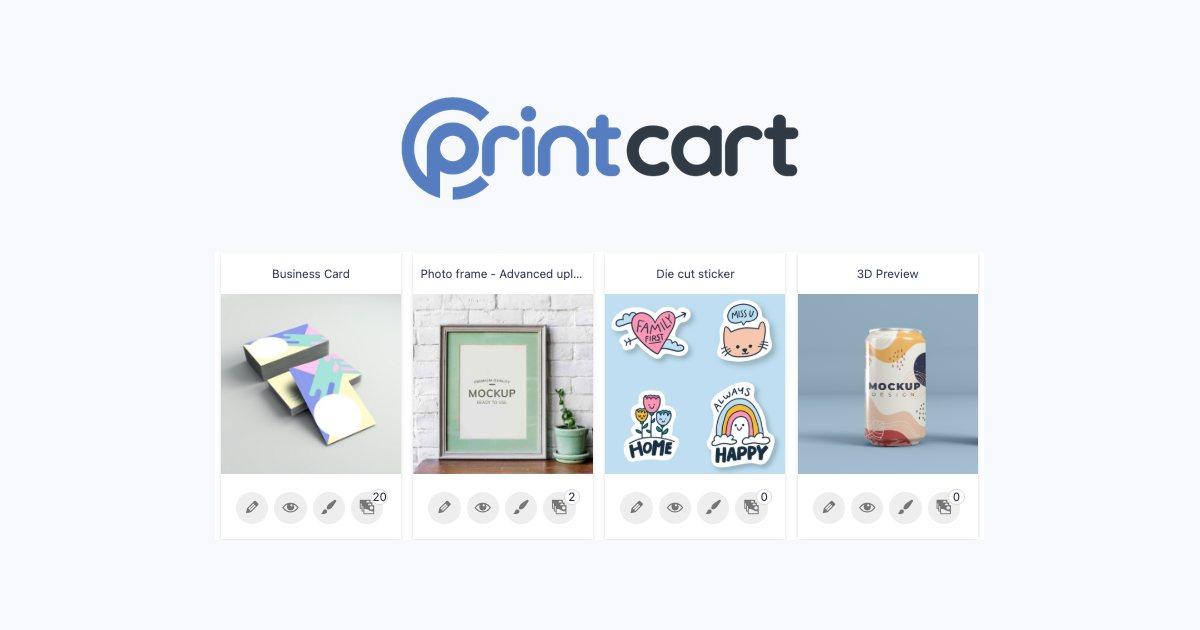
It covers scope, stack and operation; no performance metric is claimed.
Keep ReadingBuyer FAQ
It depends on the number of user groups, flows and open questions. We agree the plan and its end date before we start.
No. A problem, a target user and a decision maker are enough to start.
You do: research notes, prototypes, the roadmap and the backlog are delivered to you.
Only if discovery shows users value it and the data exists. Many products launch with rules or search first and add AI once real usage data arrives.
Yes. The outputs are written for any competent team, not only for Netbase.
Through workshops, weekly reviews and a dedicated project manager, over Slack, Zoom and client dashboards.
Treating discovery as a formality. We test the riskiest assumption first and change the roadmap when evidence disagrees with it.
Related solutions
 SaaS product accelerator: launch an AI-ready SaaS on proven Netbase modules
A SaaS product accelerator is a set of reusable Netbase modules for accounts, billing, roles and integrations that helps founders and product teams launch subscription software faster, with room for in-product AI from the first release. Reusing these modules can cut development time by up to 60%, and the approach is proven on Printcart, Netbase's own web-to-print SaaS.
Learn More
Service owner and next step
This service is owned by David, Netbase's Chairman, founder and CEO, and maintained by the Netbase Editorial Team. Want to know what version one should be before you pay for it? Book a solution review, or view relevant work first.
Discuss a project
Netbase JSC helps organizations design, build, modernize, and operate digital products and AI-enabled business systems.+84 937 869 689
91 Nguyen Chi Thanh, Dong Da, Hanoi, Vietnam
Get in touch
Tell us what you want to build, modernize, or operate.