

AI-ready cloud platform engineering for SaaS and commerce workloads
Netbase provides cloud platform engineering for SaaS and commerce teams that need a secure, repeatable home for their software and its AI features, on AWS, Google Cloud, DigitalOcean or Cloudflare. We design the architecture, write the environments as code, connect managed and AI services and hand over a platform your team can run, built the way we run ours.
Book a solution review View relevant workReviewed by David (CEO) · Updated 17 Sep 2026

Need a platform that will not fall over at the next peak? Book a solution review.
What cloud platform engineering includes
A cloud platform is everything a product needs to run that is not the product itself: networks, containers, databases, storage, queues, secrets, pipelines, monitoring and backups. Platform engineering writes these as code, so a new environment takes minutes instead of a week of console clicks. The service belongs to our Cloud & DevOps family.
It also covers cloud application services integration: connecting your application to the managed services AWS and Google Cloud offer, such as storage, queues, managed databases, email and identity, so the team does not rebuild what the provider already runs well.
Included
- Cloud architecture and provider selection with written reasons
- Infrastructure as code for every environment
- Containers, managed databases, storage, queues and CDN
- Integration with AWS and Google Cloud managed services
- CI/CD pipelines and environment promotion
- Monitoring, logging, backups and disaster recovery
- Security baseline, access model and cost tagging
Not included
- Cloud provider bills and third-party licences
- Feature development of the application itself
- Office IT, laptops and help-desk support
- Hardware in your own data centre
- Round-the-clock on-site staff
- Guaranteed uptime figures
When to use it, and when another route fits
Platform engineering fits when the way software runs has become the constraint, or when a new product should start on a platform that will scale with it.
Good fit
- A new SaaS or commerce product that needs a production platform
- Environments nobody can rebuild, or one server carrying everything
- Traffic peaks that slow or break the product
- A move from one provider or hosting setup to another
Another route fits better
- A small brochure site: standard hosting is enough
- A live, stable platform that only needs looking after: managed cloud fits
- The application code, not the platform, is the bottleneck
- You need office IT support
Other routes are listed in the services directory.
Outcomes and buyer jobs
Teams hire cloud platform engineering to:
Staging matches production, and disaster recovery is a tested procedure, not a hope.
Capacity grows with load and shrinks after it.
Pipelines test and promote each change the same way every time.
Managed databases, storage, queues and identity, integrated properly.
Resources are tagged, so spend can be traced to a product, tenant or environment.
Capability modules and deliverables
Current-state inventory, risks, costs and target requirements
Reference architecture, provider choice and decision records
Version-controlled definitions for every environment
Application connected to managed databases, storage, queues, email and identity
CI/CD with automated tests and environment promotion
Monitoring, logging, alerting and dashboards
Backup policy, restore tests and a disaster recovery plan
Runbooks, access model and a knowledge-transfer session
Delivery process, team, quality and security
Every platform project runs on our six-step delivery lifecycle:
-
Discovery and strategic alignment
The current environment, its risks and costs, and the targets the platform must meet.
-
Team assembly and architecture planning
A team of 3 to 30 people, combining business analysts, project managers, solution architects, developers, QA and UI/UX. Work typically starts within one to two weeks after discovery.
-
Agile execution with outcome-based milestones
Environments, pipelines and integrations are delivered in reviewable steps.
-
Modular and productized components
Proven modules are reused where they remove risk and time.
-
Training, rollout and optimization
Your team learns the platform, and workloads move in stages.
-
Ongoing support and co-building
The platform keeps pace with the product. Our team supports you Monday to Saturday, with Sunday off.
Governance includes weekly reviews, KPI dashboards and a dedicated account manager and project manager, with Slack, Zoom and client dashboards; the team works remote-first from Hanoi in English, and every infrastructure change goes through a pull request you can see. Security is designed in as DevSecOps, part of the baseline: secure code review and version control, TLS in transit and AES at rest, role-based access control, MFA for admin dashboards, vulnerability scanning and penetration testing, and disaster recovery planning. NDAs, DPAs and SLAs are available on request, and contributors work under NDA.
AI on the platform and in how we run it
Two things change when AI enters a cloud platform: the product needs somewhere safe to run models, and operations gain tools that read signals faster than people. We engineer for both, and a named engineer approves every production change.
Platform capabilities for your AI features:
-
Managed AI service integration
Model APIs connected through a gateway with keys, quotas and logging, as in AI integration.
-
Vector search and data stores
Storage for embeddings and documents, with the same access model as the rest of the platform.
-
Inference capacity
Serverless, container or GPU options sized for cost and latency.
AI-assisted engineering and operations:
- Infrastructure code review. AI flags risky changes and misconfigurations in pull requests before a reviewer approves.
- Alert and log triage. Related alerts grouped and summarised so on-call time goes to the cause.
- Cost anomaly detection. Unexpected spend flagged by service, tenant or environment.
AI in this service
Where AI already runs in delivered work, and where it is offered as a growth capability.
-
In delivered commerce work
Recommendation engine
Built for 4over4's online printing store, not for a cloud platform project.
-
Available capability
Cloud platforms for AI workloads with AI-assisted operations
Machine learning and generative AI that Netbase offers; not yet tied to a published cloud platform case.
Engagement models and commercial variables
Most Netbase projects are delivered on fixed-price contracts agreed after discovery, and platform work usually runs as project-based development with milestones. A dedicated team suits a longer programme across several products, and after launch the platform can move to on-demand support or fully managed delivery. Milestone-based, monthly team retainer and KPI-linked terms are also offered. We do not publish rate cards.
What moves effort and cost: the number of environments and services, data volume, how much must migrate from the current setup, compliance obligations and the availability you need.
Technology as an implementation choice
Netbase works on AWS, Google Cloud, DigitalOcean and Cloudflare. We name them as providers we use; no cloud partner tier or cloud certification is claimed. The provider stays your choice, and we recommend that cloud accounts remain in your name with Netbase given role-based access. The tools we pair with each provider, from infrastructure as code to monitoring, are on our cloud and DevOps stack page, and the tenancy and cloud-cost trade-offs for subscription products are in our SaaS platform engineering guide.
Technologies we build with



Industry applications
Printing and packaging. Web-to-print platforms move large artwork files, render print-ready output and face seasonal order peaks. Storage, rendering capacity and CDN design matter more here than on most commerce sites.
SaaS products. A subscription product needs tenant isolation, per-tenant cost visibility and releases that reach every customer at once. Teams building on our SaaS product accelerator get a platform designed for that from the start.
 Printing and packaging: online ordering, AI artwork checks and production handoff
Netbase helps print and packaging businesses move ordering, artwork approval and production handoff online, with AI where files go wrong, so customers configure, design, proof and pay in one flow and the press floor receives clean jobs. Six published print-commerce case studies and 50+ custom web-to-print platforms, across apparel, packaging, signage, promotional merchandise and B2B portals, back this page.
Learn More
Proof: platforms behind Netbase's own Business Divisions
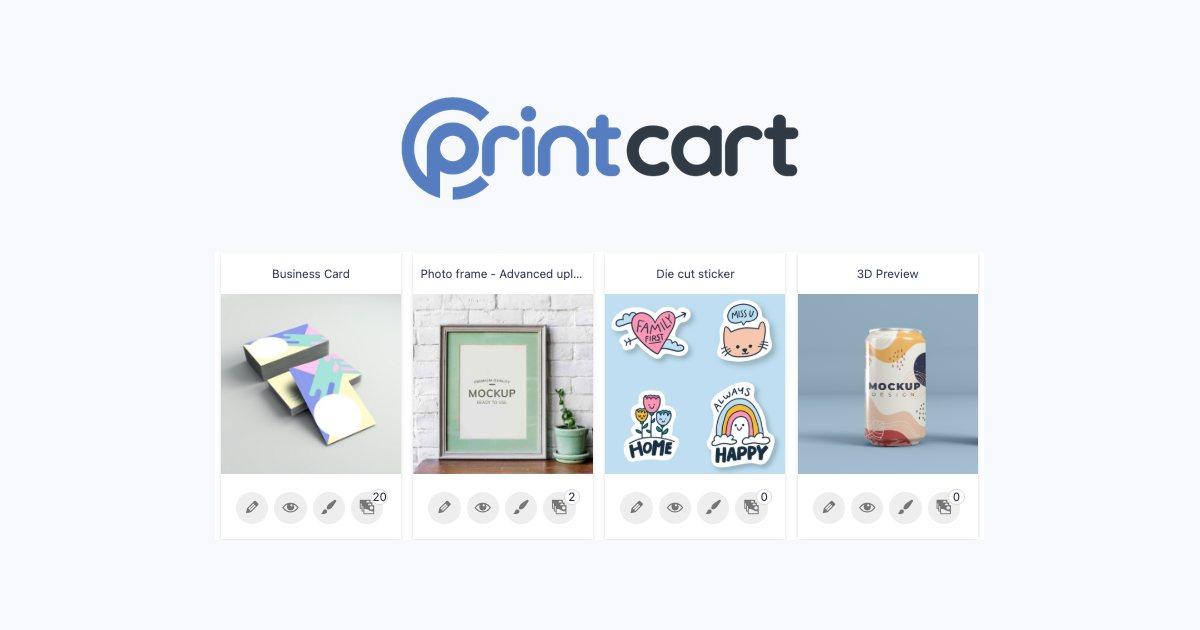
Printcart (Netbase Business Division). Printcart is the web-to-print and print-on-demand platform Netbase engineers, hosts and operates. It turns online orders into print-ready files and routed fulfillment, runs on merchants' own stores or as Shopify, Wix and WooCommerce apps, and serves 2000+ stores. See the Printcart record.
Cloodo Workspace (Netbase Business Division). Cloodo is an AI-powered digital workplace for company profiles, services, projects and team collaboration, connecting internal staff and outsourced specialists in one hybrid workspace. Netbase engineered its cloud platform as a multi-tenant product and runs it live at cloodo.com. See the Cloodo record.
Both answer to Netbase itself, so the patterns we recommend are ones we depend on. More projects are in our work.
It covers scope, stack and operation; no performance metric is claimed.
Keep Reading
Cloodo Workspace is the work-management SaaS Netbase built and operates for service businesses.
Keep ReadingBuyer FAQ
It depends on your workload, team skills, data location and budget. We compare AWS, Google Cloud, DigitalOcean and Cloudflare for your case and record the reason.
Yes. We assess it first and move it to code step by step.
We recommend the accounts stay in your name. For custom work, you own the IP created for you, including the infrastructure code.
Yes. Migrations are planned with a rehearsed cut-over and a rollback point.
If you want us to. Managed operation is available, or we hand over runbooks and train your team.
Yes, when designed for it. Model calls go through a gateway, sensitive data can stay in chosen regions or on self-hosted open-weight models, and access follows the same role-based rules as the rest of the platform.
Support runs Monday to Saturday, with Sunday off. SLAs are agreed on request.
Related solutions
 SaaS product accelerator: launch an AI-ready SaaS on proven Netbase modules
A SaaS product accelerator is a set of reusable Netbase modules for accounts, billing, roles and integrations that helps founders and product teams launch subscription software faster, with room for in-product AI from the first release. Reusing these modules can cut development time by up to 60%, and the approach is proven on Printcart, Netbase's own web-to-print SaaS.
Learn More
Related insights

To take a SaaS product from MVP to scale, separate the shared control plane (sign-up, tenants, identity, billing) from your product features, choose a tenancy model per service, meter usage from the first release, and treat tenant isolation as security, for AI features too. A focused MVP typically takes 8 to 12 weeks; Printcart shows the model at work.
Service owner and next step
This service is owned by David, Netbase's Chairman, founder and CEO, and maintained by the Netbase Editorial Team. Want a platform you can rebuild from code tomorrow? Book a solution review, or view relevant work first.
Discuss a project
Netbase JSC helps organizations design, build, modernize, and operate digital products and AI-enabled business systems.+84 937 869 689
91 Nguyen Chi Thanh, Dong Da, Hanoi, Vietnam
Get in touch
Tell us what you want to build, modernize, or operate.