

Web-to-print integrations: connecting MIS, ERP, CRM, shipping and payment without re-keying an order
A web-to-print order earns its labour saving only if it reaches production, accounting and the buyer without re-typing. Pick one integration method per system: a job ticket or API for the MIS, an API for ERP and CRM, a carrier API or EDI for shipping, a gateway API for payment, each built to retry safely and reconcile on its own.
Book a solution review See the related solutionBy Netbase Web-to-Print and Print Commerce Desk · Reviewed by David (CEO) · Updated · 11 min read

This guide is for owners, operations leads and technical teams scoping a web-to-print integration, once the platform itself is decided (the platform guide and the implementation checklist cover that; a migration rebuilds the same integrations on the new side). It goes one layer deeper.
In this guide
- Five systems, five different integration jobs
- Choosing the integration method
- Design for failure: retries, idempotency and reconciliation
- Payment: capturing print-specific charges correctly
- Shipping: labels, multi-destination and production-linked dispatch
- A sequencing plan for an integration project
- Where AI fits in a web-to-print integration
- What delivery record exists, and what does not
- Alternatives: who builds and runs the integration layer
- Limits of this guide
- Frequently asked questions
- Next step
Five systems, five different integration jobs
Treat MIS, ERP, CRM, shipping and payment as five separate integrations, each with its own data and its own tolerance for delay.
-
Print MIS or production system
- What flows, and which way
- Job specification, options and the print-ready file out; job status and completion back
- Typical method
- Job-ticket standard (JDF or XJDF) or a plain API, depending on what the MIS supports
-
ERP
- What flows, and which way
- Order, customer and invoice data out; stock, pricing and fulfilment status back
- Typical method
- API, usually synchronous for pricing and stock, asynchronous for order and invoice
-
CRM
- What flows, and which way
- Customer, company and quote data out; account and contract status back
- Typical method
- API, often webhook-triggered on order or quote events
-
Shipping and carriers
- What flows, and which way
- Package weight, dimensions and destination out; label, tracking number and delivery status back
- Typical method
- Carrier or multi-carrier API; EDI for large B2B trading partners
-
Payment
- What flows, and which way
- Charge or authorization out; capture, refund and chargeback events back
- Typical method
- Payment gateway API for the charge; webhooks for everything that happens after it
A platform that treats all five as "the integration" usually builds the easiest one first and runs out of time for the rest, as the implementation checklist's integration row warns.
Choosing the integration method
| Method | Strength | Risk | Choose it when |
|---|---|---|---|
| Manual export or CSV upload | No integration work at all | Re-keying, delay, and errors that reach production or the buyer | Order volume is very low or the system is being retired soon |
| Point-to-point API | Direct, synchronous, easy to debug for one connection | Each new system is custom work; many point-to-point links become brittle | One or two systems, with a team that owns both ends |
| Webhook plus API | Event-driven; the receiving system reacts as soon as something happens | Needs retry handling, because delivery is at-least-once, not exactly-once | Payment, shipping status and any event another system must react to quickly |
| EDI (ANSI X12) | A trading partner's standard; required by large retail and B2B buyers | Mapping and onboarding cost per partner; older technology to staff | A partner mandates EDI, commonly purchase orders, advance ship notices and invoices |
| Job-ticket standard (JDF or XJDF) | Vendor-neutral job specification most print MIS systems already read | Only useful if the MIS on the other end supports it | Several MIS or production sites must all receive the same specification |
Most platforms end up using two or three of these at once: a job-ticket or API link to the MIS, a plain API to ERP and CRM, and webhooks for payment and shipping events.
Design for failure: retries, idempotency and reconciliation
Webhook delivery is at-least-once: a gateway, carrier or CRM can and will send the same event more than once, especially after a timeout. Stripe's webhook guidance is explicit: acknowledge receipt quickly, use the event's own identifier (not its signature, which changes on a retry) to detect a duplicate, and return a server error only for failures that should be retried.
Two failure classes matter most: a duplicate event, where the same "payment captured" or "label created" webhook arriving twice must not charge or print twice; and a missed event, where a dropped webhook must not leave an order stuck. Store the event identifier before acting on it, and reconcile on a schedule, not only by reacting to pushes.
This is a general integration problem: our enterprise systems integration guide covers it in depth; this page adds what print changes: a job is not "done" until the MIS confirms the file was accepted.
Secure this layer the way Netbase secures what it builds: TLS in transit, role-based access to whoever can trigger a refund or resend a job, and MFA on any dashboard that can replay a webhook.
Payment: capturing print-specific charges correctly
Print orders often change price after checkout: a rush fee, an overrun or underrun adjustment, or a deposit-and-balance split on a large B2B order. Authorize the estimated amount at checkout and capture the final amount once the specification is confirmed, rather than charging and refunding the difference; keep card data off your own servers with hosted fields, which narrows what the Payment Card Industry Data Security Standard (PCI DSS) requires, as the PCI Security Standards Council publishes.
Purchase-order and invoice payment for B2B print portals is a separate path: it settles through the ERP's accounts-receivable process, so the integration must route each order correctly from the start.
Shipping: labels, multi-destination and production-linked dispatch
Shipping in print has two complications a generic store rarely has: a label often cannot be bought until the job is printed and boxed, and one order can need many destinations, such as a company distributing branded materials to its locations. Buy the label when the MIS marks the job ready to ship, so it matches the real package, and rate-shop only once you have real dimensions, since print jobs rarely have a final size before finishing.
Large retail and corporate buyers often mandate ANSI X12 EDI: an 850 purchase order in, an 856 advance ship notice out once the job dispatches, and an 810 invoice to close it. X12 publishes the transaction sets; treat an EDI mandate as a scoped, per-partner integration, not a platform-wide default.
A sequencing plan for an integration project
-
Map the data each system needs, and which way it flows
Confirm the five-system table above against your own MIS, ERP, CRM, carrier and gateway.
-
Pick one method per system,
rather than defaulting to "an API for everything"; some systems only expose a job ticket, a webhook or an EDI feed.
-
Build against a sandbox first
Most gateways, carriers and MIS systems offer one; test the full retry and failure path there before touching production data.
-
Make every receiver idempotent,
storing the event or job identifier before acting on it, for every webhook and every MIS or ERP callback.
-
Add a reconciliation report before launch,
not after an incident: a daily comparison of orders, payments and shipped jobs catches a missed event before a buyer calls about it.
-
Pilot one product family end to end,
as the implementation checklist's go-live gate recommends, before widening the catalog.
-
Monitor the integrations, not only the storefront,
so a failed webhook or a stuck MIS job pages someone before a buyer notices a missing order.
Where AI fits in a web-to-print integration
AI is useful at the edges of an integration, never inside the parts that move money or production data unsupervised. Netbase works with the major commercial and open-source AI models, chosen per project. Each item below states how mature it is at Netbase.
-
In delivered work
Product recommendation engine
Built for 4over4's online printing store from browsing and purchase history; it is not an integration tool.
-
Available capability
AI-assisted reconciliation and mapping
Matching fields between a new system's data model and your own, and flagging unusual mismatches in a daily reconciliation report, are machine learning and generative AI features; not yet tied to a published integration case.
What delivery record exists, and what does not
Netbase has delivered 50+ custom web-to-print platforms, and has also built and integrated the systems on the other side of the connection:
- Cloodo Workspace. A Netbase Business Division digital workplace carrying CRM, HRM, Cloud ERP and AI modules in one product (Cloodo record); Netbase also deploys a help desk and B2B CRM for partners on the same workspace.
- Cloud ERP for a US client (not named). Since 2020, offshore development and managing partner on a multi-tenant cloud ERP, whose first phase covered CRM, project management and API integrations, with e-commerce integrations planned for the second (cloud ERP record).
- ERP and CRM consultancy. Odoo consultancy and customisation, including with a Vietnamese Odoo partner; e-commerce-to-ERP integrations that synchronise catalogues, inventory, orders and customer data by API; and a Vtiger-to-ERP upgrade. None of these engagements is named, and none publishes a figure or result.
- Printcart. The Printcart platform runs inside a merchant's existing store as a Shopify, Wix or WooCommerce app, not as a system every merchant must integrate from scratch.
- A loyalty and rewards platform (not named). For a Dubai-based company, Netbase integrated the client's points middleware, ordering service and catalogue by webhooks and scheduled sync, alongside SSO and payment gateways (loyalty platform record). Not a print platform; it shows the pattern this guide describes.
- Deyar Printing & Advertising. A bilingual web-to-print platform with RFQ capture, multi-branch ordering and a production back-office (Deyar record); its ERP link and e-invoicing are a planned later phase, not delivered scope.
What does not exist. No published Netbase record describes one print order moving through MIS, ERP, CRM, shipping and payment integrations together on a single project, and none publishes an integration count, duration or error rate for such work. The methods above come from delivery practice across these separate engagements and the cited standards, not from one measured project.
Alternatives: who builds and runs the integration layer
| Route | Strength | Choose it when |
|---|---|---|
| Your own team | Deepest knowledge of your MIS, ERP and CRM | Capacity exists and someone already owns these systems |
| The web-to-print product's built-in connectors | Fastest start for the systems it already supports | Your MIS, ERP or carrier is on its supported list |
| A dedicated integration partner | One team across the storefront and every connected system | Several systems must be connected at once, or none exist yet |
In Netbase custom development the client owns the IP created for it, and most projects run on fixed-price contracts agreed after discovery. Netbase's own productized library also includes a CRM and B2B sales engine, a workflow automation toolkit and a Smart ERP Light module, growth-capability accelerators that can shorten the ERP or CRM side of a build. The offer sits in systems and API integration and ERP and CRM development, delivered through e-commerce development for printing and packaging.
Limits of this guide
- Every MIS, ERP, CRM, carrier and gateway differs; what is possible is known only after reading its own documentation.
- Standards are cited for what they define, not as a claim that any Netbase project conforms to them.
- No duration, cost or error-rate figure is claimed; a project's real numbers depend on its own systems and volume.
Plan the next step with a Netbase consultant
Frequently asked questions
No. Launch one product family first, as the implementation checklist recommends, and sequence the integrations the same way, starting with whichever erases the most re-keying.
You can, but every order will be re-keyed into production, erasing most of the labour saving. If it must wait, set a date for the integration release and limit the launch scope until then.
Because the webhook, not the order, can arrive twice. A stored event identifier stops a duplicate "payment captured" event from triggering a second capture or job.
Usually not. EDI (ANSI X12) matters once a large retail or corporate buyer mandates it; a direct-to-consumer storefront can usually use plain APIs and webhooks instead.
Next step
Tell us which MIS, ERP, CRM, carrier and payment gateway you run today, and we will book a solution review to scope the integrations in the right order. You can also see the web-to-print platform solution or browse more Netbase insights.
Work behind this guide

Netbase designs, engineers and operates it remotely; no usage figures are claimed.
Keep Reading
A loyalty and rewards technology company in Dubai, United Arab Emirates, not named under a non-disclosure agreement, needed many branded reward shops on one platform.
Keep Reading
Netbase delivered a bilingual Arabic and English web-to-print platform remotely, through its Printcart division, so business and government buyers design, price and order online and every order reaches production as a checked, print-ready file.
Keep ReadingRelated services and solutions
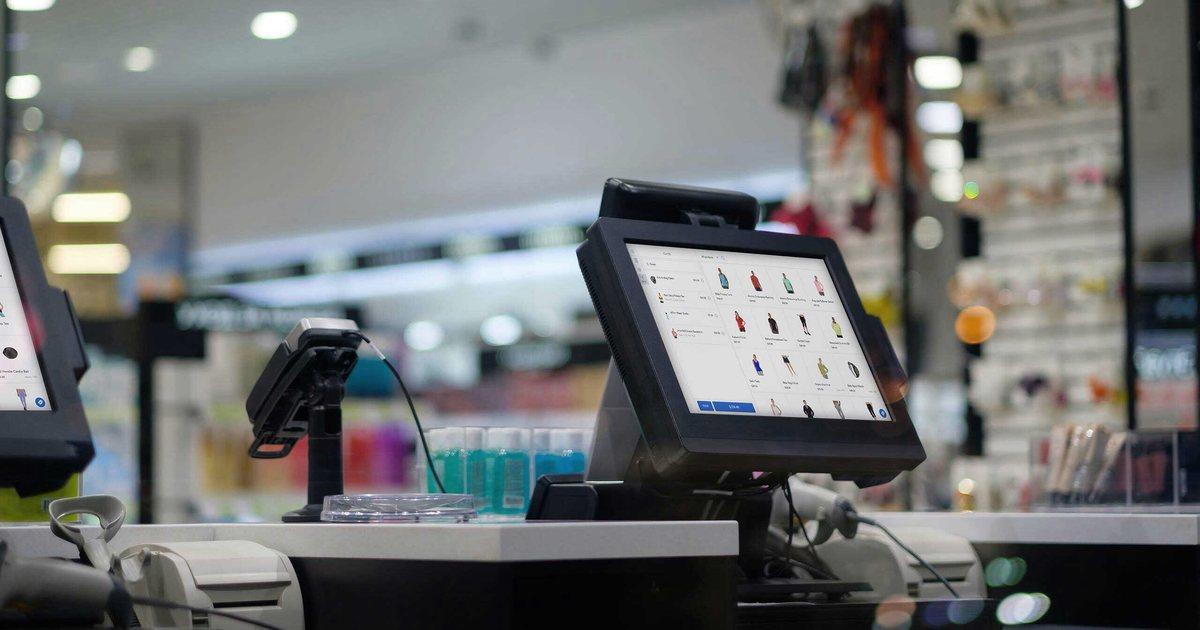 AI-enabled ecommerce development for merchants who outgrew templates
Netbase provides custom ecommerce development for merchants that have outgrown templates, to turn traffic into orders with less manual work, using AI for search, recommendations and catalog work where it pays. We build on WooCommerce, Magento 2, Laravel and headless stacks; 4over4, whose store gained an AI recommendation engine, reported 82% more revenue within six months.
Learn More
 API integration services that keep your systems in agreement and ready for AI
Netbase provides API integration services for commerce and operations teams that need e-commerce, ERP, CRM, shipping and payment systems to agree, so data moves once and AI services can act on it, with retries, monitoring and reconciliation on every API and webhook. According to its published client record, Netbase has worked with 500+ businesses across 80 countries since 2012.
Learn More
 AI-enabled ERP and CRM development connected to your commerce
Netbase provides custom ERP and CRM development for growing companies to run sales, operations and finance in systems shaped to how they work, connected to their ecommerce channels and using AI for document capture, forecasting and sales follow-up. We build on proven modules, including Smart ERP Light and Cloodo Workspace, and work with Odoo or Salesforce where one fits.
Learn More
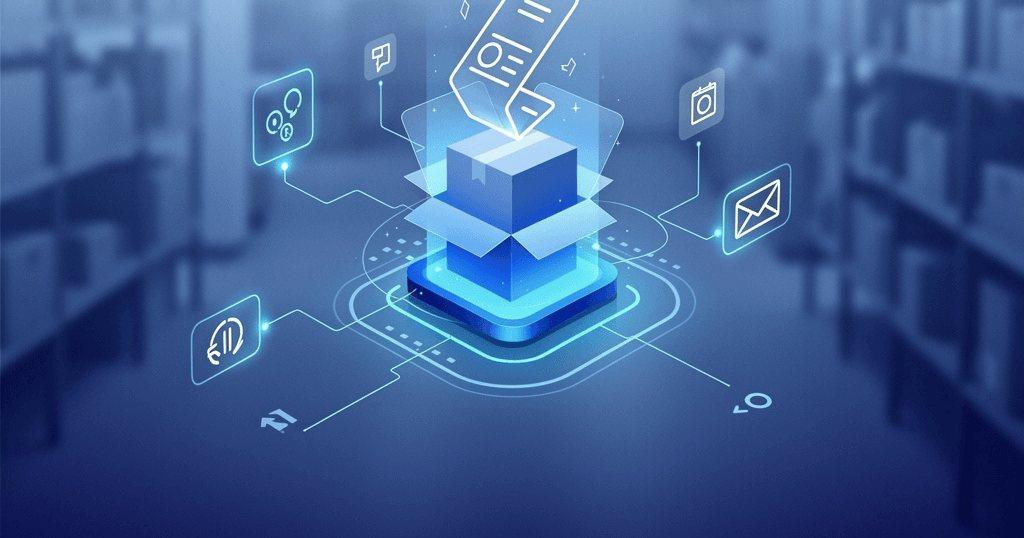 Web-to-print platform with AI design assistance, from online design to a print-ready order
A web-to-print platform is an online ordering, design and prepress workflow that helps print businesses sell custom products: customers configure, design and approve their order online, AI can suggest layouts and catch artwork problems, and production receives a print-ready file. Netbase has delivered 50+ custom web-to-print platforms across apparel, packaging, signage, promotional merchandise and corporate B2B portals.
Learn More
Work with Netbase remotely
Every Netbase engagement is delivered remotely, so clients in any country and any industry can work with us; Netbase has worked with clients in 80 countries. Contracts and invoices are issued by Netbase JSC, and payment is made by bank transfer to Netbase JSC's company account or PayPal Business. Talk to the CEO, Huy Nguyen (David), on WhatsApp or by email.
Discuss a project
Netbase JSC helps organizations design, build, modernize, and operate digital products and AI-enabled business systems.project@netbasejsc.com
+84 937 869 689
91 Nguyen Chi Thanh, Dong Da, Hanoi, Vietnam
Get in touch
Tell us what you want to build, modernize, or operate.