

AI product recommendations and search for WooCommerce: which route fits your store
A WooCommerce store adds AI product search and recommendations in one of three ways: an extension, a hosted search and recommendation service, or a custom AI layer on the store's own APIs. Netbase picks the route by catalog data quality, shopper event data collected with consent, and who must own the ranking rules.
Book a solution review See the ecommerce development serviceBy Netbase Commerce and Platform Engineering Desk · Reviewed by David (CEO) · Updated · 11 min read

This guide is for WooCommerce store owners, e-commerce managers and CTOs whose searches return nothing or whose related products feel random. It sits under Netbase's ecommerce development service and its page on WordPress and WooCommerce development.
In this guide
- What does AI change in WooCommerce search and recommendations?
- Which route fits your store?
- Is your catalog and event data ready for AI?
- How do you roll out AI search and recommendations?
- Where AI fits
- What delivery record exists, and what does not?
- Alternatives: who builds and runs it
- Limits of this guide
- Frequently asked questions
- Next step
What does AI change in WooCommerce search and recommendations?
AI changes how a store matches intent, not what the store sells. Keyword search returns products whose text contains the words a shopper typed. AI search tries to match meaning, so a query that describes a need, a use or a problem can still find the right product, and misspellings or synonyms stop being dead ends.
Search matters because, as Baymard Institute's e-commerce search research puts it, if users cannot find what they are searching for, they cannot buy it.
Recommendations change in the same direction. A rule says "show other products from this category". A model learns which products are bought or viewed together, and which products fit the shopper in front of it, from the store's own orders and browsing events. WooCommerce's own Product Recommendations extension, for example, describes an algorithm that analyses a store's orders to find product relationships, alongside rules the merchant sets by category, attribute, tag or price.
Both features depend on data more than on the model. A hosted commerce search vendor's documentation says it uses the same catalog and user event data for search and for recommendations, and that relevance and ranking are extremely sensitive to the quality of that data.
Which route fits your store?
There is no single best tool. The right route is the smallest one that fixes the search or recommendation problem the store actually has, without giving away control it needs to keep.
| Route | What it is | Choose it when | Do not choose it when |
|---|---|---|---|
| 1. Extension or plugin | A WooCommerce extension that adds AI search, related products or frequently bought together inside the store | The catalog is small to mid-sized, attributes are clean and the default placements fit | The plugin must hook the same search or product page as another plugin, or the store runs a custom storefront |
| 2. Hosted search and recommendation service | A third-party service that indexes the catalog and events and returns results through an API or widget | Search quality is the main problem, the team wants merchandising controls and no model to run | Shopper data may not leave your systems, or the service cannot read the attributes your shoppers filter on |
| 3. Custom AI layer | Your own index and models, fed by the WooCommerce REST API and returned through the Store API or a custom front end | The ranking rule is the business itself (configurable, personalised or B2B products), or data must stay in your infrastructure | No one will own the model, the index and the evaluation after launch |
Three decision rules keep the matrix honest:
- Fix the catalog first. If products lack attributes, consistent names and in-stock flags, every route returns poor results; an AI layer cannot invent the data a shopper filters on.
- Separate search from recommendations. They share data, but they fail differently. A store can run a hosted search service and keep simple order-based recommendations, or the reverse.
- Keep an exit. Whatever route you choose, keep the catalog and event data in a form you own, so the next route does not start from zero.
When a store's needs outgrow WooCommerce itself, the comparison is no longer between search tools; the custom e-commerce platform guide covers that platform decision, and the guide to WooCommerce custom development covers when a custom plugin is the better answer than another extension.
Is your catalog and event data ready for AI?
A data check is quicker than a tool trial and shows which route is realistic. Run it on an export and record each answer.
-
Attributes
- What to check
- Do products carry the attributes shoppers filter and ask about, such as size, material, use or compatibility?
- Why it matters
- AI search matches meaning, but it can only return what the catalog describes
-
Variations
- What to check
- Are variations stored as WooCommerce variations, or hidden in free text and plugin fields?
- Why it matters
- Hidden options cannot be indexed or recommended
-
Stock and visibility
- What to check
- Is stock status reliable, and are hidden or private products excluded from the feed?
- Why it matters
- Recommending an out-of-stock or hidden product breaks trust
-
Access
- What to check
- Can the catalog and orders be read through the WooCommerce REST API, and can the front end query products through the Store API?
- Why it matters
- Every route outside the plugin route needs these APIs
-
Events
- What to check
- Which views, searches, add-to-cart actions and purchases are recorded, and where?
- Why it matters
- Recommendations learn from behaviour; without events only order history is left
-
Consent
- What to check
- Is behavioural tracking switched on only after the shopper agrees to non-essential cookies?
- Why it matters
- Consent decides which events you may use, and for whom
-
Search log
- What to check
- Do you keep the queries that returned nothing?
- Why it matters
- Zero-result queries are the cheapest test set you will ever get
A store that passes attributes, variations, stock and access is ready for route 1 or 2. Route 3 also needs reliable events, a consent design and a named owner for the search log.
Consent is a design input, not a legal footnote. The UK Information Commissioner's Office says users should be able to enable or disable non-essential cookies easily, and that consent must involve a clear positive action. A personalisation model that silently assumes every visitor is tracked will be trained on the wrong population.
How do you roll out AI search and recommendations?
A rollout is a measurement project as much as a build. The sequence Netbase's engineering teams follow:
-
Collect the baseline
Export a month of search queries, zero-result queries and the current related-product placements, and note which pages carry them.
-
Write a fixed query set
Pick real queries from the log, including product names, needs, misspellings and attribute filters, and write the products a good answer should return for each.
-
Clean the catalog for those queries
Fill the missing attributes and variation data that the query set exposes before any AI work starts.
-
Connect the data
Feed the catalog through the WooCommerce REST API and the consented events into the chosen extension, service or custom index, with one owner per record.
-
Test offline, then online
Score the old and new search on the fixed query set first; then show the new search or recommendations to part of the traffic and keep a holdout on the old behaviour.
-
Set merchandising guardrails
Decide which products are always excluded, which promotions may be boosted and who approves a change to those rules.
-
Hand over the loop
Name who reviews zero-result queries, who updates synonyms and attributes, and who decides when the model or the service changes.
Where AI fits
AI does the matching and the ranking; people still own the catalog, the rules and the decision to ship. Netbase works with the major commercial and open-source AI tools and models, chosen per project, and engineers check every result on staging before it reaches shoppers.
The engineers still review the query set, the exclusions and every ranking rule that touches price, promotion or stock.
- In delivered work
The 4over4 recommendation engine
The AI feature Netbase delivered for a named commerce client suggests products from browsing history and previous purchases, the order-and-event pattern described above.
- Available capability
AI search on a WooCommerce catalog
A semantic index over a WooCommerce catalog, tested with a fixed query set and a holdout, is a capability Netbase is growing; it is not yet tied to a published WooCommerce case.
What delivery record exists, and what does not?
Netbase has delivered commerce platforms on WooCommerce, Magento 2, Laravel and headless commerce. Its WooCommerce work runs largely through CMSmart, a Netbase Business Division that builds personalised e-commerce stores, product designers and configurators, and WooCommerce stores and marketplaces for small and mid-sized sellers.
The records closest to this guide:
- The recommendation engine built into 4over4's online printing store, which suggests products from browsing history and previous purchases.
- For an online classifieds marketplace whose client is not named, Netbase delivered category and location search along with the rest of the platform, on a Laravel back end with REST APIs.
- Retrieval-augmented (RAG) knowledge assistants, document AI and MLOps pipelines for clients that are not named; the same retrieval pattern sits under a natural-language product search.
What does not exist: no published conversion, revenue or search-relevance figures for these projects, no benchmark of search vendors or recommendation plugins, and no published WooCommerce case of AI search. These records describe scope, not results. Projects are usually agreed at a fixed price after scoping; milestone-based and monthly team models also exist.
Alternatives: who builds and runs it
The route decides what you run; the delivery model decides who keeps it working. Pick by who will review the query log and the rules every month.
| Option | Fits when | Watch for |
|---|---|---|
| Store team with an extension | The catalog is clean and the default placements fit | Nobody reviews zero-result queries after setup |
| Search vendor's onboarding team | Route 2, and the vendor's merchandising tools fit how you sell | Rules and synonyms locked into one vendor's format |
| Freelancer or WordPress developer | A bounded connector or theme change around a chosen service | The data feed and evaluation have no owner after handover |
| E-commerce engineering partner | Route 3, or catalog clean-up, data connection and front end must change together | Ask who owns the index, the query set and the code repository |
Limits of this guide
- It covers WooCommerce on WordPress. Shopify apps and Magento modules follow other rules.
- It does not estimate costs, timelines or uplift; those depend on the catalog and are agreed per project.
- It is not legal advice on consent; check the rules that apply to your shoppers with your own adviser.
Plan the next step with a Netbase consultant
Frequently asked questions
Often not. A small catalog with clean attributes, good product names and well-built filters can work well with keyword search. AI search earns its place when shoppers describe needs instead of product names, or when the zero-result log keeps growing.
Partly. Order history alone supports frequently bought together and related products without tracking individual visitors. Personalised suggestions based on browsing need behavioural events, and where those rely on non-essential cookies they should run only for shoppers who have agreed.
Neither is better in general. A hosted service usually gives more merchandising controls and keeps search load off the store, while a plugin keeps data inside WordPress and is simpler to run. Choose by catalog size, who must own the data and who will manage the rules each month.
Score the old and new search on the same fixed set of real queries before launch, then compare them on live traffic with a holdout that keeps the old behaviour. A search that feels better but cannot be scored has not been tested.
Next step
Bring your zero-result search queries and a catalog export, and Netbase will map them to a route: book a solution review.
Work behind this guide
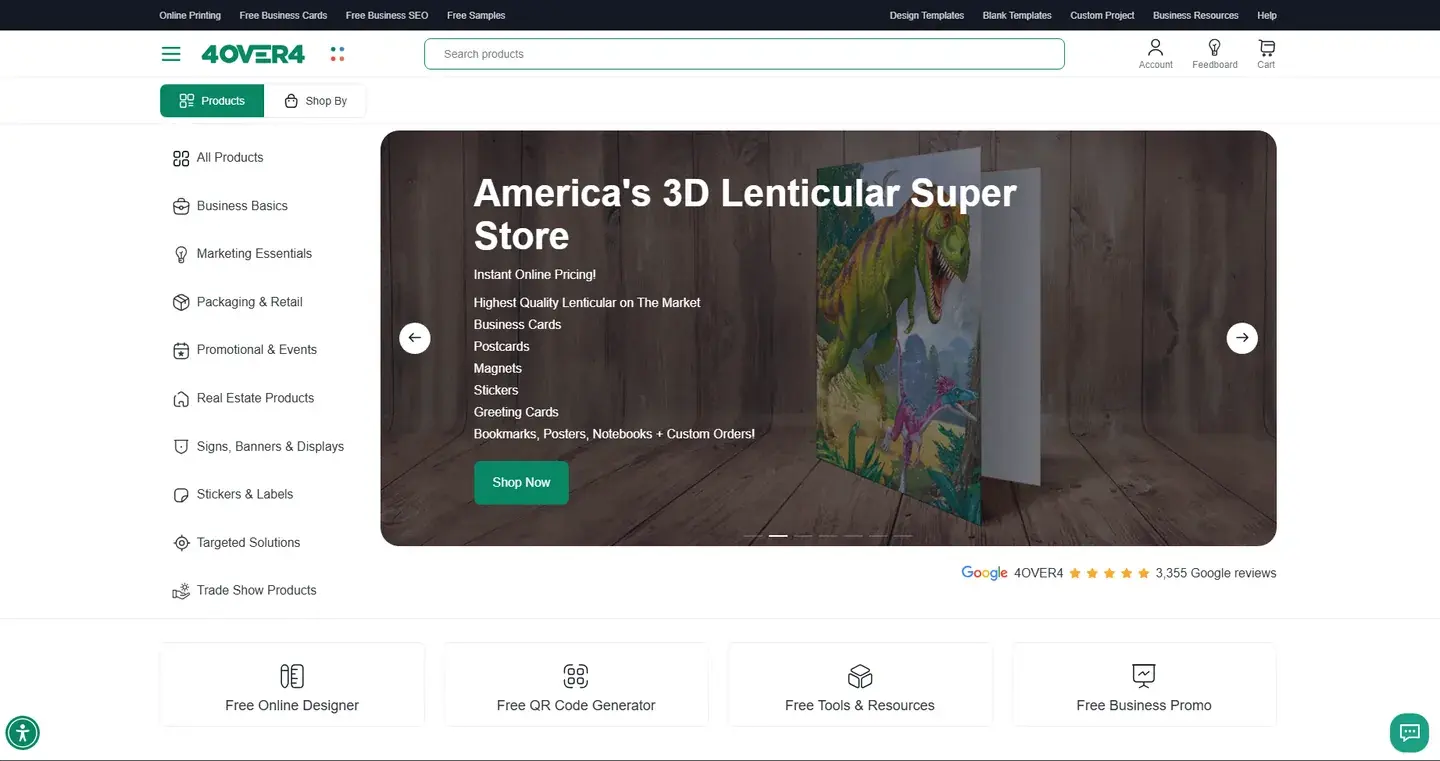
The same work also automated Adobe Illustrator (.ai) to SVG file conversion and added product recommendations for shoppers.
Keep Reading
Revenue grew 36% in the first quarter after launch.
Keep ReadingRelated services and solutions
 AI-enabled ecommerce development for merchants who outgrew templates
Netbase provides custom ecommerce development for merchants that have outgrown templates, to turn traffic into orders with less manual work, using AI for search, recommendations and catalog work where it pays. We build on WooCommerce, Magento 2, Laravel and headless stacks; 4over4, whose store gained an AI recommendation engine, reported 82% more revenue within six months.
Learn More
 AI integration services: add AI to the products and systems you already run
Netbase provides AI integration services for companies that want AI inside the store, ERP, CRM, mobile app or internal tool they already run, without rebuilding it. We connect language model APIs and retrieval over your data to existing workflows through a controlled integration layer, with evaluation, guardrails, cost limits and privacy rules agreed before launch. It is a growth capability.
Learn More  Multi-vendor marketplace development: vendors, catalog, payouts and AI search on one platform
A multi-vendor marketplace is a commerce platform where many independent sellers list, sell and get paid through one storefront. Netbase's marketplace solution covers vendor onboarding, a shared catalog, split payments and payouts, with AI for search, listing enrichment and fraud checks. For an EU fashion-tech marketplace, Netbase's work grew gross merchandise value (GMV) and cut vendor onboarding time.
Learn More  CMSmart
 turns product personalization into a working store. Since 2012 this Netbase division has shipped WooCommerce builds, online product designers and marketplace setups for small and mid-sized sellers around the world, and more than 7,000 businesses have now launched a store with it.
Learn More Related insights

A WooCommerce store needs custom development when the rule that makes the business different has to be faked across several plugins, or when plugins block updates, integrations or checkout changes. Netbase sorts the fix into six routes, from configuration to a replatform, and picks the smallest one that removes the trigger.
Work with Netbase remotely
Every Netbase engagement is delivered remotely, so clients in any country and any industry can work with us; Netbase has worked with clients in 80 countries. Contracts and invoices are issued by Netbase JSC, and payment is made by bank transfer to Netbase JSC's company account or PayPal Business. Talk to the CEO, Huy Nguyen (David), on WhatsApp or by email.
Discuss a project
Netbase JSC helps organizations design, build, modernize, and operate digital products and AI-enabled business systems.project@netbasejsc.com
+84 937 869 689
91 Nguyen Chi Thanh, Dong Da, Hanoi, Vietnam
Get in touch
Tell us what you want to build, modernize, or operate.