

Blockchain and smart contract development in 2026: when a ledger fits and how to scope it by milestone
A blockchain is the right tool only when several parties must share a record that none of them controls alone, or when users must hold their own keys. Netbase scopes such a build as six milestones, from fit check to mainnet and operations, each with a deliverable, acceptance evidence and a rule for stopping.
Book a solution review See blockchain development servicesBy Netbase Commerce and Platform Engineering Desk · Reviewed by David (CEO) · Updated · 11 min read

This guide is for founders, product owners and CTOs who are about to brief a blockchain or smart contract development company and want proposals they can compare line by line. It sits in our IoT, Web3 and emerging technology work and supports the blockchain development service, which covers contracts, wallets, tokens and permissioned ledgers.
In this guide
- When is a blockchain the right tool for a business problem?
- Which ledger option fits: database, permissioned ledger or public network?
- How should a smart contract build be scoped by milestone?
- What should a fixed-price milestone exclude or name separately?
- Where AI fits
- What delivery record exists, and what does not?
- Alternatives: who builds the contracts, and how to choose
- Limits of this guide
- Frequently asked questions
- Next step
When is a blockchain the right tool for a business problem?
A blockchain earns its extra cost when several organisations write to one record, none of them is trusted to own it, and outsiders must later verify that nothing was changed. NIST describes blockchains as tamper evident and tamper resistant ledgers implemented in a distributed fashion, usually without a central authority, which is exactly the property a single-owner database does not need.
Three questions settle most cases before any development company is asked for a proposal:
- Who writes the record? If one company writes and everyone else only reads, a database with an audit log and an API is simpler to build, change and run.
- Who must be able to check it later, and without whose help? If an auditor, partner or customer must verify history without trusting the operator, a ledger starts to make sense.
- Must the record ever be corrected or deleted? Data that changes often, or that people can ask to have erased, fits poorly on a ledger that is designed to be permanent.
When the answers point to one owner, editable data and no outside verifier, the honest recommendation is a database. Many tokenisation ideas end there too, as our guide to product questions before tokenized loyalty shows.
Which ledger option fits: database, permissioned ledger or public network?
The choice of network changes the milestone plan, the security work and who can run the system after launch, so it belongs in the first milestone, not the build.
| Option | Choose it when | Do not choose it when |
|---|---|---|
| Shared database with audit log and API | One party owns the data; partners need read or write access under contract | Outsiders must verify history without trusting the operator |
| Permissioned ledger (for example Hyperledger Fabric) | Known, governed organisations share one record and need private channels | Users must hold assets in their own wallets or the parties will not run nodes |
| Public network | Users hold tokens or credentials in their own wallets and anyone must be able to verify | Transaction data must stay private or the business cannot accept public, permanent records |
| Layer 2 on a public network | The public network fits but users make many small transactions | The product depends on assets and tools that exist only on the base layer |
The Hyperledger Fabric documentation describes it as a permissioned platform where participants are known to each other, which suits consortia of known companies. On public networks, Ethereum's documentation notes that smart contracts are immutable by design: business logic cannot be updated once a contract is deployed unless an upgrade mechanism was built in. That single fact explains why the milestones below put design, testing and audit before any contract holds value.
How should a smart contract build be scoped by milestone?
A milestone is useful only when it names a deliverable, the evidence that proves it is done and the condition under which the buyer should stop. The six milestones below follow the plan, code, test, audit, deploy and monitor phases that security firms describe for smart contracts.
-
Fit check and decision record
Deliverable: a list of parties, records and trust relationships, the ledger option chosen with reasons, and the alternatives rejected. Evidence: the buyer signs the decision record. Stop rule: if the three questions above point to a database, stop here and build the database instead.
-
Design specification
Deliverable: contract specification, roles and permissions, upgrade, pause and admin-key design, a threat model, wallet and custody choice, and the integration map to existing systems. Evidence: every privileged function has a named key holder and a recovery plan. Stop rule: if nobody can own the admin keys or the legal review of a token is not settled, pause before code.
-
Testnet build
Deliverable: contracts with unit and property-based tests, the back end, indexer and wallet flows, all deployed on a public test network or a test channel. Evidence: the agreed test suite passes and the user journeys run end to end on the testnet. Stop rule: if a core flow only works with manual steps the users would never accept, redesign before the audit.
-
Audit and fix
Deliverable: a frozen commit handed to an independent auditor, the findings report, the fixes and the re-review. Evidence: every high and medium finding is fixed or formally accepted by the buyer. Stop rule: if a finding changes the design, return to milestone 2 rather than patching. Our smart contract audit preparation checklist covers this milestone in depth.
-
Mainnet launch
Deliverable: deployment scripts, verified contracts, the key ceremony for admin and upgrade keys, monitoring and an incident runbook. Evidence: a dry run of the deployment on a fork or testnet, and the buyer holds the keys agreed in milestone 2. Stop rule: no launch while any admin key sits with a single person.
-
Run and improve
Deliverable: monitoring of contracts and events, upgrades through the agreed governance, and support for the web and mobile apps around the contracts. Evidence: alerts reach a named on-call owner. Stop rule: none; this milestone runs as long as the product does, under application maintenance and support.
OpenZeppelin's audit readiness guide asks teams to define the audit scope at least two weeks in advance and to keep the commit frozen until the fixes are reviewed, so milestone 4 needs a date agreed with the auditor before milestone 3 ends.
What should a fixed-price milestone exclude or name separately?
A fixed-price proposal is only comparable when each milestone states what is outside it. The items below change with factors no development company controls, so a good proposal names each one and says who pays and who decides.
- The independent audit. The auditor is a separate firm chosen by the buyer; the development company prepares the code and fixes the findings.
- Network fees. Deployment and transaction fees on a public network depend on the network at the time, not on the proposal.
- Token and legal review. Whether a token is a security, a payment instrument or a loyalty point is a legal question for the buyer's counsel.
- Third-party services. Node providers, custody providers, oracles and indexing services carry their own terms.
- Scope changes after the audit freeze. A new feature after milestone 4 starts means another audit round.
Most Netbase projects are delivered on fixed-price contracts, with milestone-based, monthly team retainer and KPI-linked models also offered, so each milestone above can be priced and signed off on its own.
Where AI fits
AI shortens the routine parts of a blockchain build. A model can draft contract scaffolding and unit tests from the specification, list every privileged function and external call for the threat model, suggest invariants for property-based tests and generate integration code for wallets and back-office systems. Engineers still own the contract logic, the upgrade and pause design, the key management and the decision to deploy; no AI tool holds a private key or approves a release. Netbase works with the major commercial and open-source AI tools and models, chosen per project.
- In delivered work
Product recommendation engine
Built for 4over4's online printing store, it suggests products from browsing history and previous purchases; a delivered AI feature named with a client.
- Available capability
AI-assisted engineering under human review
AI-assisted contract drafting and test generation is a capability Netbase offers, not yet tied to a published blockchain case.
What delivery record exists, and what does not?
Netbase designs, builds, integrates and runs software in every technology that large software market players offer, and blockchain applications are part of that scope. This page describes the capability and the approach; it is not backed by a published blockchain client project, and it claims no number of contracts, tokens, audits or users.
Delivery follows a six-step lifecycle from discovery and strategic alignment to ongoing support, with agile execution against outcome-based milestones; the six blockchain milestones above map onto it. Netbase's published security practices are secure code review and version control, role-based access control, MFA for admin dashboards, vulnerability scanning and penetration testing, and disaster recovery. The same lifecycle runs on Netbase's own products, such as Cloodo Workspace.
Alternatives: who builds the contracts, and how to choose
The milestone plan stays the same whoever builds; what changes is who carries each milestone.
- A blockchain specialist firm. Best when protocol design, a new chain or a DeFi product is the core of the business. Check who builds the web, mobile and integration work around the contracts.
- A full-stack software partner with blockchain scope. Best when contracts are one part of a product that also needs web and mobile apps, payments and links to existing systems. Ask for the milestone plan, the test approach and the audit plan in writing, and compare companies with a disclosed ranking method.
- An in-house team with an external audit. Best when you already employ engineers who write smart contracts. Buy the audit and, if needed, a design review at milestone 2.
Choose by three criteria: who will own the keys and the deployment scripts after launch, who can fix an audit finding without breaking deployed state, and who will run the system in year two. Wallet design is often the deciding question.
See wallet and custody options for business Web3 apps
Limits of this guide
- It covers scoping a build on public, layer 2 or permissioned networks, not token economics, exchange listings or protocol research.
- It is not legal, financial or compliance advice; token questions belong with the buyer's counsel.
Plan the next step with a Netbase consultant
Frequently asked questions
Ask who writes the record, who must verify it without trusting the operator and whether data must ever be corrected or deleted. If one party writes, nobody outside needs to verify and records change often, a database with an audit log and an API is the better and simpler choice.
It should deliver a signed decision record: the parties, the records, the trust relationships, the ledger option chosen and the alternatives rejected. If that record points to a database, the project should stop there or change course before any contract is written.
By default it cannot, because public-network contracts are immutable by design. An upgrade mechanism can be built in, but it adds admin keys and trust assumptions, so the decision belongs in the design milestone, with multisig control or a timelock agreed before launch.
Usually it is not, because the auditor should be independent of the team that wrote the code. The development company prepares the frozen commit, answers the auditor's questions and fixes the findings; the proposal should say which of those steps its price covers.
Next step
If you are about to brief a blockchain or smart contract development company and want the ledger decision and the milestone plan written down first, book a solution review.
Work behind this guide
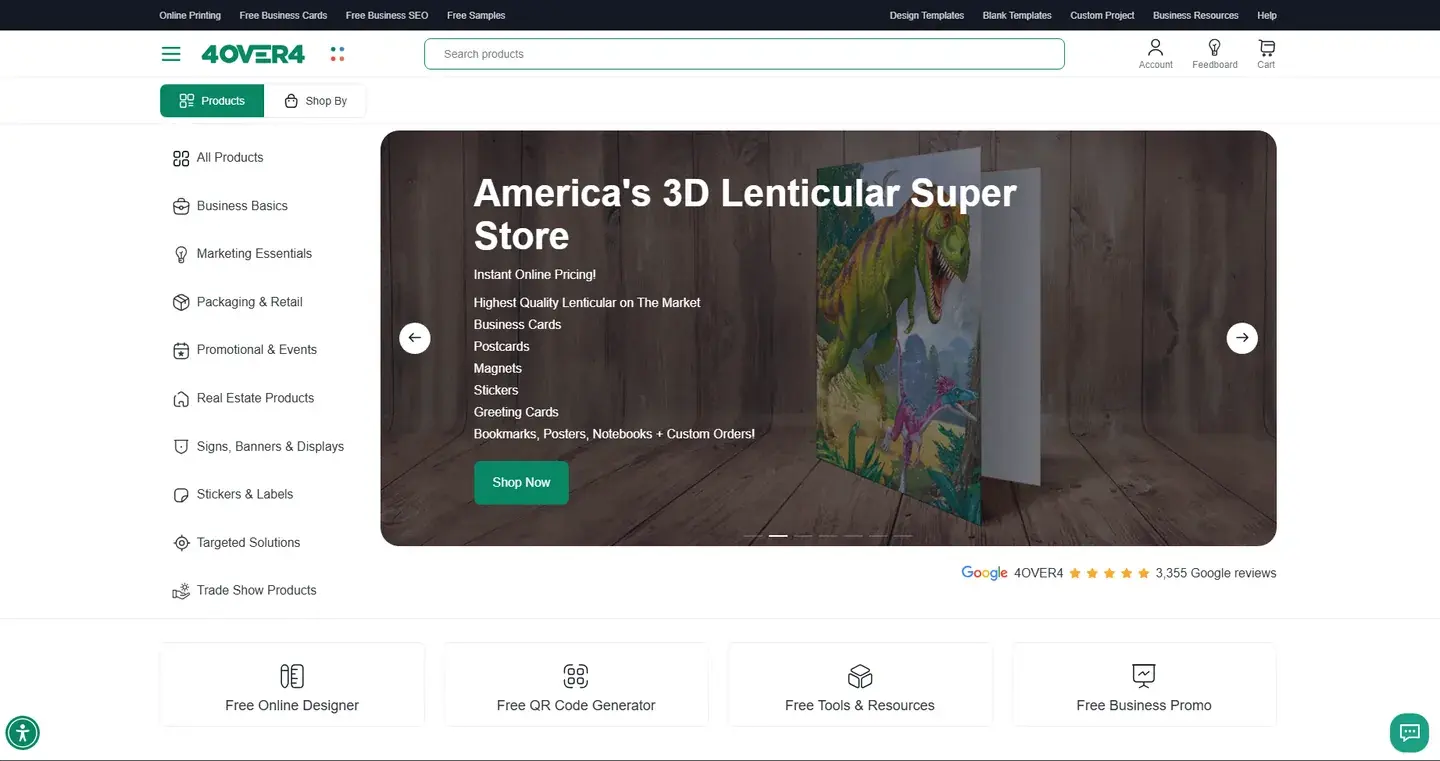
4over4, a US online printing store, reported 82% higher e-commerce revenue within six months after Netbase JSC remotely reworked its checkout, search and navigation.
Keep Reading
Cloodo Workspace is Netbase's own work-management SaaS for service businesses, built and run from Vietnam.
Keep ReadingRelated services and solutions
 IoT development with AI analytics that connects devices to the business
Netbase provides IoT development for manufacturers, logistics operators and product companies to connect devices and sensor data to the business platforms that act on them, with AI that spots anomalies and forecasts what needs attention. We design the device-to-cloud data path, build the back end, dashboards and integrations, and treat security, data ownership and AI as design decisions.
Learn More
 Blockchain development: smart contracts, wallets and tokenisation built to last
Netbase designs and builds blockchain applications: smart contracts, wallet integrations, tokens and permissioned ledgers, connected to the web, mobile and business systems you already run. We start by checking whether a blockchain is the right tool at all, test every contract against known attack patterns and plan an independent audit before anything holds real value.
Learn More  Digital wallet and payments with AI: balances, transfers, merchant payments and payouts on one ledger
A digital wallet from Netbase is web and mobile software where customers hold a balance, top up, pay merchants, send money to each other and receive payouts, while operations and finance teams reconcile every movement on one ledger. We design and build it custom on licensed payment partners, and add AI that flags fraud while analysts decide.
Learn More Related insights

To prepare smart contracts for an external audit, freeze the code at one commit, write down what is in and out of scope, finish unit, fuzz and invariant tests, document the roles and expected behaviour, and reserve time to fix findings. Netbase prepares contracts this way so that paid audit days go to real logic flaws.

Tokenized Loyalty and Rewards: Product Questions Before Choosing Blockchain
Before choosing blockchain for a loyalty program, settle ten product questions about point value, transfer, redemption, partner settlement and member onboarding; most programs that answer them honestly need a well-run points database, and a token fits only when members must hold and move value across companies. This Netbase guide gives the screen and the operating duties.

When does a digital twin of physical assets pay back?
A digital twin pays back when it changes a frequent, costly decision about physical assets and the data to feed it already exists. This Netbase guide applies a five-question filter: which decision changes, what an error costs, how often it is made, which data exists, and who acts. Most proposals pass as dashboards first.
Work with Netbase remotely
Every Netbase engagement is delivered remotely, so clients in any country and any industry can work with us; Netbase has worked with clients in 80 countries. Contracts and invoices are issued by Netbase JSC, and payment is made by bank transfer to Netbase JSC's company account or PayPal Business. Talk to the CEO, Huy Nguyen (David), on WhatsApp or by email.
Discuss a project
Netbase JSC helps organizations design, build, modernize, and operate digital products and AI-enabled business systems.project@netbasejsc.com
+84 937 869 689
91 Nguyen Chi Thanh, Dong Da, Hanoi, Vietnam
Get in touch
Tell us what you want to build, modernize, or operate.