

Fractional AI Leader: The First 90 Days, Step by Step
In its first 90 days, a fractional AI leader should deliver four things the company can accept or reject in writing: a signed mandate, a ranked use-case portfolio, a governance baseline and a handover plan. Netbase plans these as checkpoints at day 30, 60 and 90, each with acceptance criteria agreed before the work starts.
Book a solution review See fractional AI leadershipBy Huy Nguyen (David), Founder & CEO · Updated · 10 min read

This guide is for the CEO, COO, founder or board chair of a mid-market company who has engaged, or is about to engage, a part-time AI leader and wants to know what good looks like before the first invoice. Policy content, such as risk tiers and approval rules, sits in our guide to AI governance for mid-market companies; the roles and engagement models are on the fractional AI leadership service. This page is the sequence that connects them.
In this guide
- What should a fractional AI leader deliver in the first 90 days?
- Days 1-30: how is the mandate set, and what does the leader inventory?
- Days 31-60: how does the leader build the portfolio and the governance baseline?
- Days 61-90: what does a handover plan contain?
- The 90-day plan as a checklist
- Who should own AI in the first 90 days?
- Where AI fits
- What delivery record exists, and what does not
- Independence: what to check when the leader's firm also builds
- Alternatives: when a 90-day fractional mandate is the wrong tool
- Limits of this guide
- Frequently asked questions
- Next step
What should a fractional AI leader deliver in the first 90 days?
Four workstreams run in parallel, but each one has a clear finishing point.
-
Mandate
- Finished by
- Day 30
- What the company receives
- A written mandate: reporting line, decision rights, out-of-scope items, cadence
- Accepted when
- The sponsor has signed it and the leadership team has seen it
-
Use-case portfolio
- Finished by
- Day 60
- What the company receives
- A ranked list of AI use cases with owners, data sources and a reason for every rank
- Accepted when
- Each item has a named business owner, a data source and a risk rating
-
Governance baseline
- Finished by
- Day 60
- What the company receives
- Roles, approval points and a risk rule for AI work, in plain language
- Accepted when
- Approval points are written, named and signed off by the sponsor
-
Handover plan
- Finished by
- Day 90
- What the company receives
- Who inherits each decision, backlog item and document, and when
- Accepted when
- An internal owner is named for every item, or the gap is stated
Netbase structures fractional AI work as outcome-based milestones, in which each milestone has a written outcome and acceptance criteria agreed before it starts. Outcome-based here means scoped deliverables, not a promised business result or a price guarantee.
The handover plan appears in the first 90 days on purpose. A fractional role exists to fill a seat for a period, and Netbase's fractional technology leadership engagements are written with a handover to a permanent hire. If nobody knows who inherits the work, the company is renting a leader rather than building capability.
Days 1-30: how is the mandate set, and what does the leader inventory?
The first month is about authority and facts, not building.
The mandate. It answers five questions in writing: who the leader reports to, which decisions the leader can take alone, which ones need the sponsor, what is out of scope (for example hiring, contracts or vendor payments), and how often the leader meets the sponsor.
The inventory. The leader lists every AI tool, pilot, vendor contract and data flow already in use, including tools staff adopted on their own. Each item gets an owner, or the note "no owner". This list is the raw material for both the portfolio and the governance baseline.
The stakeholder map. One conversation with each department head that uses or wants AI, recorded as problems and data, not as tool requests. A RACI chart shows early where two people believe they own the same decision.
Day-30 checkpoint: the mandate is signed, the inventory exists, and the leader can name the three questions that most need a decision. Failure signal: the leader presents a vendor shortlist before the inventory.
Days 31-60: how does the leader build the portfolio and the governance baseline?
The second month turns the inventory into choices; portfolio and baseline are built together, because risk changes rank.
The use-case portfolio. Every candidate gets the same fields: the business problem, the owner, the data it needs and whether that data is reachable, the risk level, and the reason for its rank. The leader also writes down what was left out and why. A portfolio without exclusions is a wish list.
The governance baseline. The minimum set of rules the company needs before any AI use case moves past a pilot: who approves a new use case, which actions need a human decision, how incidents are reported and who can stop a system. The NIST AI Risk Management Framework organises this work in four functions (govern, map, measure and manage), and its Playbook offers voluntary suggested actions that a company can adopt selectively. A mid-market baseline starts with govern: named roles and decision rights.
The first pilot decision. By day 60 the leader recommends whether to start one pilot from the top of the portfolio, and on what terms. Our first-90-days plan for agentic AI describes how such a pilot is gated once it starts.
Day-60 checkpoint: the sponsor accepts the ranked portfolio and signs off the approval points. Failure signal: the governance baseline is a policy copied from elsewhere that names no person in your company.
Days 61-90: what does a handover plan contain?
The third month proves the plan survives without the leader in the room.
Owners. Every portfolio item, governance role and open decision has an internal owner. Our guide to AI agent operating models sets out the owner and escalation roles that agent work needs once it runs.
The decision log. A dated record of each decision taken in the 90 days, who took it and what alternatives were rejected.
The next-term plan. The leader recommends one of three paths: continue the fractional role for a defined term, hire a permanent AI leader (with a role profile and interview support), or close the mandate because an internal owner can carry it.
Day-90 checkpoint: the sponsor accepts the handover plan and the decision log. Failure signal: the recommended next step is "continue as is" with no change in scope.
The 90-day plan as a checklist
-
Mandate first
Agree the sponsor, reporting line and decision rights in writing before day 1.
-
Criteria before work
Agree acceptance criteria for each of the four deliverables before the work starts.
-
Inventory
List AI tools, pilots, vendors and data flows, including unofficial ones.
-
Stakeholders
Record problems and data per department, not tool requests.
-
Portfolio
Rank use cases with owners, data, risk and a reason for every rank and exclusion.
-
Governance baseline
Write approval points, human decisions, incident reporting and stop authority.
-
Pilot decision
Decide whether one pilot starts, and on what terms.
-
Owners and log
Name an internal owner for every item and keep a dated decision log.
-
Next term
Recommend continue, hire or close, and accept each deliverable against its criteria.
Who should own AI in the first 90 days?
A fractional leader is one of four ways to staff this period. The right choice depends on whether the company needs a decision-maker, a report or a builder.
| Option | Strength | Risk | Choose it when |
|---|---|---|---|
| Fractional AI leader | Senior judgement and a mandate without a full-time hire | Part-time attention; needs a strong internal sponsor | AI work exists but no one owns priorities or risk |
| Full-time AI leader hire | Full attention and long-term ownership | Hiring takes time; hard to define the role before the inventory exists | The scope is already clear and justifies a permanent seat |
| One-off consulting assessment | A fixed scope and a written report | No one stays to carry the decisions | You need a baseline score, not an owner |
| Internal owner with an outside advisor | Keeps ownership in the company | The internal owner may lack time or authority | A capable manager exists and only needs challenge and review |
Decision rule: if the company cannot name who would accept the four deliverables, start by naming a sponsor; no option works without one.
Where AI fits
AI is the subject of the mandate, and it also helps the leader work, under human review. Language models can summarise contracts, interview notes and policies into a first draft of the inventory; the leader checks every line against the source. Netbase works with the major commercial and open-source models, chosen per project, and the ranking, risk ratings and approval points stay with named people.
- In delivered work
Recommendation engine
Built for 4over4's online printing store; the named delivered AI feature that informs Netbase's advice on which use cases are realistic.
- In delivered work
WhatsApp AI chatbot with CRM integration
An AI chatbot synchronised with a CRM, delivered in milestones for a client that is not named.
- Available capability
AI leadership at executive level
A fractional AI leader running this 90-day plan; not yet tied to a published engagement.
What delivery record exists, and what does not
Netbase offers fractional AI and digital-transformation leadership as part-time and per-project roles, including a fractional Chief AI Officer, an AI transformation advisor, a project-based AI programme lead and an independent board or advisory seat, delivered remotely first. Huy Nguyen (David), Netbase's Founder and CEO, takes part personally as advisor, board member or independent expert.
The engagement models are a part-time retainer, a per-project sprint and outcome-based milestones. Most Netbase projects are delivered on fixed-price contracts agreed after discovery. Netbase's delivery lifecycle includes discovery, outcome-based milestones and training and rollout, which is the practice a fractional leader draws on.
The AI delivery behind the advice is the recommendation engine built for 4over4's online printing store, the one named delivered AI feature, plus AI projects for clients we do not name, including retrieval-augmented knowledge assistants, document AI and MLOps pipelines.
What does not exist: no named fractional AI or board engagement is published, and we state no count of mandates, no duration and no result. The 90-day plan on this page is the way we structure the work, not a record of past outcomes.
Independence: what to check when the leader's firm also builds
A leader from a firm that also builds software knows what delivery takes, but the conflict has to be managed in writing.
In Netbase's advisory and board roles, any Netbase interest in a recommendation is disclosed in writing before the client decides, and the leader takes no part in selecting or evaluating Netbase as a vendor for the same client unless the client asks and the interest is disclosed. Formal board directorships follow the client's governance and applicable law. For the company, accountability starts with knowing who gains from each recommendation.
Alternatives: when a 90-day fractional mandate is the wrong tool
- A single AI feature to build. If the decision is already taken, a fixed-scope build is faster than a leadership mandate.
- Only a readiness score is needed. An AI strategy and readiness assessment gives a baseline without an ongoing role.
- No internal sponsor. A fractional leader without a sponsor who can accept deliverables produces documents nobody adopts; fix sponsorship first.
Limits of this guide
- The plan assumes a mid-market company with some AI activity already under way; a company with none may spend the first month on education instead of inventory.
- The 30-60-90 split is a planning frame; a regulated company may need the governance baseline first.
- Nothing here is legal, audit or investment advice, and a board seat always follows the company's own governance.
Plan the next step with a Netbase consultant
Frequently asked questions
A signed mandate, a ranked use-case portfolio with owners, a governance baseline with named approval points, and a handover plan that names an internal owner for every decision and backlog item.
Not necessarily. The first 90 days establish ownership, priorities and rules; at most one pilot is recommended and started on agreed terms, and launching several systems before the governance baseline exists adds risk.
Check each deliverable against acceptance criteria written before the work started. If the criteria were never written, the first fix is to write them, not to extend the engagement.
Next step
Planning AI leadership without a full-time hire? Book a solution review to agree a mandate and acceptance criteria for the first 90 days.
Work behind this guide
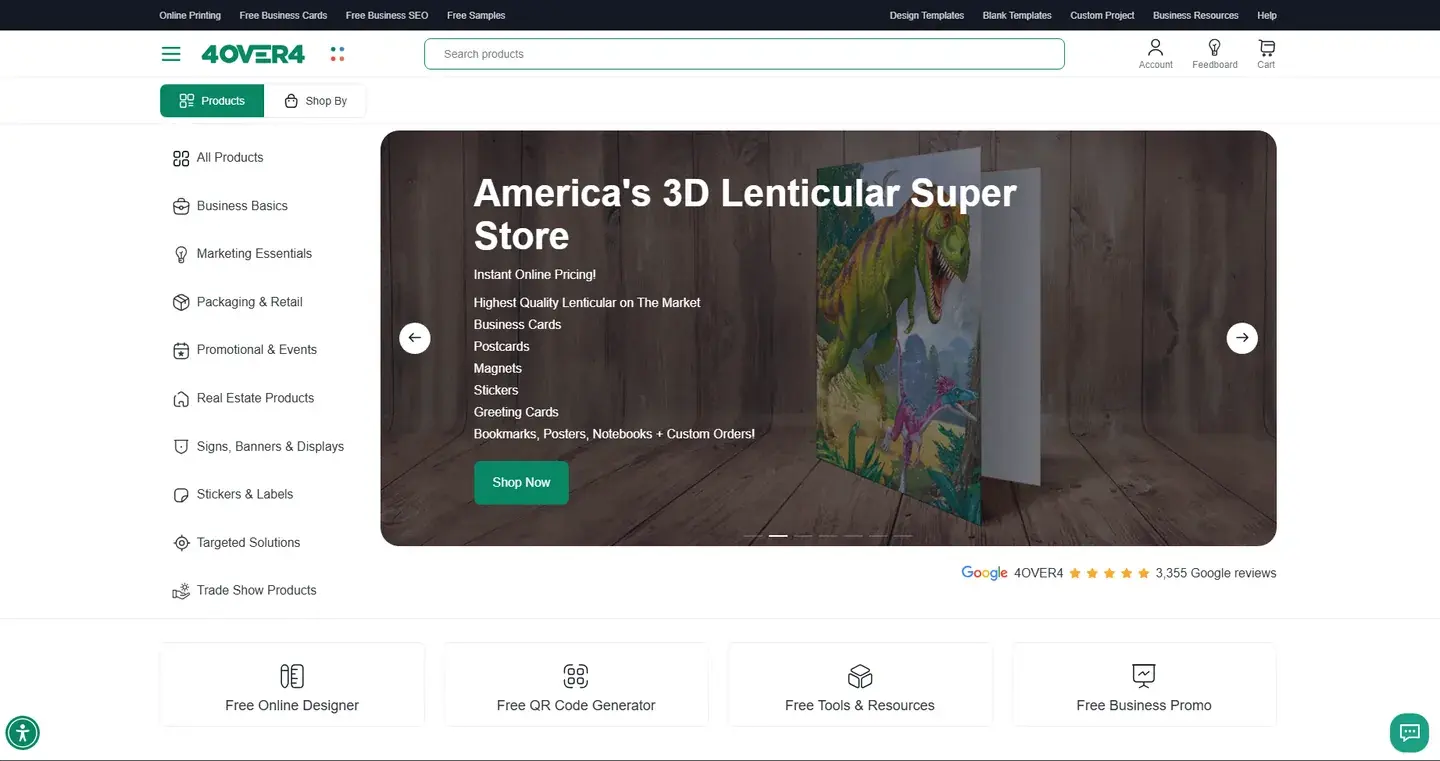
The same work also automated Adobe Illustrator (.ai) to SVG file conversion and added product recommendations for shoppers.
Keep ReadingRelated services and solutions
 Fractional AI leadership: a part-time AI leader, advisor or board seat
Netbase provides fractional AI leadership: a part-time or per-project chief AI, digital or technology officer, transformation advisor, independent expert or board-level adviser. The work is remote first and organised around written outcomes the client accepts or rejects. David, Netbase's CEO, takes part personally, with delivery roles behind him.
Learn More
 AI strategy and readiness: from a list of ideas to a governed roadmap
Netbase provides AI strategy consulting for leadership teams that need to decide where AI is worth the effort. We assess readiness across four areas (use cases, data, risk and value), rank the candidates and deliver a governed AI roadmap with first pilots, owners and measures. AI strategy is a capability we are growing, not a record of many past programmes.
Learn More  Enterprise AI agent platform: run AI agents with approvals, audit logs and cost limits
An enterprise AI agent platform is a governed runtime where AI agents plan and carry out multi-step work through approved tools, while approvals, audit logs, access rules and cost limits keep every action accountable. Netbase offers it as a forward-looking solution, built inside your own environment rather than licensed as a product.
Learn More Related insights

A mid-market company can govern AI without a large compliance team. Start with an inventory of every AI use, rate each one by risk, name an owner, write short rules for data and human oversight, check your suppliers, and secure agents and integrations. Then check which EU AI Act dates apply to your role and markets.
Work with Netbase remotely
Every Netbase engagement is delivered remotely, so clients in any country and any industry can work with us; Netbase has worked with clients in 80 countries. Contracts and invoices are issued by Netbase JSC, and payment is made by bank transfer to Netbase JSC's company account or PayPal Business. Talk to the CEO, Huy Nguyen (David), on WhatsApp or by email.
Discuss a project
Netbase JSC helps organizations design, build, modernize, and operate digital products and AI-enabled business systems.project@netbasejsc.com
+84 937 869 689
91 Nguyen Chi Thanh, Dong Da, Hanoi, Vietnam
Get in touch
Tell us what you want to build, modernize, or operate.