

UK Companies Choosing Local, Nearshore or Offshore Developers: IR35, UK GDPR Transfers and a Contract Checklist
A UK company should choose where its developers sit by answering three questions first: who must decide IR35 status, which UK GDPR transfer route the data needs, and how many shared office hours the work requires. Local suits daily discovery work; EU nearshore suits live collaboration; offshore, such as Netbase in Hanoi, suits written scope.
Book a solution review See the offshore development centerBy Huy Nguyen (David), Founder & CEO · Updated · 10 min read

Written by Netbase JSC, whose only office is in Hanoi, Vietnam, so Netbase sells the offshore option compared here; the local and nearshore options are described only from public UK guidance, accessed 2026-11-18. This is not tax or legal advice.
This guide is for a UK CTO, founder or procurement lead who must defend a delivery location. It sits under Netbase's custom software development service and adds a three-option matrix, an IR35 decision path and a ten-point contract checklist.
In this guide
- What actually changes between local, nearshore and offshore for a UK buyer?
- How do the three options compare on IR35, data transfers and fit?
- Who has to make the IR35 decision, and when does it not arise?
- Which UK GDPR transfer route does each option need?
- Ten points to settle in the contract
- Where AI fits
- What delivery record exists, and what does not?
- Alternatives: how should you pick between the three?
- What are the limits of this guide?
- Frequently asked questions
- Next step
What actually changes between local, nearshore and offshore for a UK buyer?
Three things change with the location of the team: who carries the IR35 status decision, which route personal data needs to leave the UK, and how many office hours both sides share. Code quality, stack and the use of AI depend on the team, not the country.
Local means UK developers, either contractors working through their own limited company or an agency's employees. Nearshore usually means an EU country such as Poland, Romania or Portugal, one or two hours ahead of London. Offshore means another continent; Vietnam stays on UTC+7, seven hours ahead of the UK in winter and six in summer.
Netbase's Hanoi office hours are Monday to Saturday, 9:00 to 18:15 Vietnam time, which is 2:00 to 11:15 in London in winter and 3:00 to 12:15 in summer. A UK team starting at 9:00 shares a little over two hours with Hanoi in winter and three in summer: enough for a daily call, not for all-day pairing. The time-zone overlap models guide compares the working models in detail.
How do the three options compare on IR35, data transfers and fit?
| Option | Who decides IR35 status | UK GDPR transfer route | Choose it when |
|---|---|---|---|
| Local contractors (own company) | A medium or large client, with a status determination statement; for a small client, the contractor's company | None while data stays in the UK | You direct named individuals day to day or need people on site |
| Local agency (own employees) | Usually no off-payroll decision; ask about contractors it brings in | None while data stays in the UK | You want one UK supplier and all-day overlap |
| Nearshore (EU team) | Usually none for non-UK workers working abroad; check UK residents in the chain | UK adequacy covers EU and EEA states | Live pairing and same-day decisions matter |
| Offshore (Vietnam) | Usually none for non-UK workers working abroad; check UK residents in the chain | No adequacy: IDTA or Addendum plus a transfer risk assessment, or masked data | Scope can be written, data can be masked and a short daily window is enough |
Who has to make the IR35 decision, and when does it not arise?
The off-payroll working rules, known as IR35, apply where a worker provides services to a client through an intermediary, usually their own limited company. According to GOV.UK guidance on off-payroll working, a medium or large client normally decides the worker's employment status for tax and gives a status determination statement with reasons; for a small private-sector client, the worker's own company decides.
Client size follows the Companies Act tests. HMRC's manual notes that two of the three size thresholds increased from 6 April 2025, turnover and balance sheet total, and that the earliest tax year the change can affect is 2027/28.
Location matters through tax, not the supplier's address. HMRC says a worker who is not UK-resident and works outside the UK is unlikely to be chargeable to UK tax or National Insurance, and then the off-payroll rules do not apply. The intermediary's residence is not considered, so a UK-resident contractor routed through a company abroad is still in scope.
Ask four questions in order:
- Is anyone on the project UK-resident or working from the UK? If not, the rules are unlikely to arise.
- Does that person work through their own company, or are they on the supplier's payroll? Supplier employees are not an off-payroll engagement.
- Is your company small under the Companies Act tests for the relevant year? If so, the decision sits with the worker's company.
- If you are medium or large, who signs the status determination statement, and how will the supplier tell you when a new contractor joins?
Which UK GDPR transfer route does each option need?
The transfer question depends on where personal data goes, not where developers are employed. The regulator's brief guide to international transfers says a restricted transfer needs UK adequacy regulations, appropriate safeguards or an exception, and a transfer risk assessment when relying on a safeguard.
The UK approach to international data transfers lists the EU and EEA states as covered by UK adequacy; Vietnam is not listed. For countries without adequacy it names the International Data Transfer Agreement (IDTA) and the Addendum to the EU Standard Contractual Clauses.
The cheapest transfer is the one that does not happen. Much development work runs on synthetic or masked data, with production access limited to named people in logged sessions.
Ten points to settle in the contract
-
Name the people model
Employees, subcontractors or individual contractors, with notice before anyone new joins.
-
Record residence
The supplier confirms whether any UK-resident person will work on the project, and through what kind of company.
-
Assign the status decision
Who issues any status determination statement, and how disputes are handled.
-
List the data categories
Which personal data the team may touch and which stays masked.
-
Pick the transfer route
Adequacy for EU and EEA teams; IDTA or Addendum with a risk assessment for countries such as Vietnam.
-
Fix where data lives
The hosting region and whether remote access from abroad is allowed; ask your adviser how that access is treated.
-
Assign the IP
What is created for you is yours, and when it passes; see how to protect IP when outsourcing.
-
Set the working window
Shared hours, a daily written status and the default taken when an answer is late.
-
Tie payment to acceptance
Testable criteria per milestone; see fixed-price software development for UK companies.
-
Agree law and exit
Governing law, handover of code and documents, and removal of access at the end.
Where AI fits
Netbase works with the major commercial and open-source AI tools and models, chosen per project, and AI is part of how Netbase delivers its own projects. In a windowed UK model, AI can draft the daily status from commits and tickets and propose test cases from acceptance criteria; engineers check every summary and test, and a person owns each decision.
- In delivered work
Retrieval-augmented knowledge assistants, document AI and MLOps pipelines
These clients are not named; written review and approval steps applied to the data each project handled.
What delivery record exists, and what does not?
Most Netbase projects come from clients outside Vietnam, mainly in the United States and Europe, and every service is delivered remotely. Netbase has delivered product personalization, such as online designers and configurators, for print-commerce clients in the United Kingdom; those clients are not named. A named client record is the 4over4 print e-commerce work.
Most projects run on fixed-price contracts, with dedicated teams and project-based work also offered. Delivery communication is in English, and the client owns the IP created for custom development. Security practice includes secure code review, role-based access control, MFA for admin dashboards, and NDAs and DPAs on request. Netbase holds ISO 27001 certification and a SOC 2 Type II attestation for its own operations and follows GDPR-aligned practice for Europe.
What does not exist. Netbase has no UK office, no UK-registered entity and no named UK client. No Netbase record gives a measured delivery speed or defect rate for UK work. ISO 27001 and SOC 2 apply to Netbase's own operations, not your product, hosting or transfer assessment.
Alternatives: how should you pick between the three?
Use three tests in order. The people test: if the work needs named individuals you direct or people on site, choose local and make the IR35 decision for contractors. The collaboration test: if the next months are mostly discovery with same-day decisions, EU nearshore or a local agency wastes less time. The scope test: if scope can be written and data masked, offshore with a daily window is fair, as a dedicated development team or an offshore development center.
A split often works best: keep product ownership and production data in the UK and send well-specified build and test work offshore. Avoid offshore when nobody on your side can answer written questions every morning.
US buyers face SOC 2 and state privacy laws instead; see onshore, nearshore or offshore developers for US companies and the security questions to ask a software development partner.
What are the limits of this guide?
- It is not tax or legal advice. Status depends on each engagement and transfer rules change; check both with your adviser.
Plan the next step with a Netbase consultant
Frequently asked questions
Usually not for developers who are not UK-resident and work outside the UK, because HMRC says they are unlikely to be chargeable to UK tax or National Insurance. Check anyone in the chain who is UK-resident.
A medium or large client decides the contractor's status and gives a status determination statement with reasons. If the client is small under the Companies Act tests, the contractor's own company decides.
Yes, but Vietnam is not covered by UK adequacy, so the company needs a safeguard such as the IDTA or the Addendum plus a transfer risk assessment, or it keeps personal data out of the work by masking it.
For the transfer itself, yes, because EU and EEA states are covered by UK adequacy. The IP, access and security terms are the same work as for any supplier.
Next step
Tell us which data your developers will touch and how your team makes decisions, and we will book a solution review to test the three options and the checklist against your project.
Work behind this guide
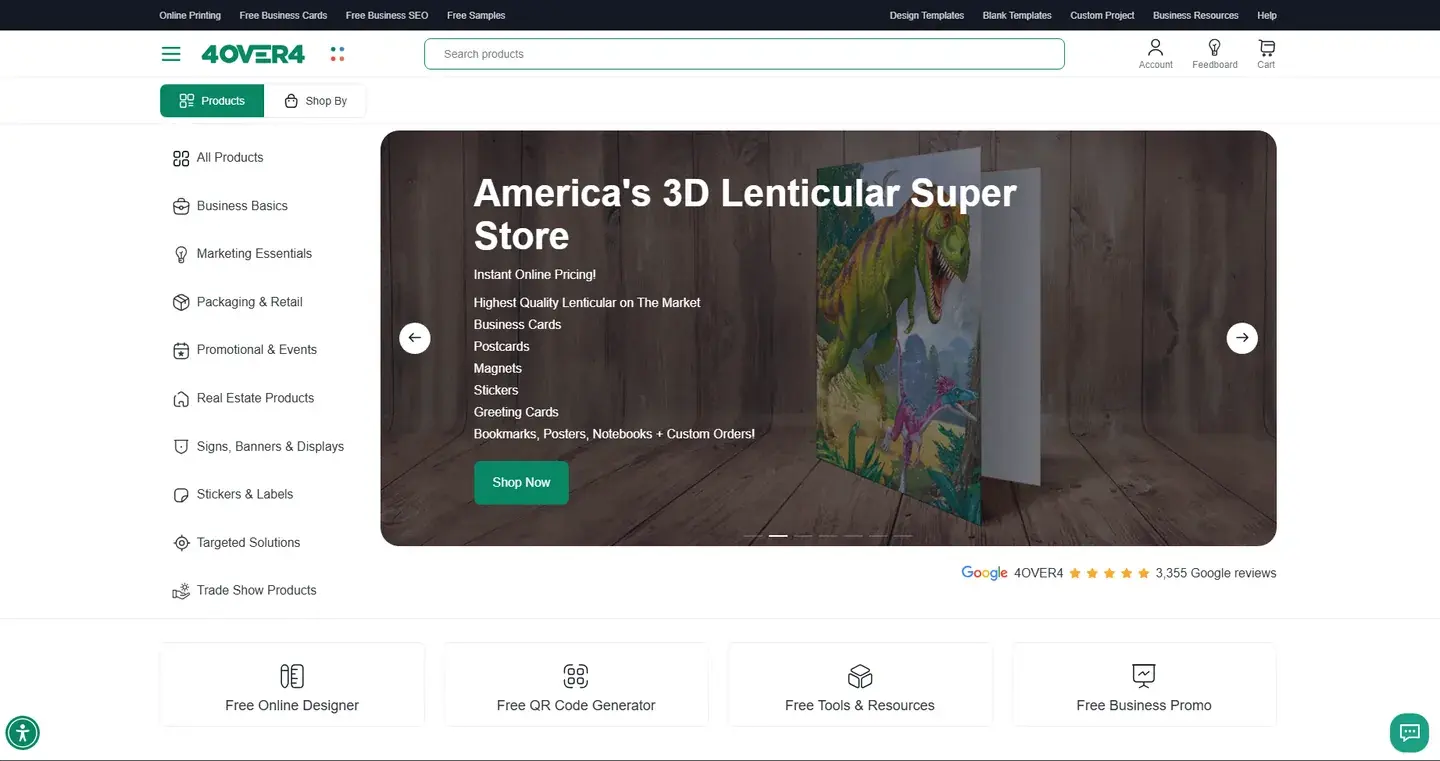
The same work also automated Adobe Illustrator (.ai) to SVG file conversion and added product recommendations for shoppers.
Keep Reading
An organization that Netbase does not name, filed under professional services, needed a controlled way to train, evaluate, release and monitor its models.
Keep ReadingRelated services and solutions
 AI-enabled custom software development built around your workflow
Netbase provides custom software development for companies whose workflow no off-the-shelf product fits, from discovery through architecture, build, testing and handover, with AI where it removes manual steps and the IP left with you. Since 2012 Netbase has worked with 500+ businesses across 80 countries; according to the published USticker case study, design-tool users converted 40% more often.
Learn More
 An AI-augmented dedicated development team in Vietnam that answers for results
Netbase provides dedicated development teams from Vietnam for product companies and enterprises that need engineering capacity. Teams of 3 to 30 people work only on your product, use AI-assisted engineering under review, report to a named account manager and project manager, typically start within one to two weeks after discovery, and the IP they create is yours.
Learn More  An AI-enabled offshore development center in Hanoi, when a long roadmap needs one
An offshore development center (ODC) in Vietnam is a long-running engineering team that a partner abroad staffs, manages and documents for your product roadmap. Netbase runs ODC teams from its only office, in Hanoi, with AI-assisted engineering, weekly governance and knowledge transfer built in. When the work has a defined outcome, a fixed-price project usually fits better.
Learn More  Product personalization software with AI design suggestions: let shoppers design what they buy
Product personalization software lets shoppers design custom products online, adding their own text, images and options with a live preview and AI design suggestions before they buy. Netbase builds it into commerce platforms: at USticker, shoppers using the design tool converted 40% better, and Indieprint cut design errors 28% with automated print-ready files.
Learn More Related insights

A US company should choose by data and by how much live collaboration the work needs, not by location alone: onshore when the data or contract requires US persons, nearshore when daily live overlap is essential, and offshore, such as Netbase in Hanoi, when scope is written down and a zero-overlap handoff can carry it.
Work with Netbase remotely
Every Netbase engagement is delivered remotely, so clients in any country and any industry can work with us; Netbase has worked with clients in 80 countries. Contracts and invoices are issued by Netbase JSC, and payment is made by bank transfer to Netbase JSC's company account or PayPal Business. Talk to the CEO, Huy Nguyen (David), on WhatsApp or by email.
Discuss a project
Netbase JSC helps organizations design, build, modernize, and operate digital products and AI-enabled business systems.project@netbasejsc.com
+84 937 869 689
91 Nguyen Chi Thanh, Dong Da, Hanoi, Vietnam
Get in touch
Tell us what you want to build, modernize, or operate.