

Privacy-aware analytics: pseudonymization, retention and consent inside the warehouse
Privacy-aware analytics keeps direct identifiers in one restricted place, gives every other table a pseudonymous key, expires data by rule and filters by consent before anyone queries it. Netbase's view is that a deletion request should then touch one vault and a few derived tables, not every model in the warehouse.
Book a solution review See the related solutionBy Netbase Commerce and Platform Engineering Desk · Reviewed by David (CEO) · Updated · 11 min read

This guide is for heads of data and data engineering leads whose warehouse already holds customer, order or behaviour data, and who now face deletion requests, retention limits and consent rules. It compares four erasure patterns, sets out three access tiers and gives a rollout order. It reflects how the data engineering and platforms service scopes privacy controls when it builds or takes over a warehouse.
In this guide
- Why does pseudonymized data still count as personal data?
- Which deletion pattern fits your warehouse?
- How should access tiers split who sees personal data?
- How do retention and consent work inside the warehouse?
- How to roll out privacy-aware analytics in seven steps
- Where AI fits
- What delivery record exists, and what does not
- Alternatives: a privacy platform, warehouse-native controls or a separate clean room
- When is pseudonymization not worth it?
- Limits of this guide
- Frequently asked questions
- Next step
Why does pseudonymized data still count as personal data?
Pseudonymized data is still personal data because someone, somewhere, can link the key back to a person. The GDPR defines pseudonymisation as processing that stops data being attributed to a person without additional information that is kept separately and protected. Remove the separation and the protection, and the data is simply identified.
That has two consequences for a warehouse. First, swapping an email address for a hashed customer key does not take a table out of scope: retention limits, access requests and deletion requests still apply to it. Second, the value of pseudonymization is operational. It narrows who sees identities and where a deletion has to happen, which is exactly what the EDPB guidelines on pseudonymisation describe as its purpose: reducing risk, not removing obligations.
A plain hash of an email or phone number is weak pseudonymization, because anyone with a list of candidate values can hash them and match. Use a keyed hash or a random surrogate key issued by a vault, and keep the key or the mapping in the restricted tier only.
Which deletion pattern fits your warehouse?
Each row names how the pattern handles an erasure request, what it costs and when to choose it.
| Pattern | How a deletion works | Main cost or risk | Choose it when |
|---|---|---|---|
| Hard delete and rebuild | Delete the person's rows in every raw and modelled table, then rebuild derived tables | Every table holding identifiers must be found and rewritten; snapshots and time travel keep old copies | Few tables hold personal data and lineage is complete |
| Identity vault with key deletion | Identifiers live in one vault table; other tables hold only a surrogate key; deleting the vault row breaks the link | Remaining attributes may still single a person out; quasi-identifiers need review | Many models share one customer key and analytics must keep its history |
| Crypto-shredding | Personal fields are encrypted with a per-person key; destroying the key makes the values unreadable | Key management becomes critical; encrypted columns are hard to join and filter | Data is copied into files, logs or backups that cannot be rewritten |
| Aggregate and drop | Keep only counts and sums above a minimum group size; drop row-level detail after a set period | Row-level analysis is lost for older periods; small groups can still reveal a person | Older data is needed only for trends and reporting |
Most warehouses combine two patterns: an identity vault for current data and aggregate-and-drop for history. A deletion then means removing the vault row, deleting or rebuilding the few raw tables that carried identifiers, and waiting for the next aggregate refresh.
Watch the copies the warehouse keeps for you. Open table formats keep old data files for time travel until a cleanup job removes them; in Delta Lake, for example, deleted rows stay readable in earlier versions until VACUUM removes the old files. Set that cleanup window to match the deletion deadline you promise. For format choice, see choosing between Iceberg, Delta Lake and Hudi.
How should access tiers split who sees personal data?
Three tiers cover most mid-market warehouses. Each tier has its own roles, and a column moves down a tier only after it has been pseudonymized or aggregated.
- Restricted raw tier. Landing tables and the identity vault, with direct identifiers. Only pipeline service accounts and a small, named group of engineers can read it, every query is logged and access is reviewed on a schedule.
- Pseudonymized modelling tier. Cleaned and joined models keyed by the surrogate key, with identifiers removed or masked. Analytics engineers and analysts work here; quasi-identifiers such as birth date or postcode are generalised.
- Aggregated reporting tier. Metrics and dashboards with a minimum group size. Business users and embedded reports read only from here.
Warehouses offer the controls to enforce this. BigQuery applies column-level access control through policy tags, and Snowflake offers dynamic data masking policies that show a masked value to roles without clearance. Masking is a display control, not a deletion: the value still exists and still has to be erased on request.
How do retention and consent work inside the warehouse?
Retention works when it is a property of the table, not a reminder in a calendar. Partition tables by event date and set partition expiration, or schedule a job that deletes partitions older than the retention period, and record the rule next to the table in the catalog. The GDPR's storage limitation principle asks that identifiable data be kept no longer than necessary for its purpose, so each personal-data table needs a stated purpose and a period.
Consent works when it is a table. Land consent events (granted, withdrawn, purpose, timestamp) from the consent tool into the warehouse, build a current-consent model per person and purpose, and join it in the modelling tier so a withdrawn consent removes the person from marketing audiences and purpose-bound models at the next run. The same model should gate every sync that leaves the warehouse.
See reverse ETL guardrails for field ownership and consent
How to roll out privacy-aware analytics in seven steps
-
Inventory personal data
List every table and column holding identifiers or quasi-identifiers, with its source, purpose and owner. A catalog makes this durable; see what catalog and lineage a 20-person data team needs.
-
Choose the key strategy
Issue a surrogate or keyed-hash customer key from one vault, and stop copying raw identifiers past the landing tables.
-
Set up the three tiers
Create roles and schemas per tier, apply column policies or masking, and move every analyst and dashboard to the tier it needs.
-
Pick the deletion pattern per data class
Vault key deletion for modelled data, hard delete for raw tables, crypto-shredding for files and logs, aggregate-and-drop for history.
-
Attach retention rules
Give each personal-data table a purpose, a period and an automated expiry, including time-travel and backup windows.
-
Model consent
Land consent events, build the current-consent model and join it wherever processing depends on a purpose.
-
Test an erasure end to end
Run a deletion for a test person, check every tier, snapshot and sync, and keep the run log as evidence.
Where AI fits
AI helps find personal data and draft the paperwork around it, not decide what is lawful. An assistant can scan column names and sample values to propose which columns hold identifiers, draft catalog descriptions and retention notes, and summarise an erasure run log for the owner. Netbase works with the major commercial and open-source AI tools and models, chosen per project.
Engineers still confirm every classification, set the tiers and retention periods with the client's privacy owner, and run deletions themselves; no model reads raw identifiers it does not need or deletes data on its own.
- In delivered work
MLOps pipeline
An MLOps pipeline among the AI projects Netbase has delivered for clients that are not named; an AI delivery record, not a warehouse privacy rollout.
- Available capability
AI and data services
AI-assisted personal-data discovery and catalog drafting are a way Netbase approaches the work, not yet tied to a published case.
What delivery record exists, and what does not
Netbase's stated compliance practices include GDPR alignment for data privacy in Europe and CCPA compliance for clients with U.S. customer bases. Its ERP and e-commerce work includes API sync of product catalogues, inventory, orders and customer data with ERP systems, the kind of feed that brings identifiers into a warehouse.
Netbase has delivered AI projects for clients that are not named, including MLOps pipelines, and its named AI delivery is the 4over4 recommendation engine, which suggests products from browsing history and previous purchases.
Delivery runs in a six-step lifecycle from discovery and architecture planning to rollout and ongoing support. Most Netbase projects are delivered on fixed-price contracts. No published Netbase record describes a warehouse pseudonymization or erasure rollout for a client, and no request volume, deadline or result figure is claimed here.
Alternatives: a privacy platform, warehouse-native controls or a separate clean room
- Warehouse-native controls only. Column policies, masking, partition expiry and scheduled deletes in the warehouse itself. Choose this when one warehouse holds the analytics data and the team can own the deletion jobs.
- A privacy or consent management platform. A tool that tracks requests, consent and data maps across systems and calls each system to delete. Choose it when personal data spreads across many applications beyond the warehouse.
- A separate clean room or anonymised extract. Share only aggregated or anonymised data with partners or vendors. Choose it when outside parties need analytics but must not receive row-level data.
Selection criteria: how many systems hold personal data, how often requests arrive, whether lineage exists, and who owns the deletion run every week.
When is pseudonymization not worth it?
Skip a separate identity vault when the warehouse holds no row-level personal data, when reporting needs only aggregates that can be built at ingestion, or when a single source system already deletes and the warehouse rebuilds from it nightly. Pseudonymization without access tiers is also theatre: if everyone can read the vault, the key protects nothing.
Limits of this guide
- It is not legal advice; lawful basis, periods and deadlines come from your privacy owner and counsel.
- It does not rank privacy tools or warehouses, or compare their cost.
Plan the next step with a Netbase consultant
Frequently asked questions
No. A plain hash can be reversed by hashing a list of known emails and matching the results, so the data is at best pseudonymized and still personal data. Use a keyed hash or a vault-issued surrogate key, and keep the key in a restricted tier.
Keep identifiers in one vault and give every model a surrogate key. Deleting the vault row breaks the link for all models at once; then delete the raw rows that carried identifiers, clear time-travel copies and let derived aggregates refresh.
They hold the same personal data, so their retention window has to fit the deletion promise. Shorten time-travel and backup retention for personal-data tables, or encrypt personal fields with per-person keys so that destroying a key removes them from every copy.
In the warehouse, as a current-consent model joined in the modelling tier, and again at every sync that leaves the warehouse. Enforcing it only in the marketing tool leaves models and exports built on data the person withdrew.
Next step
If deletion requests already reach your analytics stack, Netbase can map where personal data lives, which tier each table belongs to and how an erasure would run, with your team, before any tool is bought: book a solution review.
Work behind this guide
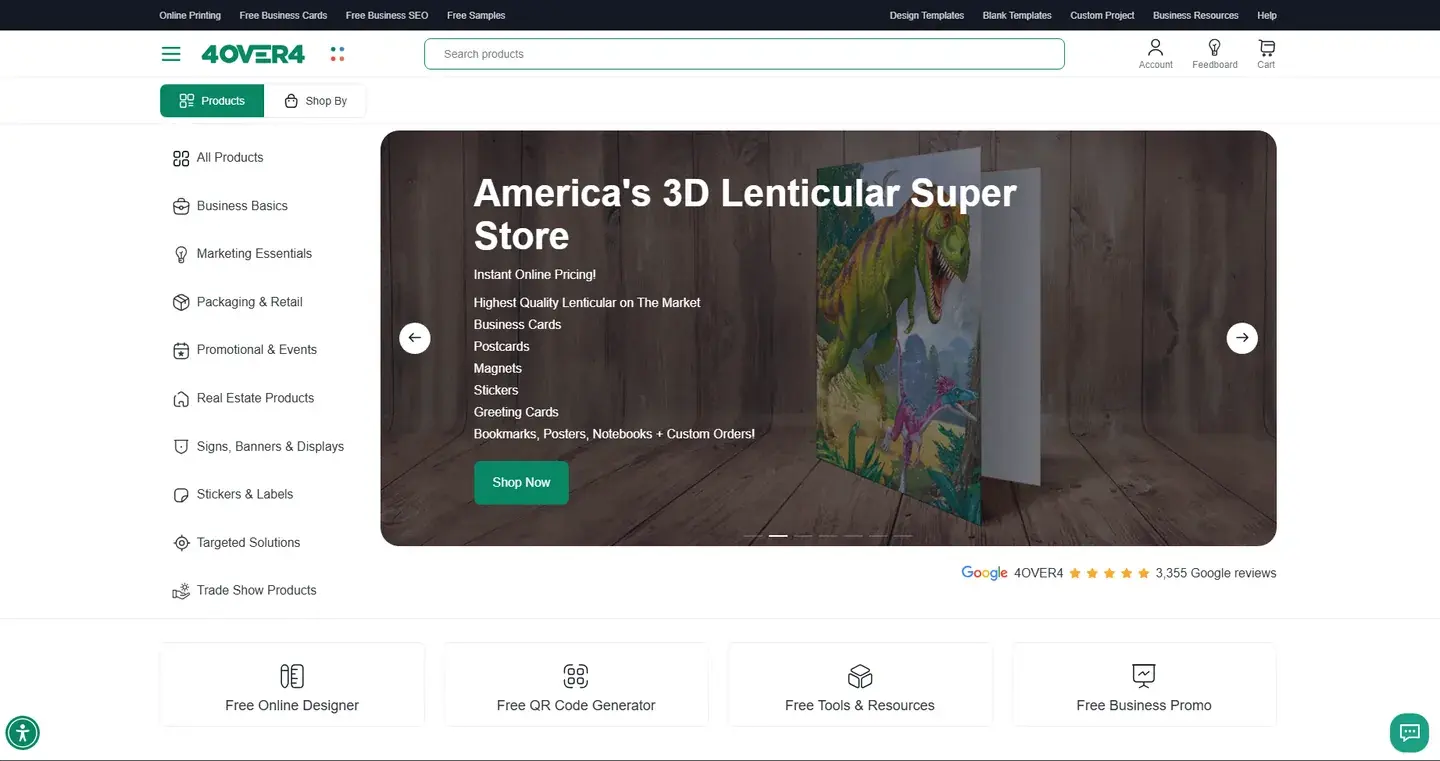
4over4, a US online printing store, reported 82% higher e-commerce revenue within six months after Netbase JSC remotely reworked its checkout, search and navigation.
Keep Reading
Geo-Tek IT Solutions, a printing and design-services company in Cyprus, needed an online design platform that worked on every device and fitted its existing systems.
Keep Reading
Netbase delivered an MLOps pipeline remotely, combining AI consulting, engineering and integration.
Keep ReadingRelated services and solutions
 Data engineering platforms for reporting and AI
Netbase builds data pipelines and analytics foundations for companies whose data is spread across a store, an ERP, a CRM and spreadsheets. We collect it, clean it, model it and check its quality, so reports agree with each other and AI projects start from data people trust. Data engineering is a capability we are growing alongside the platforms we deliver.
Learn More
 AI and data services, from readiness check to production feature
Netbase provides AI and data services for companies that want to move from an AI idea to a feature that works inside a real product or process: readiness assessment, data preparation, model and automation development, and production support. Delivered AI includes 4over4's recommendation engine, plus RAG, document AI and MLOps projects for unnamed clients; the rest is growing.
Learn More  Enterprise integration hub ready for AI agents: one monitored layer for commerce, ERP and CRM data
An enterprise integration hub is a central layer that moves orders, customers, stock and invoices between your commerce, ERP and CRM systems, with monitoring, retries and replay in one place, and scoped APIs that AI agents can call safely. Netbase builds it as a custom layer on the stack you already run, starting from the flows that break most often.
Learn More Related insights

Use the lightest change data capture method your consumers can live with: a nightly snapshot or timestamp polling covers most reporting, while native database CDC or log-based CDC with Debezium earns its cost only when consumers need deletes, every change in order and fresh data. Netbase scores each source table before choosing.

Streaming or batch: deciding the latency a business metric really needs
A business metric needs only the freshness of the decision it feeds: if nobody acts on a number more than once an hour, an hourly batch pipeline is enough, and streaming pays off only where a late action costs real money. Netbase scores every metric on a latency-to-value worksheet before choosing a pipeline.

Data catalog and lineage: what a 20-person data team actually needs
A data team of about twenty people needs a small catalog of its most-used tables, each with an owner, and table-level lineage that answers "what breaks if I change this?"; a full governance platform pays off only after specific triggers. Netbase scopes catalog and lineage work from the questions the team must answer, not from a tool list.
Work with Netbase remotely
Every Netbase engagement is delivered remotely, so clients in any country and any industry can work with us; Netbase has worked with clients in 80 countries. Contracts and invoices are issued by Netbase JSC, and payment is made by bank transfer to Netbase JSC's company account or PayPal Business. Talk to the CEO, Huy Nguyen (David), on WhatsApp or by email.
Discuss a project
Netbase JSC helps organizations design, build, modernize, and operate digital products and AI-enabled business systems.project@netbasejsc.com
+84 937 869 689
91 Nguyen Chi Thanh, Dong Da, Hanoi, Vietnam
Get in touch
Tell us what you want to build, modernize, or operate.