

Success Criteria for a Generative AI Proof of Concept: A Go/No-Go Scorecard
A generative AI proof of concept is ready to scale only when it passes six criteria written before it starts: quality on real cases, failure severity, unit economics at target volume, latency, data and risk controls, and a named owner who will run it. Netbase uses this scorecard so the decision rests on evidence, not on the demo.
Book a solution review See the related solutionBy Huy Nguyen (David), Founder & CEO · Updated · 11 min read

This guide is for business owners, product owners and technology leads who are about to fund a proof of concept, or who have a promising demo and must decide what happens next. It sits under the generative AI development service, and it links the deeper pages behind individual criteria instead of repeating them.
In this guide
- Why do so many generative AI proofs of concept stall before scale-up?
- What should a generative AI proof of concept prove?
- The six-criterion go/no-go scorecard
- How do you turn the scorecard into a decision?
- How do you run the proof of concept, step by step?
- Where AI fits
- What delivery record exists, and what does not?
- Alternatives: which way of testing a generative AI idea fits?
- When should you not run a generative AI proof of concept?
- What are the limits of this guide?
- Frequently asked questions
- Next step
Why do so many generative AI proofs of concept stall before scale-up?
Most stall because nobody wrote down what the proof of concept had to prove. A demo on hand-picked examples looks convincing, and months later the work is neither live nor stopped. Gartner predicted in July 2024 that at least 30% of generative AI projects would be abandoned after proof of concept by the end of 2025, citing poor data quality, inadequate risk controls, escalating costs or unclear business value.
Those four reasons are decision criteria in disguise. Each can be tested if someone names the test, the threshold and the person who accepts the result before the build starts.
A second cause is that a proof of concept answers a narrower question than scale-up needs. It shows that a model can do the task on a sample, not that it holds up at full volume, with real users, inside real systems. A good scorecard separates what the proof of concept can prove from what only a pilot or a production release can prove.
What should a generative AI proof of concept prove?
It should prove that one named task can be done well enough, safely enough and cheaply enough to be worth building properly, and that someone in the business will own it. Model providers give the same advice for evaluation design: Anthropic's guidance on success criteria asks for criteria that are specific, measurable, achievable and relevant, and notes that most use cases need several criteria rather than one score.
Write the criteria on one page before work starts. For each, record the threshold, how it will be measured, the evidence the proof of concept will produce and who signs it off. Set the thresholds from the business case, not from what the first prototype happens to reach.
The six-criterion go/no-go scorecard
The table is the scorecard we recommend. The last column matters as much as the threshold: it names what a proof of concept cannot settle, so the scale-up plan covers it.
| Criterion | Evidence the proof of concept can produce | Not proven at proof-of-concept scale | Decision owner |
|---|---|---|---|
| Quality on real cases | Scores on a frozen set of real, reviewed cases, reported per case type | Drift as content, users and volume change | Business process owner |
| Failure severity | A list of the worst observed failures and how often each occurred | Rare failures that a small sample never shows | Risk or compliance owner |
| Unit economics at target volume | Measured tokens and calls per task, projected to expected volume | Real traffic peaks and provider pricing changes | Budget owner |
| Latency | Response times for the real workflow, not a single test call | Behaviour under concurrent load | Product owner |
| Data and risk controls | Data access approved, personal data handling agreed, logs kept | Audit and incident response in daily operation | Security or data owner |
| Adoption and ownership | Users who tried it in their own workflow, and a team that agrees to run it | Long-term use once novelty fades | Line manager of the users |
Quality is the criterion teams over-weight. It is necessary but never sufficient: a feature that is accurate but too slow, too costly at volume or without an owner is still a no-go. Measure quality on real cases, and use generated cases only for coverage, as synthetic data for AI testing explains.
Failure severity deserves its own line. An assistant that is right most of the time but occasionally invents a refund policy or exposes another customer's data fails, whatever its average score. Name the failures that block a launch before testing, and probe for them on purpose; red-teaming a generative AI feature covers that work.
How do you turn the scorecard into a decision?
Use three outcomes, not two. Scale when every criterion meets its threshold and the "not proven" column has a plan. Adjust when quality or cost is close and the gap has a named, bounded fix, then decide again on a fixed date. Stop when a blocker fails, when the gap has no credible fix, or when the business value no longer holds.
One rule keeps the decision honest: a strong result on one criterion does not offset a failed blocker. Excellent answers do not compensate for an unresolved data protection question, and low cost does not compensate for failures that harm customers.
A stop is a good outcome when it is reached early.
How do you run the proof of concept, step by step?
-
Name one task and one decision owner
Choose a task with a clear input, a clear output and a person who would use the result.
-
Write the scorecard first
Fill in the six criteria, thresholds and owners before anyone builds. Agree the decision date.
-
Collect real cases
Gather a reviewed sample of real requests or documents, masked where personal data is involved, and freeze it as the test set.
-
Build the thinnest working path
Connect the model to the real data source and the real workflow, even if crudely, so latency and cost are measured on the actual path.
-
Test across models and settings
Compare at least two model options or configurations on the frozen set; the result tells you how much depends on the model choice.
-
Measure cost and time per task
Log tokens, calls and response times for every test run and project them to expected volume.
-
Put it in front of real users
Let a few intended users try it in their own work, in shadow mode where possible, and record what they accept, correct or ignore.
-
Hold the decision meeting on the agreed date
Score each criterion against its threshold, apply the blocker rule and record scale, adjust or stop with the reasons.
Where AI fits
AI does the volume work in a proof of concept: drafting candidate prompts, grading answers at scale against a rubric, clustering failures after each run and summarising user feedback. Engineers still own the test set, the thresholds, the review of graded samples and the recommendation. Netbase works with the major commercial and open-source models, chosen per project, so the proof of concept can compare options instead of assuming one.
- In delivered work
RAG knowledge assistant
A retrieval-augmented assistant that answers from company documents, the kind of feature whose quality and failure criteria this scorecard tests; the client is not named.
- In delivered work
MLOps pipeline
A delivered pipeline for versioning, deploying and monitoring models, which is where the "not proven" column is handled after scale-up; the client is not named.
- In delivered work
WhatsApp AI chatbot with CRM integration
A chatbot on OpenAI language models connected to WhatsApp Business and a CRM; the client is not named.
- Available capability
Proof-of-concept scorecard
The six criteria, the blocker rule and the eight steps as described on this page; not yet tied to a published case.
What delivery record exists, and what does not?
- What exists. Netbase has delivered retrieval-augmented knowledge assistants, document AI and MLOps pipelines for clients that are not named, an AI chatbot for WhatsApp Business built on OpenAI language models for an unnamed client, and the named 4over4 recommendation engine, which suggests products from browsing history and previous purchases. Its delivery lifecycle starts with discovery and strategic alignment and runs on outcome-based milestones. Most Netbase projects are delivered on fixed-price contracts.
- What does not. No published Netbase case reports a proof-of-concept score, duration, cost or scale-up rate, and none is offered here. The scorecard and the steps are method guidance.
Alternatives: which way of testing a generative AI idea fits?
| Approach | Strength | Weakness | Choose it when |
|---|---|---|---|
| Demo on sample inputs | Fast, shows what the model can do | Proves nothing about real cases or cost | You need to decide whether a proof of concept is worth funding |
| Scored proof of concept | Evidence on real cases with a decision rule | Still small scale; the "not proven" column remains | The task is clear and real data is available |
| Limited pilot with real users | Shows adoption, load and operating effort | Slower, needs integration and support | The proof of concept passed and the risks are controlled |
| Buy a packaged tool | Quick to try, vendor carries the model work | Less control over data, quality and change | The task is common and a tool already does it well |
Selection criteria: how clear the task is, whether real data can be used, how costly a wrong answer is and how soon the decision is due. For most first projects the scored proof of concept is the right middle step, followed by a pilot. When a model change is planned after launch, the same frozen cases support upgrading LLM versions without regressions. For a knowledge assistant over company documents, the enterprise knowledge RAG service covers the build after a go decision.
When should you not run a generative AI proof of concept?
Skip it when the task has no measurable output, when nobody in the business will own the result, or when the data it needs cannot be used for legal or contractual reasons that a proof of concept will not change. Fix the missing piece first.
A proof of concept is also the wrong tool when the decision is already made. If leadership will scale regardless of the result, run a pilot with proper controls instead, and use the scorecard as its acceptance checklist. The NIST AI Risk Management Framework and its generative AI profile help a risk owner list what that checklist must cover.
What are the limits of this guide?
- It covers the decision after a generative AI proof of concept, not how to choose a vendor or negotiate its contract.
- The scorecard is method guidance; thresholds depend on each business case and on any rules in regulated domains.
- The abandonment figure comes from the cited Gartner forecast, not from Netbase client work.
Plan the next step with a Netbase consultant
Frequently asked questions
Good criteria cover quality on real cases, the severity of the worst failures, cost per task at expected volume, latency in the real workflow, data and risk controls, and a team that will own the result. Each criterion needs a threshold, a measurement method and a decision owner, all written before the work starts.
It should run until the agreed decision date and no longer. Fix that date when the scorecard is written, and treat any extension as an explicit adjust decision with a named fix, not as drift.
A proof of concept tests whether one task can be done well enough on a real sample. A pilot tests whether the solution holds up with real users, real volume and daily operation. Pass the first before funding the second.
Yes. A stop decision reached early on clear evidence avoids the cost of a pilot or a launch that would have failed, and the test set and findings stay useful for the next idea.
Next step
Send us the task you want to test, the real cases you can use and the date the decision is due, and we will book a solution review to draft the scorecard and scope the proof of concept.
Work behind this guide
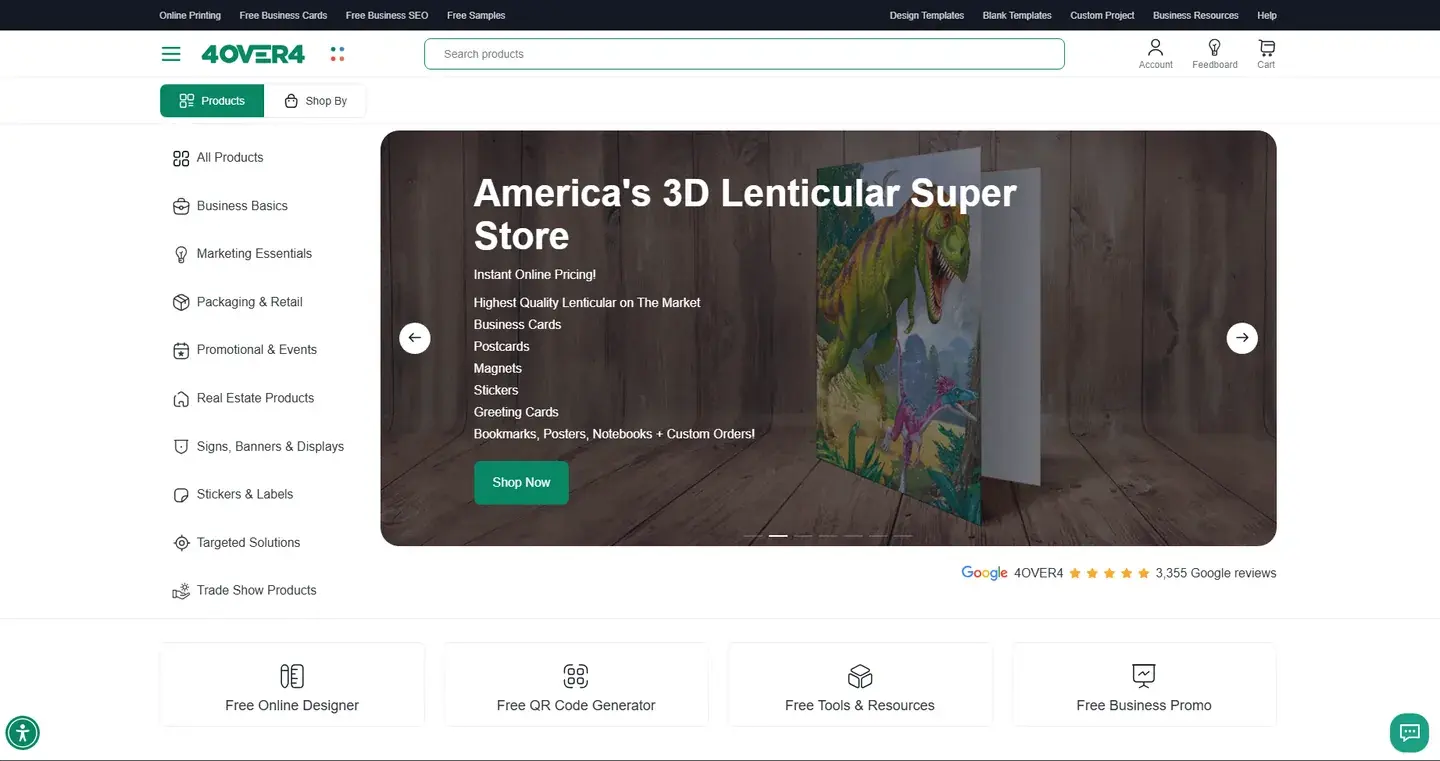
The same work also automated Adobe Illustrator (.ai) to SVG file conversion and added product recommendations for shoppers.
Keep Reading
Netbase delivered a retrieval-augmented generation (RAG) assistant remotely, combining AI consulting, engineering and integration.
Keep Reading
Netbase delivered an MLOps pipeline remotely, combining AI consulting, engineering and integration.
Keep ReadingRelated services and solutions
 Generative AI development with evaluation and human review
Netbase builds generative AI features for product and operations teams: drafting, summarising, rewriting and content generation inside the software your people and customers already use. Every feature ships with an evaluation set, a human review step where output matters and limits on cost. Generative AI is a capability we are growing, and we label its maturity honestly.
Learn More
 Enterprise AI knowledge assistants: RAG engineering with access control
Netbase engineers retrieval-augmented generation (RAG) over company knowledge: the ingestion, search, permission checks, cited answers and evaluation that let an internal assistant or a website RAG chatbot answer from your own documents. It is a growth capability with access control designed in from the first prototype, and Netbase has delivered a RAG knowledge assistant for an unnamed client.
Learn More  Responsible AI and MLOps for AI in production
MLOps and responsible AI keep an AI feature trustworthy after launch. Netbase's practice for monitored, governed AI in production covers evaluation before every release, versioning of models, prompts and data, monitoring of quality and cost, and incident controls with a named owner. It is a growth capability, backed by an MLOps pipeline delivered for an unnamed client.
Learn More  AI knowledge assistant: answers from company knowledge, with sources and access control
An AI knowledge assistant is an internal tool that answers employees' questions from your company's own documents and systems, cites the source behind every answer and shows each person only what they may see. Netbase offers it as a growth capability, designed with retrieval, evaluation and human review from the first pilot, and has delivered one for an unnamed client.
Learn More Related insights

Tune retrieval as a measured experiment, not a hunch: label real questions with the passages that answer them, change one thing at a time, chunking first, then hybrid search, then reranking, and keep a change only when recall@k rises within your latency and cost limits. This is how Netbase approaches retrieval work on knowledge assistants.

When a small language model beats a large one for a business task
A small language model beats a large one when the task is narrow, repeated at high volume, has a fixed set of answers, must respond fast or stay inside your own environment, and has labelled examples to learn from. Netbase scores those six signals per task, then tests both model sizes on your data before choosing.

How to prepare fine-tuning data: curation, labelling and leakage checks
Prepare fine-tuning data by passing it through five gates before any training run: confirm the right to use each source, curate out duplicates and noise, label against a written guide, split by customer and date so nothing leaks, and size the set from a small pilot. Netbase works through this checklist with a client before training is scheduled.
Work with Netbase remotely
Every Netbase engagement is delivered remotely, so clients in any country and any industry can work with us; Netbase has worked with clients in 80 countries. Contracts and invoices are issued by Netbase JSC, and payment is made by bank transfer to Netbase JSC's company account or PayPal Business. Talk to the CEO, Huy Nguyen (David), on WhatsApp or by email.
Discuss a project
Netbase JSC helps organizations design, build, modernize, and operate digital products and AI-enabled business systems.project@netbasejsc.com
+84 937 869 689
91 Nguyen Chi Thanh, Dong Da, Hanoi, Vietnam
Get in touch
Tell us what you want to build, modernize, or operate.