

Upgrading LLM versions without regressions: a regression suite and a staged rollout
Upgrading an LLM version without regressions means treating the new model as a release candidate: pin the current version, run a frozen regression suite with the old prompt on the new model, count cases that flip from right to wrong, and move traffic in stages with a fallback. This Netbase guide gives the acceptance matrix and the runbook.
Book a solution review See the related solutionBy Netbase AI and Automation Engineering Desk · Reviewed by David (CEO) · Updated · 10 min read

It is written for engineering leads and AI product owners who run a live assistant, extraction flow or agent on a hosted or open-weight model and must move it to a newer version. It sits under generative AI development, and the monitoring after the switch belongs to MLOps and responsible AI operations.
In this guide
- Why does a newer model break cases that worked before?
- When should you upgrade, and when should you wait?
- What decides whether the new version passes?
- How do you run the upgrade, step by step?
- Where AI fits
- What delivery record exists, and what does not?
- Alternatives: who runs the upgrade, and with which tooling?
- What are the limits of this guide?
- Frequently asked questions
- Next step
Why does a newer model break cases that worked before?
A newer model breaks working cases because average quality and per-case behaviour are different things. A version can score higher on a benchmark and still answer some of your inputs worse, format a field differently or call a tool with other arguments. Upgrading safely means checking the cases your users depend on, not the provider's headline score.
Research gives this a name. Apple's MUSCLE paper describes negative flips: instances a previous model version handled correctly that the updated version gets wrong, observed across tasks and models even when the task training procedure stayed identical. The lesson for a business feature is simple: a better model on average is not proof that your feature is safe on the new version.
The behaviour behind one model name can also move. A Stanford and Berkeley study compared the March 2023 and June 2023 versions of GPT-4 and found that accuracy on identifying prime numbers fell from 84% to 51%, with more formatting mistakes in generated code in June. Version identifiers exist so that a team can decide when that kind of change reaches its users.
Upgrades are often not optional. Anthropic's model deprecation page states that requests to a retired model fail, and that it gives at least 60 days' notice before retiring a publicly released model. The same page notes that a new model can reject a deprecated request parameter. A team with no upgrade routine meets these dates as an incident.
When should you upgrade, and when should you wait?
Upgrade when the current version has a retirement date, when the new version fixes a measured weakness of your feature, or when it lowers cost or latency on your own test set without new failures. Wait when the only argument is a launch announcement, when your regression suite does not exist yet, or when a busy trading period leaves no room for a rollback.
Two cases call for a different decision. If the replacement fails the same cases in every run, consider a smaller or fine-tuned model for that task, as the small language models guide explains. If the feature depends on a LoRA adapter, budget a retrain: an adapter matches only the base version it was trained on, as the LoRA fine-tuning guide notes.
What decides whether the new version passes?
The upgrade passes on rules written before the run, per check type. Cheap exact checks come first; judged quality comes last and never overrides a failed exact check.
| Check type | What it compares | Pass rule before rollout | Blocks the upgrade when |
|---|---|---|---|
| Format and schema | JSON parses, required fields, allowed values | Every case valid, as on the current version | Any case that was valid becomes invalid |
| Exact fields and tool calls | Extracted values, chosen tool, arguments | No case flips from right to wrong without an accepted reason | A flip touches money, customer data or an irreversible action |
| Free-text quality | Answers scored by a rubric, by people or a calibrated grader | Score at least equal on every slice, not only on average | One slice, such as a language or customer type, gets worse |
| Refusals and safety | Refusal rate, policy cases, red-team set | No new harmful output; refusals within the agreed band | The model refuses valid work or answers what it should refuse |
| Latency and cost | Response time and tokens on the same cases | Within the feature's budget | The budget breaks at the expected traffic |
Count flips case by case: list every case that moved from pass to fail and every case that moved the other way, and have the feature owner accept or reject each fail. An average that improves while ten contract-extraction cases fail is a blocked upgrade.
How do you run the upgrade, step by step?
-
Watch the retirement calendar
Record the exact model identifier each environment calls, and subscribe to the provider's deprecation notices. An alias without a date can move to a new snapshot; a dated identifier stays put until retirement.
-
Freeze the regression suite
Use the evaluation set the feature already has, plus recent production cases with personal data removed and every confirmed past failure. The evaluation harness guide covers building it; human feedback queues keep it fresh.
-
Run the old prompt on the new model
Change one thing at a time, so the result shows the model's effect alone. Run each case several times when outputs vary.
-
Fix only what flipped
Adjust the prompt, schema or parsing for the cases that failed, in its own reviewed change, and re-run the full suite against the same frozen cases.
-
Shadow the new version
Send a copy of live traffic to the new model without showing its answers to users, and compare outputs with the current version on the same requests.
-
Canary with a fallback
Route a small share of real traffic to the new version, keep the old one as a switchable fallback while it is still available, and watch the checks from the matrix.
-
Promote and record
Move all traffic, keep the comparison report with the release, and log the new identifier in the provenance records.
The general release process for every kind of agent change, prompts and permissions included, is in the AI agent change management guide; this runbook is the model-upgrade path through it. A quality drop with no version change is drift, covered in the drift detection guide.
Where AI fits
AI helps run the comparison, not approve it. A model can grade free-text answers against a rubric, cluster the cases that flipped, draft prompt fixes for review and summarise the shadow report. Engineers still own the frozen suite, read every flipped case that touches money or customer data, and decide on promotion and rollback. Netbase works with commercial and open-weight models, chosen per project.
- In delivered work
MLOps pipeline
A delivered pipeline for versioning, deploying and monitoring models, the closest delivered pattern to a gated version switch; the client is not named.
- In delivered work
RAG knowledge assistant
A retrieval-augmented assistant that answers from company documents, the kind of feature whose answers a model upgrade changes; the client is not named.
- In delivered work
WhatsApp AI chatbot with CRM integration
A chatbot on OpenAI language models connected to WhatsApp Business and a CRM; the client is not named.
- Available capability
Model upgrade runbook
The acceptance matrix and the seven steps as described on this page; not yet tied to a published case.
What delivery record exists, and what does not?
- What exists. Netbase has delivered retrieval-augmented knowledge assistants, document AI and MLOps pipelines for clients that are not named, an AI chatbot for WhatsApp Business built on OpenAI language models for an unnamed client, and the named 4over4 recommendation engine, which suggests products from browsing history and previous purchases. It works with the major commercial and open-source models, chosen per project. Most Netbase projects are delivered on fixed-price contracts.
- What does not. No published Netbase case describes a model version upgrade programme, and no time, cost, flip count or quality result from client work is offered here. The matrix and the steps are method guidance; the figures on this page come from the cited sources.
Alternatives: who runs the upgrade, and with which tooling?
Three set-ups cover most teams; choose by how many LLM features you run and who owns them.
- Script plus spreadsheet. A script runs the frozen suite on both versions and writes a flip list the feature owner signs off. Choose it for one or two features and a team that already reviews code; it fails when nobody re-runs it before the retirement date.
- Evaluation platform in the release pipeline. An open-source or commercial evaluation tool runs on every model or prompt change and blocks the release on the matrix rules. Choose it when several features share a model or when changes are frequent; the MLOps and LLMOps guide places it in the wider pipeline.
- A delivery partner runs the switch. A partner that built the feature, or one that takes over its operations, prepares the suite, runs shadow and canary and hands back the report. Choose it when the team that built the feature has moved on; insist that the suite and the report stay with you.
When not to upgrade on schedule: when the feature has no owner who can judge a flipped case. Fix ownership first, then the model. For assistants that answer from company documents, re-check retrieval as well, since a new model can use the same passages differently.
See enterprise knowledge and RAG
What are the limits of this guide?
- It covers moving a live feature to a newer version of a model, not choosing a model or a provider from scratch.
- Providers set their own retirement terms; check the current page of each one, because platforms that resell a model can set different dates.
- A frozen suite only tests what it contains. Rare inputs still need shadow traffic and monitoring after promotion.
Plan the next step with a Netbase consultant
Frequently asked questions
Enough to cover every route, language and customer type the feature serves, plus every confirmed past failure. A few hundred well-chosen cases usually say more than thousands of similar ones, because the aim is to see which kinds of input flip.
Not at first. Run the existing prompt on the new model so the result isolates the model's effect, then change the prompt only for the cases that flipped, in a separate reviewed change tested against the same frozen cases.
Use an alias only where a surprise change is acceptable, such as an internal prototype. A production feature should call a dated or pinned identifier, so that a version change happens when your team decides and after the regression suite has run.
Treat the retirement date as the deadline for the whole runbook and start as soon as the notice arrives. If the replacement still fails, compare another model or provider on the same suite, and agree in writing which known failures the business accepts.
Next step
Send us the LLM features you run, the model identifiers they call and any retirement notice you have received, and we will book a solution review to scope the regression suite and the rollout plan for the next version switch.
Work behind this guide
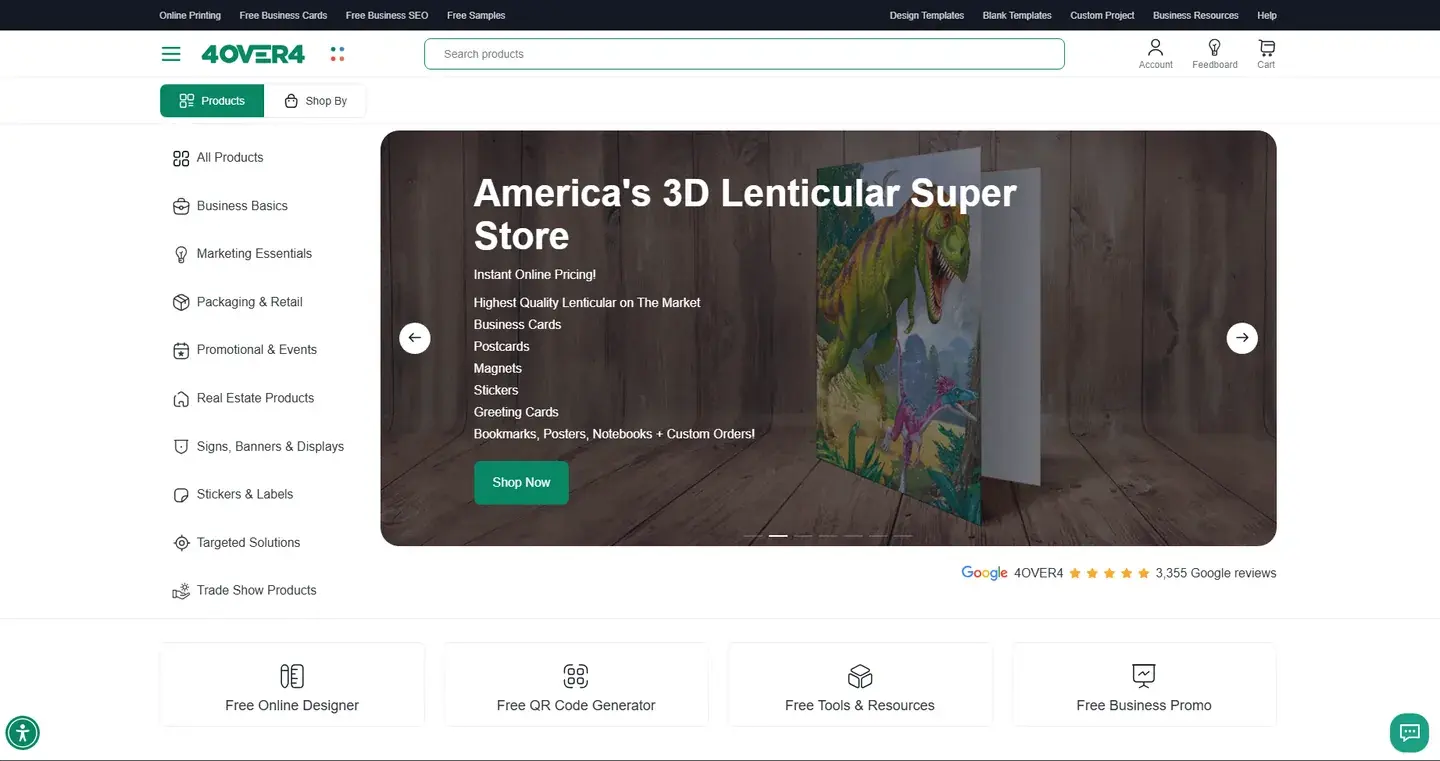
4over4, a US online printing store, reported 82% higher e-commerce revenue within six months after Netbase JSC remotely reworked its checkout, search and navigation.
Keep Reading
An organization that Netbase does not name, filed under professional services, needed a knowledge assistant that answers from its own documents.
Keep Reading
Netbase delivered an MLOps pipeline remotely, combining AI consulting, engineering and integration.
Keep ReadingRelated services and solutions
 Generative AI development with evaluation and human review
Netbase builds generative AI features for product and operations teams: drafting, summarising, rewriting and content generation inside the software your people and customers already use. Every feature ships with an evaluation set, a human review step where output matters and limits on cost. Generative AI is a capability we are growing, and we label its maturity honestly.
Learn More
 Enterprise AI knowledge assistants: RAG engineering with access control
Netbase engineers retrieval-augmented generation (RAG) over company knowledge: the ingestion, search, permission checks, cited answers and evaluation that let an internal assistant or a website RAG chatbot answer from your own documents. It is a growth capability with access control designed in from the first prototype, and Netbase has delivered a RAG knowledge assistant for an unnamed client.
Learn More  Responsible AI and MLOps for AI in production
MLOps and responsible AI keep an AI feature trustworthy after launch. Netbase's practice for monitored, governed AI in production covers evaluation before every release, versioning of models, prompts and data, monitoring of quality and cost, and incident controls with a named owner. It is a growth capability, backed by an MLOps pipeline delivered for an unnamed client.
Learn More  AI knowledge assistant: answers from company knowledge, with sources and access control
An AI knowledge assistant is an internal tool that answers employees' questions from your company's own documents and systems, cites the source behind every answer and shows each person only what they may see. Netbase offers it as a growth capability, designed with retrieval, evaluation and human review from the first pilot, and has delivered one for an unnamed client.
Learn More Related insights

Tune retrieval as a measured experiment, not a hunch: label real questions with the passages that answer them, change one thing at a time, chunking first, then hybrid search, then reranking, and keep a change only when recall@k rises within your latency and cost limits. This is how Netbase approaches retrieval work on knowledge assistants.

When a small language model beats a large one for a business task
A small language model beats a large one when the task is narrow, repeated at high volume, has a fixed set of answers, must respond fast or stay inside your own environment, and has labelled examples to learn from. Netbase scores those six signals per task, then tests both model sizes on your data before choosing.

How to prepare fine-tuning data: curation, labelling and leakage checks
Prepare fine-tuning data by passing it through five gates before any training run: confirm the right to use each source, curate out duplicates and noise, label against a written guide, split by customer and date so nothing leaks, and size the set from a small pilot. Netbase works through this checklist with a client before training is scheduled.
Work with Netbase remotely
Every Netbase engagement is delivered remotely, so clients in any country and any industry can work with us; Netbase has worked with clients in 80 countries. Contracts and invoices are issued by Netbase JSC, and payment is made by bank transfer to Netbase JSC's company account or PayPal Business. Talk to the CEO, Huy Nguyen (David), on WhatsApp or by email.
Discuss a project
Netbase JSC helps organizations design, build, modernize, and operate digital products and AI-enabled business systems.project@netbasejsc.com
+84 937 869 689
91 Nguyen Chi Thanh, Dong Da, Hanoi, Vietnam
Get in touch
Tell us what you want to build, modernize, or operate.