

Provenance records for AI projects: the minimum set that survives an audit
A provenance record for an AI project is a small set of linked records showing where each dataset, prompt and model version came from, who approved it and how it was tested. This Netbase guide sets out six records, their minimum fields and the audit question each one answers, so evidence comes from files rather than memory.
Book a solution review See MLOps and responsible AI operationsBy Netbase AI and Automation Engineering Desk · Reviewed by David (CEO) · Updated · 10 min read

It is written for engineering leads, AI product owners and compliance owners who build or commission AI features, from a retrieval assistant to a fine-tuned classifier. It sits under generative AI development, and it is the record-keeping half of MLOps and responsible AI operations.
In this guide
- Why do AI projects need provenance records at all?
- What is the minimum provenance record set?
- Which record answers which audit question?
- How do you set up provenance records, step by step?
- Where AI fits
- What delivery record exists, and what does not?
- Alternatives: which tooling should hold the records?
- Limits of this guide
- Frequently asked questions
- Next step
Why do AI projects need provenance records at all?
Provenance records exist because the questions about an AI feature arrive months after the decisions behind it. A customer security questionnaire asks which data trained the model. An incident review asks which prompt and model version produced a wrong answer last Tuesday. A regulator or auditor asks how the training data was obtained and checked. Without records, each answer depends on whoever still remembers.
The European Union's AI Act makes this concrete for high-risk systems. Article 10 asks providers to document data collection processes, the origin of data and the preparation steps such as labelling and cleaning. Annex IV asks the technical documentation to describe the training data sets, including their provenance, scope and how the data was obtained and selected, plus the versions of relevant software and any pre-trained systems supplied by third parties.
Most business AI features are not high-risk under that law, but the same questions come from enterprise customers, insurers and internal audit. Licensing is a real gap, not a formality: the Data Provenance Initiative traced more than 1,800 text datasets and reported license omission of over 70% and error rates of over 50% on widely used hosting sites. A team that copied a license label from a hosting page has not checked its source.
Provenance and lineage are related but not the same. Lineage traces how data and models were transformed from step to step. Provenance adds where the material came from, under which terms and who approved its use. An audit needs both.
What is the minimum provenance record set?
The minimum set is six records. Each one is small, has one owner and links to the next by an identifier, so a single model release can be traced back to its sources.
- Source register. One row per data source: identifier, description, owner, origin (internal system, licensed vendor, public dataset, user content), license or contract reference, whether it contains personal data, the original purpose of collection, access date and allowed uses.
- Dataset version record. One entry per training, evaluation or retrieval dataset version: identifier, source register ids it draws from, filters and transformations applied, labelling procedure and who labelled, content hash or snapshot reference, row or document count, and the approver.
- Prompt and retrieval index record. For LLM features the behaviour lives here: prompt or system instruction version, the retrieval index version and the dataset version it was built from, chunking and embedding settings, and the date it went live.
- Model release record. One entry per model that reaches an environment: base model name and version (commercial, open-weight or in-house), fine-tuning dataset version if any, training code commit, key settings, the environment it serves, and the release approver. A version switch also attaches its regression comparison.
- Evaluation record. The test set version, metrics, thresholds, results and known weaknesses for each release candidate, including the cases where the model failed and the decision taken.
- Change and approval log. Every change to a source, dataset, prompt, index or model, with the reason, the reviewer and the date. This is where a withdrawn source or a rolled-back release is recorded.
Model cards and datasheets are useful formats for records 2, 4 and 5; they are a way to present the content, not a replacement for keeping it current.
Which record answers which audit question?
The test of a record set is whether each common question has one record that answers it.
| Audit question | Record that answers it | What fails without it |
|---|---|---|
| Were we allowed to use this data? | Source register (license, purpose, personal data flag) | Data used under unknown terms; deletion requests cannot be traced |
| Which data shaped this model or answer? | Dataset version record plus prompt and index record | A wrong answer cannot be traced to a document or example |
| Which model and settings were live on a given date? | Model release record | An incident cannot be reproduced |
| Was the release tested, and against what? | Evaluation record | No evidence that quality was checked before release |
| Who approved the change, and why? | Change and approval log | Accountability rests on memory and chat history |
Run-time actions are a separate question. What an AI agent did in production, under which policy and with whose approval, belongs to the AI agent audit trail; the provenance records explain why the system behaved as it did.
How do you set up provenance records, step by step?
-
List the AI features in scope
Start with features that touch customers, money or personal data; leave internal experiments for later.
-
Build the source register first
Every later record points to it. Check each license against its original source, not a hosting page label.
-
Give every dataset, prompt, index and model an identifier
A version string or content hash in the repository is enough; the point is that records can refer to each other.
-
Make releases write their own record
The pipeline that deploys a model or prompt writes the release entry and links the evaluation run, so the record cannot be skipped. Model registries such as MLflow store versions and the run that produced them.
-
Attach evaluation results to the release
Keep the test set version with the results, so a later comparison is fair. The fine-tuning data guide covers keeping test data apart from training data.
-
Route changes through review
A source, prompt or model change goes through the same review as code, and the review link is the approval entry.
-
Rehearse one audit question per quarter
Pick a past answer or release and trace it to its sources. Fix the record that broke the chain.
Where AI fits
AI can draft the first source register from data contracts and repository history, summarise change logs and check that each release record links an evaluation run. Engineers still verify licenses against the original terms, approve dataset and model releases and decide what a failed audit rehearsal means. Netbase works with commercial and open-weight models, chosen per project.
- In delivered work
MLOps pipeline
A delivered pipeline for versioning, deploying and monitoring models, the closest delivered pattern to automated release records; the client is not named.
- In delivered work
4over4 recommendation engine
Product suggestions from browsing history and previous purchases, the named AI feature Netbase delivered with a client.
- Available capability
Provenance records for AI features
The six-record set and the audit rehearsal as described on this page; not yet tied to a published case.
What delivery record exists, and what does not?
- What exists. Netbase has delivered retrieval-augmented knowledge assistants, document AI and MLOps pipelines for clients that are not named, and the named 4over4 recommendation engine. It works with the major commercial and open-source models, chosen per project. Most Netbase projects are delivered on fixed-price contracts.
- What does not. No published Netbase case describes a provenance audit or a regulatory submission, and no time, cost or audit result from client work is offered here. The record set and the steps are method guidance; the figures on this page come from the cited sources.
Alternatives: which tooling should hold the records?
The record set matters more than the tool. Three options cover most companies.
- Spreadsheet plus repository. The source register in a controlled sheet, the other records as files next to the code. Choose it for one to three AI features and a team that already reviews code; it fails when nobody updates the sheet.
- Open-source tracking and lineage. An experiment tracker and model registry, with lineage events in a format such as OpenLineage, feeding the existing data catalog. Choose it when releases are frequent and an engineer can own the setup. The data catalog and lineage guide covers the catalog side.
- Commercial governance platform. Choose it when many teams ship AI features, regulators or large customers ask for standard reports, and someone will own the platform full time.
When not to buy a platform: when the source register does not exist yet. A platform will not supply the license checks and approvals; it only stores them. The same logic runs through software supply chain security, where build provenance proves where an artefact came from only if the build process is controlled.
For assistants that answer from documents, the retrieval index record also supports retrieval quality tuning, because a quality change can be traced to an index or chunking change.
Limits of this guide
- It is not legal advice. Whether the AI Act or another law applies to a system depends on its use and needs a legal review.
- It covers record content, not storage security or retention periods, which follow the company's own policies and contracts.
- Third-party models rarely disclose their full training data; the record can only hold what the vendor publishes and the contract terms.
Plan the next step with a Netbase consultant
Frequently asked questions
Yes, but a smaller set. You cannot document the vendor's training data, so record the model name and version, the vendor terms, your prompts, your retrieval sources and your evaluations, because those decide how the feature behaves.
A model card is a useful summary of a release, its intended use and its evaluation. An audit also asks where each dataset came from, under which terms and who approved each change, which needs the source register and the change log behind the card.
It depends on how many AI features are in scope and whether releases already run through a pipeline. Starting with the source register for the features that touch customers or personal data gives the fastest useful result.
The engineering lead owns the release, dataset and evaluation records, because the pipeline writes them. A data owner or compliance owner should own the source register, because license and personal data questions are theirs to answer.
Next step
Send us the list of AI features you run or plan and the data sources behind them, and we will book a solution review to sketch the source register, the release records and a first audit rehearsal. For assistants that answer from company documents, see enterprise knowledge and RAG.
Work behind this guide
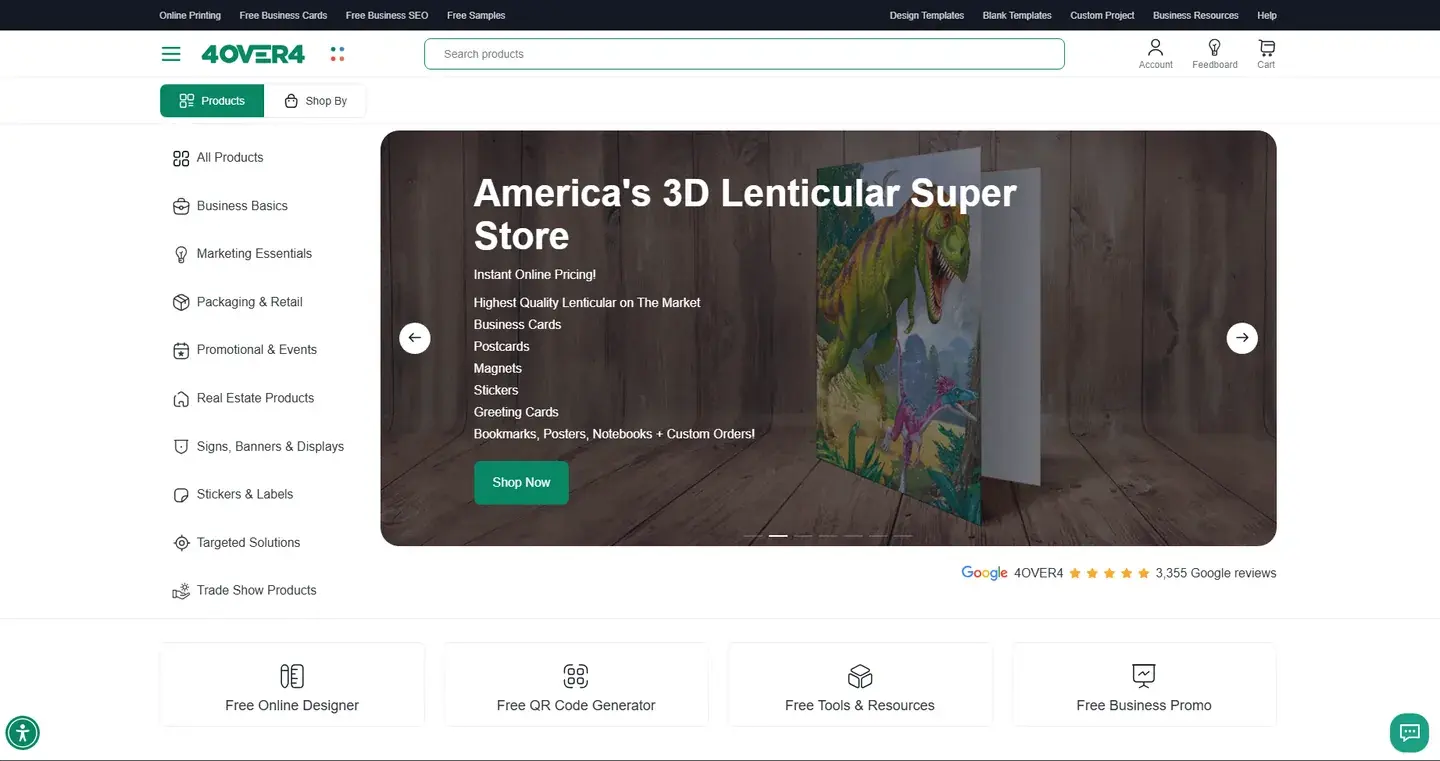
4over4, a US online printing store, reported 82% higher e-commerce revenue within six months after Netbase JSC remotely reworked its checkout, search and navigation.
Keep Reading
Netbase delivered a retrieval-augmented generation (RAG) assistant remotely, combining AI consulting, engineering and integration.
Keep Reading
Netbase delivered an MLOps pipeline remotely, combining AI consulting, engineering and integration.
Keep ReadingRelated services and solutions
 Generative AI development with evaluation and human review
Netbase builds generative AI features for product and operations teams: drafting, summarising, rewriting and content generation inside the software your people and customers already use. Every feature ships with an evaluation set, a human review step where output matters and limits on cost. Generative AI is a capability we are growing, and we label its maturity honestly.
Learn More
 Enterprise AI knowledge assistants: RAG engineering with access control
Netbase engineers retrieval-augmented generation (RAG) over company knowledge: the ingestion, search, permission checks, cited answers and evaluation that let an internal assistant or a website RAG chatbot answer from your own documents. It is a growth capability with access control designed in from the first prototype, and Netbase has delivered a RAG knowledge assistant for an unnamed client.
Learn More  Responsible AI and MLOps for AI in production
MLOps and responsible AI keep an AI feature trustworthy after launch. Netbase's practice for monitored, governed AI in production covers evaluation before every release, versioning of models, prompts and data, monitoring of quality and cost, and incident controls with a named owner. It is a growth capability, backed by an MLOps pipeline delivered for an unnamed client.
Learn More  AI knowledge assistant: answers from company knowledge, with sources and access control
An AI knowledge assistant is an internal tool that answers employees' questions from your company's own documents and systems, cites the source behind every answer and shows each person only what they may see. Netbase offers it as a growth capability, designed with retrieval, evaluation and human review from the first pilot, and has delivered one for an unnamed client.
Learn More Related insights

Tune retrieval as a measured experiment, not a hunch: label real questions with the passages that answer them, change one thing at a time, chunking first, then hybrid search, then reranking, and keep a change only when recall@k rises within your latency and cost limits. This is how Netbase approaches retrieval work on knowledge assistants.

When a small language model beats a large one for a business task
A small language model beats a large one when the task is narrow, repeated at high volume, has a fixed set of answers, must respond fast or stay inside your own environment, and has labelled examples to learn from. Netbase scores those six signals per task, then tests both model sizes on your data before choosing.

How to prepare fine-tuning data: curation, labelling and leakage checks
Prepare fine-tuning data by passing it through five gates before any training run: confirm the right to use each source, curate out duplicates and noise, label against a written guide, split by customer and date so nothing leaks, and size the set from a small pilot. Netbase works through this checklist with a client before training is scheduled.
Work with Netbase remotely
Every Netbase engagement is delivered remotely, so clients in any country and any industry can work with us; Netbase has worked with clients in 80 countries. Contracts and invoices are issued by Netbase JSC, and payment is made by bank transfer to Netbase JSC's company account or PayPal Business. Talk to the CEO, Huy Nguyen (David), on WhatsApp or by email.
Discuss a project
Netbase JSC helps organizations design, build, modernize, and operate digital products and AI-enabled business systems.project@netbasejsc.com
+84 937 869 689
91 Nguyen Chi Thanh, Dong Da, Hanoi, Vietnam
Get in touch
Tell us what you want to build, modernize, or operate.