

Industry digital platform playbooks: printing, packaging and retail first, with AI priorities per sector
Run an industry playbook where the workflow is known and proof exists. For Netbase that means printing and packaging first, then retail and e-commerce: map the order-to-fulfilment flow, digitize the step that loses most orders, integrate the systems around it, then add AI where the data supports it. Real estate, manufacturing, healthcare, travel and events follow as proof matures.
Book a solution review See the related serviceBy Netbase Consulting and Transformation Desk · Reviewed by David (CEO) · Updated 17 Sep 2026 · 15 min read

This guide is for owners, COOs, operations managers and e-commerce leads in print, packaging and retail businesses who want a digital platform programme that fits how their industry actually works. It explains what an industry playbook is, how to choose which one to run first, the two playbooks Netbase can support with delivered work today, the AI priorities in each, the building blocks they share, a six-step sequence, and how the next sector playbooks will be added.
In this guide
- What an industry playbook is, and what it is not
- Choosing which playbook to run first
- Playbook 1: printing and packaging
- Playbook 2: retail and e-commerce
- Building blocks both playbooks share
- Who owns a playbook programme
- Sequencing a playbook in six steps
- The next playbooks
- Trade-offs and common mistakes
- A playbook readiness checklist
- Limitations of this guide
- Frequently asked questions
- How this guide was made
- Next step
What an industry playbook is, and what it is not
A playbook is a repeatable sequence of decisions for one industry: the workflow to map, the systems and standards to connect, the measures that show progress, and the risks that usually appear. It shortens discovery because the questions are known in advance, and it reduces risk because each step has been run before.
A playbook is not a template website or a fixed product. Two printers, or two retailers, rarely share the same product mix, pricing rules or production constraints. The playbook fixes the order of decisions, not the answers.
-
Workflow map
- What it contains
- The steps from enquiry to delivery and repeat order
- Why it matters
- Shows where orders, time and margin are lost
-
System map
- What it contains
- The applications and data behind each step
- Why it matters
- Shows what must be integrated or replaced
-
Industry standards
- What it contains
- Formats and rules the sector already uses
- Why it matters
- Avoids inventing interfaces that partners cannot read
-
Measures
- What it contains
- A few numbers per step, with a baseline
- Why it matters
- Makes progress visible and funding decisions easier
-
Risk list
- What it contains
- The failures typical for the sector
- Why it matters
- Lets the programme plan for them early
-
AI priorities
- What it contains
- The AI uses that fit the workflow, their data needs and who approves the output
- Why it matters
- Puts AI on the leaking step instead of on a demo
Choosing which playbook to run first
The first playbook should be the one where the workflow is best understood and where delivered work shows what the platform can change. Netbase's legacy site names eight industries: printing and packaging, with six cases, e-commerce and retail, real estate, manufacturing, healthcare, travel, hospitality and events. Only printing and packaging and retail and e-commerce have published Work proof today, so this guide starts with those two and treats the others as next playbooks.
For your own business, four signals help choose where to start:
-
Revenue at risk
- Question
- Which step loses the most orders or customers?
- Start here if
- A single step clearly leaks revenue
-
Manual effort
- Question
- Where do people re-key, check or chase the most?
- Start here if
- Staff time goes to work a system could do
-
Customer expectation
- Question
- Where do customers expect self-service you do not offer?
- Start here if
- Competitors already offer it online
-
Readiness
- Question
- Where are data, owners and systems ready enough to change?
- Start here if
- A team can own the change and its measures
Playbook 1: printing and packaging
Print and packaging combine the complexity of manufacturing with the expectations of online retail. A customer wants to configure, design, see a proof and pay in minutes; the business must then turn that order into a print-ready file, a production slot and a delivery, often at low margins per job.
-
Product setup and pricing
- What digitizing it means
- Configurable products with rule-based prices
- Typical blocker
- Pricing held in spreadsheets and people's heads
- Measure to baseline
- Time to launch a new product
-
Online design and personalization
- What digitizing it means
- A browser design tool with templates
- Typical blocker
- Customers cannot picture the result
- Measure to baseline
- Share of started designs that are ordered
-
Proofing and approval
- What digitizing it means
- Automatic proofs and approval steps
- Typical blocker
- Proof rounds by e-mail
- Measure to baseline
- Proof cycles per order
-
Print-ready files
- What digitizing it means
- Automatic checks and output of production files
- Typical blocker
- Manual prepress fixes
- Measure to baseline
- Files needing manual correction
-
Production and fulfilment
- What digitizing it means
- Orders routed to production and shipping
- Typical blocker
- Re-keying into a print management system
- Measure to baseline
- Order-to-dispatch time
-
Reorders and B2B portals
- What digitizing it means
- Saved designs, approvals and company catalogs
- Typical blocker
- Corporate buyers ordering by e-mail
- Measure to baseline
- Repeat order rate
Standards to use rather than reinvent. CIP4, a not-for-profit standards association that works to foster process automation in the printing industry, maintains (X)JDF for exchanging job information between applications and PrintTalk for automating print procurement and business transactions. Where a print management or production system supports these formats, integrating through them is usually cheaper and more durable than a custom interface.
What Netbase has delivered. Netbase has delivered 50+ custom web-to-print platforms across apparel, packaging, signage, promotional merchandise and corporate B2B portals. The web-to-print platform solution describes the building blocks behind that work, and the printing and packaging industry page shows how Netbase approaches the sector.
Example: 4over4. For 4over4, a print business, Netbase's engagement is published with revenue up 82% within six months, conversion up 48%, average order value up 35%, production time down 40%, 200+ templates created in three months and fulfilment time down 50%. The figures describe the engagement as a whole, as reported for that client, and depend on its baseline and market. They show why a print playbook measures production and fulfilment as closely as conversion.
Example: USticker. For USticker, Netbase delivered an e-commerce payment enhancement engagement, published with conversion up 40% for users of the design tool, completed designs up 32% in six months, retention up 25%, online-order revenue up 15% and page load time down 21%. The 40% applies only to users of the design tool, and the figures describe the engagement as a whole.
AI priorities for print. Print is where Netbase's named AI work already runs: a recommendation engine delivered for 4over4. Next in line for most print businesses are AI design assistance for buyers who are not designers, preflight triage that explains file problems before a proof, quote assistants for configurable products, and demand forecasting to plan production slots. Rule-based preflight and a buyer-approved proof still decide what goes to press.
Playbook 2: retail and e-commerce
Retail and e-commerce playbooks start from the same question as print, where orders and margin are lost, but the answers usually sit in catalog data, checkout, stock accuracy and fulfilment rather than in design and production.
-
Catalog and product data
- What digitizing it means
- One owner for product data, synced to every channel
- Typical blocker
- Different product data on each channel
- Measure to baseline
- Time to publish a new product
-
Pricing and promotions
- What digitizing it means
- Rules managed in one place
- Typical blocker
- Promotions set by hand per channel
- Measure to baseline
- Pricing errors reported
-
Checkout and payments
- What digitizing it means
- A short checkout with provider-hosted payment
- Typical blocker
- Abandoned checkouts and payment failures
- Measure to baseline
- Checkout completion rate
-
Orders and stock
- What digitizing it means
- Orders and stock synced with ERP and warehouse
- Typical blocker
- Overselling and manual order entry
- Measure to baseline
- Order processing time
-
Fulfilment and returns
- What digitizing it means
- Tracked shipments and self-service returns
- Typical blocker
- Customers chasing parcel status
- Measure to baseline
- Contacts per order
-
Service and loyalty
- What digitizing it means
- Order history, accounts and repeat-purchase journeys
- Typical blocker
- No single view of the customer
- Measure to baseline
- Repeat purchase rate
Payments and card data. The PCI Data Security Standard, maintained by the PCI Security Standards Council, applies to entities that store, process or transmit cardholder data, and to those whose systems can affect its security. A practical playbook step is to keep card data out of your own systems by using a payment provider's hosted fields or pages, which narrows what your platform must protect. It does not remove the need to check your obligations with your payment provider.
Example: Geo-Tek IT Solutions (Cyprus). Netbase built an e-commerce platform for Geo-Tek IT Solutions. The client reported revenue up 36% in the first quarter after launch, engagement up 35%, repeat transactions up 24% and order processing time down 30%. The figures describe the engagement as a whole and depend on the client's baseline and market; the order processing result shows why a retail playbook baselines operations, not only sales.
AI priorities for retail. Buyers now expect search that understands intent and recommendations that reflect what they browse and buy. Behind the storefront, AI can draft product descriptions and attributes for a merchandiser to approve, forecast stock by location, and answer order-status questions with a hand-over to staff. Prices, refunds and published content stay with people. Beyond the 4over4 features, these are capabilities Netbase offers through AI and data services, not published retail results.
Building blocks both playbooks share
The two playbooks differ in their front end but share most of their foundations. Building these once, and well, is what makes the second playbook faster than the first.
| Building block | Print and packaging use | Retail and e-commerce use |
|---|---|---|
| Product and pricing model | Configurable products, quantity breaks, finishing options | Variants, bundles, promotions |
| Customer accounts | Saved designs, company approvals, reorders | Order history, addresses, loyalty |
| Order orchestration | Routing to production and fulfilment | Routing to warehouse, stores and carriers |
| Integration layer | Print management, production, shipping | ERP, warehouse, marketplaces, CRM |
| Payments | Deposits, B2B invoicing, card payments | Card and wallet payments, refunds |
| Measures and dashboards | Proof cycles, prepress fixes, dispatch time | Checkout completion, stock accuracy, contacts per order |
Who owns a playbook programme
A playbook changes how several teams work, so it needs owners on the business side as well as in technology.
-
Executive sponsor
Chooses the leaking step, sets the target and removes blockers between departments
-
Process owner
Owns the workflow step being digitized and signs off the target process
-
Data owner
Decides which system owns each record and fixes data quality before migration
-
Product owner
Turns the target process into a prioritized backlog with acceptance criteria
-
Technology lead
Chooses the platform, integration pattern and standards, and owns reliability
-
Operations lead
Prepares staff, training and support for the day the change goes live
In a smaller business one person may hold several of these roles. What matters is that each responsibility has a name, so decisions about product rules, data and priorities are made in days rather than weeks. The most common delay in a playbook is not development; it is waiting for a decision nobody felt entitled to make.
Sequencing a playbook in six steps
-
Map the workflow and systems
Walk one order from enquiry to delivery and repeat purchase, and note every system, hand-off and manual step.
-
Baseline a few measures
Pick two or three numbers per step and record today's values, so later changes can be judged fairly.
-
Choose the leaking step
Select the step that loses the most orders, time or margin, and where an owner is ready to change it.
-
Digitize that step end to end
Build or adopt the platform capability, and connect it to the systems before and after it so nothing is re-keyed.
-
Measure, then extend
Compare against the baseline over a full business cycle, add AI to the step once its data is clean, then move to the next step on the map.
-
Standardize what worked
Turn the decisions, integrations and measures into the playbook for the next site, brand or market.
When the first question is where to start and how to prioritize, digital transformation consulting turns the workflow map and baseline into a delivery-ready plan, then builds it in agile steps reviewed weekly with your process owners.
The next playbooks
Netbase's legacy site also names real estate, manufacturing, healthcare, travel, hospitality and events. Netbase has also delivered projects in these sectors; those clients are not named, and the anonymised records for travel, events, healthcare, real estate and manufacturing and logistics sit with the rest of our work. This guide keeps its detailed playbooks to printing, packaging and retail, where named case studies publish measured results, and adds the other sectors as that evidence becomes publishable.
The same structure will apply: a workflow map, a system map, the sector's own standards, a few baselined measures and a risk list. Each sector brings its own questions, such as booking and availability for travel and hospitality, regulated data handling for healthcare, listings and transactions for real estate, and production and logistics flows for manufacturing. Each also has its likely first AI uses: booking and guest-service assistants in travel and hospitality, document capture under strict data rules in healthcare, listing enrichment and lead qualification in real estate, and demand forecasting, shipping-document capture and sensor alerts from IoT devices in manufacturing and logistics. These are candidates to test in each playbook, not delivered results. Until those playbooks are written, the industry platforms solution and the travel and hospitality, healthcare, real estate and manufacturing and logistics industry pages describe Netbase's approach in each sector.
The planned guides in this cluster are: digital transformation for printing and packaging operations; retail and e-commerce operations automation; travel and hospitality booking platform modernization; healthcare workflow platform requirements; real-estate platform architecture and integrations; and manufacturing and logistics workflow automation. The first two will build directly on the playbooks above.
Trade-offs and common mistakes
- Copying another company's platform. A playbook fixes the order of decisions, not the answers; your product mix and pricing still need their own design.
- Starting with the most visible step. A new storefront is tempting, but the leaking step may be proofing, prepress or stock accuracy.
- Skipping the baseline. Without today's numbers, a successful change cannot be shown, and the next step is harder to fund.
- Ignoring sector standards. Custom interfaces where industry formats exist raise cost and make partners harder to connect.
- Digitizing one step in isolation. A fast online order that is re-keyed into production moves the bottleneck without removing it.
- Starting with AI instead of the workflow. An assistant on top of a broken order flow answers questions about the problem without removing it.
- Claiming a playbook before proof. A sector playbook earns trust when it rests on delivered work, which is why the next playbooks wait for it.
A playbook readiness checklist
- One order has been walked from enquiry to repeat purchase, with every system and manual step recorded.
- Two or three measures per step have a recorded baseline.
- The leaking step is chosen, with a named owner and a target.
- Systems before and after that step are listed with their integration options.
- Relevant industry standards, such as (X)JDF, PrintTalk or payment card rules, are identified.
- Card data handling is designed to stay with the payment provider where possible.
- A full business cycle is planned for measurement before the next step starts.
- AI uses for the chosen step are listed with their data needs and a named person who approves their output.
- Decisions and integrations are documented so the next site or market can reuse them.
Limitations of this guide
This is practical guidance from Netbase delivery experience, not original research. The industries named come from Netbase's legacy site; only printing and packaging and retail and e-commerce are supported here by published Work proof, and no claim is made for the other sectors. The 4over4, USticker and Geo-Tek results were reported for those engagements as a whole and depend on each client's baseline and market. Apart from the two 4over4 AI features, the AI priorities are capabilities to evaluate. CIP4 and the PCI Security Standards Council are cited as public standards bodies; this guide is not payment compliance advice.
Plan the next step with a Netbase consultant
Frequently asked questions
A repeatable sequence of decisions for one industry: the workflow, systems, standards, measures and risks to handle, in order.
They are the sectors where Netbase has published Work proof, including 50+ custom web-to-print platforms.
Not always. Many playbooks start by digitizing one leaking step and connecting it to the systems already in place.
After the workflow map and baseline, on the step that leaks most. Print usually starts with file automation and design help, retail with search, recommendations and catalog enrichment; each AI use gets its own measure and a person who approves its output.
Often yes. The shared building blocks above are the same; the difference lies in the front end and in the production or warehouse integrations.
It depends on the step, the systems around it and data readiness; measure over a full business cycle before moving on.
As delivered work and measured results become available for real estate, manufacturing, healthcare, travel, hospitality and events.
How this guide was made
The Netbase Editorial Team wrote this guide from Netbase's published industry and web-to-print pages, the 4over4, USticker and Geo-Tek case studies and public information from CIP4 and the PCI Security Standards Council. David (CEO) reviewed every Netbase fact. External sources are cited with access dates. Drafting used AI assistance (Claude). Its purpose is to help print, packaging and retail businesses run a digital platform programme in an order where each step pays for the next.
Next step
Share the workflow that loses you the most orders, the systems behind it and your growth plans, and we will book a solution review to map the playbook and choose the first step. You can also see the related service or browse more Netbase insights.
Work behind this guide
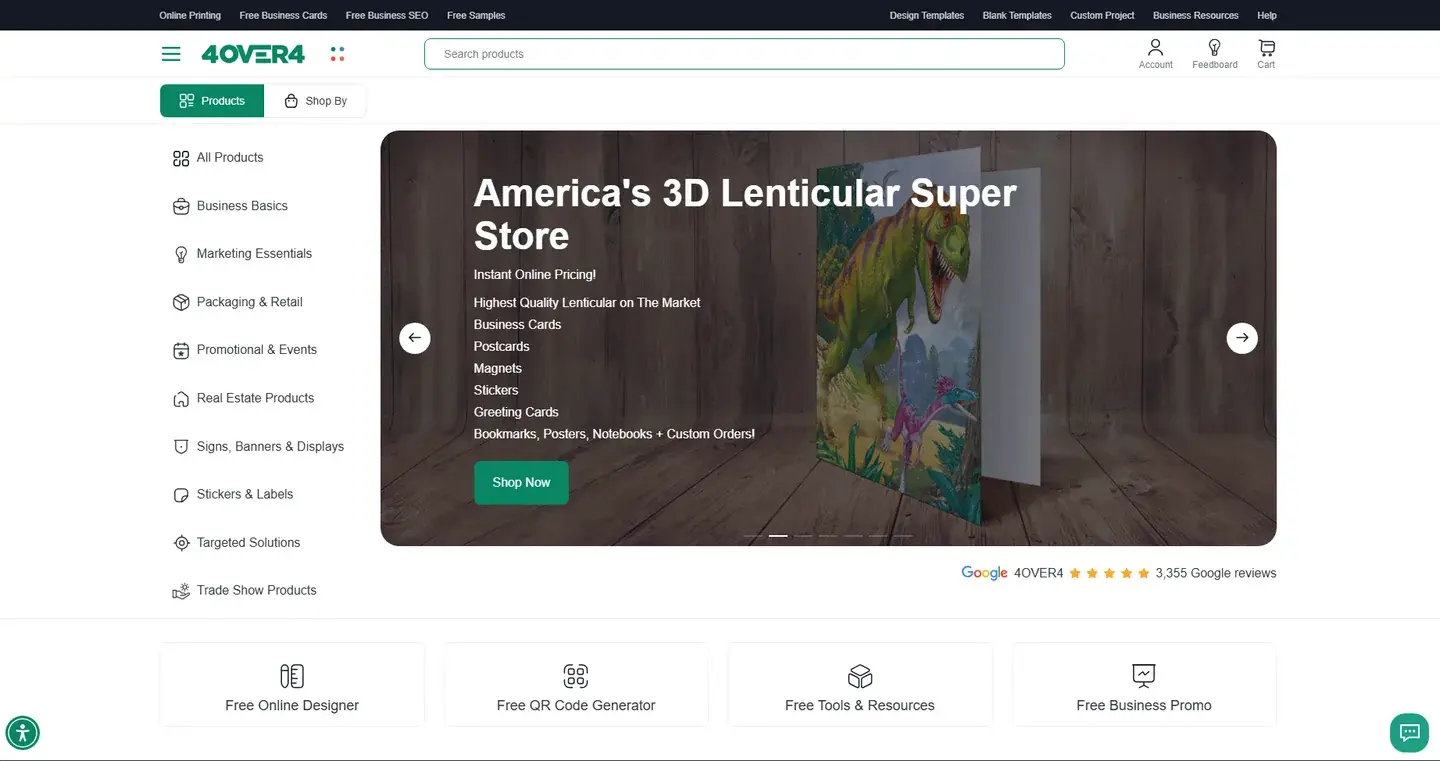
Netbase JSC reworked checkout, search and navigation, automated Adobe Illustrator (.ai) to SVG file conversion and added recommendations.
Keep ReadingRelated services and solutions
 AI-enabled digital transformation consulting that ends in a delivery plan
Netbase provides digital transformation consulting for mid-market companies to turn operational problems into a prioritized roadmap with a delivery path, not a strategy deck. We map your workflows, systems and data, rank every change by business value and risk, including where AI can remove manual work, and hand over a plan the same team can start building.
Learn More
 Web-to-print platform with AI design assistance, from online design to a print-ready order
A web-to-print platform is an online ordering, design and prepress workflow that helps print businesses sell custom products: customers configure, design and approve their order online, AI can suggest layouts and catch artwork problems, and production receives a print-ready file. Netbase has delivered 50+ custom web-to-print platforms across apparel, packaging, signage, promotional merchandise and corporate B2B portals.
Learn More
Discuss a project
Netbase JSC helps organizations design, build, modernize, and operate digital products and AI-enabled business systems.+84 937 869 689
91 Nguyen Chi Thanh, Dong Da, Hanoi, Vietnam
Get in touch
Tell us what you want to build, modernize, or operate.