

Edge AI IoT pilot: scope, firmware security and operations
An edge AI IoT pilot should prove one operational decision on a small fleet, ship firmware, runtime and model as one signed release that can roll back, and name who runs the devices after go-live. Netbase scopes those three parts with the buyer before any hardware order, so the pilot ends in a clear decision.
Book a solution review See the MLOps serviceBy Netbase Commerce and Platform Engineering Desk · Reviewed by David (CEO) · Updated · 11 min read

This guide is for product owners, CTOs and operations leads at device makers and equipment-heavy businesses who are briefing an IoT development company about putting a machine learning model on a camera, gateway or sensor node. It sits in the IoT development cluster. The IoT project scoping checklist covers the four layers of any IoT build, and the pilot charter guide covers proof criteria in general; this page adds what changes when the model runs on the device.
In this guide
- Why is an edge AI pilot harder than a cloud AI pilot?
- What should the pilot scope include?
- Where should inference run?
- How do you ship firmware and model as one secure release?
- Who runs the fleet after go-live?
- When should you not put AI at the edge?
- Where AI fits
- What delivery record exists, and what does not
- Which alternatives should you compare, and how?
- Limits of this guide
- Frequently asked questions
- Next step
Why is an edge AI pilot harder than a cloud AI pilot?
An edge AI pilot is harder because the model, the firmware that runs it and the hardware that accelerates it must all change together, in the field, on devices nobody can reach by hand. A cloud model can be replaced in minutes; a model on a thousand gateways is replaced only as fast as the update pipeline allows.
Three things break that rarely break in the cloud. A new model may need a runtime or driver the old firmware does not have, so the device falls back to a slow path or stops inferring. A failed update can leave a device offline at a remote site. And a model that was accurate in the lab drifts when lighting, vibration or sensor wear changes the input, without anyone noticing, because the raw data never leaves the device.
So the pilot must prove more than accuracy: that the release can be shipped and reversed, and that someone owns the fleet.
What should the pilot scope include?
Netbase writes the scope as one sheet with six fields, agreed by the sponsor, the delivery team and the people who will run the devices.
-
Decision
- What to write
- The one operational decision the model supports, and who acts on it
- Weak version to avoid
- "Add AI to our sensors"
-
Split
- What to write
- What runs on the device, what on the gateway, what in the cloud, and why
- Weak version to avoid
- "Everything at the edge"
-
Proof criteria
- What to write
- Accuracy on real site data, inference time on the target hardware, power or heat budget, one update shipped and rolled back
- Weak version to avoid
- "The demo works"
-
Release set
- What to write
- Firmware, runtime, model and configuration versions that are tested together
- Weak version to avoid
- A model file copied by hand
-
Run owner
- What to write
- The role that watches drift, failed updates and device health after go-live
- Weak version to avoid
- "The vendor, somehow"
-
Out of scope
- What to write
- Hardware redesign, certification, fleet-wide rollout, retraining at scale
- Weak version to avoid
- Not written
Where should inference run?
The first scope question is where the model runs at all. The answer comes from latency, bandwidth, privacy and how often the model must change, not from the hardware catalogue.
| Option | Choose it when | Main trade-off | Do not choose it when |
|---|---|---|---|
| Cloud inference | Latency of seconds is fine, the link is reliable and the model changes often | Every reading crosses the network; costs and privacy follow the data | The site loses connectivity or the decision must be taken in milliseconds |
| Gateway inference | Several sensors feed one decision and the gateway has power and a fan | One more box to secure, update and replace | Devices are scattered with no local hub |
| On-device inference | Raw data is too heavy or too private to send, or the response must be immediate | Model size, power and update risk sit on every device | The model will change monthly or the hardware has no headroom |
| No model yet | A threshold rule or a manual review answers the question | Less automation in the pilot | You can already state the rule the model would learn |
The connectivity guide shows how the network choice limits this answer: a low-power network that sends a few bytes an hour cannot carry raw images to the cloud, which pushes inference onto the device or the gateway.
How do you ship firmware and model as one secure release?
Netbase treats firmware, runtime, model and configuration as one release set with a version for each part and a tested combination. The steps below form the release gate the pilot must pass once before anyone talks about rollout.
-
Sign every artifact
Firmware images and model files are signed in the build pipeline, and the device refuses anything it cannot verify.
-
Describe the release in a manifest
The manifest lists each part, its version, its hash and the hardware it fits, in the spirit of the IETF firmware update architecture for constrained devices.
-
Keep a known-good slot
An A/B layout or an equivalent lets the device boot the previous set if the new one fails its checks.
-
Check health after the update, not only connectivity
The device reports that inference starts, runs inside its time and memory budget and receives its input stream.
-
Roll out in rings
A few pilot devices first, then a wider group, with an automatic stop if health checks fail.
-
Block silent downgrades
Older, vulnerable versions cannot be reinstalled without an explicit, logged decision.
-
Record the bill of materials
Each release carries a software bill of materials so a new vulnerability can be traced to the devices that run it.
A practitioner guide on edge AI updates puts the point plainly: staged rollout is about testing recovery first, not about shipping to fewer devices (zediot on DEV Community). For the device side, the NIST IR 8259A baseline lists software update, device identification and data protection among the core capabilities a connected device should have.
SoftWSP, a Netbase brand, offers device firmware security for device makers: a firmware scan, a software bill of materials and a vulnerability report, with remediation and monitoring as options. It fits step 7 when the firmware includes third-party components nobody has inventoried.
Who runs the fleet after go-live?
The run phase decides whether the pilot result lasts. Before go-live, the scope names an owner for each of these duties:
- Drift checks. Sample predictions and the inputs behind them are reviewed on a schedule, because device data rarely reaches the cloud on its own.
- Failed-update recovery. A runbook says how a device that fails its health check is restored, remotely or by a site visit.
- Keys and certificates. Signing keys and device credentials have a rotation plan and a named holder.
- Retraining and re-release. A new model goes through the same release gate as firmware, never around it.
- Retirement. A device that leaves service is wiped and its identity revoked.
Governance follows the usual Netbase rhythm: weekly reviews with KPI dashboards during the pilot and the first months of operation, so drift and update failures show up as trends rather than surprises.
When should you not put AI at the edge?
Keep the model in the cloud, or skip it, when the decision can wait seconds and the link is reliable; when the hardware is already in the field without a secure update path; when nobody will own drift checks after the pilot; or when the model must change faster than the fleet can be updated safely. In each case, an edge model adds risk without adding speed.
Where AI fits
AI helps engineers build and run an edge pilot, under their review. It can draft test cases for the release gate, summarise device health reports across the fleet and flag inputs that drift from the training data. Engineers still choose the model and hardware, approve each release set, read every flagged device against its source data and decide on rollback. Netbase works with the major commercial and open-source AI tools and models, chosen per project.
- In delivered work
4over4 recommendation engine
A recommendation engine that suggests products from browsing history and previous purchases; it is not a device or edge project.
- In delivered work
MLOps pipeline
An MLOps pipeline for a client that is not named; it shows model release practice, not devices.
- Available capability
AI with IoT
AI with IoT is a Netbase capability area; not yet tied to a published case.
What delivery record exists, and what does not
No Netbase IoT or edge AI project is published, and this guide claims none. Netbase designs, builds, integrates and runs software across technologies and industries as a capability statement, and AI with IoT is one of its AI capability areas. IoT with AI at the edge is an investment direction: we are building toward it, not reporting results from it.
What is on record is the delivery method and the AI work around it. Netbase follows a six-step lifecycle from discovery and strategic alignment through agile execution with outcome-based milestones to ongoing support, with security by design and AI-assisted engineering under human review. Beyond the named 4over4 recommendation engine, Netbase has delivered AI projects for clients that are not named, including MLOps pipelines, the model release practice an edge pilot builds on. Most Netbase projects are delivered on fixed-price contracts, and milestone-based models are also offered, which suits a pilot with a fixed decision date. No device count, duration, cost or result is claimed here.
Which alternatives should you compare, and how?
| Option | Strength | Risk | Choose it when |
|---|---|---|---|
| Chip or module vendor kit | Fast start with tuned models for its own hardware | Release pipeline and fleet tools tied to one vendor | The hardware is already chosen and the use case matches the kit |
| IoT platform with edge runtime | Device management and updates included | The model and data follow the platform's limits | You accept the platform for the long term |
| In-house embedded team | Knows the hardware and the site | Rarely staffed for model operations | The model is simple and the team owns firmware already |
| Independent build partner | Scopes the split, builds the release gate and the business integration | Needs a buyer-side owner for the run phase | Device, model and business systems all have to change together |
Judge each option by the same three questions: can it ship a signed release set and roll it back, who owns drift after go-live, and can you leave with your models, keys and data.
Limits of this guide
- The proof criteria are examples. Thresholds come from your own site data and business case.
- Regulated products such as medical, automotive or safety devices add certification steps a pilot scope does not replace.
- Rules such as the EU Cyber Resilience Act set duties for products with digital elements; check them with your own advisers.
Plan the next step with a Netbase consultant
Frequently asked questions
It should prove that the model runs inside the time, memory and power budget of the target hardware, that one signed update can be shipped and rolled back, and that a named owner can read device health and drift after go-live.
Run it on the device when raw data is too heavy or too private to send or the response must be immediate. Use a gateway when several sensors feed one decision, and the cloud when seconds of delay are fine and the link is reliable.
Treat the model as part of a signed release set with the firmware and runtime, describe it in a manifest, keep a known-good slot, check inference health after the update and roll out in rings with an automatic stop.
One operations role on the buyer side should own drift checks, failed-update recovery, key rotation and device retirement, with the build partner supporting under a written runbook.
Next step
If you are planning an edge AI pilot or have devices in the field without a secure update path, book a solution review and we will mark the split, the release gate and the run owner to settle before you build.
Work behind this guide
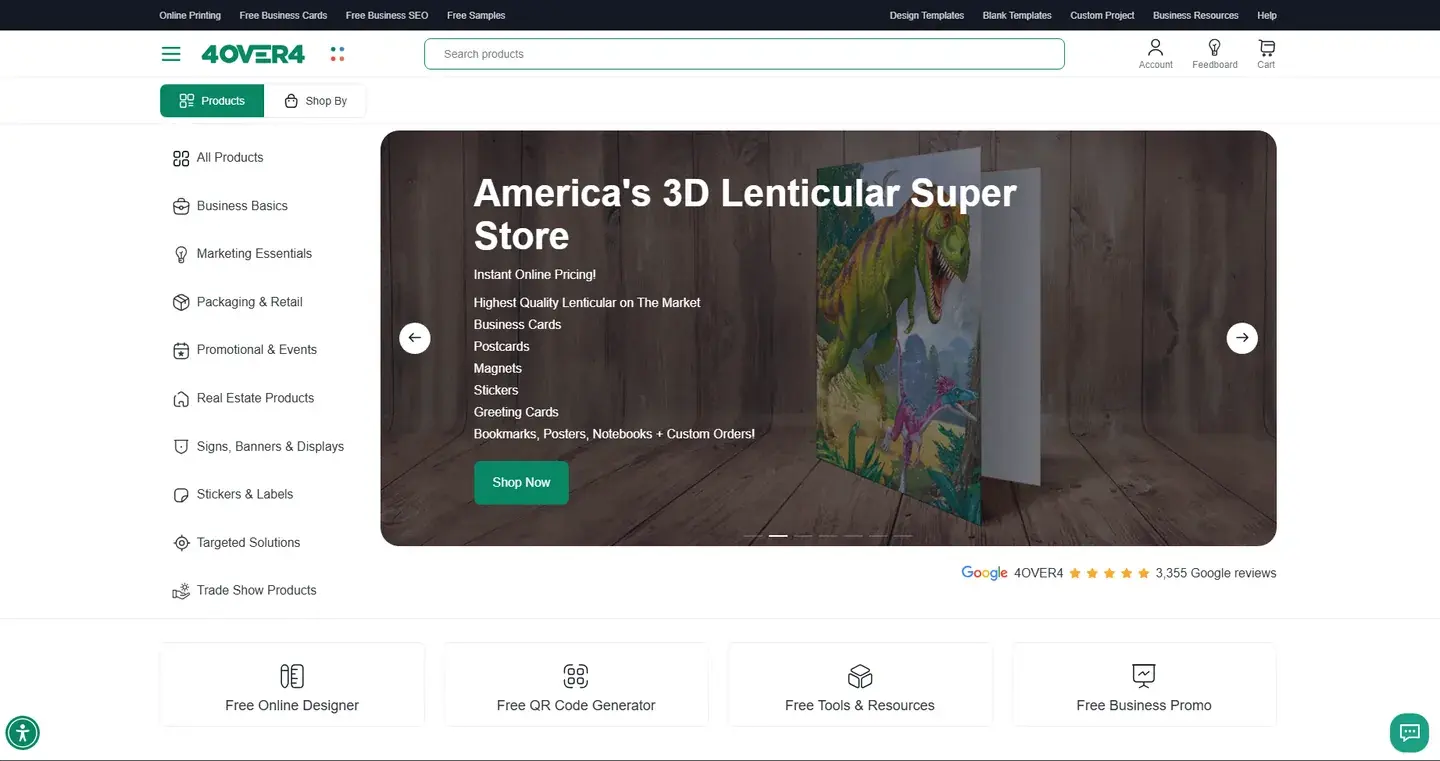
4over4, a US online printing store, reported 82% higher e-commerce revenue within six months after Netbase JSC remotely reworked its checkout, search and navigation.
Keep Reading
Netbase delivered an MLOps pipeline remotely, combining AI consulting, engineering and integration.
Keep ReadingRelated services and solutions
 IoT development with AI analytics that connects devices to the business
Netbase provides IoT development for manufacturers, logistics operators and product companies to connect devices and sensor data to the business platforms that act on them, with AI that spots anomalies and forecasts what needs attention. We design the device-to-cloud data path, build the back end, dashboards and integrations, and treat security, data ownership and AI as design decisions.
Learn More
 Computer vision AI for images and artwork
Netbase applies computer vision to images and artwork: checking customer uploads before print, tagging and sorting product images, and converting raster images into vector files. Document workflows such as invoices and forms belong to our intelligent document processing solution. Computer vision is a capability we are growing.
Learn More  Responsible AI and MLOps for AI in production
MLOps and responsible AI keep an AI feature trustworthy after launch. Netbase's practice for monitored, governed AI in production covers evaluation before every release, versioning of models, prompts and data, monitoring of quality and cost, and incident controls with a named owner. It is a growth capability, backed by an MLOps pipeline delivered for an unnamed client.
Learn More  CMMS and maintenance management software: assets, work orders, spare parts and production on one record
A CMMS from Netbase is one system where maintenance teams plan preventive work, run work orders and keep spare parts in stock, linked to production schedules and purchasing. We design and build it around your assets, shifts and approval rules, connect it to sensors and the ERP, and add AI that predicts failures while engineers decide.
Learn More Related insights

To prepare smart contracts for an external audit, freeze the code at one commit, write down what is in and out of scope, finish unit, fuzz and invariant tests, document the roles and expected behaviour, and reserve time to fix findings. Netbase prepares contracts this way so that paid audit days go to real logic flaws.

Tokenized Loyalty and Rewards: Product Questions Before Choosing Blockchain
Before choosing blockchain for a loyalty program, settle ten product questions about point value, transfer, redemption, partner settlement and member onboarding; most programs that answer them honestly need a well-run points database, and a token fits only when members must hold and move value across companies. This Netbase guide gives the screen and the operating duties.

When does a digital twin of physical assets pay back?
A digital twin pays back when it changes a frequent, costly decision about physical assets and the data to feed it already exists. This Netbase guide applies a five-question filter: which decision changes, what an error costs, how often it is made, which data exists, and who acts. Most proposals pass as dashboards first.
Work with Netbase remotely
Every Netbase engagement is delivered remotely, so clients in any country and any industry can work with us; Netbase has worked with clients in 80 countries. Contracts and invoices are issued by Netbase JSC, and payment is made by bank transfer to Netbase JSC's company account or PayPal Business. Talk to the CEO, Huy Nguyen (David), on WhatsApp or by email.
Discuss a project
Netbase JSC helps organizations design, build, modernize, and operate digital products and AI-enabled business systems.project@netbasejsc.com
+84 937 869 689
91 Nguyen Chi Thanh, Dong Da, Hanoi, Vietnam
Get in touch
Tell us what you want to build, modernize, or operate.