

Solution architecture for AI-ready systems that settles trade-offs before build
Netbase provides solution architecture consulting for CTOs and product owners to define how systems, data, integrations and AI services fit together before build, with every trade-off documented. You receive a target architecture, decision records and an integration map that any competent team can build from, ready for AWS, Google Cloud, DigitalOcean or Cloudflare.
Book a solution review View relevant workReviewed by David (CEO) · Updated 17 Sep 2026

Planning a build that touches several systems? Book a solution review.
What solution architecture includes
Most expensive software problems are decided in the first weeks: which system owns a record, how services talk, where data is copied and what happens when a dependency fails. Solution architecture makes those decisions on purpose and writes them down. It is one of the lead offers of our Strategy & Consulting family.
Included
- Current-state system and data inventory
- Target architecture with components, owners and boundaries
- Integration map: APIs, events, files and their failure paths
- Data model and system-of-record decisions
- Security, scalability and cost trade-offs, written down
- Architecture decision records and a phased build plan
Not included
- Enterprise-wide IT strategy with no build in view
- Hardware procurement or data-centre design
- Software licence resale
- Formal certification of your product or hosting
- Full implementation, unless you choose Netbase delivery

When to use it, and when another route fits
Architecture work pays off when a wrong early decision would be expensive to undo.
Good fit
- A new platform that must connect to ERP, CRM, commerce or payment systems
- Several vendors or teams building parts of one product
- A replatforming decision with data and integrations at stake
- An AI feature that needs data flows, evaluation and cost limits
Another route fits better
- A small site on a standard platform with no integrations
- Nobody owns technology decisions: a fractional CTO fits
- A question that is really about process: map the process first
- A live platform that only needs routine operation
Other routes are listed in the services directory.
Outcomes and buyer jobs
Technology leaders hire solution architecture to:
Each major choice has a decision record with the options considered, the reason and the cost of changing it later.
Every connection has an owner, a contract and a documented failure path.
Hosting, licences and maintenance effort are estimated per option, not discovered after launch.
The architecture is detailed enough for your team, Netbase or another vendor to estimate and build.
Capability modules and deliverables
Systems, data stores, integrations and constraints on one map
Component diagram, responsibilities and deployment view
API and event contracts, data mapping and error handling
System-of-record decisions, data flows and retention
Security, performance, availability and cost trade-offs per option
Architecture decision records, risks and a phased build plan
Delivery process, team and governance
Architecture sits in the first two steps of our six-step delivery lifecycle and stays with the build:
-
Discovery and strategic alignment
Goals, constraints, current systems and the measures the architecture must meet.
-
Team assembly and architecture planning
A solution architect leads, with business analysts and senior developers who check that each design can be built.
-
Agile execution with outcome-based milestones
The riskiest part of the design is proven first in a thin working slice.
-
Modular and productized components
Proven modules are placed in the architecture where they fit.
-
Training, rollout and optimization
Your team is walked through the design and the decision records.
-
Ongoing support and co-building
The architecture is revisited when the product or load changes.
Security is designed in, not added later: secure code review and version control, TLS in transit and AES at rest, role-based access control, MFA for admin dashboards, vulnerability scanning and penetration testing, and disaster recovery planning. Teams range from 3 to 30 people, and governance includes weekly reviews, KPI dashboards and a dedicated account manager and project manager. Architects work remote-first from Hanoi in English, with diagrams and decision records kept in your repository, and every design is API-first so web, mobile, IoT and partner channels share the same contracts. For cloud designs we also check against published provider guidance, such as the AWS Well-Architected Framework, which frames decisions around reliable, secure, efficient, cost-effective and sustainable systems.
AI architecture patterns we design
AI features fail in production for architecture reasons more often than model reasons. These are the patterns we most often place in a target architecture:
-
Model gateway
One service in front of every model call, so providers can change, costs are capped and prompts are logged.
-
Retrieval layer
Search over your documents and records, with access rules applied before anything reaches a model.
-
Evaluation and monitoring
Test sets, quality checks and alerts for answers that drift or slow down.
-
Human review queue
A place where low-confidence results wait for a person instead of reaching a customer.
-
Event and data pipelines
Clean, owned data flows that forecasting and recommendations can trust.
We use AI in the architecture work too, to summarise existing code and draft integration maps, and an architect confirms every finding.
AI in this service
AI workloads add architecture questions that ordinary features do not: where model calls sit, which data may leave your systems, how answers are evaluated, what happens when a model is slow or wrong, and how cost is capped. We draw those boundaries in the integration map and decision records. Models are chosen per workload from commercial and open-source options, so no single vendor is designed in.
-
In delivered work
Recommendation engine
Delivered for 4over4's online printing store.
-
Available capability
Architecture for model gateways, retrieval and evaluation
Machine learning, NLP and generative AI that Netbase offers; not yet tied to a published solution architecture case.
Engagement models and commercial variables
Architecture is consulting work with a defined output. Most Netbase projects are delivered on fixed-price contracts agreed after discovery, so the architecture becomes a build scope with a fixed price. Milestone-based, monthly team retainer and KPI-linked terms are also offered. The architecture can stand alone when another team builds, and a dedicated development team is a secondary option for a long programme. We do not publish rate cards.
What moves effort and cost: the number of systems and integrations, data volume and sensitivity, the number of teams to align, compliance obligations and how settled the business requirements are.
Technology as an implementation choice
We recommend technology after the architecture questions are answered. Services and APIs are compared on our backend platforms page. For commerce, Netbase has delivered WooCommerce, Magento 2, Laravel and headless commerce. We use AWS, Google Cloud, DigitalOcean and Cloudflare; no cloud partner tier or cloud certification is claimed. Where many systems must exchange data, our integration hub is the reference design for connecting them through one managed layer.
Technologies we build with




Industry applications
Retail and e-commerce. Stores, marketplaces, ERP, payment and shipping systems must agree on orders, stock and prices. Architecture decides which system owns each record and how the others stay in step.
Print and personalization platforms. Design tools, file rendering and fulfilment routing add heavy files and long-running jobs to ordinary commerce. The architecture separates them so a busy season does not slow the store.
 Retail and ecommerce: AI-enabled storefronts, marketplaces and order operations
Netbase helps retailers and online merchants modernize storefronts, marketplaces and order operations, and adds AI where it pays: search, recommendations, catalog enrichment and order exceptions, with your team approving what shoppers see. Results are published: Geo-Tek IT Solutions grew revenue 36% in the first quarter after its new ecommerce platform launched, and an EU fashion marketplace grew GMV 47%.
Learn More
Proof: integrated platforms Netbase delivered
Evidence maturity: solution architecture is a growth capability. The records below are delivered platforms whose architecture Netbase designed and built; architecture is not published as a stand-alone engagement.
Geo-Tek IT Solutions (Cyprus). An online design platform that had to work on every device and fit the company's existing systems. After launch, revenue grew 36% in the first quarter and order processing time fell 30%. Read the Geo-Tek case.
Printcart (Netbase Business Division). One web-to-print platform that runs on a merchant's own store or as Shopify, Wix and WooCommerce apps, turning online orders into print-ready files and routed fulfillment. Serving several commerce platforms from one core is an integration architecture problem at its heart. See the Printcart record.
More projects are in our work.
Revenue grew 36% in the first quarter after launch.
Keep Reading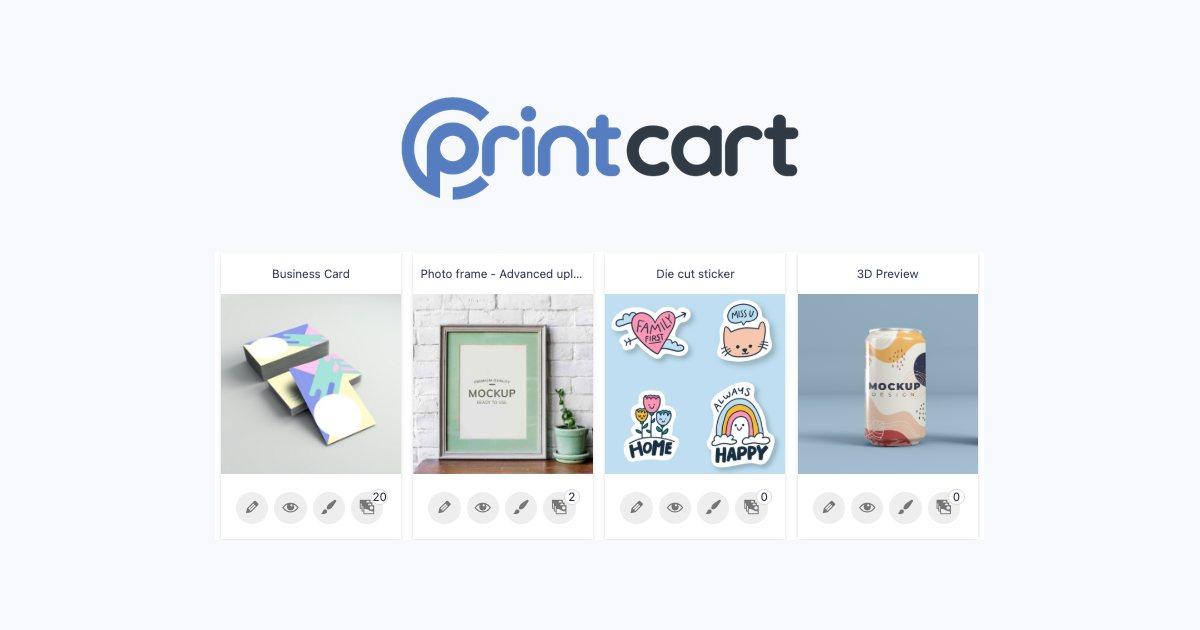
Netbase designed, engineered and operates the multi-tenant platform: an online design studio, automatic print-ready files, print order management, and store apps plus an API that plug into any storefront.
Keep ReadingBuyer FAQ
It depends on the number of systems, integrations and teams involved. We agree the plan and its end date before we start.
You do. Diagrams, contracts and decision records are delivered to you.
Yes. It is written so that any competent team can estimate and build from it.
That is the starting point. Existing systems are inventoried first, and each integration has a documented contract.
Yes. Access, encryption, secrets and recovery are part of every design.
Yes. A model gateway and a clean data layer, as in our AI integration work, keep the choice open, so you can start with one provider and switch later without rebuilding.
Designing for a future that never arrives. We size for the next stage of growth and record what would trigger a change.
Related solutions
 Enterprise integration hub ready for AI agents: one monitored layer for commerce, ERP and CRM data
An enterprise integration hub is a central layer that moves orders, customers, stock and invoices between your commerce, ERP and CRM systems, with monitoring, retries and replay in one place, and scoped APIs that AI agents can call safely. Netbase builds it as a custom layer on the stack you already run, starting from the flows that break most often.
Learn More
Service owner and next step
This service is owned by David, Netbase's Chairman, founder and CEO, and maintained by the Netbase Editorial Team. Want the hard decisions made before the first sprint? Book a solution review, or view relevant work first.
Discuss a project
Netbase JSC helps organizations design, build, modernize, and operate digital products and AI-enabled business systems.+84 937 869 689
91 Nguyen Chi Thanh, Dong Da, Hanoi, Vietnam
Get in touch
Tell us what you want to build, modernize, or operate.