

Headless commerce vs traditional commerce platforms: a buyer's decision framework
Headless commerce separates the storefront from the commerce backend so each can change independently; a traditional (monolithic) platform bundles both in one system, which launches faster and costs less to run until several front ends, non-standard checkout logic, or AI shopping agents need direct catalog access.
Book a solution review See the related solutionBy Netbase Commerce and Platform Engineering Desk · Reviewed by David (CEO) · Updated · 10 min read

This guide is for e-commerce managers, founders and technology leaders deciding a platform's architecture, whether for a new build or a replatform already planned in the custom e-commerce platform guide. Ecommerce development is the commercial service that delivers either architecture; once the architecture is set, choosing who builds the integrations is the next decision.
In this guide
- What's the real difference between headless and traditional commerce?
- Headless vs traditional, compared by criteria
- When headless pays off, and when it does not
- A sequencing plan for the decision
- Where AI fits in this decision
- What delivery record exists, and what does not
- Alternatives: hybrid and composable routes
- Limits of this guide
- Frequently asked questions
- Next step
What's the real difference between headless and traditional commerce?
A traditional, monolithic commerce platform runs the storefront (the pages a shopper sees) and the commerce engine (catalog, pricing, cart, checkout) as one connected application, usually from one vendor or codebase. A headless platform decouples the two: the commerce engine exposes products, pricing, inventory and checkout through APIs, and any front end, a website, a mobile app, a kiosk or an AI shopping agent, consumes them independently. The MACH Alliance, an industry body for this architecture, describes the practical effect: a monolith's broad scope gives it a large, interdependent codebase, so a minor change can force re-testing the entire platform, while a decoupled, API-first design lets one layer change without re-testing the other. Shopify's own documentation states the same split plainly for its headless option: "You build the frontend, and [the platform's] APIs handle the commerce underneath."
Headless vs traditional, compared by criteria
Judge the two architectures on what actually changes day to day, not on which one sounds more modern.
| Criterion | Traditional (monolithic) | Headless |
|---|---|---|
| Who owns the front end | The platform's theme engine; changes go through its templates and extensions | Your own team or agency, on any framework; the backend never dictates the front-end stack |
| Cost curve over time | Lower to launch; rises as workarounds and extensions accumulate | Higher to launch (two systems to build and connect); lower to change once the API layer is stable |
| Team and skill needs | A platform administrator and theme developer can run most of it | Needs engineers who own the API layer and at least one front-end team per channel |
| Omnichannel and AI-agent readiness | Web-first; a second channel (app, kiosk, AI shopping agent) usually means a second, loosely connected build | One catalog and order API serves every channel, including an AI agent reading stock and price directly |
| SEO and performance control | Bound by the platform's rendering and theme performance | Full control of rendering strategy and page weight, at the cost of owning that performance work yourself |
| Migration and vendor risk | Replacing the platform usually means replacing the front end too | The front end can often survive a backend swap, and vice versa, if the API contract holds |
No row in this table is a universal winner; the right side for a single standard storefront with one sales channel is usually the left column.
When headless pays off, and when it does not
Headless pays off when the business already has, or is about to add, more than one reason to decouple: several front ends sharing one catalog (web, app, in-store kiosk), a checkout or pricing model the platform's theme layer cannot express, or a plan to let AI shopping agents or partner systems read the catalog and place orders through an API rather than scraping a web page. Each of those reasons removes a different constraint; none of them come from "headless is the modern choice" alone.
When not to choose headless. A single storefront, a standard catalog, and no near-term plan for a second channel is the clearest case for staying traditional: headless adds a second system to build, host and secure, with no channel yet to justify it. A small team with no engineer who can own an API layer will feel this cost immediately, in slower releases, not faster ones. And a live store under revenue pressure is rarely the moment to take on a frontend-backend split for the first time; prove the backend's API coverage in a lower-stakes project first.
A sequencing plan for the decision
-
List every front end this catalog must serve today and in the next 12 months
, not further out; a hypothetical fourth channel is not a reason to decouple now.
-
Check what the current or planned backend already exposes through an API
, for catalog, pricing, inventory and checkout; a platform with a thin or incomplete API makes headless more work than the table above suggests.
-
Name who owns the front end and who owns the API layer
, as two separate jobs; headless without a named owner for each usually stalls after launch.
-
Pilot the highest-risk page first
(often checkout or search), not the whole storefront, so a failed assumption costs one page, not a rebuild.
-
Decide the fallback
before committing: if the headless front end is late or breaks, can the backend still serve a simpler, platform-rendered storefront while it is fixed?
Where AI fits in this decision
AI changes one input to this decision more than any other: whether an AI shopping agent needs to read your catalog and place an order on a buyer's behalf, which only works cleanly against an API, not a server-rendered page built for a human browser. Netbase works with the major commercial and open-source AI tools and models, chosen per project rather than tied to one vendor.
AI readiness is a reason to check what a platform's API already exposes; it is not, by itself, a reason to go headless.
-
Available capability
AI search, recommendations and catalog enrichment
Apply to either architecture; a traditional platform with a capable API can add them without a full headless rebuild, so this is not yet tied to a published headless-specific case.
-
In delivered work
Product recommendation engine
Built by Netbase into 4over4's online printing store from browsing and purchase history; it ran on a traditional storefront, not a headless one, so the capability does not require decoupling the front end.
What delivery record exists, and what does not
Netbase has delivered both architectures, on different projects, for different reasons:
- Headless, greenfield. For a Dubai-based loyalty and rewards technology company (not named under a non-disclosure agreement), Netbase built a headless platform on Magento 2 Open Source with a Next.js front end, so one backend could power many individually branded reward shops with a shared points-and-cash checkout, vendor fulfilment routing and mobile-app components (headless reward shop record). This was a new build, not a conversion of an existing monolith, and the reason was several branded front ends sharing one backend, matching the first criterion above.
- Headless commerce foundation, web-to-print. For Deyar Printing & Advertising in Riyadh, Saudi Arabia, Netbase built a bilingual web-to-print platform on a Laravel headless commerce foundation, again a new build rather than a monolith conversion.
- Traditional, monolith-to-monolith replatform. For Netztech, Netbase migrated a Magento 1 store to Magento 2 Commerce, including 11 extension modules, in 35 working days; the store stayed on one connected storefront-and-engine platform before and after the move.
What does not exist. No published Netbase record describes converting a live, trading monolithic store into a headless architecture; every headless delivery on record started as a new build. A business weighing headless specifically as a conversion of an existing traditional store should read that as an open question to scope in discovery, not a solved path, and should expect the migration-risk guidance in the custom e-commerce platform guide to apply in addition to anything specific to decoupling the front end.
Alternatives: hybrid and composable routes
Few businesses need a pure choice between one monolith and a fully headless rebuild.
| Route | Strength | Choose it when |
|---|---|---|
| Stay traditional, extend through APIs | Cheapest to run; most platforms now expose enough of an API for AI search, recommendations and a connected app | One storefront, one channel, and the platform's API already covers what you need to connect |
| Headless storefront, traditional-style single front end | Gets API-first flexibility without committing to several channels on day one | You expect more channels later but only need one now, and want the backend ready when they arrive |
| Fully headless, several front ends | Matches scale and channel count to the architecture from the start | Web, app and at least one more channel (kiosk, partner integration, AI agent) are funded and planned together |
| Platform-native "headless mode" (a vendor's own decoupled front-end option) | Faster to adopt than a custom headless build, inside one vendor's ecosystem | The current platform already offers it and vendor lock-in on the front end is an acceptable trade for speed |
Decide the route the same way as the main criteria table: by channel count, team capacity and what the backend's API already exposes, not by which option is newest. A backend built for several front ends can usually also carry a multi-vendor marketplace later; marketplace platform architecture covers the vendor, catalog and payout choices that add on top of this one.
Limits of this guide
This is practical guidance from Netbase delivery experience and public architecture documentation, not a benchmark study. No duration, cost or traffic figure is claimed for a headless build specifically; the only timed figure in this guide (the Netztech migration) describes a monolith-to-monolith move, not a headless one. Architecture names and vendor documentation are cited for what they define, not as an endorsement or a ranking. What is possible on a given platform depends on its own current API coverage, which changes; verify it directly before deciding.
Plan the next step with a Netbase consultant
Frequently asked questions
No. Headless pays off when several front ends, an AI-agent channel or non-standard checkout logic justify the extra system to build and run; a single standard storefront with one channel is usually better served by a traditional platform.
A conversion is possible when the backend already exposes a complete API for catalog, pricing, inventory and checkout; where it does not, exposing that API is itself a project to scope before any front-end work starts, and Netbase has no published record yet of this specific conversion path.
Not automatically. A headless front end can be built lighter and faster, which the Core Web Vitals metrics measure, but a poorly built headless front end can be just as slow as a poorly built traditional one; the architecture creates the opportunity, not the result. Either architecture still needs a written performance budget and Core Web Vitals gate to keep that opportunity from eroding release by release.
Not necessarily. Many AI search, recommendation and catalog features can run against a traditional platform's existing API; headless matters most when an AI agent, partner system or several channels need to read and act on the catalog directly, beyond what a single storefront's API already supports.
Next step
Tell us how many front ends and channels your catalog needs to serve today and over the next year, and we will book a solution review to score your case against this guide's criteria before you commit to either architecture. You can also see the e-commerce marketplace solution or browse more Netbase insights.
Work behind this guide
Netbase JSC built and integrated a responsive e-commerce platform with upload and customization tools, delivered remotely.
Keep Reading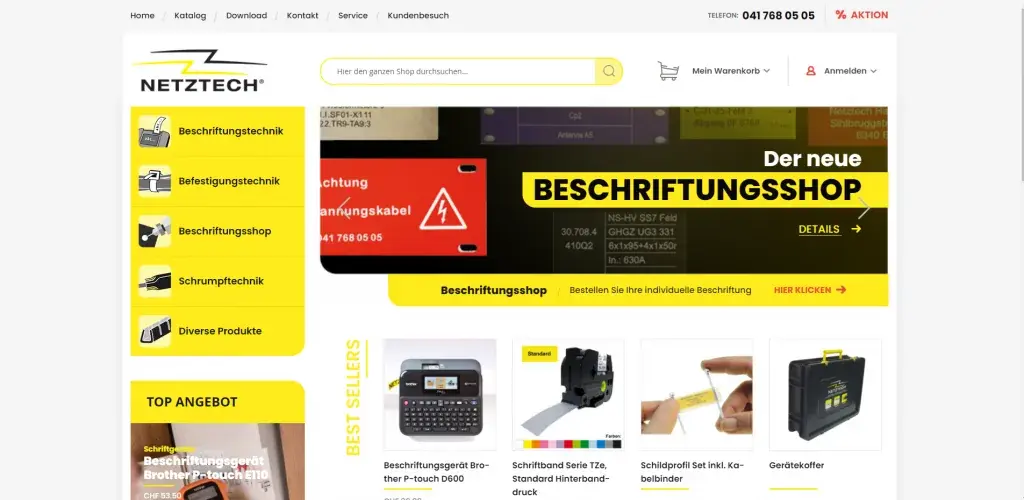
Netbase JSC delivered the migration remotely: all store data moved, 11 extensions rebuilt and a new design applied, finished in 35 working days.
Keep Reading
Netbase delivered a headless Magento 2 and Next.js platform remotely: members pay with points, cash or both, and vendors fulfil orders against service levels.
Keep ReadingRelated services and solutions
 AI-enabled ecommerce development for merchants who outgrew templates
Netbase provides custom ecommerce development for merchants that have outgrown templates, to turn traffic into orders with less manual work, using AI for search, recommendations and catalog work where it pays. We build on WooCommerce, Magento 2, Laravel and headless stacks; 4over4, whose store gained an AI recommendation engine, reported 82% more revenue within six months.
Learn More
 Multi-vendor marketplace development: vendors, catalog, payouts and AI search on one platform
A multi-vendor marketplace is a commerce platform where many independent sellers list, sell and get paid through one storefront. Netbase's marketplace solution covers vendor onboarding, a shared catalog, split payments and payouts, with AI for search, listing enrichment and fraud checks. For an EU fashion-tech marketplace, Netbase's work grew gross merchandise value (GMV) 47% and cut vendor onboarding time 60%.
Learn More
Work with Netbase remotely
Every Netbase engagement is delivered remotely, so clients in any country and any industry can work with us; Netbase has worked with clients in 80 countries. Contracts and invoices are issued by Netbase JSC, and payment is made by bank transfer to Netbase JSC's company account or PayPal Business. Talk to the CEO, Huy Nguyen (David), on WhatsApp or by email.
Discuss a project
Netbase JSC helps organizations design, build, modernize, and operate digital products and AI-enabled business systems.project@netbasejsc.com
+84 937 869 689
91 Nguyen Chi Thanh, Dong Da, Hanoi, Vietnam
Get in touch
Tell us what you want to build, modernize, or operate.