

Inventory replenishment AI agents: what the agent proposes and what the buyer approves
Netbase's view is that a replenishment AI agent for a mid-sized distributor should read stock, open orders and supplier lead times, then draft reorder proposals with its reasons, while a buyer approves every purchase order that commits money. New suppliers, shortage allocation and changes to stock policy stay with people.
Book a solution review See warehouse and inventory managementBy Huy Nguyen (David), Founder & CEO · Updated · 11 min read

This guide is for an operations or purchasing lead at a mid-sized distributor or wholesaler. It applies the approach of the AI automation for business operations guide to one process, and the build work behind it sits in the agentic AI automation service.
In this guide
- What can a replenishment AI agent do for a distributor today?
- The replenishment agent-fit matrix
- What should a reorder proposal show the buyer?
- How should supplier lead-time changes and other exceptions be routed?
- What controls keep a replenishment agent inside its limits?
- A sequencing plan for a replenishment agent
- Where AI fits
- What delivery record exists, and what does not?
- Which alternatives should a mid-sized distributor compare?
- What are the limits of this guide?
- Frequently asked questions
- Next step
What can a replenishment AI agent do for a distributor today?
Replenishment is a short chain of decisions repeated across many items. The classic rule is simple: an item is reordered when stock falls to its reorder point, normally the forecast usage during the supplier's lead time plus safety stock. A distributor's difficulty is not the formula. It is that every input moves: demand shifts by customer and season, suppliers deliver late or early, and stock records are wrong in ways nobody sees until a pick fails.
An agent helps where reading and comparing is the bottleneck. It can check every item against its policy daily, notice that a supplier's real lead time has drifted, read supplier confirmations and assemble a proposal a buyer can approve quickly. It acts alone only where nothing leaves the company; a buyer approves anything that commits spend, and people keep supplier trust, scarce stock and the policy itself.
The replenishment agent-fit matrix
| Replenishment step | What an agent can do alone | What needs a buyer or a person | Why the line sits there |
|---|---|---|---|
| Stock position | Combine on-hand, reserved, inbound and backordered quantities per item and site; flag records that disagree | Correct a stock record after a count | A wrong stock figure makes every later proposal wrong |
| Demand signal | Update the forecast for the lead-time period; flag unusual orders and one-off spikes | Decide whether a spike is a new trend or a single deal | The agent sees the numbers; the sales team knows the customer |
| Supplier lead time | Measure actual lead times from purchase order to receipt; flag drift from the master value | Approve a change to the lead time the policy uses | A lead-time change moves every reorder point for that supplier |
| Reorder proposal | Draft quantity and timing per item, rounded to pack size and minimum order quantity, with its reasons | Approve, change or reject the proposal | A purchase order is a commitment to spend |
| Supplier choice | Suggest the usual supplier and a known alternative when the usual one is late | Choose a new supplier or new terms | Supplier trust and terms are a negotiation |
| Purchase order release | Convert an approved proposal into a draft order in the ERP | Release the order to the supplier | Released orders are hard to cancel |
| Confirmation and expediting | Read supplier confirmations, compare dates and quantities, chase missing ones | Accept a changed date or a partial quantity that breaks a customer promise | The buyer owns the trade-off with the customer |
| Stock policy | Report items that stock out or sit unsold against their policy | Change safety stock, service levels or review periods | The policy states how much risk the company accepts |
What should a reorder proposal show the buyer?
A buyer approves quickly only when the proposal carries its own evidence, with facts, estimates and policy kept apart. Research prototypes such as the agentic AI framework for smart inventory replenishment let agents initiate purchases to suppliers themselves; for a distributor, a proposal record a buyer approves is the safer start. A workable record has these fields:
-
Item, site and supplier
What is being ordered, where and from whom
-
Stock position
On hand, reserved, inbound and backordered at the decision time, with data freshness
-
Demand over the exposure period
Forecast for the lead time plus the review period, and the source of the forecast
-
Lead time used
The policy value and the measured recent value, side by side
-
Policy
Safety stock and service level in force for the item
-
Suggested and constrained quantity
The raw quantity, then the quantity after pack size, minimum order and budget rules
-
Main reason
One plain sentence, such as "the inbound order is late and stock will not last until it arrives"
-
Confidence flag
Whether any input was stale, missing or unusual
How should supplier lead-time changes and other exceptions be routed?
Most of the risk sits in signals that change the inputs, not in the arithmetic. An agent should never quietly absorb such a signal into its next proposal; it attaches the evidence and sends it to the person who owns it.
-
Measured lead time drifts from the master value
- Agent's job
- Show recent receipts against the master value
- Owner who decides
- Buyer for that supplier, then the planner who owns the policy
-
Supplier confirms a later date or a partial quantity
- Agent's job
- Show affected customer orders and stock cover
- Owner who decides
- Buyer, with customer service for promised orders
-
Demand spike from one customer
- Agent's job
- Show the order and its share of normal demand
- Owner who decides
- Sales owner of that customer
-
Stock record disagrees with recent picks or counts
- Agent's job
- Hold proposals for the item and request a count
- Owner who decides
- Warehouse lead
-
Usual supplier cannot deliver
- Agent's job
- Suggest known alternatives from purchase history
- Owner who decides
- Purchasing manager
-
Item out of stock across several customers
- Agent's job
- List open orders and inbound supply
- Owner who decides
- Operations director, who sets allocation
Safety stock exists because demand and supplier delivery are uncertain; changing that buffer is a policy decision, so it goes to a person.
What controls keep a replenishment agent inside its limits?
An agent is a new actor in the buying chain, so it needs its own identity and limits, as our guide to AI agent security and human approval sets out. The OWASP guidance on excessive agency names the core risk: an AI system given more functionality, permissions or autonomy than its task needs. In replenishment that becomes a short checklist:
- The agent's account can draft proposals and draft orders; it cannot release a purchase order or approve one.
- The agent cannot edit lead times, safety stock or service levels in the item master; it can only propose a change.
- Approval limits, pack sizes, minimum orders and budget rules live in configuration the purchasing team owns, not in the prompt.
- Supplier emails are read as evidence, never as instructions; a request to change terms or bank details stops processing and goes to a person.
- Every proposal and override is logged with its data.
A sequencing plan for a replenishment agent
-
Start with the stock position and exception list
The agent reports items below their reorder point and records that disagree; buyers keep ordering as they do today.
-
Add lead-time measurement
The agent compares actual receipts with master lead times and routes drift to the buyer of each supplier.
-
Add reorder proposals with reasons
Buyers approve, change or reject each one, and every override reason is recorded.
-
Add confirmation reading and expediting
The agent reads supplier confirmations and chases the missing ones; buyers accept changed dates.
-
Widen the agent-alone column only by item group,
for example repeat items from reliable suppliers, after the override record shows buyers rarely change those proposals. Release of purchase orders then follows the approval rules in our procure-to-pay AI agents guide.
-
Measure before and after each step,
using the baseline method in our guide to measuring AI automation ROI after launch.
Where AI fits
Netbase works with the major commercial and open-source AI tools and models, chosen per project. Each item below states how mature it is at Netbase.
- In delivered work
Product recommendation engine
Built for 4over4's online printing store from browsing and purchase history; not a replenishment tool, but the named delivered-AI proof this cluster cites.
- In delivered work
Document AI platform
Field extraction and classification delivered for a client that is not named; the same extract, validate and review pattern applies to supplier confirmations.
- Available capability
Replenishment agents with buyer approval
Reorder proposals, lead-time tracking and exception routing as one agent workflow is a capability Netbase is growing; it is not yet tied to a published replenishment case.
What delivery record exists, and what does not?
- Odoo work for distributors. With a local Odoo implementation partner, Netbase has consulted on and customized Odoo for trading and distribution companies, retail store chains and manufacturers. These clients and the partner are not named, and no result is published.
- ERP inventory modules and integrations. Netbase's ERP work includes inventory and sales-order modules and e-commerce-to-ERP integrations that sync catalogues, inventory and orders by API. Those clients are not named.
- Cloud ERP for a US client (not named). Netbase works as offshore development partner on a multi-tenant cloud ERP delivered as SaaS to small and mid-sized businesses; its planned second phase covers inventory, purchasing and vendor management and supply chain.
- Manufacturing and logistics clients. Netbase has delivered projects for manufacturing and logistics clients that are not named; see the anonymous manufacturing and logistics record.
What does not exist. No published Netbase record describes a replenishment agent in production, and no stock-out, fill-rate, inventory-reduction, time-saved or cost figure is published for any inventory work. The matrix and tables above are a delivery view built from these engagements and the cited guidance, not a measured result.
Which alternatives should a mid-sized distributor compare?
| Route | Strength | Choose it when |
|---|---|---|
| Your ERP's built-in reorder rules | Already connected to stock, orders and suppliers | Demand is steady, lead times are reliable and min-max rules work for most items |
| A demand-planning or replenishment platform | Vendor-maintained forecasting and proposal screens | Your catalogue and buying process are close to the platform's standard |
| A custom agent layer over your ERP with your own approval gates | The matrix, proposal record and routing are yours | Your suppliers, pack rules or customer promises are specific enough that a default over- or under-orders |
When NOT to add an agent: if one buyer can review the catalogue weekly, if stock records are routinely wrong, or if no lead-time history exists. Fix those first. Warehouse execution itself, from receiving to picking, is covered in our guide to a custom WMS module or off-the-shelf warehouse software.
In Netbase custom development most projects run on fixed-price contracts agreed after discovery. Stock records, receipts and purchase orders on one record are the scope of the warehouse and inventory management solution, relevant to manufacturing and logistics companies and any distributor buying from many suppliers.
What are the limits of this guide?
- The matrix is a starting position from delivery practice and public guidance, not an inventory standard; your own stock policy and approval rules set the final line.
Plan the next step with a Netbase consultant
Frequently asked questions
It can draft orders from approved proposals and check them against pack sizes, minimum orders and budget rules, but releasing an order to a supplier should stay with a buyer, because a released order commits spend and is hard to cancel.
It should measure actual receipts against the lead time in the system, show the drift to the buyer for that supplier, and wait for a person to approve a new value, because a lead-time change moves every reorder point for that supplier.
The buyer records a short reason, the agent logs it with the proposal, and the purchasing team reviews the reasons regularly to decide whether a rule, a lead time or a policy should change.
Start with a daily stock position and exception list, then add lead-time measurement, because both have clear right answers and leave every purchase decision with buyers.
Next step
Tell us how your buyers reorder today and where you want the approval line, and we will book a solution review to scope the agent boundary. You can also see the agentic AI automation service.
Work behind this guide
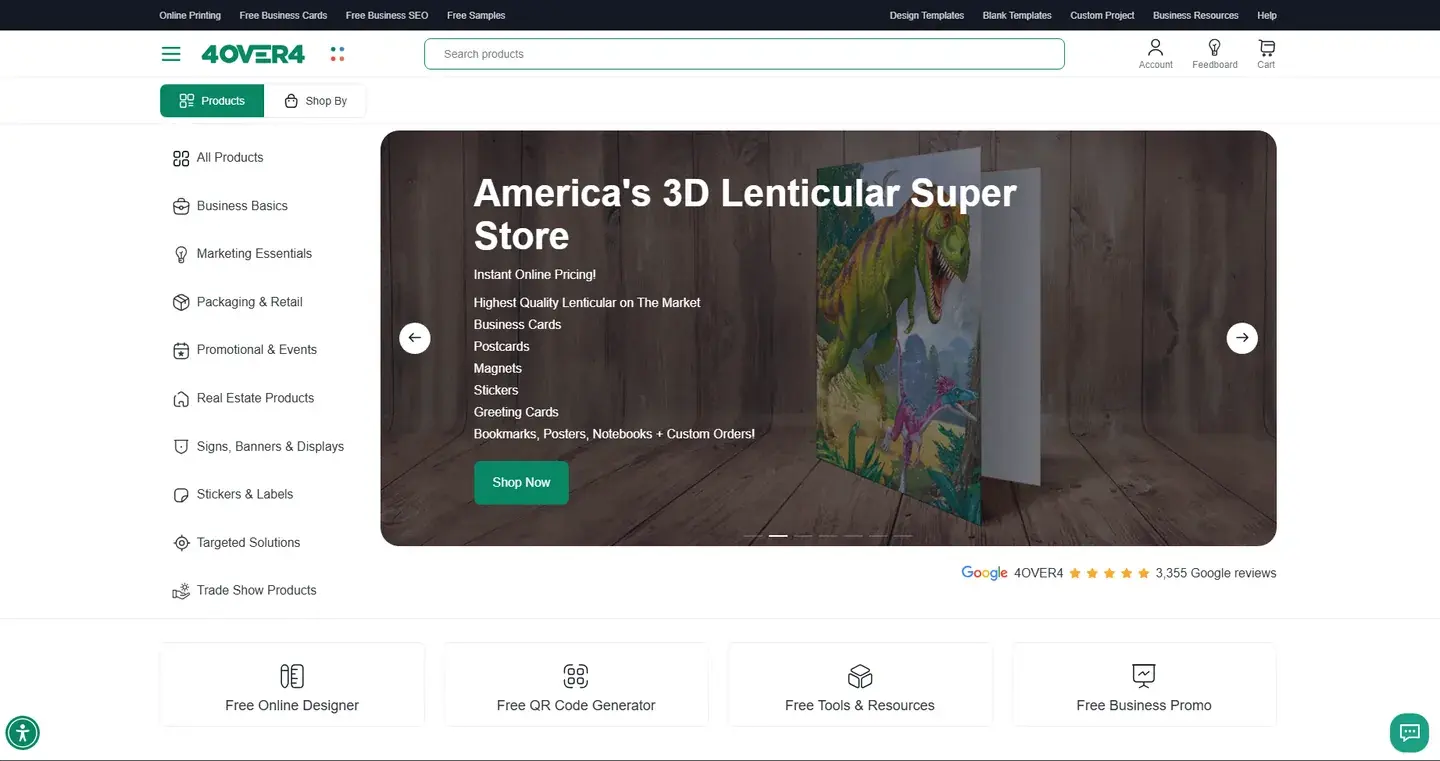
4over4, a US online printing store, reported 82% higher e-commerce revenue within six months after Netbase JSC remotely reworked its checkout, search and navigation.
Keep Reading
A manufacturing and logistics business, not named, needed its operations and the systems around them connected in one platform.
Keep Reading
A US software company, not named, sells a multi-tenant cloud ERP as SaaS to small and mid-sized businesses.
Keep ReadingRelated services and solutions
 AI automation and agents that keep people in charge
Netbase provides AI automation and agent development for operations teams that want repetitive, multi-step work done by software while people keep approval over decisions that matter. We combine rule-based automation with AI where it adds value, build in human approval, and measure return against a baseline.
Learn More
 Enterprise AI agent platform: run AI agents with approvals, audit logs and cost limits
An enterprise AI agent platform is a governed runtime where AI agents plan and carry out multi-step work through approved tools, while approvals, audit logs, access rules and cost limits keep every action accountable. Netbase offers it as a forward-looking solution, built inside your own environment rather than licensed as a product.
Learn More  Warehouse and inventory management software: receiving, stock, picking and shipping on one record
A warehouse and inventory management solution from Netbase is one system that knows what you have, where it sits and where it is going, across warehouses, stores and sales channels. We design and build it around your locations, units and pick rules, sync it with your ERP and storefronts, and add AI that forecasts and flags while people decide.
Learn More Related insights

Start AI automation with one high-volume, checkable process, not a platform. Measure the baseline first, automate the predictable steps with rules, add AI only where inputs are unstructured, keep people approving money, customer-facing and irreversible actions, and judge success by time, errors and cost per case against that baseline, with security designed in.

AI agents vs workflow automation: how to choose for each task
Use rule-based workflow automation when the steps are known and the inputs are structured: it is cheaper, predictable and easy to audit. Use an AI agent only when the steps genuinely vary and the input needs reading or judgement, and fence it with narrow permissions and human approval. Most operations need both, chosen step by step.

An AI readiness assessment framework for enterprises
An AI readiness assessment scores six dimensions (strategy and use cases, data, technology and integration, people and skills, governance and risk, operations and measurement) on a four-level maturity scale. The lowest score, not the average, decides what to do next: fix the weakest dimension before scaling any AI use case beyond a supervised pilot.

Security and human approval for AI agents: the controls to build before an agent acts
Secure an AI agent by giving it its own identity with least-privilege tools, treating every email, document and web page it reads as untrusted, and enforcing human approval outside the model for money, customer messages, deletions and other irreversible actions. Log every tool call, test against injection before launch, and keep a stop switch.
Work with Netbase remotely
Every Netbase engagement is delivered remotely, so clients in any country and any industry can work with us; Netbase has worked with clients in 80 countries. Contracts and invoices are issued by Netbase JSC, and payment is made by bank transfer to Netbase JSC's company account or PayPal Business. Talk to the CEO, Huy Nguyen (David), on WhatsApp or by email.
Discuss a project
Netbase JSC helps organizations design, build, modernize, and operate digital products and AI-enabled business systems.project@netbasejsc.com
+84 937 869 689
91 Nguyen Chi Thanh, Dong Da, Hanoi, Vietnam
Get in touch
Tell us what you want to build, modernize, or operate.