

Month-end close AI agents: what to automate, and what the controller signs
Netbase's view is that a month-end close AI agent should prepare reconciliations, draft accruals with their evidence and keep the close checklist moving, while the controller approves every journal entry that needs judgement, every estimate and the period sign-off. Mid-sized companies gain most by automating preparation and keeping posting authority with named people.
Book a solution review See the enterprise AI agent platformBy Huy Nguyen (David), Founder & CEO · Updated · 10 min read

This guide is for a CFO, financial controller or close lead at a mid-sized company who has to decide where an agent stops in the close. It applies the approach of the AI automation for business operations guide to one period-end process, and it sits after our procure-to-pay AI agents and order-to-cash AI agents guides, whose output the close consumes. The build work sits in the agentic AI automation service.
In this guide
- Which month-end close tasks can an AI agent run today?
- The month-end close agent-fit matrix
- How should reconciling items be routed?
- What should the controller's sign-off pack contain?
- What controls keep an agent inside the close?
- A sequencing plan for a close agent
- Where AI fits
- What delivery record exists, and what does not?
- Which alternatives should a mid-sized company compare?
- What are the limits of this guide?
- Frequently asked questions
- Next step
Which month-end close tasks can an AI agent run today?
The close is a calendar of small tasks with one hard end: the controller signs that the books for the period are right. Most of the work before that signature is preparation. Bank and card feeds are matched to the ledger, balance-sheet accounts are reconciled to their support, accruals are estimated for costs incurred but not yet invoiced, and variances against budget and the prior month are explained.
Preparation is where an agent helps. It reads the prior period's reconciliation, the current ledger detail and the supporting subledger, and it proposes what the accountant used to assemble by hand. Posting and signing are different. A journal entry changes the record auditors rely on, and the PCAOB's auditing standard AS 2201 directs auditors to controls over journal entries in the period-end financial reporting process, over significant estimates and over management override.
So the useful split has three levels. An agent acts alone where a rule decides and nothing is posted. An agent prepares and a person approves where an entry is posted or a balance is accepted. A person decides alone where the answer is a judgement about the business.
The month-end close agent-fit matrix
| Close task | What an agent can do alone | What needs a person | Why the line sits there |
|---|---|---|---|
| Bank and card reconciliation | Match feed lines to ledger entries by amount, date and reference; list unmatched items | Clear or write off any unmatched item | A cleared break is an accounting decision, not a match |
| Balance-sheet reconciliations | Roll forward last month's reconciliation, attach subledger and ledger detail, flag differences | Accept the reconciliation as preparer and reviewer | The reconciliation is the evidence the balance is right |
| Intercompany | Pair both sides of intercompany balances and flag mismatches by entity | Agree the correcting entry with both entities | Two ledgers must change together |
| Accruals | Find goods received but not invoiced and recurring costs with no charge; draft the entry with evidence and a reversal date | Approve the amount, account and reversal | An accrual is an estimate; someone must own it |
| Prepaid amortisation and depreciation | Calculate the schedule entry from the approved register | Approve the batch before posting | The register can be wrong even when the arithmetic is right |
| Variance review | Compare each account with budget and prior month and draft an explanation | Accept or rewrite the explanation | The explanation is a statement about the business |
| Close checklist | Track tasks, owners and due dates; chase overdue items | Change the checklist or its owners | The checklist is the control design |
| Period lock and sign-off | Assemble the sign-off pack | Lock the period and sign | The signature is the controller's accountability |
Clean opening balances, a stable chart of accounts and good subledgers justify a wider agent-alone column; manual spreadsheets outside the ledger justify a narrower one.
How should reconciling items be routed?
A reconciliation agent should never clear a break by guessing which side is right. It classifies the item, attaches the evidence and routes it to the person who owns that cause.
-
Bank line with no ledger entry
- Agent's job
- Suggest likely invoices or payments and show the bank detail
- Owner who clears it
- Accounts payable or receivable lead
-
Ledger entry with no bank line
- Agent's job
- Check whether it is a timing difference from the last days of the month
- Owner who clears it
- Treasury or cash lead
-
Customer payment not applied
- Agent's job
- Show candidate open invoices
- Owner who clears it
- Accounts receivable, using the cash application rules
-
Goods received, no supplier invoice
- Agent's job
- Draft an accrual with the receipt as evidence
- Owner who clears it
- Accounts payable, then the controller
-
Intercompany mismatch
- Agent's job
- Show both entities' entries side by side
- Owner who clears it
- Both entity accountants
-
Unexplained difference in a balance-sheet account
- Agent's job
- Stop and flag; never post a plug
- Owner who clears it
- Controller
The last row deserves its own rule. A plug entry that makes a reconciliation balance hides the problem the reconciliation exists to find, so an agent must have no route to post one.
What should the controller's sign-off pack contain?
The controller signs once, so the agent's job is to make that signature informed. A good sign-off pack, assembled by the agent and checked by the close lead, holds:
- every balance-sheet reconciliation with preparer and reviewer recorded, and its open items aged;
- every agent-drafted entry, with the evidence it used, who approved it and when;
- the accruals and reversals for the period, with the estimates flagged as judgements;
- the variance explanations, marked where a person rewrote the agent's draft;
- the exceptions the agent could not classify, and what happened to each.
Our guide to an AI agent audit trail and compliance evidence covers the logging behind this pack. Watch approval quality too: a reviewer who accepts every draft in seconds is a weaker control than the old manual step, as our guide to detecting rubber-stamp reviews explains.
What controls keep an agent inside the close?
The agent is a new actor in the ledger, so it needs its own identity and narrow rights. The OWASP guidance on excessive agency names the core risk as an AI system with more functionality, permissions or autonomy than its task needs. In the close that becomes a short checklist:
- The agent's account can create draft entries; it cannot post, approve or reverse a posted entry.
- The agent cannot open, close or reopen a period.
- Materiality thresholds, tolerance rules and account mappings live in configuration finance owns, not in a prompt.
- No privileged user can bypass the approval step for agent-drafted entries.
- Every draft, match and routing decision is logged with its source documents.
A sequencing plan for a close agent
-
Start with bank reconciliation matching
It is high volume and every match has a document behind it; Puzzle's close guide also advises starting with one repeatable task and running the agent in parallel.
-
Add balance-sheet reconciliation preparation
The agent rolls forward and attaches support; accountants still prepare and review.
-
Add accrual drafting
Every draft carries evidence and a reversal date, and a preparer approves it through the normal journal approval.
-
Add variance explanations and checklist chasing
The agent drafts and reminds; owners accept.
-
Keep posting, period lock and sign-off with people
Revisit the matrix after several closes with a clean record.
-
Measure each step against a baseline
, using the method in our guide to measuring AI automation ROI after launch.
Where AI fits
Netbase works with the major commercial and open-source AI tools and models, chosen per project. Each item below states how mature it is at Netbase.
- In delivered work
Product recommendation engine
Built for 4over4's online printing store from browsing and purchase history; not a close tool, but the named delivered-AI proof this cluster cites.
- In delivered work
Document AI platform
Extraction and classification delivered for a client that is not named; the same extract, validate and review pattern applies to the support behind reconciliations and accruals.
- Available capability
Close agents with approval gates
Reconciliation preparation, accrual drafting and sign-off packs as one agent workflow is a capability Netbase is growing; it is not yet tied to a published close case.
What delivery record exists, and what does not?
- RevenueFlow Assistant. Netbase provides this Chrome extension, which reads payment emails with read-only access, processes them locally, flags duplicates and writes only user-approved rows to Google Sheets. It is not a close tool, but it ships the rule this guide recommends: the tool proposes, a person approves, a duplicate stops the write.
- Cloud ERP for a US client (not named). Netbase works as offshore development partner on a multi-tenant cloud ERP delivered as SaaS to small and mid-sized businesses; its planned second phase covers financial management, purchasing and vendor management, inventory and reporting.
- ERP consultancy. Odoo consultancy and customisation, e-commerce-to-ERP integrations that sync orders and inventory by API, and ERP modules built for finance and accounting. None of these engagements is named, and none publishes a figure.
What does not exist. No published Netbase record describes an agent running a full month-end close, and no close-day, accuracy, time-saved or cost figure is published for any finance work. The matrix and tables above are a delivery view built from these engagements and the cited guidance, not a measured result.
Which alternatives should a mid-sized company compare?
| Route | Strength | Choose it when |
|---|---|---|
| Your ERP's built-in reconciliation and recurring-entry rules | Already inside the ledger and its approvals | Most of the close is bank matching and fixed recurring entries |
| A close-management platform with AI features | Fast start, vendor-maintained checklist and matching | Your close is near standard and you accept the platform's default agent line |
| A custom agent layer over your ERP with your own gates | The matrix, thresholds and sign-off pack are yours | Your entities, subledgers or spreadsheets are specific enough that a default over- or under-automates a task |
When NOT to add an agent: if opening balances are not reconciled, if there is no written close checklist, or if the chart of accounts is being redesigned. Fix those first; an agent will only speed up a close nobody trusts.
Most Netbase projects run on fixed-price contracts agreed after discovery. Approvals, audit logs and access control for agents come through the enterprise AI agent platform, relevant to professional services firms and any mid-sized company with a monthly close.
What are the limits of this guide?
- The matrix is a starting position from delivery practice and public guidance, not an audit standard; your auditors and your control framework set the final line.
- No close-day, accuracy or cost figure is claimed; results depend on your data, entities and volume.
Plan the next step with a Netbase consultant
Frequently asked questions
It can draft entries with their evidence, but a person should approve and post them, because a posted entry changes the record auditors test and the approver must own it.
Yes, it can find goods received but not invoiced and recurring costs with no charge and draft the accrual with a reversal date, while the preparer approves the amount and account.
The controller still signs, using a sign-off pack the agent assembles with every reconciliation, approved entry, estimate and unresolved exception.
Start with bank reconciliation matching, because it is high volume and evidence-backed, then add reconciliation preparation and accrual drafting before anything else.
Next step
Tell us how your close runs today and where you want the approval line, and we will book a solution review to scope the agent boundary. You can also see the agentic AI automation service.
Work behind this guide
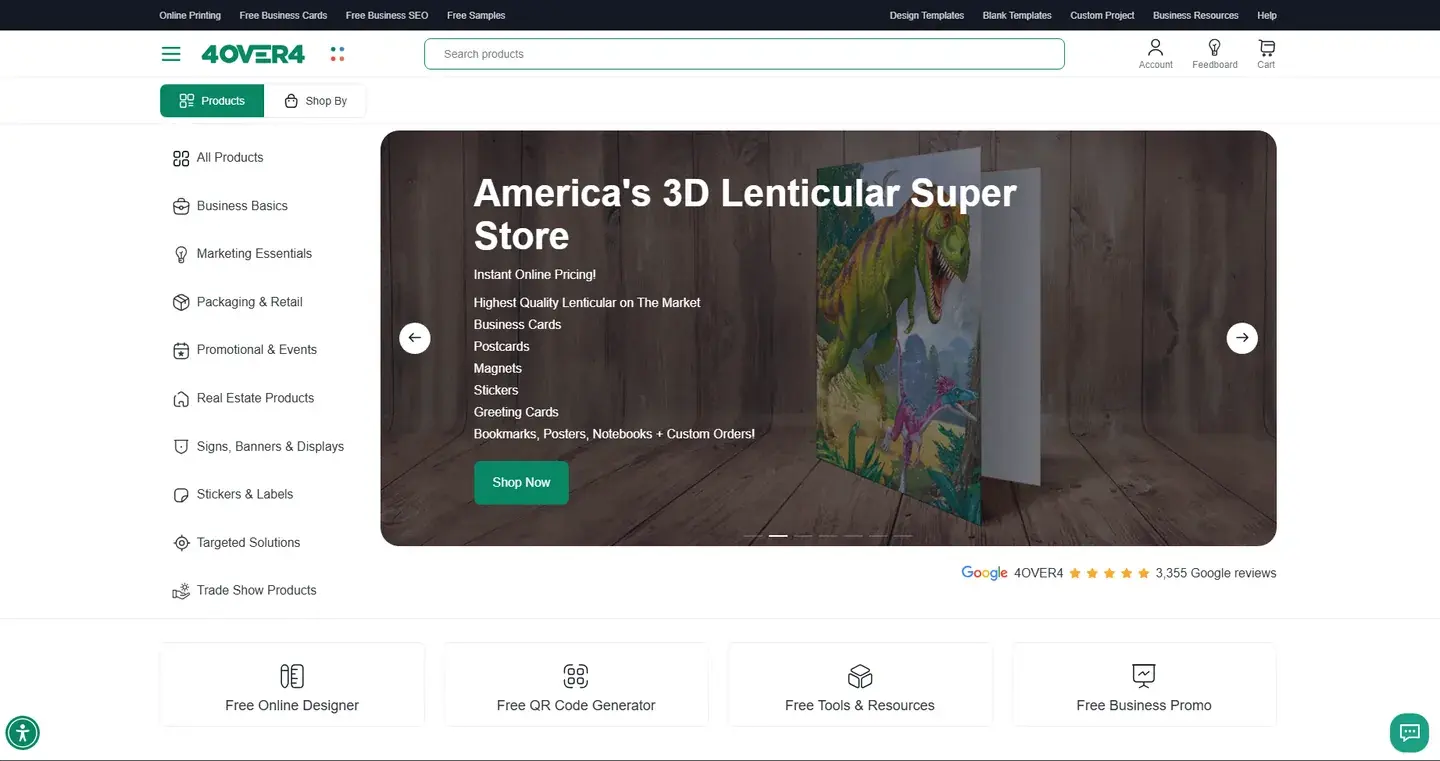
The same work also automated Adobe Illustrator (.ai) to SVG file conversion and added product recommendations for shoppers.
Keep Reading
Netbase works remotely as its offshore development partner; phase 1 brought CRM, messaging, HR, a knowledge base, work management and API integrations into one platform for agency customers.
Keep ReadingRelated services and solutions
 AI automation and agents that keep people in charge
Netbase provides AI automation and agent development for operations teams that want repetitive, multi-step work done by software while people keep approval over decisions that matter. We combine rule-based automation with AI where it adds value, build in human approval, and measure return against a baseline.
Learn More
 Enterprise AI agent platform: run AI agents with approvals, audit logs and cost limits
An enterprise AI agent platform is a governed runtime where AI agents plan and carry out multi-step work through approved tools, while approvals, audit logs, access rules and cost limits keep every action accountable. Netbase offers it as a forward-looking solution, built inside your own environment rather than licensed as a product.
Learn More Related insights

Start AI automation with one high-volume, checkable process, not a platform. Measure the baseline first, automate the predictable steps with rules, add AI only where inputs are unstructured, keep people approving money, customer-facing and irreversible actions, and judge success by time, errors and cost per case against that baseline, with security designed in.

AI agents vs workflow automation: how to choose for each task
Use rule-based workflow automation when the steps are known and the inputs are structured: it is cheaper, predictable and easy to audit. Use an AI agent only when the steps genuinely vary and the input needs reading or judgement, and fence it with narrow permissions and human approval. Most operations need both, chosen step by step.

An AI readiness assessment framework for enterprises
An AI readiness assessment scores six dimensions (strategy and use cases, data, technology and integration, people and skills, governance and risk, operations and measurement) on a four-level maturity scale. The lowest score, not the average, decides what to do next: fix the weakest dimension before scaling any AI use case beyond a supervised pilot.

Security and human approval for AI agents: the controls to build before an agent acts
Secure an AI agent by giving it its own identity with least-privilege tools, treating every email, document and web page it reads as untrusted, and enforcing human approval outside the model for money, customer messages, deletions and other irreversible actions. Log every tool call, test against injection before launch, and keep a stop switch.
Work with Netbase remotely
Every Netbase engagement is delivered remotely, so clients in any country and any industry can work with us; Netbase has worked with clients in 80 countries. Contracts and invoices are issued by Netbase JSC, and payment is made by bank transfer to Netbase JSC's company account or PayPal Business. Talk to the CEO, Huy Nguyen (David), on WhatsApp or by email.
Discuss a project
Netbase JSC helps organizations design, build, modernize, and operate digital products and AI-enabled business systems.project@netbasejsc.com
+84 937 869 689
91 Nguyen Chi Thanh, Dong Da, Hanoi, Vietnam
Get in touch
Tell us what you want to build, modernize, or operate.