

AI-assisted cloud migration with a cut-over plan and a way back
Netbase provides cloud migration services for companies running business applications on ageing servers or hosting to move them to AWS, Google Cloud, DigitalOcean or Cloudflare without losing data or control. AI speeds up the code and dependency assessment; every migration still has an inventory, a rehearsed cut-over, cost controls from day one and a tested rollback point.
Book a solution review View relevant workReviewed by David (CEO) · Updated 17 Sep 2026

Is your application stuck on a server nobody wants to touch? Book a solution review.
What cloud migration includes
A cloud migration is a move, not a rebuild. The goal is to get each application onto a supported, secure and affordable home with as little risk as possible, and to modernize it where the move makes that cheap. The service belongs to our Cloud & DevOps family.
Included
- Inventory of applications, data, dependencies and costs
- A migration strategy per application
- Target environments written as code
- Data migration with reconciliation
- Rehearsed cut-over, rollback plan and hypercare
- Cost tagging, budgets and rightsizing after the move
Not included
- Cloud provider bills and third-party licences
- Office IT, email and laptop migration
- Hardware disposal and data-centre exit contracts
- Guaranteed uptime figures
- Round-the-clock on-site staff

When to use it, and when another route fits
Migration fits when the place an application runs has become the risk or the cost problem.
Good fit
- Servers or hosting at end of support
- Backups and recovery nobody has tested
- Hosting costs that grow faster than usage
- A data-centre or hosting contract ending soon
Another route fits better
- An application that is itself end of life: replace or rebuild it first
- A healthy cloud setup that only needs operating: managed cloud fits
- A new product with nothing to move: start with platform engineering
- No one on your side who can approve a cut-over window
Other routes are listed in the services directory.
Outcomes and buyer jobs
Teams hire cloud migration to:
Applications move to maintained platforms before an outage or a security issue forces the move.
Every record is reconciled, and the cut-over has been rehearsed before the real one.
A tested rollback point means a failed cut-over costs hours, not weeks.
Resources are tagged and budgeted from the first day in the cloud.
Capability modules and deliverables
Application and data inventory, dependency map, risks and current costs
A migration strategy per application with the reason and the order of moves
Accounts, networks, access and security baseline written as code
Environment builds, data transfer scripts and reconciliation reports
Runbook, rehearsal results, go or no-go criteria and a rollback plan
Cost tags, budgets, rightsizing notes, runbooks and a hypercare period
We classify each application using the migration strategies AWS documents as the 7 Rs: retire, retain, rehost, relocate, repurchase, replatform, and refactor or re-architect. Most moves are a rehost or a replatform, with deeper modernization after the application runs safely in the cloud.
Delivery process, team and governance
Every migration runs on our six-step delivery lifecycle:
-
Discovery and strategic alignment
The inventory, the business constraints and the cut-over windows you can accept.
-
Team assembly and architecture planning
Cloud engineers, developers and QA, with the target design and migration order agreed.
-
Agile execution with outcome-based milestones
Applications move in waves, lowest risk first.
-
Modular and productized components
Proven environment templates and scripts are reused.
-
Training, rollout and optimization
Your team learns the new environment, and costs are tuned after the move.
-
Ongoing support and co-building
Our team supports you Monday to Saturday, with Sunday off.
Teams range from 3 to 30 people, and work typically starts within one to two weeks after discovery. Waves are planned in Agile sprints and run remote-first from Hanoi, with cut-over windows agreed in your time zone. Governance includes weekly reviews, KPI dashboards and a dedicated account manager and project manager. Security is designed into every wave: TLS in transit and AES at rest, role-based access control, MFA for admin dashboards, vulnerability scanning and disaster recovery planning. NDAs, DPAs and SLAs are available on request.
AI before, during and after the move
AI shortens the slowest parts of a migration and opens options once the application runs in the cloud. Engineers verify every finding, and no AI tool gets production access.
In our migration practice:
-
Code and configuration assessment
AI reads old code and settings to find hard-coded paths, outdated libraries and hidden dependencies.
-
Runbook drafting
First drafts of wave plans and cut-over steps, reviewed by the migration lead.
-
Rehearsal log analysis
Errors from test cut-overs summarised so fixes land before the real one.
-
Data reconciliation checks
Anomalies between source and target records flagged for review.
What the move makes possible for you, often the first step of an AI transformation:
- Managed AI services. Once data sits in the cloud, provider AI services can read documents, power search or forecast demand.
- AI-ready data. Migrated databases and files organised so later analytics and AI work start from clean, owned sources.
- AI-assisted monitoring. Anomaly alerts on traffic, errors and spend in the new environment.
AI in this service
Where AI already runs in delivered work, and where it is offered as a growth capability.
-
In delivered work
Recommendation engine
Delivered for 4over4's online printing store, not in a migration project.
-
Available capability
AI-ready data and managed AI services after a cloud move
Machine learning, NLP and generative AI that Netbase offers; not yet tied to a published cloud migration case.
Engagement models and commercial variables
Most Netbase projects are delivered on fixed-price contracts agreed after discovery, and a migration suits that well: the inventory fixes the scope before the move starts. Milestone-based, monthly team retainer and KPI-linked terms are also offered. After the move, on-demand support or fully managed delivery keeps the environment running; a dedicated team is a secondary option for a long, multi-application programme. We do not publish rate cards.
What moves effort and cost: the number of applications and environments, data volume, how long the business can pause, compliance obligations and how much modernization is done during the move. For custom work, you own the IP created for you, including the infrastructure code.
Technology as an implementation choice
Netbase uses AWS, Google Cloud, DigitalOcean and Cloudflare. We name them as providers we work with; no cloud partner tier or cloud certification is claimed. We recommend that cloud accounts stay in your name, with Netbase given role-based access. Tooling for infrastructure as code, pipelines and monitoring is on our cloud and DevOps stack page. Moving a product onto a subscription model at the same time? The SaaS product accelerator shows the platform pattern we start from.
Technologies we build with



Industry applications
Retail and e-commerce. Stores cannot stop selling for long. Migrations are planned around sales peaks, with the cut-over in the quietest window and search URLs kept intact.
Print and SaaS platforms. Large artwork files, rendering jobs and many tenants make storage and data transfer the hardest part of the move.
 Retail and ecommerce: AI-enabled storefronts, marketplaces and order operations
Netbase helps retailers and online merchants modernize storefronts, marketplaces and order operations, and adds AI where it pays: search, recommendations, catalog enrichment and order exceptions, with your team approving what shoppers see. Results are published: Geo-Tek IT Solutions grew revenue 36% in the first quarter after its new ecommerce platform launched, and an EU fashion marketplace grew GMV 47%.
Learn More
Proof: migrations and platforms Netbase runs
Evidence maturity: cloud migration is a growth capability. The records below are a platform migration and a platform Netbase operates; neither is published as a cloud migration case.
Netztech. Netbase moved Netztech's store from Magento 1 to Magento 2 Commerce in 35 working days, including an extension migration of 11 modules covering installation, configuration, customization and data transfer. The same discipline of inventory, rehearsal and cut-over applies to a cloud move. Read the Netztech case.
Printcart (Netbase Business Division). Printcart is the web-to-print and print-on-demand platform Netbase builds, hosts and operates, serving 2000+ stores. See the Printcart record.
More projects are in our work.
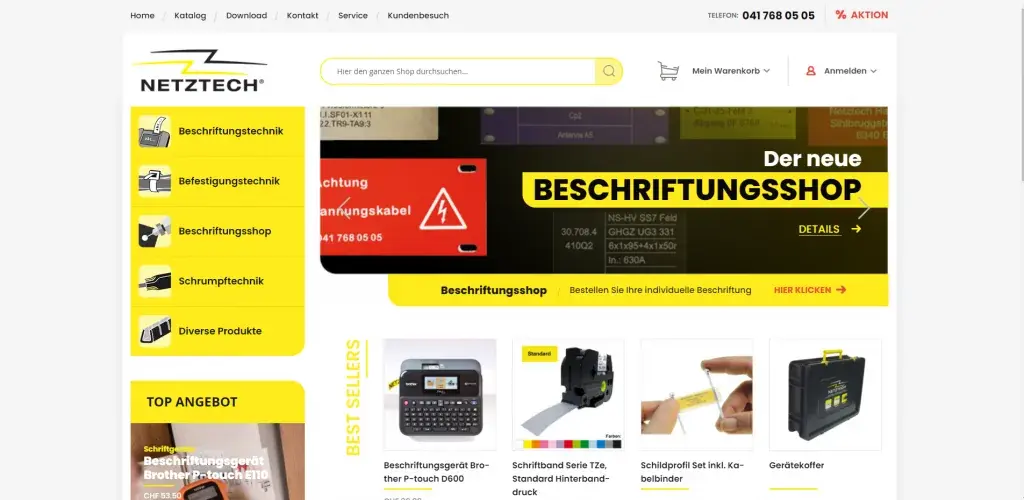
Netbase migrated all store data, rebuilt 11 extensions, applied a new design and finished in 35 working days.
Keep Reading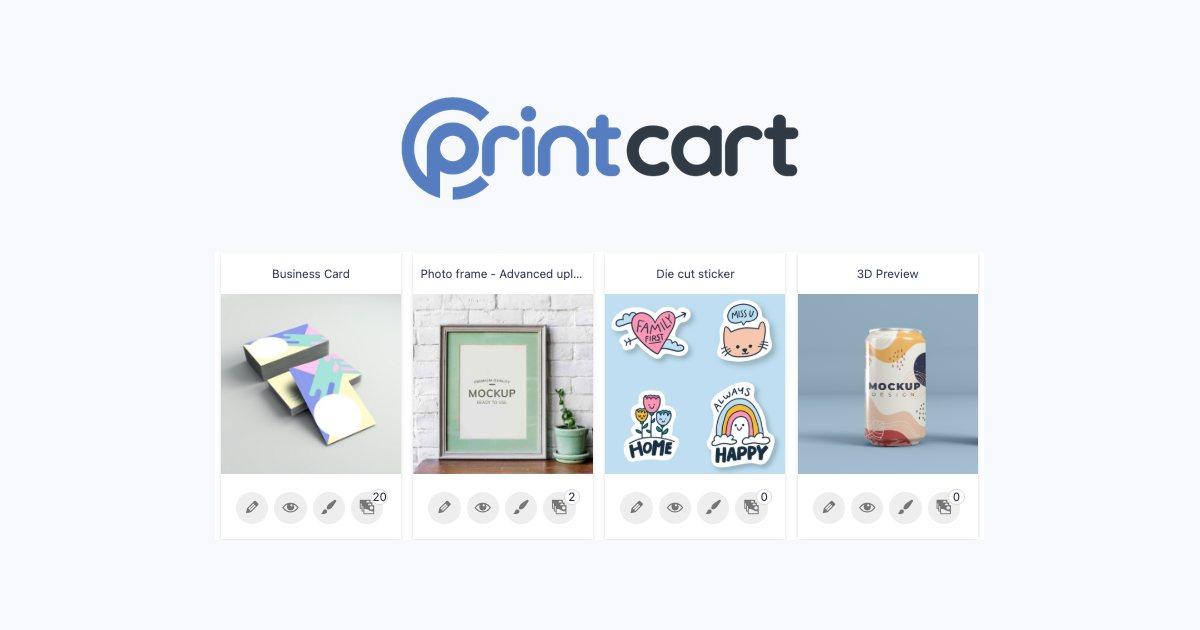
It covers scope, stack and operation; no performance metric is claimed.
Keep ReadingBuyer FAQ
It depends on the number of applications, data volume and cut-over windows. The assessment ends with a wave plan and dates.
Usually a short, planned window. We rehearse the cut-over first and agree the window with you.
We roll back to the agreed point. The rollback is tested before the real cut-over.
We recommend they stay in your name, with Netbase given role-based access.
No. AI tools work on code, configuration and logs in review environments; production changes are made by engineers following the rehearsed runbook.
Not by surprise. Resources are tagged and budgeted, and we review costs after the move.
A hypercare period, then support Monday to Saturday, with Sunday off. SLAs are agreed on request.
Related solutions
 SaaS product accelerator: launch an AI-ready SaaS on proven Netbase modules
A SaaS product accelerator is a set of reusable Netbase modules for accounts, billing, roles and integrations that helps founders and product teams launch subscription software faster, with room for in-product AI from the first release. Reusing these modules can cut development time by up to 60%, and the approach is proven on Printcart, Netbase's own web-to-print SaaS.
Learn More
Service owner and next step
This service is owned by David, Netbase's Chairman, founder and CEO, and maintained by the Netbase Editorial Team. Ready to move without betting the business on one weekend? Book a solution review, or view relevant work first.
Discuss a project
Netbase JSC helps organizations design, build, modernize, and operate digital products and AI-enabled business systems.+84 937 869 689
91 Nguyen Chi Thanh, Dong Da, Hanoi, Vietnam
Get in touch
Tell us what you want to build, modernize, or operate.