

AI reorder reminders for B2B print portals: predicting when business cards, labels and stationery run out
A B2B print portal can predict when a client location will run out of business cards, labels or stationery from its own order intervals, quantities and supplier lead times, then send a reminder or a prefilled reorder that an approver confirms. Netbase builds this as a rule first and adds a model only where order history supports it.
Book a solution review See the related solutionBy Huy Nguyen (David), Founder & CEO · Updated · 11 min read

This guide is for owners, product managers and account managers of print businesses that run closed portals for corporate clients. It sits under the web-to-print platform guide and assumes the portal is built or extended through e-commerce development.
In this guide
- Why do B2B print clients run out before they reorder?
- Which signals predict when an account will run out?
- Fixed interval, per-location interval or a model?
- Who approves what: system, client approver or printer?
- Is a reorder reminder a service message or marketing?
- How to build reorder reminders into a B2B print portal
- Where AI fits
- What delivery record exists, and what does not?
- Alternatives: how a printer can catch reorders before stock runs out
- When should a B2B print portal not use AI reorder prediction?
- What are the limits of this guide?
- Frequently asked questions
- Next step
Why do B2B print clients run out before they reorder?
Corporate print is consumed quietly. Business cards run out before a trade show; shipping labels run out on a busy dispatch day. Nobody owns the stock level, so the reorder arrives as a rush job or goes to whichever printer answers first.
A B2B portal already holds the data that could prevent this: who ordered what, for which location, in what quantity and how often. A reorder reminder turns that history into a prompt sent before the expected run-out date, so the client reorders on normal lead time.
One reminder guide suggests sending the message a few days before the expected run-out date, allowing for shipping time. In B2B print the margin must also cover proof approval and the client's internal sign-off.
Which signals predict when an account will run out?
Run-out prediction is only as good as the signals the portal records, listed here by reliability.
| Signal | Where it comes from | Reliability | Watch out for |
|---|---|---|---|
| Interval between past orders of the same item and location | Portal order history | High after three or more orders | Bulk orders placed early to use a budget |
| Quantity per order and pack size | Order lines and product setup | High | A change of pack size resets the pattern |
| Approval and production lead time | Order timestamps, proof approvals, shipping | High | Holiday shutdowns and proof rounds |
| Seasonal and event runs | Order dates over more than one year | Medium | One-off campaigns that will not repeat |
| Headcount changes and new starters | Employee or cost-centre records in the portal | Medium | Personal items such as name cards depend on people, not time |
| Rebrand or template change | Template versions | Decisive | A reminder for a retired design is worse than none |
Personal items behave differently from shared items. Business cards are per person, so a new starter, a promotion or a phone number change triggers an order regardless of the interval. Shared items such as labels, envelopes and letterheads follow consumption by a location, so the interval per location is the better signal.
Fixed interval, per-location interval or a model?
The right method depends on how much order history the portal holds for each item and location, not on how advanced the method sounds. A trade-press guide on reorder prediction makes the same point: the core is the median interval between past orders, and effective reorder automation does not require expensive AI.
| Method | Needs | Strength and risk | Choose it when |
|---|---|---|---|
| Fixed interval per product, set by the printer | Product setup only | Works from the first order; ignores each client's pace | New portals or accounts with little history |
| Per-location interval (median of past orders) | Two or more orders per item and location | Fits each client's real pace; breaks when pack sizes change | Most established portal accounts |
| Model combining interval, quantity, seasonality, headcount and lead time | Several years of clean order history | Handles seasonal runs; opaque if nobody can explain a prediction | Large portals where interval rules visibly miss |
A practical rule: start every product on a fixed interval, switch a location to its own interval once it has enough orders, and keep a model for accounts where rules miss.
Who approves what: system, client approver or printer?
A reminder is low risk; an order placed without a person is not.
-
Calculate the expected run-out date
- Owner
- System
- Why
- A repeatable calculation from recorded data
-
Send a reminder to the location contact
- Owner
- System, within rules
- Why
- It is a prompt, not a commitment
-
Prefill a reorder with the last approved design and quantity
- Owner
- System
- Why
- Saves the buyer re-entering a known order
-
Change the quantity, design or delivery address
- Owner
- Client buyer
- Why
- Only the client knows what changed
-
Approve spend against a cost centre
- Owner
- Client approver
- Why
- The portal's approval chain already owns this
-
Release the job to production
- Owner
- Printer, after approval and proof check
- Why
- A printed run cannot be undone
A print studio's guide to AI in print lists a reorder trigger for repeat customers as a light-review automation and says AI should never charge a card or push a file to press without a person signing off. The same split applies here: the system may suggest and prefill, people commit.
Is a reorder reminder a service message or marketing?
It depends on what the message says and who receives it. A reminder that only tells a location contact that their usual order is due, with a link to the prefilled reorder, reads as account service. A reminder that adds offers, upsells or new products starts to look like marketing, and marketing rules then apply.
In the UK, the ICO's guidance says a business may email any corporate body, but sole traders are treated as individuals who must have consented or bought a similar product before. A portal serving small firms as well as large companies should therefore store a contact type and a reminder preference per user, and give every user a way to switch reminders off.
How to build reorder reminders into a B2B print portal
-
Clean the order history
Tie every past order line to an item, a location and a cost centre; merge duplicate products and record pack sizes.
-
Record lead time
Store proof approval, production and shipping times per product, so a reminder leaves enough margin.
-
Start with fixed intervals
Give every reorderable product a default reminder period that the printer can edit.
-
Switch to per-location intervals
Once a location has enough orders of the same item, use its median interval instead of the default, and show the basis of each prediction to account managers.
-
Send the reminder with a prefilled reorder
Link to the last approved design and quantity, check the template is still current, and route the order through the client's normal approval chain.
-
Add a model only where rules miss
For large accounts with seasonal or event-driven runs, test a model against the interval rule on past data before switching.
-
Log every reminder and outcome
Record sent, opened, reordered, snoozed or switched off, so intervals and models are tuned from evidence, not guesses.
Where AI fits
AI's job in this workflow is estimation and drafting: predicting run-out dates for accounts with seasonal or irregular patterns, spotting a location whose pace has changed, and drafting the reminder text from the order record. Engineers still own the order data, the interval rules, the approval chain, the template version check and the log, because those must be deterministic and testable. Netbase works with the major commercial and open-source AI tools and models, chosen per project.
How an AI assistant could then place the reorder itself is covered in agent-ready print ordering.
- In delivered work
4over4 recommendation engine
For 4over4, Netbase delivered a recommendation engine that suggests products from browsing history and previous purchases; it is the closest delivered AI to reorder prediction, and it is a recommendation feature, not a reminder system.
- Available capability
Run-out prediction on portal order data
Per-location intervals and models for seasonal accounts, checked against the interval rule before use; not yet tied to a published reorder-prediction case.
What delivery record exists, and what does not?
Netbase has delivered more than 50 custom web-to-print platforms across apparel, packaging, signage, promotional merchandise and corporate B2B portals, and printing and packaging is one of the industries named in its published record. On client print stores, Netbase has delivered online designers for business cards, stickers and labels, the items reorder reminders are usually built around.
For ACT Printing, a custom apparel and print shop, B2B accounts, proofs and reorders are scoped as a second phase after a delivered guided ordering flow; that phase is planned, not delivered. Beyond 4over4, Netbase has delivered AI projects for clients who are not named, including retrieval-augmented knowledge assistants and document AI.
What does not exist yet: Netbase has no published delivery of a reorder-prediction or reorder-reminder system and no published figures for reminder response or repeat-order lift. The signal table and the decision rule above are a starting framework, not a measured result. Most Netbase projects are delivered on fixed-price contracts, so the data clean-up, the rules and any model are scoped before the build starts.
Where a printer wants the portal itself off the shelf, Web2Print Solutions, a Netbase brand, offers a B2B print portal with organisations, approval chains, cost centres and contract pricing, which is where prefilled reorders are approved.
Alternatives: how a printer can catch reorders before stock runs out
| Approach | Strength | Risk | Choose it when |
|---|---|---|---|
| Account manager calendar | Personal, no build needed | Depends on one person's memory | A handful of large accounts |
| Client-set reminder per item | The client decides the timing | Most users never set one | Clients with a central print buyer |
| Portal reminders on fixed or per-location intervals | Covers every account consistently | Needs clean order history | Most B2B portals with repeat items |
| Model-based run-out prediction | Handles seasonal and irregular accounts | Needs years of data and explanation for account managers | Large portals where interval rules visibly miss |
| Vendor-managed stock with scheduled deliveries | No run-outs for agreed items | Ties up stock and storage | Labels or forms with steady, contracted volumes |
Selection criteria: how many accounts and locations you serve, how many orders of the same item each location has, whether items are personal or shared, and whether clients already approve orders through the portal.
When should a B2B print portal not use AI reorder prediction?
Do not add a model before the order history is clean, because duplicate products and missing locations make every prediction wrong with confidence. Keep reminders away from one-off campaign print, items with a pending rebrand and accounts that order through a central buyer on a fixed schedule. No AI step may place, approve or release an order on its own.
What are the limits of this guide?
- It covers reminders and prefilled reorders inside a portal, not stock management at the printer.
- Marketing rules differ by country; the ICO guidance applies to the UK, and other markets need their own check. The B2B print portal requirements guide covers the wider portal feature set.
Plan the next step with a Netbase consultant
Frequently asked questions
A fixed reminder period works from the first order. A per-location interval needs at least two or three orders of the same item for that location, and a model needs several years of clean history across many accounts.
No. The reminder can prefill the last approved design and quantity, but the client buyer confirms it, the client's approver signs off the spend, and the printer releases it to production.
Yes. Business cards are personal, so new starters, promotions and contact changes drive orders, while labels and letterheads follow how fast a location uses them, so an interval per location fits better.
Next step
Send us an export of a year of portal orders, with items, locations and dates, and we will book a solution review to decide which items suit reminders, which method fits each account and where AI would help. The web-to-print solution page covers the platform, and the printing and packaging page covers the industry view.
Work behind this guide
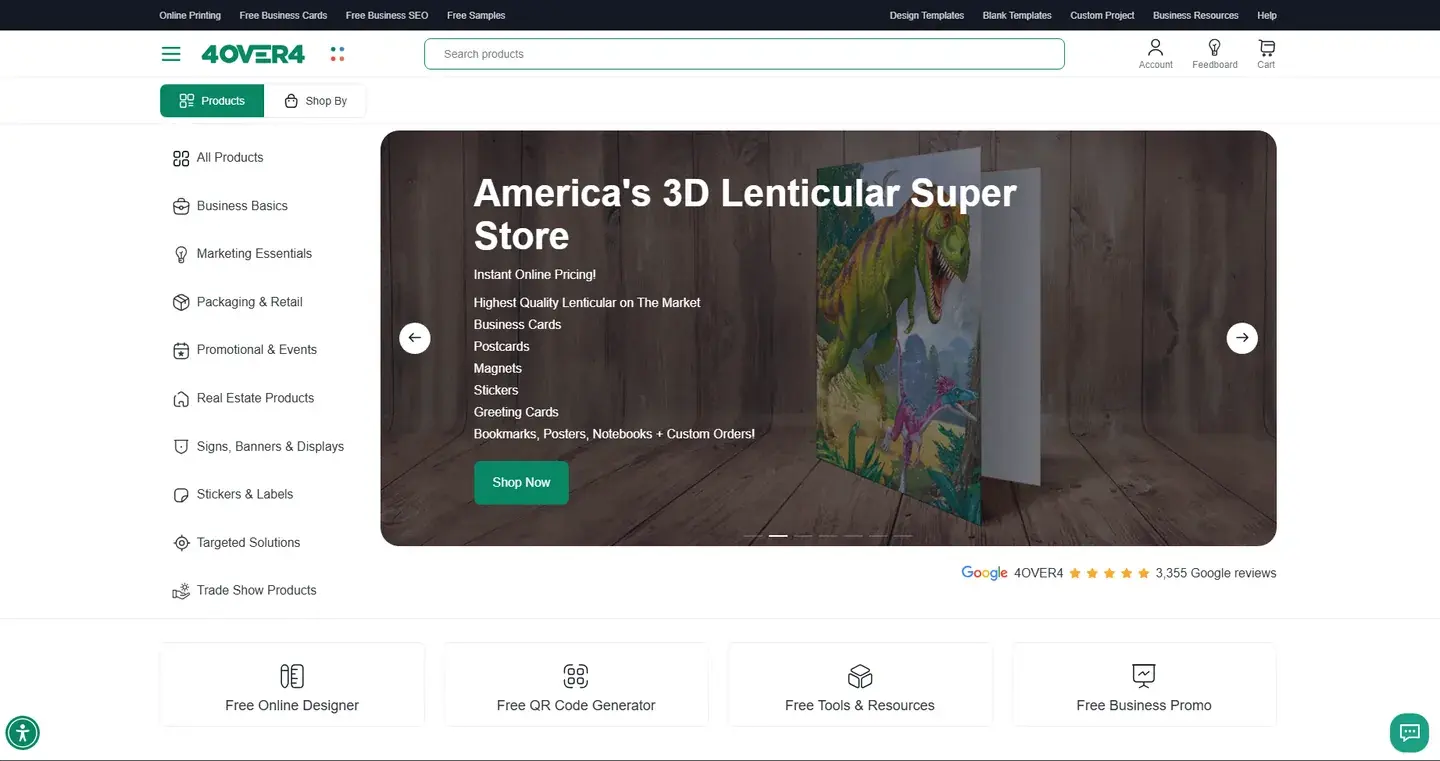
4over4, a US online printing store, reported 82% higher e-commerce revenue within six months after Netbase JSC remotely reworked its checkout, search and navigation.
Keep Reading
ACT Printing's customers order printed hoodies, tees and sweatshirts in several colours, sizes and print locations in one guided flow, and every order reaches production as structured data with its artwork. Netbase delivered the flow for the custom apparel and print shop remotely through its CMSmart and Printcart divisions; the client's country is not published.
Keep ReadingRelated services and solutions
 AI-enabled ecommerce development for merchants who outgrew templates
Netbase provides custom ecommerce development for merchants that have outgrown templates, to turn traffic into orders with less manual work, using AI for search, recommendations and catalog work where it pays. We build on WooCommerce, Magento 2, Laravel and headless stacks; 4over4, whose store gained an AI recommendation engine, reported 82% more revenue within six months.
Learn More
 Web-to-print platform with AI design assistance, from online design to a print-ready order
A web-to-print platform is an online ordering, design and prepress workflow that helps print businesses sell custom products: customers configure, design and approve their order online, AI can suggest layouts and catch artwork problems, and production receives a print-ready file. Netbase has delivered 50+ custom web-to-print platforms across apparel, packaging, signage, promotional merchandise and corporate B2B portals.
Learn More Related insights

A web-to-print implementation succeeds when ten things are settled before launch: products and pricing, the online designer, previews, print-ready files, checkout, speed, integrations, ownership, accessibility and a recorded baseline. This checklist turns each one into a decision with an owner and a test, drawn from Netbase's delivered print projects.

Web-to-print software: architecture, AI design assistance, build vs buy, and ROI
Web-to-print software must do four jobs: sell print products with rule-based pricing, let buyers design online, turn every design into a print-ready file, and pass the order to your MIS or ERP. AI assists design and repairs rough uploads. Buy when a product fits your workflow, build when the workflow is your edge, and measure ROI against a baseline.

Web-to-print customer stories: what print businesses asked for, and where AI fits
Print businesses rarely need a whole new platform. Customers of Netbase's CMSmart division, from label and invitation printers to a Singapore large-format printer, mostly started with a packaged print store or online designer and asked for the few changes their orders depended on. This guide groups those stories by use case and shows where AI fits today.

Online design editor for print: buy it, extend it or build it
Buy a proven online design editor when your products are standard and your advantage lies elsewhere. Extend a bought editor when you need a few tools it lacks, such as a page preview bar or a background picker. Build your own only when the editor itself is why buyers choose you and you can fund its upkeep for years.
Work with Netbase remotely
Every Netbase engagement is delivered remotely, so clients in any country and any industry can work with us; Netbase has worked with clients in 80 countries. Contracts and invoices are issued by Netbase JSC, and payment is made by bank transfer to Netbase JSC's company account or PayPal Business. Talk to the CEO, Huy Nguyen (David), on WhatsApp or by email.
Discuss a project
Netbase JSC helps organizations design, build, modernize, and operate digital products and AI-enabled business systems.project@netbasejsc.com
+84 937 869 689
91 Nguyen Chi Thanh, Dong Da, Hanoi, Vietnam
Get in touch
Tell us what you want to build, modernize, or operate.