

Application Portfolio Rationalization: Retire, Merge, Keep or Modernize
Application portfolio rationalization decides each application's future from evidence: score it on business need and technical health, test whether another application already does the same job, then retire, merge, keep or modernize it. This Netbase guide gives the scoring sheet, the decision rules and the order of work.
Book a solution review See application maintenance and supportBy Netbase Consulting and Transformation Desk · Reviewed by David (CEO) · Updated · 11 min read

It is for CIOs, IT managers and operations leads at mid-market companies that run more business applications than anyone planned, often after years of departmental purchases, acquisitions and changes of vendor. Netbase moves ageing systems onto supported technology through legacy modernization and keeps live software running through application maintenance and support; rationalization decides which applications deserve either.
In this guide
- Why rationalize a portfolio instead of fixing applications one by one?
- What goes on the portfolio scoring sheet?
- How do the scores turn into retire, merge, keep or modernize?
- Choosing a merge, retire or modernize route
- Running a rationalization round
- When should you not run a portfolio rationalization?
- Where AI fits
- What delivery record exists, and what does not
- Alternatives: other ways to run the decision and how to choose
- Limits of this guide
- Frequently asked questions
- Next step
Why rationalize a portfolio instead of fixing applications one by one?
Rationalizing a portfolio matters because maintenance and modernization money is spread across every application by default. Without a portfolio view, a company keeps paying to patch, host and support tools that few people use, while the systems the business depends on wait in the same queue.
Looking at one application at a time also hides overlap. Two departments may each run a ticketing tool, a reporting database or a customer portal that does the same job for different users. Neither looks wasteful on its own; together they double licences, integrations, upgrades and security work.
The AWS application portfolio assessment guide separates portfolio-level assessment (inventory, prioritization, a high-level strategy for each application) from application-level assessment (detailed discovery of one system). This guide covers the portfolio level; the legacy system assessment checklist covers the deep dive on each application you decide to modernize.
What goes on the portfolio scoring sheet?
The scoring sheet is one row per application and one column per criterion, each scored 1 to 5 from evidence, not memory. Four columns measure need, four measure health, and two more columns record overlap and the cost of waiting.
| Column | Group | Score 1 means | Score 5 means | Evidence source |
|---|---|---|---|---|
| Business criticality | Need | Nothing important stops without it | Revenue or operations stop without it | Process owners, incident history |
| Active use | Need | No real use across a full business cycle | Daily use by many people or processes | Usage logs, key actions, not just logins |
| Unique capability | Need | Another application does the same job | No other system can do it | Capability map |
| Data and integration role | Need | Holds no data others rely on | System of record feeding other systems | Integration inventory |
| Code and architecture condition | Health | Fragile, frequent incidents, no tests | Healthy, tested, easy to change | Repository, incident log |
| Platform support | Health | Runtime or vendor out of support | Fully supported, skills available | Vendor support calendars |
| Security and compliance posture | Health | Known gaps, weak controls | Patched, controlled, audited | Scan results, access reviews |
| Run cost against value | Health | Cost far above the value delivered | Cost modest for the value | Licences, hosting, support hours |
The Pretius scoring model uses a similar split, rolling usage and business value into a need score and condition, support, cost and regulatory exposure into a health score. Weighting is a local choice; agree it before scoring, not after you see the results.
Platform support is often the column that moves fastest. An application on a runtime past its end of life drops to a 1 on that date, which is why the end-of-life PHP, .NET and Java guide is a direct input to this sheet.
Two extra columns sit beside the scores:
- Overlap with. The name of any other application that serves the same capability for the same or similar users, or "none".
- Cost of delay. What gets worse each quarter the decision waits: a support deadline, a renewal date, a security finding or a blocked business change.
How do the scores turn into retire, merge, keep or modernize?
The decision follows from two averages, need and health, plus the overlap column. Use the middle of the scale as the dividing line on both axes, and let overlap override the grid when two applications do the same job.
| Need | Health | Overlap | Disposition |
|---|---|---|---|
| Low | Any | Any | Retire, or keep at minimum cost if the law requires the data |
| High | Any | Yes, with a stronger peer | Merge into the peer |
| High | High | None | Keep, with a review trigger |
| High | Low | None | Modernize |
Write tie-break rules down before scoring starts, so borderline rows are decided the same way:
- A score on the line counts as low on health and high on need. That pushes borderline systems towards attention, not neglect.
- A system of record is never retired on usage alone. Low use of an archive or ledger may still be essential; check retention duties first.
- When two applications overlap, the survivor is the one with the higher health score, unless the other holds the system of record and moving the data costs more than the health gap.
- A 1 on platform support or security forces a decision this quarter, whatever the averages say.
Mad Devs makes a point worth repeating in its application rationalization decision framework: keeping an application is a valid outcome, but record the rationale, owner, known risk and review trigger so that keep does not become indefinite neglect.
Choosing a merge, retire or modernize route
| Criterion | Retire | Merge | Modernize |
|---|---|---|---|
| Main trigger | Low need | Overlap with a stronger peer | High need, poor health |
| Main risk | Hidden users and reports found late | Data migration and process change for one user group | Scope growth and a long parallel run |
| First evidence to collect | Who used it in the last full cycle | Feature gap between the two applications | Assessment of code, platform and data |
| Data handling | Archive or move, then switch off | Migrate into the surviving system | Keep, clean and possibly restructure |
| Choose it when | Its job is gone or covered elsewhere | One application already does most of the other's job | The capability is core and its problems are technical |
The AWS migration strategies add retain, rehost, relocate, repurchase, replatform and refactor beside retire; for a modernize row, pick among them in the application-level assessment, not on the portfolio sheet.
Running a rationalization round
-
Build the inventory
List every application, including spreadsheets with macros and departmental tools, with an owner, users, integrations and annual run cost.
-
Agree the anchors and weights
Write what 1, 3 and 5 mean for each column and how ties are broken, and get the business owners to sign off.
-
Collect evidence
Usage logs, incident history, vendor support dates, scan results and licence invoices. Business owners score need; engineers score health.
-
Score and test for overlap
Fill the sheet, then group applications by capability and mark every pair that serves the same job.
-
Review the dispositions
One session per business area to challenge the scores, not to reopen the criteria.
-
Sequence the work
Retire and merge first: they reduce support and security work and free budget for the modernize rows.
-
Retire safely
Confirm hidden users and reports, export or archive data under retention rules, remove integrations, switch off and keep a rollback window.
-
Re-score on a trigger
Repeat when a support date, acquisition or major business change arrives, and at least once a year.
Before retiring anything, check that the documentation needed to archive and later read its data exists; the minimum documentation set lists what a maintained application should already have.
When should you not run a portfolio rationalization?
Do not run a full rationalization when the portfolio is small enough that one person knows every application, its users and its cost; a short list and a conversation will do. Skip it, too, when a single urgent risk, such as an unsupported platform holding customer data, needs action this month.
It also fails when nobody can make the decisions stick. If business owners cannot retire a tool their team likes, the scoring sheet becomes a report nobody acts on. Secure a sponsor who can approve retirements before you collect evidence.
Where AI fits
AI helps with the inventory and the evidence, not the decision. A model can group applications by capability from their descriptions, flag likely overlaps for people to confirm, summarise incident and ticket history into a condition note and draft the first version of each row. Engineers and business owners still verify every score, decide every disposition and keep credentials and customer data out of prompts. Netbase works with the major commercial and open-source AI tools and models, chosen per project.
- Available capability
AI-assisted portfolio inventory under human review
Drafted rows and overlap flags are checked by people before scoring; not yet tied to a published rationalization case.
What delivery record exists, and what does not
Netbase runs, maintains and upgrades what it builds, remotely and alongside the client's in-house team, under an agreed support scope, with response targets set per contract. Engagement models include dedicated development teams, project-based development, on-demand support and fully managed delivery. Most Netbase projects are delivered on fixed-price contracts; milestone-based, monthly team retainer and KPI-linked models are also offered.
Every project starts with an investigation step for requirements and clarification before planning, and progress is tracked in Jira, Redmine, Trello or GitHub, where clients can check it at any time. Delivery teams combine business analysts, project managers, solution architects, developers, QA and UI/UX.
Netbase delivered the Netztech migration from Magento 1 to Magento 2; see the Netztech record. No portfolio size, number of retired applications, saving or other rationalization result is published, and none is claimed here.
Alternatives: other ways to run the decision and how to choose
- A spreadsheet scoring sheet, as above. Cheap and transparent. Choose it for a portfolio a small team can review in a few sessions; it relies on discipline to keep evidence current.
- An enterprise architecture or application portfolio management tool. Keeps the inventory live and links it to capabilities and costs. Choose it when the portfolio is large or changes often enough that a spreadsheet goes stale between rounds.
- A one-off external assessment. An outside team collects evidence and proposes dispositions. Choose it when internal owners disagree or lack time; insist that the scoring sheet and evidence are handed over so the next round can run without them.
For the wider sequence of process change, modernization and platform work, see the digital transformation and legacy modernization guide.
Limits of this guide
- The sheet is decision support. Scores rank applications; people still decide, especially where contracts, regulation or politics are involved.
- Retention and archiving duties vary by country and sector; check them with your compliance owner before retiring a system of record.
- The guide does not cover cloud migration wave planning, which needs application-level design.
Plan the next step with a Netbase consultant
Frequently asked questions
It is a structured review of every business application a company runs, deciding for each one whether to retire it, merge it into another application, keep it as it is or modernize it, based on scored evidence of business need and technical health.
Give each application a score from 1 to 5 on agreed criteria, grouped into need (criticality, use, unique capability, data role) and health (condition, platform support, security, cost against value). Business owners score need and engineers score health, both from evidence.
Retiring switches an application off because its job is no longer needed or is already covered. Merging moves an application's users, data and remaining functions into another application that serves the same capability, then retires the old one.
Re-score at least once a year and whenever a trigger arrives: a vendor support deadline, an acquisition, a security finding or a major business change. Between rounds, keep the inventory current.
Next step
If your company runs more applications than it can maintain well and you want a scored view of which to retire, merge, keep or modernize, book a solution review.
Work behind this guide
Rebelo, AG, an offset and digital printer in Portugal founded in 1983, lost orders because customers could not picture their designs on boxes and mugs.
Keep Reading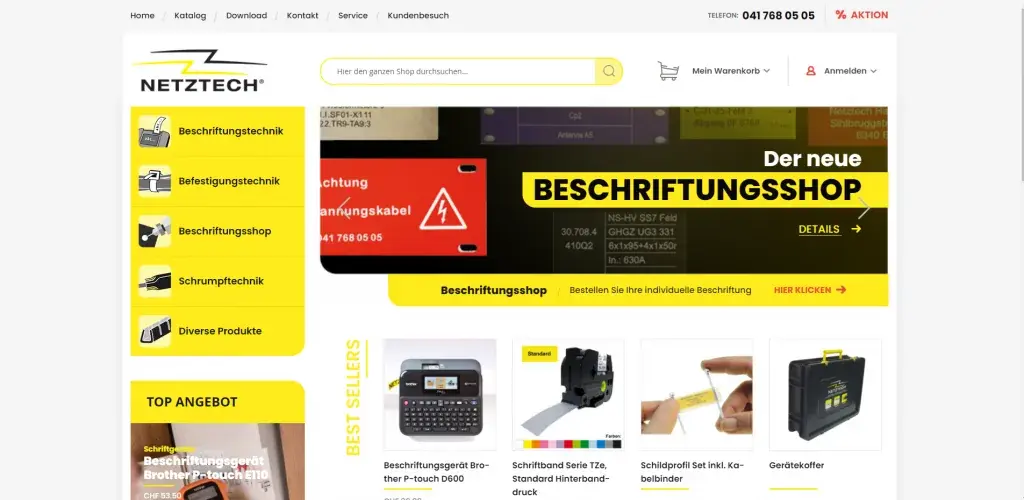
Netbase JSC delivered the migration remotely: all store data moved, 11 extensions rebuilt and a new design applied, finished in 35 working days.
Keep ReadingRelated services and solutions
 AI-assisted legacy modernization that keeps your orders and data safe
Netbase provides legacy application modernization services for commerce and operations teams to move ageing platforms, such as Magento 1 stores, onto supported technology without losing orders, customers or data. AI speeds up code analysis and data mapping; every migration runs on a written, human-approved plan with rehearsal, staged cut-over and rollback, proven by Netztech's move to Magento 2.
Learn More
 Application maintenance and support for live web, mobile and business software
Netbase maintains and supports software that is already live: web platforms, online stores, mobile apps, ERP and CRM systems and internal tools, including software another vendor built. We take it over after a code and environment review, then fix defects, keep frameworks current, monitor it, make small changes and report monthly, under service levels agreed in your contract.
Learn More  Multi-vendor marketplace development: vendors, catalog, payouts and AI search on one platform
A multi-vendor marketplace is a commerce platform where many independent sellers list, sell and get paid through one storefront. Netbase's marketplace solution covers vendor onboarding, a shared catalog, split payments and payouts, with AI for search, listing enrichment and fraud checks. For an EU fashion-tech marketplace, Netbase's work grew gross merchandise value (GMV) and cut vendor onboarding time.
Learn More Related insights

An application on an end-of-life PHP, .NET or Java version no longer gets security fixes, so its risk grows with every new vulnerability. Rank each application by version status and exposure, then choose an in-place upgrade, a long-term-support jump, a port or retirement. This Netbase guide gives the status table, risk table and path matrix.

Bug-Fix Workflow: Reproduction, Regression Tests and Release Cadence
A reliable bug-fix workflow reproduces each defect before anyone changes code, turns the reproduction into a failing regression test, fixes until that test passes, and ships the fix on a cadence set by severity: hotfix, next patch release or scheduled release. This Netbase guide gives the quality gates, a severity-to-cadence matrix and the trade-offs.

L1, L2 and L3 Support Tiers in an Outsourced Model: Who Owns What and When to Escalate
In an outsourced model, L1 handles first response and known fixes, L2 diagnoses application problems, and L3 changes code; most companies outsource L1 first and keep L3 with whoever releases the code. This Netbase guide gives a responsibility matrix, written escalation triggers and four ways to split the tiers with a partner.
Work with Netbase remotely
Every Netbase engagement is delivered remotely, so clients in any country and any industry can work with us; Netbase has worked with clients in 80 countries. Contracts and invoices are issued by Netbase JSC, and payment is made by bank transfer to Netbase JSC's company account or PayPal Business. Talk to the CEO, Huy Nguyen (David), on WhatsApp or by email.
Discuss a project
Netbase JSC helps organizations design, build, modernize, and operate digital products and AI-enabled business systems.project@netbasejsc.com
+84 937 869 689
91 Nguyen Chi Thanh, Dong Da, Hanoi, Vietnam
Get in touch
Tell us what you want to build, modernize, or operate.