

End-of-Life PHP, .NET and Java Versions: Risk Table and Upgrade Paths
An application on an end-of-life PHP, .NET or Java version no longer gets security fixes, so its risk grows with every new vulnerability. Rank each application by version status and exposure, then choose an in-place upgrade, a long-term-support jump, a port or retirement. This Netbase guide gives the status table, risk table and path matrix.
Book a solution review See application maintenance and supportBy Netbase Delivery and Quality Desk · Reviewed by David (CEO) · Updated · 10 min read

It is for IT managers, CTOs and product owners who run applications on mixed runtimes and need an upgrade order they can fund. Netbase moves ageing applications onto supported technology through legacy modernization and keeps live software current through application maintenance and support.
In this guide
- What does end of life mean for a runtime version?
- Which PHP, .NET and Java versions are out of support in November 2026?
- How do you rank the risk of each application?
- Which upgrade path fits each application?
- How to run an end-of-life upgrade programme
- When should you not upgrade?
- Where AI fits
- What delivery record exists, and what does not
- Alternatives: other routes and how to choose
- Limits of this guide
- Frequently asked questions
- Next step
What does end of life mean for a runtime version?
End of life means the project or vendor no longer ships fixes for that version. Any vulnerability published afterwards stays open unless you upgrade, pay a vendor for extended support, or remove the exposure. The application keeps running, which is why the risk is easy to miss.
The three runtimes define support differently. PHP gives each release branch two years of active support and two years of security fixes only, then ends it. Modern .NET ships a new major version every November, with three years of support for long-term support (LTS) releases and two years for standard-term releases. Java's dates depend on whose build you run: Oracle publishes Premier and Extended Support dates for its commercial customers, while free OpenJDK builds such as Eclipse Temurin publish their own availability dates.
.NET Framework is a separate case. From version 4.5.2 onward it is a Windows component and follows the lifecycle of the Windows version it runs on, but versions 4.5.2, 4.6 and 4.6.1 were retired in April 2022, so anything older than 4.6.2 is out of support.
Which PHP, .NET and Java versions are out of support in November 2026?
The table summarises the vendors' own lifecycle pages as of 19 November 2026. Check them again before you plan, because new releases arrive every year.
-
PHP
- Out of support
- 8.1 and older
- Support ending within about a year
- 8.2 (security fixes end 31 December 2026); 8.3 moves to security fixes only
- Upgrade target
- 8.4 or 8.5
-
.NET
- Out of support
- .NET 8 and .NET 9 (ended 10 November 2026) and every older version
- Support ending within about a year
- None; .NET 10 LTS and .NET 11 both run to 14 November 2028
- Upgrade target
- .NET 10 LTS
-
.NET Framework
- Out of support
- 4.6.1 and older
- Support ending within about a year
- Follows the Windows version it runs on
- Upgrade target
- 4.8 or 4.8.1 to stay, modern .NET to leave
-
Java (Oracle JDK, commercial)
- Out of support
- Non-LTS releases such as 26; Premier Support for 17 ended September 2026
- Support ending within about a year
- Java 27 (March 2027)
- Upgrade target
- 21 or 25 LTS
-
Java (Eclipse Temurin, free)
- Out of support
- Non-LTS releases after about six months
- Support ending within about a year
- 11 and 17 (at least October 2027)
- Upgrade target
- 21 or 25 LTS
Two traps hide here. A PHP branch on security fixes only gets no bug fixes and has a fixed end date. And a Java 8 or 11 application can be inside a paid Oracle Extended Support contract while the same version from another build is not, so record the distribution as well as the version number.
How do you rank the risk of each application?
Version status alone over-ranks internal tools and under-ranks small public sites. Score each application on two axes and read its priority from the risk table below.
- Version status. Supported (active fixes); security fixes only; support ends within twelve months; out of support.
- Exposure. High: reachable from the internet and holds personal, payment or credential data. Medium: reachable from the internet without sensitive data, or internal with sensitive data. Low: internal only, no sensitive data.
| Version status | High exposure | Medium exposure | Low exposure |
|---|---|---|---|
| Out of support | Act now: upgrade or isolate this quarter | Next quarter | Plan within the year or retire |
| Ends within 12 months | Next quarter | Plan within the year | Plan within the year |
| Security fixes only | Plan within the year | Watch the date | Watch the date |
| Supported | Routine updates | Routine updates | Routine updates |
Raise an application one row when a library it needs has already dropped your runtime version, because you cannot patch that library either; record it as a patch exception with an expiry date. Lower it only with a dated retirement plan.
Which upgrade path fits each application?
Pick the smallest path that ends on a supported version with a supported window long enough to be worth the work.
| Path | What changes | Main risk | Choose it when |
|---|---|---|---|
| In-place upgrade (PHP 8.2 to 8.4, .NET 9 to 10, Java 17 to 21) | Runtime, framework and libraries; code fixes for deprecations and breaking changes | Library that has no release for the new version | The code base is healthy and tests cover the main flows |
| Platform port (.NET Framework to modern .NET, PHP 5 or 7 to 8) | Project format, removed APIs, some replaced technologies | Hidden dependencies on Windows-only or removed features | The application still fits the business and will live for years |
| Replatform or rebuild | The platform itself, with data and features carried across | Data migration and lost behaviour nobody documented | The platform is at end of life as a product, as Magento 1 was |
| Retire or replace with a product | The application goes; data moves or is archived | Users lose a workflow nobody listed | Few users, low change, a standard product covers the job |
Microsoft notes that moving from an older .NET to the latest release is usually smaller in scope than leaving .NET Framework, mostly target framework, dependency and breaking-change updates. The same pattern holds for PHP and Java: one version step at a time is cheaper than a jump over several, because each migration guide covers one step.
How to run an end-of-life upgrade programme
-
Inventory runtimes per environment
List each application with its runtime, exact version, distribution (for Java), framework version and hosting, for production and test separately, because they often differ.
-
Score version and exposure
Apply the risk table, note libraries that block an upgrade, and agree the order with the business owner of each application.
-
Add a safety net first
Write or extend automated tests on the main business flows and switch on deprecation warnings in a test environment before you change the runtime.
-
Upgrade one step at a time
Move to the next supported version, fix what breaks, release, then take the next step; do not combine a runtime jump with new features.
-
Pilot on a low-risk application
Run the first upgrade of each runtime on an application with low exposure, then reuse the checklist on the rest.
-
Isolate what cannot move yet
Put an out-of-support application behind network restrictions and remove public access where possible, with a dated exit in the plan.
-
Put the next end-of-life dates on the roadmap
Record the new support end date for every upgraded application, so the next upgrade is a planned release.
A wider legacy system assessment checklist covers code, data and integrations when an upgrade turns into a modernization decision, and measuring modernization risk and business value helps track a funded programme.
When should you not upgrade?
Do not upgrade an application you will retire soon; isolate it and move its users instead. Do not upgrade to a version already on security fixes only. And do not start a runtime upgrade on code with no tests and no one who knows it: take it over and add tests first, or the upgrade becomes guesswork.
Where AI fits
AI helps with the volume of an upgrade. A model can read changelogs and migration guides, list deprecated calls in the code, propose code changes for each breaking change and draft tests for the main flows. Engineers still review every change, decide which behaviour must stay the same and run the full test suite before release, because a plausible fix for a breaking change can quietly change business logic. Netbase works with the major commercial and open-source AI tools and models, chosen per project.
- Available capability
AI-assisted runtime upgrades under human review
AI-proposed changes pass the same code review, version control and testing as any other change; not yet tied to a published upgrade case.
What delivery record exists, and what does not
Netbase delivered the Netztech migration from Magento 1, a platform that reached end of life, to Magento 2, including the migration of 11 extensions (installation, configuration, customization and data transfer); see the Netztech record. Netbase has also delivered commerce platforms on Laravel and Magento 2.
Netbase runs, maintains and upgrades what it builds, remotely and alongside the client's in-house team, under an agreed support scope, with response targets set per contract. Its published security practices include secure code review, version control and vulnerability scanning.
Netbase designs, builds and runs software in every technology, including .NET, Java with Spring Boot and Laravel and PHP. No .NET or Java upgrade case is published, and no upgrade count, duration or result is claimed here.
Most Netbase projects are delivered on fixed-price contracts; milestone-based, monthly retainer and KPI-linked models are also offered.
Alternatives: other routes and how to choose
- Paid extended support. Oracle sells Extended Support for Java LTS releases to its commercial customers; for PHP and modern .NET, check what your vendors offer before you count on it. It buys time, not a supported future.
- Compensating controls. A web application firewall, network isolation and stricter access reduce exposure but do not fix the runtime; use them as a bridge with a dated exit.
- Combined security and maintenance. If upgrades keep slipping, one service that keeps the application patched, scanned and recoverable puts end-of-life dates on the same roadmap as patches.
Choose by how long the application must run, how exposed it is, and whether your team can test the result. Long life and high exposure favour an upgrade or port; short life favours isolation and retirement.
Limits of this guide
- Dates are taken from the vendors' pages on 19 November 2026; check them again before you plan.
- It covers runtimes, not operating systems, databases or front-end frameworks.
- It is not legal or licensing advice; read your Java distribution's licence terms before you choose a build.
Plan the next step with a Netbase consultant
Frequently asked questions
Yes, when the application is reachable from the internet or holds personal or payment data. Vulnerabilities found after the end-of-life date are not fixed for that version, so the risk grows over time even if nothing in the application changes.
Move to .NET 10, the long-term support release supported until 14 November 2028. Upgrading between modern .NET versions is usually a contained change of target framework, packages and breaking changes, not a rewrite.
It depends on the build you run. Oracle offers paid Extended Support for Java 8 and 11 to its commercial customers, and Eclipse Temurin publishes free builds of both, so record the distribution as well as the version before you decide.
Upgrade when the code is healthy, tested and still fits the business. Rebuild or replatform when the platform itself is at end of life as a product, or when the code cannot be tested well enough to change safely.
Next step
If you run applications on PHP, .NET or Java and want an upgrade order you can fund, book a solution review.
Work behind this guide
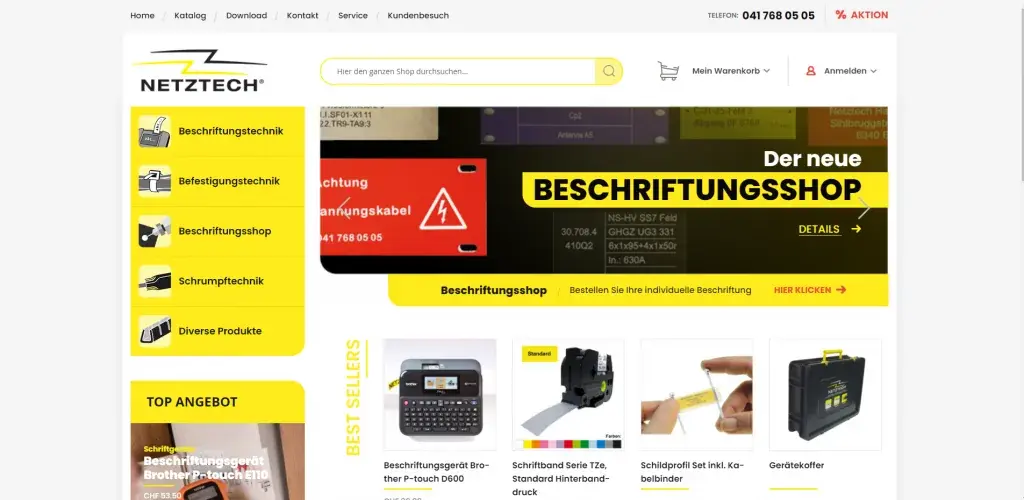
Netbase JSC delivered the migration remotely: all store data moved, 11 extensions rebuilt and a new design applied, finished in 35 working days.
Keep ReadingRelated services and solutions
 AI-assisted legacy modernization that keeps your orders and data safe
Netbase provides legacy application modernization services for commerce and operations teams to move ageing platforms, such as Magento 1 stores, onto supported technology without losing orders, customers or data. AI speeds up code analysis and data mapping; every migration runs on a written, human-approved plan with rehearsal, staged cut-over and rollback, proven by Netztech's move to Magento 2.
Learn More
 Application maintenance and support for live web, mobile and business software
Netbase maintains and supports software that is already live: web platforms, online stores, mobile apps, ERP and CRM systems and internal tools, including software another vendor built. We take it over after a code and environment review, then fix defects, keep frameworks current, monitor it, make small changes and report monthly, under service levels agreed in your contract.
Learn More  Multi-vendor marketplace development: vendors, catalog, payouts and AI search on one platform
A multi-vendor marketplace is a commerce platform where many independent sellers list, sell and get paid through one storefront. Netbase's marketplace solution covers vendor onboarding, a shared catalog, split payments and payouts, with AI for search, listing enrichment and fraud checks. For an EU fashion-tech marketplace, Netbase's work grew gross merchandise value (GMV) and cut vendor onboarding time.
Learn More Related insights

A reliable bug-fix workflow reproduces each defect before anyone changes code, turns the reproduction into a failing regression test, fixes until that test passes, and ships the fix on a cadence set by severity: hotfix, next patch release or scheduled release. This Netbase guide gives the quality gates, a severity-to-cadence matrix and the trade-offs.

L1, L2 and L3 Support Tiers in an Outsourced Model: Who Owns What and When to Escalate
In an outsourced model, L1 handles first response and known fixes, L2 diagnoses application problems, and L3 changes code; most companies outsource L1 first and keep L3 with whoever releases the code. This Netbase guide gives a responsibility matrix, written escalation triggers and four ways to split the tiers with a partner.

Runbooks and Documentation for Maintainable Applications: The Minimum Set
A maintainable business application needs seven documents: a system overview, architecture views, a decision log, build and release steps, a configuration inventory, an observability guide and runbooks. This Netbase guide gives each an owner, a trigger that forces an update and a test that someone who did not build the system must pass.
Work with Netbase remotely
Every Netbase engagement is delivered remotely, so clients in any country and any industry can work with us; Netbase has worked with clients in 80 countries. Contracts and invoices are issued by Netbase JSC, and payment is made by bank transfer to Netbase JSC's company account or PayPal Business. Talk to the CEO, Huy Nguyen (David), on WhatsApp or by email.
Discuss a project
Netbase JSC helps organizations design, build, modernize, and operate digital products and AI-enabled business systems.project@netbasejsc.com
+84 937 869 689
91 Nguyen Chi Thanh, Dong Da, Hanoi, Vietnam
Get in touch
Tell us what you want to build, modernize, or operate.