

Security Patching Policy for Business Applications: Timelines and Exceptions
A security patching policy for business applications sets a deadline for each patch tier, ranks patches by active exploitation and exposure before severity score, and makes every exception time-limited and owned. This Netbase template covers the framework, libraries, runtime and plugins inside an application, with deadlines, release paths and an exception record.
Book a solution review See application maintenance and supportBy Netbase Delivery and Quality Desk · Reviewed by David (CEO) · Updated · 10 min read

It is for IT managers, CTOs and application owners who need rules a delivery team can follow. Netbase keeps applications on supported technology through legacy modernization and keeps live software patched through application maintenance and support.
In this guide
- Why does a business application need its own patching policy?
- What should the deadlines be, and what sets them?
- The policy template, clause by clause
- How should each tier reach production?
- How should an exception work without becoming permanent?
- Three ways to keep applications patched
- When should you not adopt strict patch deadlines?
- Where AI fits
- What delivery record exists, and what does not?
- Alternatives: other routes and how to choose
- Limits of this guide
- Frequently asked questions
- Next step
Why does a business application need its own patching policy?
A business application needs its own patching policy because its patches are code changes, not installer runs. Updating a framework, library or plugin changes behaviour, so the patch must pass tests and ship as a release. Policies written for laptops and servers rarely say who does that work.
Most patch management templates cover operating systems, endpoints and servers. Inside a web shop, a portal or a line-of-business system, the risky components are the web framework, open-source libraries, the language runtime, CMS or e-commerce plugins and container base images.
NIST describes enterprise patch management as identifying, prioritizing, acquiring, installing and verifying patches, and calls patching "a critical component of preventive maintenance". For an application, installing means a tested, released dependency change; verifying means production runs the patched version.
What should the deadlines be, and what sets them?
Deadlines should follow the likelihood that a weakness is exploited and how exposed the application is, with severity score as the third input. A critical score on an unreachable internal tool matters less than a medium score on a public checkout under active attack. Write the tiers down so nobody re-argues them.
Three public signals help. The CISA Known Exploited Vulnerabilities catalog lists vulnerabilities exploited in the wild and should feed prioritization, CISA says. FIRST's EPSS estimates the probability that a published CVE will be exploited in the next 30 days. CVSS rates severity from Low to Critical; its specification says to enrich Base scores with threat and environment data before a risk decision.
For a reference point, CISA's directive BOD 26-04, issued in June 2026, sets US federal agencies windows of 3, 14 or 60 days, or the next scheduled upgrade, from four factors: public exposure, KEV status, whether exploitation can be automated, and technical impact. It does not bind a private company, but it is a tested model.
-
Emergency
- Trigger
- Listed as exploited, or exploit code public, and the component is reachable from the internet
- Example deadline (adjust)
- Mitigate within 24 hours, patch within 3 days
- Release path
- Emergency release
-
Urgent
- Trigger
- Critical or High severity with a high exploitation probability, or exploited but only internally reachable
- Example deadline (adjust)
- Within 14 days
- Release path
- Expedited release
-
Routine
- Trigger
- Any other security patch for a used component
- Example deadline (adjust)
- Next monthly release, at most 60 days
- Release path
- Normal release
-
Hygiene
- Trigger
- Non-security updates and patches for unused code paths
- Example deadline (adjust)
- Quarterly upgrade cycle
- Release path
- Normal release
The example deadlines are a starting point, not a standard. Pick numbers your team can meet with tests and a release, and tighten them where a contract or card-payment rules require it. An honest 14 days beats a broken promise of 24 hours.
The policy template, clause by clause
Copy the clauses below and fill the brackets. Each answers a question an auditor or customer will ask.
- Scope. This policy covers [application names]: their language runtime, framework, libraries, plugins, container base images and the build tools that produce them. Hosting and operating systems are covered by [infrastructure policy].
- Inventory. Each application keeps a dependency list generated from its build (lock file or software bill of materials); an unlisted component counts as unpatched.
- Sources of patch information. Dependency scanning on every change and on a [weekly] schedule, vendor security advisories, and the CISA KEV catalog.
- Tiers and deadlines. [Role] assigns each new patch a tier from the table within [2 working days]; the clock starts when the patch is published.
- Release paths. Each tier uses the release path named for it. No tier skips automated tests or peer review.
- Unsupported software. A component past its end of life needs a dated upgrade plan on the roadmap [one quarter] ahead.
- Exceptions. A patch that cannot meet its deadline needs an exception record approved before the deadline passes.
- Verification. A patch is closed only when the deployed version in production is confirmed and the scanner no longer reports the issue.
- Reporting. A [monthly] report shows open patches by tier and age, exceptions and their expiry dates, and components nearing end of life.
- Review. The policy owner reviews deadlines and tiers [yearly] and after any incident linked to a missed patch.
How should each tier reach production?
-
Normal release
The patch joins the next scheduled release with the full test suite, review and staging check, the same path as any change in the bug-fix workflow.
-
Expedited release
The patch ships on its own branch outside the release calendar; automated tests, peer review and a staging deploy stay, while feature sign-off and the wait for the release window are skipped.
-
Emergency mitigation
If the patch cannot ship within hours, reduce exposure first: switch the feature off, add a web application firewall rule or restrict access to the affected path.
-
Emergency release
Ship the patch with automated tests and one reviewer; a rollback plan is written before the deploy, not after.
-
Verify in production
Confirm the running version, rerun the scanner, and close the ticket with links to the advisory, the commit and the release.
-
Review the miss
Record why a deadline slipped (missing tests, a blocked upgrade, an unclear owner) in the monthly report.
How should an exception work without becoming permanent?
An exception should be a short, owned, dated record that expires automatically, with a compensating control in place while it lasts. Without an expiry date, exceptions become the real policy. Approval sits one level above the requester and rises with the tier.
-
Component and patch
The library, plugin or runtime and the advisory it fixes
-
Reason
Why the deadline cannot be met: breaking change, vendor certification, frozen release, missing tests
-
Compensating control
What reduces risk meanwhile: feature disabled, firewall rule, access restriction, extra monitoring
-
Risk owner and approver
The business owner who accepts the risk and the person who approved it
-
Expiry date
A date no later than [90 days], after which the exception lapses and must be decided again
Suggested approvers: the engineering lead for Routine and Hygiene, the application owner with the security lead for Urgent, and an executive for Emergency. A renewal is a new decision, and a second renewal triggers an upgrade plan.
The usual reason for an exception is a breaking upgrade: the patched library needs a newer framework, which needs a newer runtime. That is an end-of-life upgrade in disguise; point the exception to that plan.
Three ways to keep applications patched
| Option | Strength | Risk | Choose it when |
|---|---|---|---|
| Vendor auto-update (SaaS or managed platform) | Patches arrive without your work | You control neither timing nor testing; custom extensions can break | The application is mostly standard and the vendor publishes its own patch commitments |
| Monthly batched patch release | Predictable, one test cycle for many patches | Exploited flaws wait for the batch unless the emergency path is real | A small team maintains several applications on a release calendar |
| Continuous dependency updates in the pipeline | Small changes, fast fixes, little backlog | Needs strong automated tests or breakages reach production | The application has good test coverage and frequent releases |
Most applications mix them: continuous updates where tests are strong, a monthly batch for the rest, and a real emergency path.
When should you not adopt strict patch deadlines?
Strict deadlines do harm when the application has no automated tests, because every forced patch risks an outage; build a minimal regression suite first and set honest interim deadlines. An application retiring within months may justify a documented exception with compensating controls instead.
Where AI fits
AI helps with the reading and drafting around a patch, not the decision. A model can summarise an advisory and a changelog, flag breaking changes and draft regression tests for the patched path. Engineers still assign the tier, review every generated change and confirm the deployed version. Netbase works with the major commercial and open-source AI tools and models, chosen per project.
- Available capability
AI-assisted patch triage under human review
Summaries and drafted tests are checked by engineers before any release; not yet tied to a published patching case.
What delivery record exists, and what does not?
Netbase runs, maintains and upgrades what it builds, remotely and alongside the client's in-house team, under an agreed support scope, with response targets set per contract. Its published security practices include secure code review, vulnerability scanning, penetration testing and disaster recovery.
For an existing client store Netbase had built, Netbase scoped the recovery of a compromised Magento site in three phases: investigation and a malware scan, cleanup with core files restored, then repair with Magento security patches and hardening. The client is not named. Netbase also delivered the Netztech migration from Magento 1 to Magento 2.
Netbase holds ISO 27001 certification and a SOC 2 Type II attestation for its own operations; neither covers a client's application. Most Netbase projects are delivered on fixed-price contracts; milestone-based, monthly retainer and KPI-linked models are also offered. No patch time, response time, uptime figure or incident count is published; the template comes from public guidance and delivery practice.
Alternatives: other routes and how to choose
- Buy security and maintenance as one service. If patches keep stalling between a tester's report and a release, one service that keeps the application patched, scanned and recoverable puts both under one owner.
- Commission independent testing. An application security assurance review finds weaknesses in your own code, which a patching policy does not cover.
- Modernize instead of patching. When most exceptions point to one ageing platform, upgrade or rebuild it.
Limits of this guide
- The example deadlines are illustrative; set your own.
- The guide covers third-party components, not flaws in your own code, configuration or hosting.
- It is not legal or compliance advice; regulated data has its own patching rules.
Plan the next step with a Netbase consultant
Frequently asked questions
It depends on exploitation and exposure. An exploited flaw in an internet-facing component needs mitigation within hours and a patch within days; other security patches can follow a monthly release. Set deadlines your team can meet with tests.
A patch exception is a written, dated decision to run an unpatched component past its deadline. It names the reason, a compensating control, the risk owner and an expiry date. Approval sits above the requester and rises with the risk tier.
No. CVSS rates severity, and its own specification says Base scores should be enriched with threat and environment information. Known exploitation, the probability of exploitation and whether the component is reachable from the internet should rank a patch before its score does.
Next step
If your applications need a patching policy your team can actually meet, or a backlog of overdue patches and exceptions cleared, book a solution review.
Work behind this guide
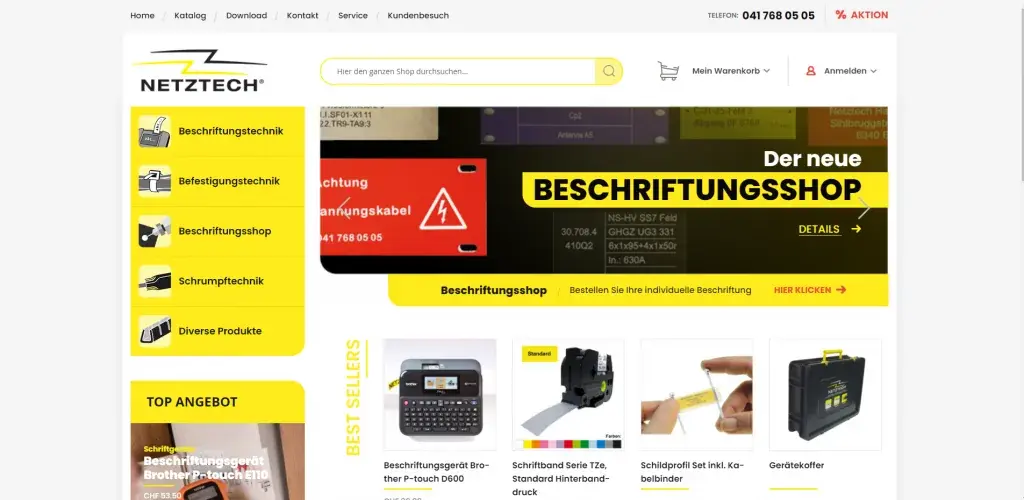
Netbase JSC delivered the migration remotely: all store data moved, 11 extensions rebuilt and a new design applied, finished in 35 working days.
Keep Reading
Print businesses plug online design, print-ready files and order management into any storefront with Printcart, the web-to-print SaaS Netbase builds and runs from Vietnam.
Keep ReadingRelated services and solutions
 AI-assisted legacy modernization that keeps your orders and data safe
Netbase provides legacy application modernization services for commerce and operations teams to move ageing platforms, such as Magento 1 stores, onto supported technology without losing orders, customers or data. AI speeds up code analysis and data mapping; every migration runs on a written, human-approved plan with rehearsal, staged cut-over and rollback, proven by Netztech's move to Magento 2.
Learn More
 Application security assurance for web, SaaS and AI features
Netbase provides application security testing for product and engineering leaders to find and fix vulnerabilities before release, including in AI features. We review code with AI-assisted triage, scan dependencies and test running applications, then rank findings and retest fixes. Netbase's own alignment with ISO 27001 and SOC 2 Type II covers Netbase's operations, never your application.
Learn More  Application maintenance and support for live web, mobile and business software
Netbase maintains and supports software that is already live: web platforms, online stores, mobile apps, ERP and CRM systems and internal tools, including software another vendor built. We take it over after a code and environment review, then fix defects, keep frameworks current, monitor it, make small changes and report monthly, under service levels agreed in your contract.
Learn More  Multi-vendor marketplace development: vendors, catalog, payouts and AI search on one platform
A multi-vendor marketplace is a commerce platform where many independent sellers list, sell and get paid through one storefront. Netbase's marketplace solution covers vendor onboarding, a shared catalog, split payments and payouts, with AI for search, listing enrichment and fraud checks. For an EU fashion-tech marketplace, Netbase's work grew gross merchandise value (GMV) and cut vendor onboarding time.
Learn More Related insights

An application on an end-of-life PHP, .NET or Java version no longer gets security fixes, so its risk grows with every new vulnerability. Rank each application by version status and exposure, then choose an in-place upgrade, a long-term-support jump, a port or retirement. This Netbase guide gives the status table, risk table and path matrix.

Bug-Fix Workflow: Reproduction, Regression Tests and Release Cadence
A reliable bug-fix workflow reproduces each defect before anyone changes code, turns the reproduction into a failing regression test, fixes until that test passes, and ships the fix on a cadence set by severity: hotfix, next patch release or scheduled release. This Netbase guide gives the quality gates, a severity-to-cadence matrix and the trade-offs.

L1, L2 and L3 Support Tiers in an Outsourced Model: Who Owns What and When to Escalate
In an outsourced model, L1 handles first response and known fixes, L2 diagnoses application problems, and L3 changes code; most companies outsource L1 first and keep L3 with whoever releases the code. This Netbase guide gives a responsibility matrix, written escalation triggers and four ways to split the tiers with a partner.
Work with Netbase remotely
Every Netbase engagement is delivered remotely, so clients in any country and any industry can work with us; Netbase has worked with clients in 80 countries. Contracts and invoices are issued by Netbase JSC, and payment is made by bank transfer to Netbase JSC's company account or PayPal Business. Talk to the CEO, Huy Nguyen (David), on WhatsApp or by email.
Discuss a project
Netbase JSC helps organizations design, build, modernize, and operate digital products and AI-enabled business systems.project@netbasejsc.com
+84 937 869 689
91 Nguyen Chi Thanh, Dong Da, Hanoi, Vietnam
Get in touch
Tell us what you want to build, modernize, or operate.