

Offshore development center, captive center or staff augmentation: choosing the team model
Choose staff augmentation when you only need a few engineers inside a team you already manage, a partner-run offshore development center when you need a stable multi-squad team without your own entity abroad, and a captive center only when you must own the entity and can carry its setup load. Netbase runs the first two models remotely.
Book a solution review See the offshore development center serviceBy Netbase Delivery and Quality Desk · Reviewed by David (CEO) · Updated · 11 min read

This guide is for CTOs, heads of engineering and COOs who need offshore engineering capacity for more than one project and must decide who employs, steers and eventually owns that team. It compares the three ownership models with build-operate-transfer as the bridge between them, gives decision rules and a staged path, and says when each model is the wrong choice. Netbase's own team offer is described on the dedicated development teams page, which is the hub of this topic.
In this guide
- What is the actual difference between the three models?
- Which questions decide the model?
- Decision matrix for the three team models
- When is each model the wrong choice?
- How do you move between models as the team grows?
- Where AI fits
- What delivery record exists, and what does not?
- Alternatives beyond the three models
- Limits of this guide
- Frequently asked questions
- Next step
What is the actual difference between the three models?
The three models differ in who employs the engineers, who decides what they work on each day, and who carries the legal and management load. Cost per engineer follows from those three answers; it is not the starting point.
Staff augmentation adds individual engineers from a provider to a team that you lead. They follow your process, your tools and your priorities, and your managers direct them every day. The provider employs them and replaces them if needed. Netbase describes this route on its staff augmentation page.
A partner-run offshore development center (ODC) is a long-term team that works only for you, but the partner hires, employs and manages it under governance you agree. You set priorities through a product owner; the partner runs recruitment, delivery management and the local administration. Netbase's version is the offshore development center service.
A captive center is your own legal entity in another country. You register the company, employ the engineers directly, rent or arrange the workplace and run payroll, tax and compliance. Setup guides from nCube and Sproutly describe captive centers as the model with the most control and the longest start, because the entity must exist before the first hire.
Build-operate-transfer (BOT) is not a fourth ownership model so much as a route between the second and the third: a partner builds and runs the team, then hands the team and its operation to an entity you own at agreed milestones. The term comes from infrastructure contracts, where a private party builds and operates a facility before transferring it.
Which questions decide the model?
Five questions separate the models more reliably than headcount or a target cost per seat. Answer them in this order, because an early answer often settles the later ones.
- Who will direct the engineers every day? If your own engineering managers have time to run more people, augmentation works. If they do not, you need a partner that manages delivery, or you must hire that management layer abroad yourself.
- How long is the need, and how certain? A gap of one or two quarters argues for augmentation. A roadmap of several years with several release streams argues for a dedicated center.
- Must you own the entity? Some companies need the engineers on their own payroll for regulatory, tax, valuation or strategic reasons. Only that requirement justifies a captive center; preference alone rarely does.
- Who carries the legal and employment risk? In augmentation and a partner-run ODC, the provider carries it. In a captive center, you do, in a legal system you may not know.
- How will you exit? Augmentation is the easiest to stop. A partner-run center needs written handover terms. A captive center is the hardest to close, because you own leases and employment contracts.
Decision matrix for the three team models
| Criterion | Staff augmentation | Partner-run ODC | Captive center |
|---|---|---|---|
| Who employs the engineers | The provider | The partner | You, through your own entity |
| Who directs daily work | Your managers | Your product owner, with the partner's delivery lead | Your managers abroad |
| Management load on you | High: every engineer needs your direction | Medium: priorities and reviews, not people management | Highest: hiring, payroll, compliance and the workplace |
| Time to first work | Shortest | Weeks after discovery with most partners | Months, because the entity comes first |
| Continuity and knowledge | Tied to individuals | Held by a stable team with documented processes | Held inside your own company |
| Exit | Stop or replace individuals | Handover under contract terms | Close or sell an entity |
| Choose it when | A skill gap inside a team you already lead | A multi-year roadmap without an entity of your own | Ownership is a hard requirement and you can staff its management |
Read the matrix by rows, not by columns. A buyer who answers "my managers have no time" in the second row has already ruled out augmentation, whatever the other rows say. A buyer who cannot name a hard ownership requirement in the third column's last row has ruled out a captive center for now.
When is each model the wrong choice?
Staff augmentation is the wrong choice when you have no engineering lead with time to direct the new people, or when the work is a whole product rather than a gap in a team. Augmented engineers inherit your process; if the process is the problem, more people make it bigger.
A partner-run offshore development center is the wrong choice for a defined build with a clear end, which a fixed-price project answers better, and for a need that will last only a few months. It is also wrong if no one on your side can set priorities every week, because a center without a product owner drifts.
A captive center is the wrong choice when the main reason is a lower cost per engineer, when the team will stay under about one or two squads, or when you have not yet run an offshore team at all. You would be learning the location, the hiring market and the management model at the same time, with your own entity at risk.
How do you move between models as the team grows?
Most companies do not pick one model forever. A staged path keeps each step reversible until ownership is clearly worth its load.
-
Start with a defined scope or a few augmented engineers
Use the first months to learn how remote delivery works with your process, not to build an organisation.
-
Write down the trigger for the next step
For example: a second release stream, a backlog that one team cannot clear, or a manager who spends most of the week directing contractors.
-
Move to a dedicated team or partner-run center when the trigger fires
Agree governance, a named delivery lead, weekly reviews and documentation standards before the team grows.
-
Put transfer terms in the contract early
If ownership may matter later, write handover milestones, documentation duties and knowledge-transfer sessions into the agreement now, as in a transition and knowledge transfer plan.
-
Decide on a captive center only with evidence
Use the center's own record (stable roadmap, team size, documented processes) and your legal and tax advice to judge whether owning the entity adds enough to justify it.
OutsourcingVN, a Netbase brand, offers dedicated development teams: a named engineering team directed by the product owner of the client and run by Netbase.
Where AI fits
AI changes how much each team can deliver, not who should own it. In any of the three models, AI-assisted coding, test generation and documentation can raise the output of a smaller team, which can delay the point at which a larger center is needed. Engineers still review every AI-generated change, own the architecture and answer for defects, so the management question in the matrix stays the same. Netbase works with the major commercial and open-source AI tools and models, chosen per project.
- Available capability
AI-assisted engineering under human review
AI drafts code, tests and documentation in a Netbase team, and engineers review each change before it ships; not yet tied to a published team-model case.
What delivery record exists, and what does not?
Netbase's engagement models are dedicated development teams, project-based development, on-demand support and fully managed delivery, with milestone-based, monthly team retainer and KPI-linked commercial models. Most Netbase projects are delivered on fixed-price contracts.
Teams range from 3 to 30 people and combine business analysts, project managers, solution architects, developers, QA and UI/UX designers. Work typically starts within one to two weeks after discovery. Roles Netbase has hired include business analysts, project managers, testers and PHP, Laravel, Magento, WordPress, Python and React Native developers. Delivery is in English and every service is delivered remotely.
Governance follows a six-step lifecycle from discovery to ongoing support, with weekly reviews, KPI dashboards and a dedicated account manager and project manager. For custom development, the client owns the IP created for it.
Netbase works as offshore development partner on a multi-tenant cloud ERP for a US client, a long-running team engagement of the kind a partner-run center is designed for.
What does not exist: Netbase has not published a case of a center transferred to a client's own entity or of a captive center set up for a client. Setting up a center under build-operate-transfer is a capability Netbase offers, not a published result. Netbase publishes no retention figure.
Alternatives beyond the three models
Not every capacity problem needs a team model. Three alternatives answer narrower needs, each with its own selection rule.
- A fixed-price project. Choose it when the scope can be written down and has an end. The comparison is in dedicated team vs fixed price.
- An AI-first offshore development center. Choose it when you already know a center is right and want AI-assisted delivery built into its method; the AI-first offshore development center guide covers governance, start and exit.
- Freelancers or a marketplace. Choose them for short, isolated tasks with a clear owner on your side; they rarely hold product knowledge over time.
Limits of this guide
- Setup times quoted here are third-party estimates for other locations; your own timeline depends on country, entity type and hiring market.
- Entity, employment and tax questions for a captive center or a transfer differ by country. Take legal and tax advice before you decide.
- The matrix compares models, not providers. Judge any partner, Netbase included, on its own record and contract terms.
Plan the next step with a Netbase consultant
Frequently asked questions
Not reliably. Augmentation needs no setup and suits a small or uncertain need, but every engineer needs direction from your managers, so the hidden cost is management time. A dedicated center spreads management across a stable team and suits a long roadmap.
A captive center makes sense when owning the entity is a hard requirement, the team will be large and permanent, and you can staff its local management. If those three conditions are not all true, a partner-run center or a build-operate-transfer arrangement usually carries less risk.
Yes, if the contract says so. Build-operate-transfer agreements set handover milestones, documentation and knowledge-transfer duties in advance; entity and employment questions are settled with your own advisers.
In staff augmentation and a partner-run center, ownership follows the contract, and with Netbase the client owns the IP created for it in custom development. In a captive center, the code belongs to your own entity.
Next step
If you are weighing these models for a roadmap, tell us how many teams you expect to need and who will set priorities, and we will book a solution review to recommend a starting model and the trigger for the next step.
Work behind this guide
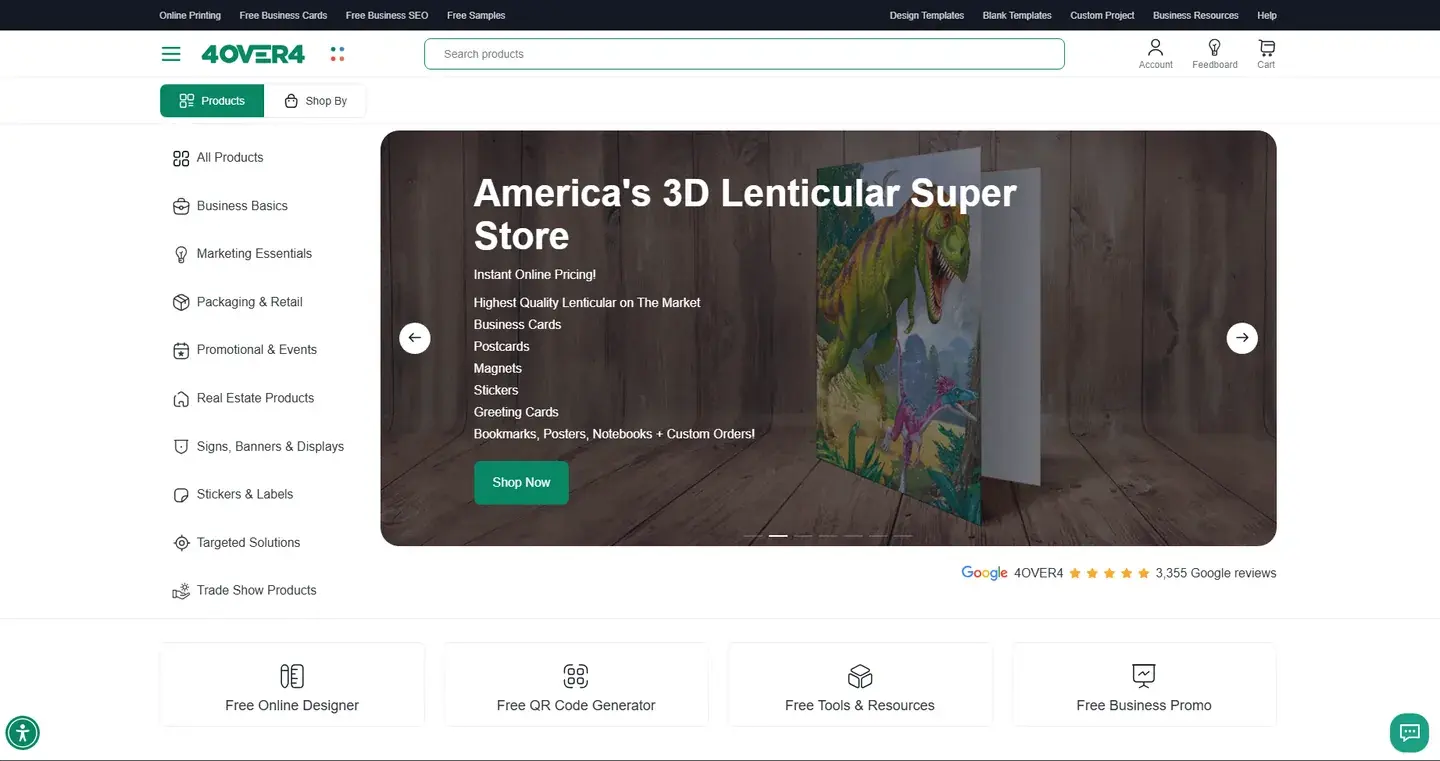
The same work also automated Adobe Illustrator (.ai) to SVG file conversion and added product recommendations for shoppers.
Keep Reading
Revenue grew 36% in the first quarter after launch.
Keep ReadingRelated services and solutions
 An AI-augmented dedicated development team in Vietnam that answers for results
Netbase provides dedicated development teams from Vietnam for product companies and enterprises that need engineering capacity. Teams of 3 to 30 people work only on your product, use AI-assisted engineering under review, report to a named account manager and project manager, typically start within one to two weeks after discovery, and the IP they create is yours.
Learn More
 An AI-enabled offshore development center in Hanoi, when a long roadmap needs one
An offshore development center (ODC) in Vietnam is a long-running engineering team that a partner abroad staffs, manages and documents for your product roadmap. Netbase runs ODC teams from its only office, in Hanoi, with AI-assisted engineering, weekly governance and knowledge transfer built in. When the work has a defined outcome, a fixed-price project usually fits better.
Learn More  IT staff augmentation with AI-skilled engineers for teams that lead their own delivery
Netbase provides IT staff augmentation for engineering leaders who run their own delivery to add individual engineers, including AI and data specialists, who work under the client's process, tools and priorities and use AI assistance within your rules. It is a supporting option: when you need an outcome, a consulting-led fixed-price project or a ready solution usually fits better.
Learn More  SaaS product accelerator: launch an AI-ready SaaS on proven Netbase modules
A SaaS product accelerator is a set of reusable Netbase modules for accounts, billing, roles and integrations that helps founders and product teams launch subscription software faster, with room for in-product AI from the first release. Reusing these modules can shorten development time, and the approach is proven on Printcart, Netbase's own web-to-print SaaS.
Learn More Work with Netbase remotely
Every Netbase engagement is delivered remotely, so clients in any country and any industry can work with us; Netbase has worked with clients in 80 countries. Contracts and invoices are issued by Netbase JSC, and payment is made by bank transfer to Netbase JSC's company account or PayPal Business. Talk to the CEO, Huy Nguyen (David), on WhatsApp or by email.
Discuss a project
Netbase JSC helps organizations design, build, modernize, and operate digital products and AI-enabled business systems.project@netbasejsc.com
+84 937 869 689
91 Nguyen Chi Thanh, Dong Da, Hanoi, Vietnam
Get in touch
Tell us what you want to build, modernize, or operate.