

How AI coding agents change offshore delivery time: a stage-by-stage view
AI coding agents shorten the build and test stages of an offshore project, but they do not shorten decisions, code review, acceptance or the overnight wait between time zones, so total delivery time falls only when those stages keep pace. Netbase delivers with AI-assisted engineering under human review, in weekly increments planned around those waits.
Book a solution review See the related solutionBy Huy Nguyen (David), Founder & CEO · Updated · 11 min read

This guide is for CTOs, product owners and ecommerce leaders who run an offshore team, or are about to sign one, and keep hearing that AI makes delivery faster. It explains the delivery side of how Netbase runs an offshore development center or a dedicated development team, and it gives you a way to test a schedule before you agree to it.
In this guide
- Does AI make an offshore project finish sooner?
- Where does the time go in an offshore delivery?
- How to check a schedule that promises AI speed
- Where AI fits
- What delivery record exists, and what does not?
- When should you not compress a schedule because of AI?
- Alternatives: other ways to shorten offshore delivery time
- Limits of this guide
- Frequently asked questions
- Next step
Does AI make an offshore project finish sooner?
Sometimes, and less than the coding-speed headlines suggest. AI coding agents make the act of writing code, tests and documentation faster, but a delivery schedule is mostly made of other things: agreeing what to build, waiting for answers, reviewing changes, testing against real data, and accepting a milestone. When only one of those stages gets faster, the schedule shortens by much less than that stage did.
The research points both ways. In a 2022 controlled experiment published by GitHub, 95 professional developers were split into two groups, and the group with an AI pair programmer finished a defined task (an HTTP server in JavaScript) 55% faster. In a 2025 randomised study by METR, 16 experienced open-source developers working on 246 real issues in large codebases they knew well took 19% longer when AI tools were allowed, while believing the tools had made them about 20% faster. Well-defined tasks gain; complex work in a mature codebase may not.
The DORA 2025 report on AI-assisted software development describes AI as an amplifier of an organisation's existing strengths and weaknesses. For an offshore buyer, that means a team with clear requirements, fast review and automated tests gains the most from AI, and a team waiting on unclear scope gains very little.
Where does the time go in an offshore delivery?
The table maps each stage of an offshore engagement to what AI changes, what it does not, and who controls the pace.
| Stage | What AI coding agents shorten | What still sets the pace | Who controls it |
|---|---|---|---|
| Discovery and scope | First drafts of user stories, acceptance criteria and data models from your notes | Your decisions on scope, priorities and trade-offs | Buyer and partner together |
| Estimation and plan | Faster technical spikes to test an unknown | Agreement on milestones, acceptance tests and commercial terms | Buyer and partner together |
| Build | Drafting code, tests, migrations and documentation | Clarity of the specification; answers to open questions | Partner team |
| Code review | First-pass checks and summaries of each change | A named engineer reading and approving every change | Partner team |
| Integration and test | Generating test cases and test data; reading logs | Access to third-party systems, sandboxes and real data | Buyer, third parties and partner |
| Acceptance | Release notes and demo scripts | Your people testing the milestone and signing it off | Buyer |
| Release and hand-over | Deployment scripts, runbooks and hand-over notes | Change windows, approvals and app-store or vendor reviews | Buyer and third parties |
Two effects are specific to offshore teams. The first is the review queue: when an agent helps a developer produce more changes a day, the number of changes waiting for review grows, and if review capacity stays the same, the queue becomes the new bottleneck. The second is the overnight hand-off: a question asked at the end of the offshore working day and answered the next morning in your time zone costs a full day, whether the code was written by a person or with an agent. Faster coding makes these waits a larger share of the schedule, not a smaller one.
How to check a schedule that promises AI speed
Use these five checks on any offshore plan, including one from Netbase, before you sign.
-
Ask which stages the plan assumes are faster
A credible plan names the stages where AI is expected to help (usually build and test) and leaves discovery, review and acceptance at a pace your team can hold.
-
Count your own review and acceptance time
Write down who on your side answers questions, joins the weekly review and tests each milestone, and how many days that takes. If the plan needs answers faster than your people can give them, the plan is optimistic.
-
Check the review gate
Ask who reviews each AI-assisted change, which automated checks run first, and how sign-off is recorded. Skipping human review does not save time; it moves the delay to production.
-
Look for the overlap and hand-off rule
Ask when the two teams overlap each day, how a blocking question is escalated, and what the offshore team works on while it waits.
-
Tie milestones to acceptance, not effort
A milestone accepted on agreed tests and a demo shows real progress. A plan measured in hours or story points tells you about effort, not about delivery time.
If you want one number to track after the start, change lead time is a sound choice: DORA defines it as the time a change takes to go from being committed to version control to being deployed in production. Our guide to measuring engineering delivery health explains how to read it without turning it into a target.
Where AI fits
In an offshore delivery, AI coding agents draft code, tests, data migrations and documentation from the agreed specification, propose refactors, summarise changes for reviewers and help write test cases. Engineers still decide the architecture, check that each change meets the acceptance criteria, confirm that the tests test the right thing, and approve every change through secure code review and version control. The result for the buyer is shorter build and test stages and better hand-over material, not a shorter decision cycle. Netbase works with the major commercial and open-source AI tools and models, chosen per project, so the question is which tools may touch your code and data, agreed at the start.
- In delivered work
RAG knowledge assistant
A retrieval-augmented knowledge assistant delivered for a client that is not named.
- In delivered work
MLOps pipeline
A machine-learning operations pipeline delivered for a client that is not named.
- Available capability
AI-assisted engineering under human review
AI-assisted changes held to the same secure code review and version control as any other change; not yet tied to a published case with delivery-time figures.
What delivery record exists, and what does not?
Netbase delivers its own projects in Agile increments with weekly reviews, lean discovery and pilots, remote-first delivery from Hanoi, security and API design from the start, and AI-assisted engineering under human review. The delivery lifecycle runs in six steps, from discovery and strategic alignment to ongoing support and co-building, and governance uses weekly reviews, KPI dashboards and a dedicated account manager and project manager.
Progress is tracked in Jira, Redmine, Trello or GitHub, where clients can check it at any time, and source code is managed in GitHub. Teams range from 3 to 30 people, and work typically starts within one to two weeks after discovery. Netbase works Monday to Saturday, 9:00 to 18:15 Vietnam time (UTC+7), which sets the overlap window for a client in another time zone.
For a US client that is not named, Netbase works as the offshore development partner on a multi-tenant cloud ERP delivered as SaaS to small and mid-sized businesses, the kind of long-running offshore engagement this guide describes. Beyond the one named AI client, Netbase has delivered AI projects such as RAG knowledge assistants, document AI and MLOps pipelines for clients that are not named.
Netbase plans each timeline from scope after discovery, and no published Netbase timeline is stated as the result of AI. Most Netbase projects are delivered on fixed-price contracts, so a faster build shows up as an earlier milestone.
What does not exist: no published figure for how much faster AI coding agents made any Netbase project, no before-and-after delivery-time comparison, and no client named for the AI projects. This page describes method and practice, not measured results.
When should you not compress a schedule because of AI?
AI speed is not a reason to shorten a plan in every case. Keep the schedule as it is, or plan for more time, when:
- nobody on your side can review and accept milestones faster than today, because unreviewed output only moves risk to production;
- the scope is still a hypothesis, where a short discovery gives more certainty than faster code;
- the work depends on third parties, such as a payment provider, an ERP vendor or an app store, whose approval times AI cannot change;
- the change touches regulated data or security-critical logic, where review should get slower and deeper, not faster;
- the codebase is large, old and poorly tested, which is the setting where the METR study found experienced developers slowed down.
Alternatives: other ways to shorten offshore delivery time
AI coding agents are one lever. These are the others, with a rule for when each one fits.
- Reuse proven modules. Choose it when your requirement matches a common pattern such as a catalogue, a CRM or a checkout; the trade-off is fitting your process to an existing component.
- Increase time-zone overlap. Choose it when blocking questions are the main delay; the trade-off is shifted working hours on one or both sides. Our guide to time-zone overlap models for offshore AI teams compares the options.
- Strengthen your product owner role. Choose it when answers and acceptance are slow; the trade-off is your own staff time.
- Add review and test automation. Choose it when the review queue is growing; the trade-off is set-up effort before the gain.
- Change the delivery shape. Choose an AI-first offshore development center for a long-running product, or a fixed-price project for a bounded one; the trade-off is control against simplicity.
For the contract side of AI-assisted delivery, read what AI-native software development changes for the buyer.
Limits of this guide
- No delivery-time figure is given for Netbase work, because no registered Netbase figure supports one.
- The research cited measures coding tasks, not whole offshore projects; treat it as a direction, not a forecast.
- Results depend on your codebase, review capacity and scope; a short discovery gives a better estimate than any general rule.
Plan the next step with a Netbase consultant
Frequently asked questions
No general promise like that holds. AI coding agents shorten build and test work, but discovery, decisions, review, acceptance and third-party approvals take the same time, so the whole schedule shrinks by much less than the coding does.
More code produced each day means more changes waiting for review, and complex work in a large codebase can take longer when developers check and correct AI output. A team that plans review capacity and keeps tasks well defined avoids most of this.
Compare proposals on milestones and acceptance terms rather than on effort. On a fixed-price contract, faster build shows up as earlier milestones, and the price reflects scope and risk, not hours.
Track change lead time and the share of milestones accepted on the first demo before and after AI tools are introduced. If those do not improve, the bottleneck is somewhere other than coding.
Next step
Bring your current plan or a proposal you are comparing, and Netbase will walk through where AI can shorten it and where the waits sit: book a solution review. You can also read the security review gate for AI-generated code before you agree on how AI-assisted changes are approved.
Work behind this guide
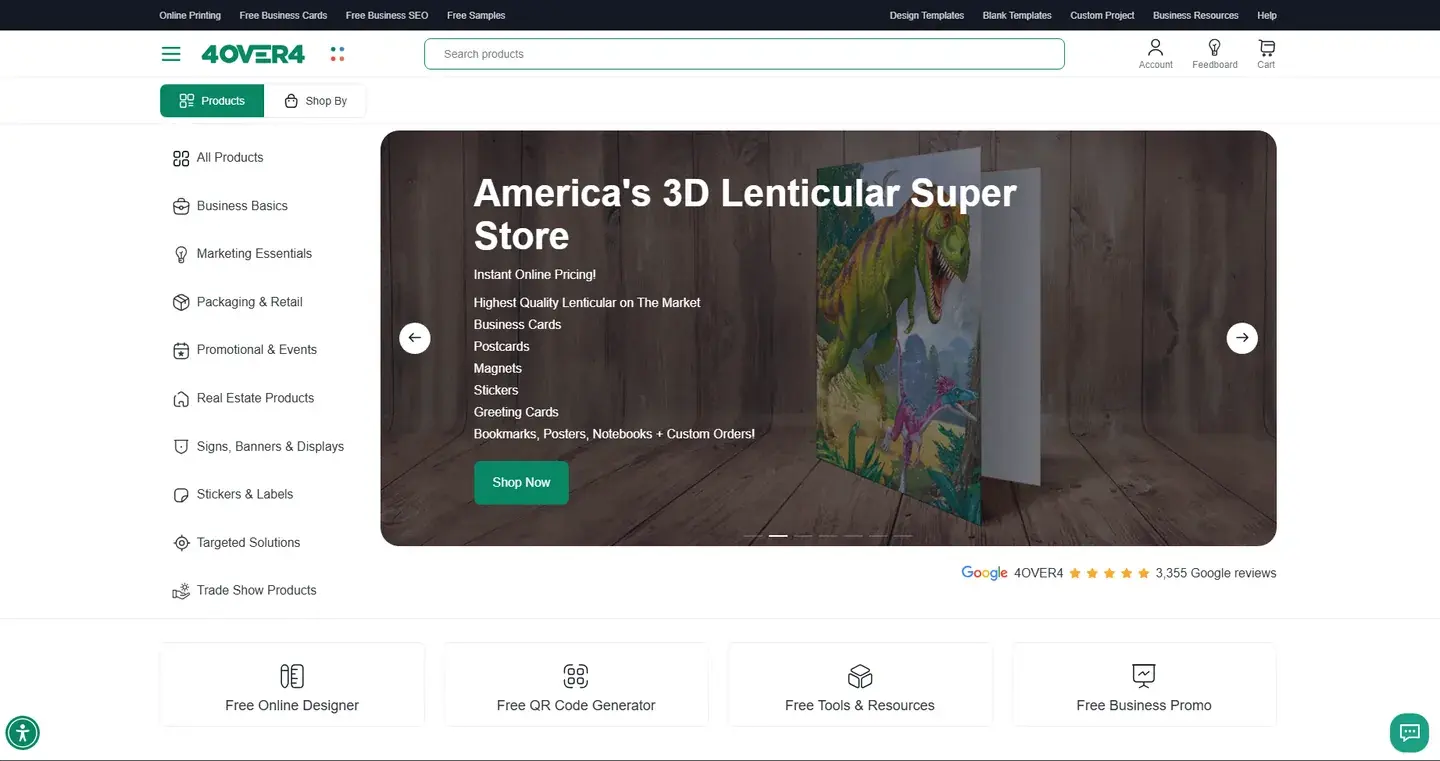
4over4, a US online printing store, reported 82% higher e-commerce revenue within six months after Netbase JSC remotely reworked its checkout, search and navigation.
Keep Reading
Netbase works remotely as its offshore development partner; phase 1 brought CRM, messaging, HR, a knowledge base, work management and API integrations into one platform for agency customers.
Keep ReadingRelated services and solutions
 An AI-enabled offshore development center in Hanoi, when a long roadmap needs one
An offshore development center (ODC) in Vietnam is a long-running engineering team that a partner abroad staffs, manages and documents for your product roadmap. Netbase runs ODC teams from its only office, in Hanoi, with AI-assisted engineering, weekly governance and knowledge transfer built in. When the work has a defined outcome, a fixed-price project usually fits better.
Learn More
 An AI-augmented dedicated development team in Vietnam that answers for results
Netbase provides dedicated development teams from Vietnam for product companies and enterprises that need engineering capacity. Teams of 3 to 30 people work only on your product, use AI-assisted engineering under review, report to a named account manager and project manager, typically start within one to two weeks after discovery, and the IP they create is yours.
Learn More  SaaS product accelerator: launch an AI-ready SaaS on proven Netbase modules
A SaaS product accelerator is a set of reusable Netbase modules for accounts, billing, roles and integrations that helps founders and product teams launch subscription software faster, with room for in-product AI from the first release. Reusing these modules can shorten development time, and the approach is proven on Printcart, Netbase's own web-to-print SaaS.
Learn More Related insights

A fractional AI engineer costs less when the work is senior judgement in short bursts; an offshore AI team costs less when the work is a sustained build that must also be run and improved. Netbase compares the two by cost driver, not by price list, because ramp-up, review load and continuity decide the total.
Work with Netbase remotely
Every Netbase engagement is delivered remotely, so clients in any country and any industry can work with us; Netbase has worked with clients in 80 countries. Contracts and invoices are issued by Netbase JSC, and payment is made by bank transfer to Netbase JSC's company account or PayPal Business. Talk to the CEO, Huy Nguyen (David), on WhatsApp or by email.
Discuss a project
Netbase JSC helps organizations design, build, modernize, and operate digital products and AI-enabled business systems.project@netbasejsc.com
+84 937 869 689
91 Nguyen Chi Thanh, Dong Da, Hanoi, Vietnam
Get in touch
Tell us what you want to build, modernize, or operate.