

Offshore vs fractional AI engineers: which cost drivers decide the total?
A fractional AI engineer costs less when the work is senior judgement in short bursts; an offshore AI team costs less when the work is a sustained build that must also be run and improved. Netbase compares the two by cost driver, not by price list, because ramp-up, review load and continuity decide the total.
Book a solution review See fractional AI leadershipBy Huy Nguyen (David), Founder & CEO · Updated · 11 min read

This comparison is for founders, CTOs and heads of ecommerce at mid-sized companies weighing part-time senior help against a team. It sits beside our offshore development center and dedicated development teams services and states no amounts, because every figure depends on scope.
In this guide
- What is the difference between a fractional AI engineer and an offshore AI team?
- Why does a lower unit cost not mean a lower total?
- The cost-driver matrix
- Which model fits which kind of AI work?
- How to compare proposals without a price list
- The hybrid: a fractional lead with an offshore team
- Where AI fits
- What delivery record exists, and what does not
- Alternatives: when neither model is the right buy
- Limits of this guide
- Frequently asked questions
- Next step
What is the difference between a fractional AI engineer and an offshore AI team?
A fractional AI engineer is a senior practitioner who works a part of each week inside your team on a retainer for a defined period, without joining your payroll. The AY Automate guide to fractional AI engineers describes that shape and the main trade-off: the fractional engineer writes their own specifications, while a contracted team needs detailed specifications and oversight.
An offshore AI team is a group of engineers, usually with a business analyst, a project manager, QA and an architect, who work full time on your roadmap from another country. Netbase teams range from 3 to 30 people across those roles, and work typically starts within one to two weeks after discovery.
The two models are often confused with a third: a fractional AI leader. A leader owns priorities, governance and vendor choices; an engineer writes and reviews code, prompts, pipelines and evaluation sets. Our guide to the first 90 days of a fractional AI leader covers the leadership role. This page compares hands-on engineering capacity only.
Why does a lower unit cost not mean a lower total?
The unit cost of a seat is the most visible number in a proposal and the weakest predictor of what a working AI feature costs. The total is set by how many hours of senior judgement the work needs, how much context each person must rebuild, how much reviewing your own staff must do, and what happens when a key person leaves.
AI work adds drivers that ordinary software budgets miss. A model-backed feature needs an evaluation set, model and tool usage that grows with traffic, data access that passes your security review, and monitoring after launch. The research paper Hidden Technical Debt in Machine Learning Systems explains why the code around a model, not the model, carries most of the long-term maintenance cost.
The cost-driver matrix
Each row shows the direction a driver pushes the total; ask the last column's question of every candidate.
| Cost driver | Fractional AI engineer | Offshore AI team | Question to ask |
|---|---|---|---|
| Senior judgement hours | Low total, all senior; you buy the hours you use | Senior time is shared across the team; architects and reviewers set the mix | Which decisions need a senior person, and how often? |
| Ramp-up and context | Repeated each time the engineer returns after a gap | Paid once, then kept in the team's shared context | How much of each week goes to catching up? |
| Specification effort | Low; the engineer writes their own specs | Moderate; a business analyst writes them, you approve them | Who writes the acceptance criteria, and who signs them? |
| Review load on your staff | Low for small changes, high if the engineer has no reviewer | Carried inside the team by QA and code review, with your sign-off at milestones | How many hours a week must your people review? |
| Evaluation sets and tests | Often skipped in a part-time scope | Built and rerun as part of the delivery process | Who builds the evaluation set, and who reruns it on each change? |
| Model and tool usage | Same driver in both; depends on traffic and model choice | Same driver; a team can tune prompts and caching continuously | Is model usage a visible budget line? |
| Data access and security setup | One person to onboard, but often on personal equipment | One setup for many people, under the vendor's controls | Where does the work run, and who controls access? |
| Continuity and key-person risk | High: one person holds the knowledge | Lower: knowledge is spread across roles and documents | What happens if the person leaves next month? |
| Knowledge transfer and exit | Small handover, but often undocumented | Planned handover, documentation and code ownership in the contract | Who owns the code, prompts and evaluation data at exit? |
| Time-zone overlap | Flexible for a few hours a week | Agreed daily overlap window | Which meetings must be live, and when? |
| Management time on your side | Light direction, but you integrate the output | One accountable manager on the vendor side | Who chases progress, you or the vendor? |
Fractional engineering is cheap where the work is small, senior and intermittent, and expensive where it must be continuous, reviewed and handed over. An offshore team reverses that: its fixed cost is wasted on a few hours of advice and pays back on a multi-release roadmap.
Which model fits which kind of AI work?
Match the model to the shape of the work. Three shapes cover most AI requests from mid-sized ecommerce and operations companies.
- Direction-setting work (choosing a use case, reviewing a vendor proposal, designing an evaluation approach): a fractional engineer or a fractional leader fits, because the output is a decision, not a running system.
- A sustained build (a recommendation feature, a support assistant, a document pipeline connected to your systems): an offshore team fits, because the work needs analysis, build, tests and release cycles in parallel.
- Run and improve (monitoring, prompt and model updates, retraining, evaluation reruns): a small dedicated team or an agreed support scope fits, because continuity matters more than seniority.
How to compare proposals without a price list
-
Write the work shape first
State whether you need a decision, a build or a run, and for how long; a proposal cannot be compared until this is fixed.
-
List the drivers that apply
Copy the matrix rows that matter to your work and drop the rest, so every proposal answers the same questions.
-
Ask who carries each driver
For every row, name the person on your side or the vendor's side who does the work, including evaluation sets and review.
-
Make model usage a visible line
Ask each candidate to separate engineering effort from model and tool usage, so a cheaper proposal is not cheaper by hiding usage.
-
Test continuity in writing
Ask what happens to the code, prompts and evaluation data if the engineer or team changes, and where that is written in the contract.
-
Compare the cost of an outcome
Divide each proposal by the accepted outcome it promises, not by the hours or seats it lists, then choose.
The hybrid: a fractional lead with an offshore team
The most cost-effective pattern for many mid-sized companies is a part-time senior lead who sets direction and accepts the work, plus an offshore team that builds and runs it. The lead keeps senior judgement hours low; the team keeps ramp-up, review load and continuity costs down.
The hybrid only works when the roles are written down. The lead owns priorities, acceptance criteria and the evaluation approach. The team owns the backlog, tests and releases. If the lead comes from the same vendor as the team, the vendor's interest in its own team must be disclosed before any decision; Netbase discloses that interest in writing and its advisors take no part in selecting Netbase as a vendor unless the client asks.
Where AI fits
AI changes both models in the same direction: it lowers the cost of drafting code, tests and documents, and raises the value of senior review. Netbase works with the major commercial and open-source AI tools and models, chosen per project, and engineers review every AI-produced change before it ships. Each item below states how mature it is at Netbase.
- In delivered work
A product recommendation engine for 4over4
It suggests products from browsing history and previous purchases; no result figure is published for it.
- In delivered work
Retrieval-augmented knowledge assistants, document AI and MLOps pipelines
These clients are not named, and no count, duration or result is published.
- Available capability
AI-assisted evaluation reruns
Rerunning an evaluation set on every model or prompt change, with an engineer reading the failures; not yet tied to a published case.
What delivery record exists, and what does not
Netbase offers dedicated development teams, project-based development, on-demand support and fully managed delivery, under milestone-based, monthly team retainer and KPI-linked commercial models. Most Netbase projects are delivered on fixed-price contracts. The client owns the IP created for it in custom development; Netbase productized modules are licensed, not transferred.
On the fractional side, Netbase offers part-time and per-project AI leadership roles, under a part-time retainer, a per-project sprint or outcome-based milestones with written acceptance criteria. Netbase also runs, maintains and upgrades what it builds, remotely and alongside the client's in-house team, under an agreed support scope. Office hours are Monday to Saturday, 9:00-18:15 Vietnam time (UTC+7).
What does not exist: Netbase publishes no comparison of the total cost of a fractional engineer against a team for any client, no figure for savings, and no named client for its fractional roles. This page therefore compares drivers, not results.
Alternatives: when neither model is the right buy
Neither model is the right buy in four situations, and each has a clear selection criterion.
- The use case is not chosen yet. Buy a short readiness or strategy assessment first; see AI strategy and readiness.
- The scope is fixed and small. A fixed-price project with written acceptance criteria often costs less than either model; our comparison of a dedicated team and a fixed-price project sets out when.
- You need an AI owner, not an engineer. Choose fractional AI leadership and let the leader decide what to build.
- You plan a long-term engineering centre. Read how an AI-first offshore development center is governed, and define the roles first with our guide to hiring an offshore AI engineering team.
Limits of this guide
- It compares cost drivers, not amounts; any figure depends on scope, seniority and duration.
- Risk and evaluation practice follow the NIST AI Risk Management Framework, which is voluntary guidance, not a cost model.
Plan the next step with a Netbase consultant
Frequently asked questions
It is cheaper for small, senior and intermittent work such as reviewing a design or choosing a use case. It is usually more expensive for a sustained build, because ramp-up, review load and key-person risk grow with every week of continuous work.
Switch when the work needs parallel roles, such as analysis, build, testing and release, or when the backlog no longer fits in the engineer's weekly hours.
Yes, and this hybrid is common. The leader owns priorities and acceptance criteria and the team owns delivery; any interest of the leader's firm in the team should be disclosed in writing before decisions are made.
Buyers most often forget the evaluation set, model and tool usage that grows with traffic, data access that passes a security review, and monitoring after launch.
Next step
Tell us the shape of your AI work and we will book a solution review to map the cost drivers to a team shape and a commercial model. If the work is mainly direction-setting, start with fractional AI leadership instead.
Work behind this guide
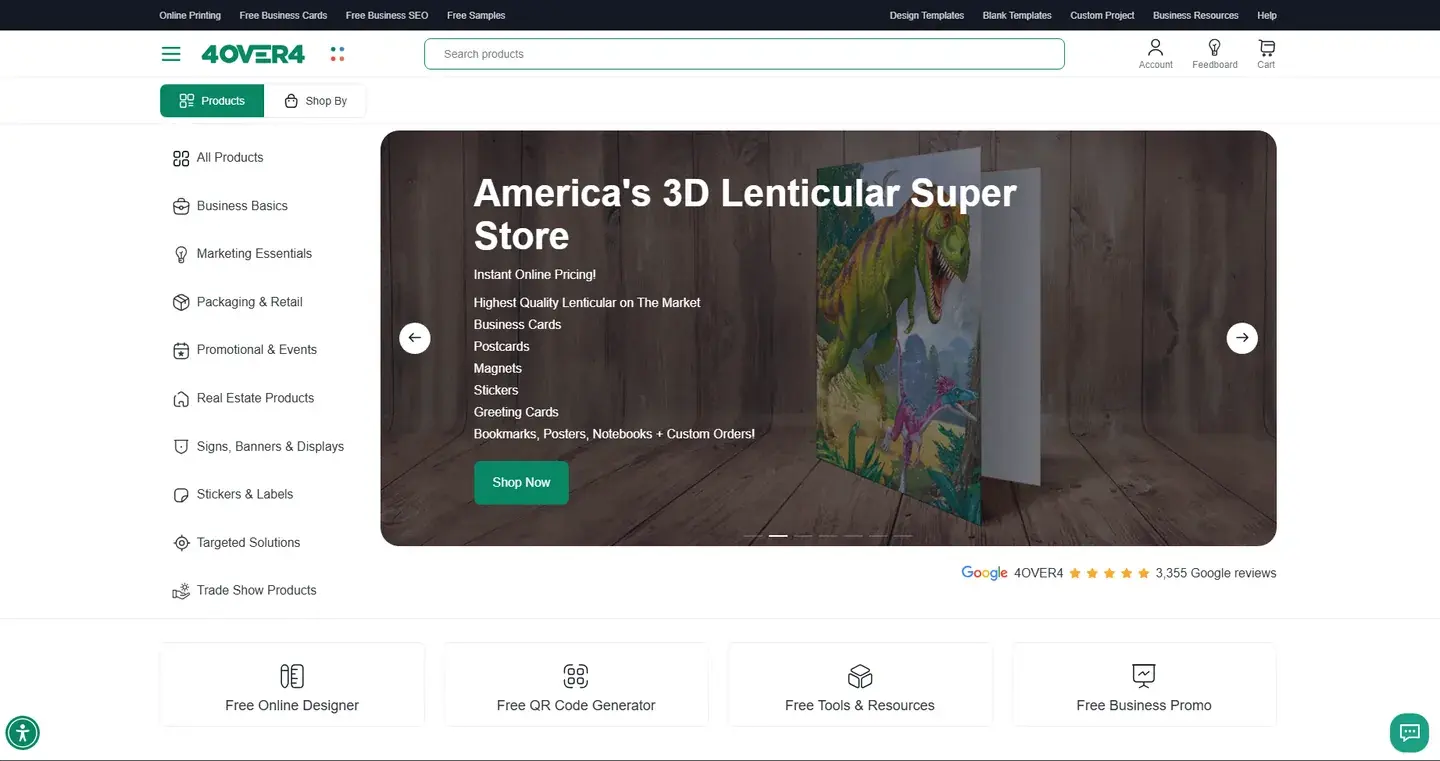
4over4, a US online printing store, reported 82% higher e-commerce revenue within six months after Netbase JSC remotely reworked its checkout, search and navigation.
Keep Reading
An organization that Netbase does not name, filed under professional services, needed a knowledge assistant that answers from its own documents.
Keep ReadingRelated services and solutions
 An AI-enabled offshore development center in Hanoi, when a long roadmap needs one
An offshore development center (ODC) in Vietnam is a long-running engineering team that a partner abroad staffs, manages and documents for your product roadmap. Netbase runs ODC teams from its only office, in Hanoi, with AI-assisted engineering, weekly governance and knowledge transfer built in. When the work has a defined outcome, a fixed-price project usually fits better.
Learn More
 An AI-augmented dedicated development team in Vietnam that answers for results
Netbase provides dedicated development teams from Vietnam for product companies and enterprises that need engineering capacity. Teams of 3 to 30 people work only on your product, use AI-assisted engineering under review, report to a named account manager and project manager, typically start within one to two weeks after discovery, and the IP they create is yours.
Learn More  Fractional AI leadership: a part-time AI leader, advisor or board seat
Netbase provides fractional AI leadership: a part-time or per-project chief AI, digital or technology officer, transformation advisor, independent expert or board-level adviser. The work is remote first and organised around written outcomes the client accepts or rejects. David, Netbase's CEO, takes part personally, with delivery roles behind him.
Learn More  AI-assisted ecommerce operations automation: from paid order to delivered parcel
Ecommerce operations automation removes the manual order, production and fulfilment steps behind a storefront: routing, file preparation, status updates and back-office sync, with AI flagging risky orders and triaging exceptions. It suits merchants and online printers whose order volume has outgrown their staff. In delivered work, 4over4 cut design-file production time 40% and Geo-Tek cut order processing time 30%.
Learn More Related insights

AI coding agents shorten the build and test stages of an offshore project, but they do not shorten decisions, code review, acceptance or the overnight wait between time zones, so total delivery time falls only when those stages keep pace. Netbase delivers with AI-assisted engineering under human review, in weekly increments planned around those waits.
Work with Netbase remotely
Every Netbase engagement is delivered remotely, so clients in any country and any industry can work with us; Netbase has worked with clients in 80 countries. Contracts and invoices are issued by Netbase JSC, and payment is made by bank transfer to Netbase JSC's company account or PayPal Business. Talk to the CEO, Huy Nguyen (David), on WhatsApp or by email.
Discuss a project
Netbase JSC helps organizations design, build, modernize, and operate digital products and AI-enabled business systems.project@netbasejsc.com
+84 937 869 689
91 Nguyen Chi Thanh, Dong Da, Hanoi, Vietnam
Get in touch
Tell us what you want to build, modernize, or operate.